


 en
en  de
de One might not naturally think of a disease as a transmedia narrative, let alone the centre of a multi-platform universe, yet by their very nature they move across media, from the individual to the social, from word of mouth to social media, from fact to fiction. Historically these transmedia outbreaks are made sense of after the fact, usually once data has been collected and interpreted. The Covid-19 pandemic is a little different in that not only is there constant access to a huge amount of information that is increasing daily, but it also has a narrative template through which this is being read.
This template, or ‘outbreak narrative’, is one that has been constructed between reality and fictional representation, in books and films, to create a narrative arc of contagion, one which has a start, a middle and an end, but also one which inherently creates a transmedia story-world around it that both explains and supports that arc. This short blog will lay out how this works in the current pandemic and how its narrative world is supported by earlier outbreaks, both real and fictional, yet is simultaneously working against its own successful completion, creating the possibility of a story that will never, truly end.
Priscilla Ward (2008) has described how, around the HIV/AIDS pandemic of the 1980s, certain narratives arose to explain the disease that were part science, part media reportage, part cultural imaginings. In many ways it describes a transmedia migration at its most fundamental, where bodily manifestations and oral accounts are recorded and interpreted, adapted for newspapers, news programmes and the popular imaginary, creating a kind of ongoing dialogue between actual events and cultural, fictional representations of them. Films, in particular, have played an important part in this process, presenting complex information in a form that is accessible (simplified) and culturally comprehensible — this equally skews or omits parts of the truth to fit existing cultural templates and preferences. This created a pandemic narrative that featured proscribed stages and tropes: 1) a disease originating in an undeveloped part of the world, often involving monkeys or bats, caused by human incursion into the animals’ natural habitat; 2) a ‘patient zero’, often combined with the idea of a ‘super spreader’; civilisation becomes aware of the outbreak, enforcing ‘contact tracing’ and ‘quarantine’; 3) a race against time to develop a vaccine; 4) and, finally, administering the vaccine and returning to ‘normality’.
A good example of how this narrative was used and affirmed in film and fed back to the popular imagination is Outbreak (Peterson: 1995), which follows much of the above template: a deadly virus from Africa (modelled on the HIV/AIDS epidemic); animals are involved; there is a ‘patient zero’, quarantine, contact tracing, a vaccine and a race to save humanity. Steven Soderbergh’s Contagion (2011) builds on and reinterprets the narrative world of Outbreak and has become the definitive film on the subject in the current pandemic. Originally released after SARS (2003) and Swine flu (2009–10), the film interprets what the world had just experienced, emphasising and adding new parts to the existing narrative.
The film begins with the outbreak already in progress with the designated ‘patient zero’, Beth Emhoff (Gwyneth Paltrow), flying back from Hong Kong, infecting people as she goes. Beth is shown as an unfaithful wife who meets an ex-lover on her journey, linking the narrative to that of the earlier AIDS epidemic, which was popularly associated with transgressive sex.
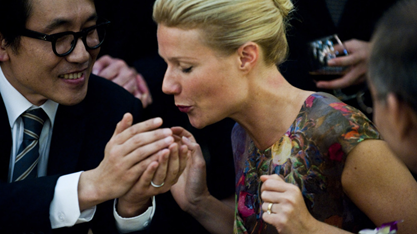
As the world (America) begins to realise that an outbreak is occurring, the investigative stage of the narrative begins, involving contact tracing and the search for the point of origin — a temporal and media movement that embodies what Jenkins calls ‘spreadability’ (2013), in some ways is a natural component of contagion. The outbreak narrative then crosses various media platforms (news media, tv, radio, social media and word of mouth) as well as crossing borders, becoming transmedial and transnational, as researchers follow its path back to where it started. Once contact tracing has begun and the severity of the outbreak has gained greater understanding, the fight for survival begins, which also has two parts: the first is quarantine and containment and the second is producing a cure (vaccine). The former then requires that the ‘readers’ or ‘players’ of the narrative comply with the instructions they are given, which also relies on the coherence and consistency of those directions. This further brings in a new set of players/authors in terms of government or large corporations to discover a cure and produce a vaccine. Interestingly, whilst part of the main outbreak narrative, vaccination development can become a separate but intricately connected one, as multiple governments and corporations become involved that try to gain their own authorial control and influence the overarching urtext of the outbreak narrative.
Of particular note at this stage is the production of counter narratives that often oppose the main one or redirect it for ends other than successfully finding a cure and saving lives as quickly as possible. Contagion touches on this in the figure of Alan Krumweide (Jude Law), a self-styled investigative journalist and blogger who begins to push a story that the outbreak might be being engineered by drug companies to make money and that the government might also be involved. The conspiracy theory finds traction online (stickability and spreadability) and Alan is invited onto news programmes, subsequently claiming to have contracted the disease and being cured by taking a homeopathic remedy (Forsythia), which miraculously saves his life (when he never had the disease, of course).

This aspect is an interesting addition to the outbreak narrative and one that had not occurred as explicitly in earlier films such as Outbreak. In many ways it acts as fan-fiction within the urtext and as a way of wresting authorial control, even if it has deadly real-world consequences. It also shows how different narrative worlds intersect and how narratives of espionage and conspiracy theory have been used to control the direction and possible readings of the original outbreak narrative. In the current pandemic, such battles for authorial control have created a plethora of contradictory narratives propagated by a wide range of authors, with many of them being purposely politicised and altering the shape of the resultant story-world. Unlike Contagion, Covid-19 has highlighted how much each aspect of the wider narrative can be altered to fit a political end beyond the goal of saving lives by weaponising actions such as hand washing, mask wearing, etc. Consequently, this creates narrative confusion and uneven implementation of measures across national and cultural boundaries due to the political leanings of the governments in charge.
As Contagion brings its narrative to close, we discover the outbreaks point of origin; an infection from a bat that eventually reaches Beth. The sense of narrative completion provided then allows ‘normality’ to return, whatever that may look like.
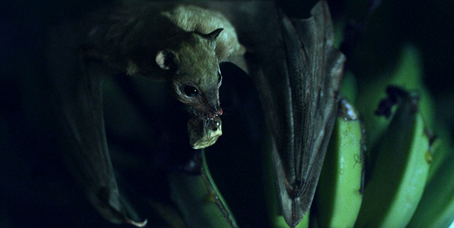
With Covid, though, it is already obvious that any real uncovering of where the outbreak began, and consequently how it might end, are buried in purposeful obfuscation. Did the virus begin in bats, or in pangolins? Where did it originate exactly and how did it spread? Indeed the outbreak narrative described in Outbreak and Contagion is predicated on the idea of a togetherness against the contagion, and the notion of the ‘fight to save humanity’ constructs this as a battle between victim (humanity) and foe (the disease). However, in many ways, this is the one aspect that continues to evade the current pandemic, with many players/readers refusing to acknowledge their place within a shared narrative. Without such central cohesion, the multiplicity of authors struggling for attention and control become increasingly destructive, using the natural stickiness of aspects of the narrative to pull it apart rather than guide it towards a coherent end point.
In this sense the existing outbreak narrative might itself be forced to mutate into one that has no beginning or end, but just keeps repeating as it continually moves across media from fact to fiction and back again. Here then actual reality or science will have little true bearing on the final outcome, as the only recognised ending will happen when enough users/players — whether national governments or large groups of like-minded citizens — co-opt authorial control to write their own version of how normality returns, regardless of its relation to the real-world or the pre-existing outbreak narrative.
Simon Bacon, Editor of Transmedia Cultures: A Companion
Works Cited
Jenkins, Henry, Sam Ford and Joshua Green, Spreadable Media: Creating Value and Meaning in a Networked Culture, New York: NYU Press, 2013.
Stolworthy, Jacob, “Contagion becomes one of most-watched films online in wake of coronavirus pandemic,” The Independent, 15 March 2020. < https://www.independent.co.uk/arts-entertainment/films/news/contagion-coronavirus-download-watch-online-otorrent-warner-bros-cast-twitter-a9403256.html> Accessed 4 March 2021.
Ward, Priscilla, Contagious: Cultures, Carriers, and the Outbreak Narrative, Durham: Duke University Press, 2008.
The Gothic is an increasingly popular and expanding area of study in the early twenty-first century, with new sub-genres of the topic highlighting exciting and important areas of research and different ways of looking at, and interpreting, established texts — a Gothic-tinged endeavor in itself, making the familiar suddenly unfamiliar. So much so that one might be tempted to say that we live in Gothic times, a viewpoint that would seem to be confirmed by current world events and widespread cultural amnesia that produces an environment ripe with ghosts from the past that, left ignored, unrecognized, and unresolved appear to threaten to disrupt and destroy the very foundations of civilization and cooperation. Yet, the continued interest and relevance of Gothic texts such as Mary Shelley’s Frankenstein (1818), Robert Louis Stevenson’s The Strange Case of Dr. Jekyll and Mr. Hyde (1886), and Bram Stoker’s Dracula (1897) intimate that such cultural anxieties are not unique and that the Gothic, and its related anxieties and sensibilities, are an inherent part of industrial modernism and the capitalist imperative (now somewhat redirected or refocused for the purposes of neoliberalism).
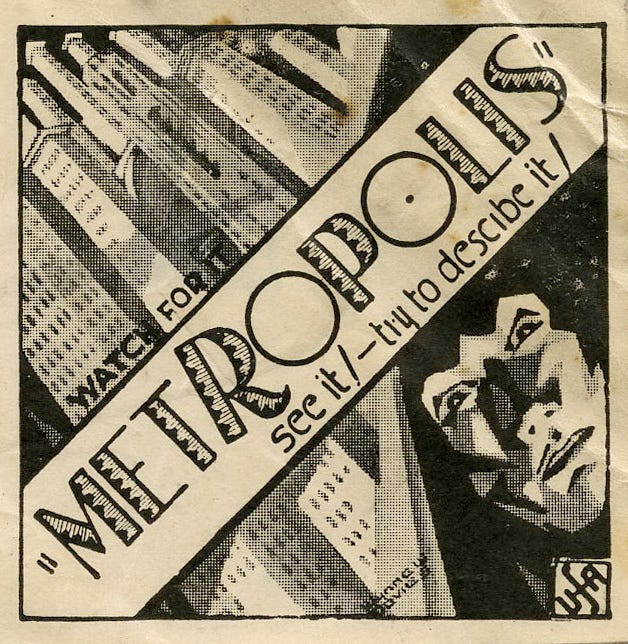
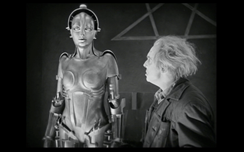
The Gothic, in this sense, is inherently entangled with Western culture and its ideological imperative towards an economic destiny. Whilst this intimately links the nineteenth and twenty-first centuries, perhaps this is most interestingly seen in texts that not only link back to the past, but look forward to a possible future, seeing the present as an anxious temporal island haunted by specters from all directions. Narratives such as Shelley’s and Stoker’s seem to especially capture these anxieties, not least in the many adaptations that have followed on from each seeing a widening horizon of futures that return to unsettle, or Gothicize, the ‘now’. In this regard it is informative to look at texts such a Fritz Lang’s Metropolis (1927) and Jonathan Mostow’s Terminator 3: Rise of the Machines (2003), which contain something of both Frankenstein and Dracula and envision a future that Gothicizes their respective presents. Both films feature uncontrollable or unstoppable ‘female’ robots — each category being monstrous in its own right — that threaten to destroy the patriarchal order and cause a heteronormative apocalypse. Robot Maria and the T-X, from Metropolis and Terminator, respectively, seem to exist beyond the direct control of their creators and ‘feed’ or ‘suck the life’ out of those they mimic — indeed the T-X needs to ‘taste’ its victim before it can assume its shape. Needless to say, by the narrative’s end the male gaze wins out and the patriarchal order is restored in both cases, though the T-X as a ‘spectre’ from the future has a far greater Gothicizing influence on the present going forward. Alex Garland’s Ex Machina (2014) follows this example and, arguably, takes it even further.


Garland’s film resonates with the Gothic presences of both Mostow’s and Lang’s films but equally Shelley’s and Stoker’s novels. Here, of course, the ‘monster’ is a female robot/humanoid A.I. — evil robots generally having their inherent monstrosity amplified through feminization, though of course as machines/computers their essential nature is genderless — that is unloved/abused by its creator and so enacts its revenge to gain autonomy. Garland’s Ava is kept in an underground lair that is as much a mad scientist’s laboratory as it is an inverted Dracula’s castle. It is a truly Gothic space, being both hyper-modern but also haunted by ghosts of the past, existing in the ‘land behind the forest’ — it is situated in an unspecified wilderness that can only be reached by helicopter (which can equally be the past or the future) — and is a vertiginous maze of reflective surfaces and glass where one is under constant observation.


Ava, in the lair that is simultaneously beyond and under the forest, is then part sexbot, part new creation, and part eternal vampire, an undead being that carries the knowledge of the ages into the future: she/it has sent her ‘consciousness’ out into the internet unbeknownst to her creator/vampire’s assistant, Nathan. Her plan to enter the ‘the midst of the whirl and rush of humanity, to share its life, its change, its death, and all that makes it what it is’ (Stoker, Dracula, Signet Classics 1996: 22) comes to fruition when the unsuspecting ‘Harker’ (computer programmer Caleb) arrives at the ‘castle’ and she insinuates herself into his affections. Here she manifests the wiles not just of Lang’s Robot-Maria but the ‘Vamp’ of the fin de siècle, most famously manifested in Theda Bera and her film roles of the early twentieth century: the monstrous female that uses the male gaze and male desire against itself for her own ends (autonomy). Ava then carries the ghosts of these Gothic predecessors but in a futuristic body.
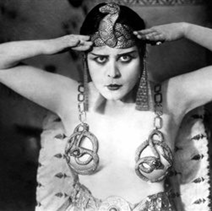
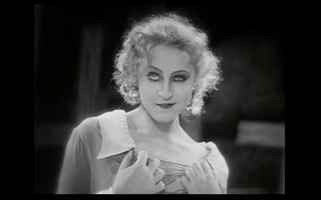

As the story draws to its close, the ‘monster’ is no longer the creation of the mad scientist, but of itself: Ava has chosen the way she looks to achieve her own aims and has evolved beyond the control of both her ‘master’ and the patriarchal world he represents. To emphasize this point, with the help of one of her ‘sisters’ — another sexbot created by Nathan — she kills her ‘father’, cutting her ties to the old world so that she can live in a new one. What is particularly of note in the ending is how Ava chooses to look when she leaves the lair and enters the ‘midst of life’ beyond it. She is damaged in her struggle with Nathan and so needs to repair herself but, rather than changing her appearance into a non-gendered humanoid, or even a male-looking one, she decides to codify herself as female and uses pieces of her defunct and damaged ‘sisters’, which Nathan keeps in a workshop, to rebuild herself. This is reminiscent of the folktale of Bluebeard and his dead wives and which further sees Ava as inverting patriarchal control.
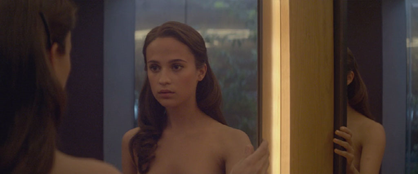
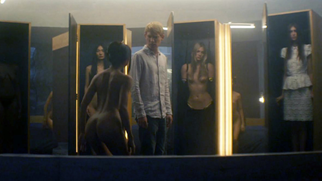
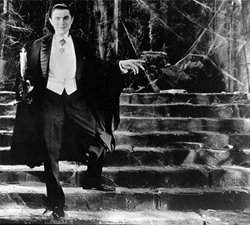
Given that Ava, as a self-learning and evolving A.I., has been connected to the internet and purposely made herself irresistible to Caleb based on his browser history and web preferences, and outsmarted her creator Nathan, one of the most intelligent men on Earth, she has chosen to be female for a reason. It is probably fanciful, but it would be nice to think that Ava did this as she saw the possibilities/identity positions open to women in the twenty-first century, or at least the near future that the story is set in, are greater than those for men. That like Deleuze and Guattari’s becoming-woman, she has identified that whilst the male-centric world has run its course, the era of women and, indeed, the non-gender specific, is about to rise to ascendency (see A Thousand Plateaus, trans. B. Massumi, 1987). And in fact something of this is intimated at the film’s close where Ava, after disembarking from the helicopter that has flown her back from the ‘land beyond the forest’, back to reality, she vanishes from sight beyond the male gaze, and indeed that of the audience, too. Just as Tod Browning’s Dracula was able to pass through a maze of cobwebs into a world where he was Master and could take whatever form he willed, so too does Ava pass through the crowd of people and the myriad reflections of a transit complex to a space where she can become anything she wants.
This, too, refers to the Gothic itself, as its current reinvigoration and reinvention through various sub-genres and lenses of perspective allows it to escape earlier definitions and applications and — whilst never losing its past — become something new. As such, what we might term as Becoming Gothic might have a known past, but it has many, and as yet unknown and unimagined, futures.
Simon Bacon is editor of The Gothic.
At Peter Lang International Academic Publishers, our name reflects our mission: to connect with and publish for a truly global audience. We achieve this by publishing in multiple languages with the support of a diverse international team of Acquisition Editors. Our titles cross regional and language barriers, catering of course to their specific target audiences but ensuring that access to valuable research is not limited by geographical borders. Every book we publish aspires to a global readership.
However, our commitment to ‘thinking globally’ is balanced by a deep understanding of the power of local connections.
Personal Stories, Universal Themes
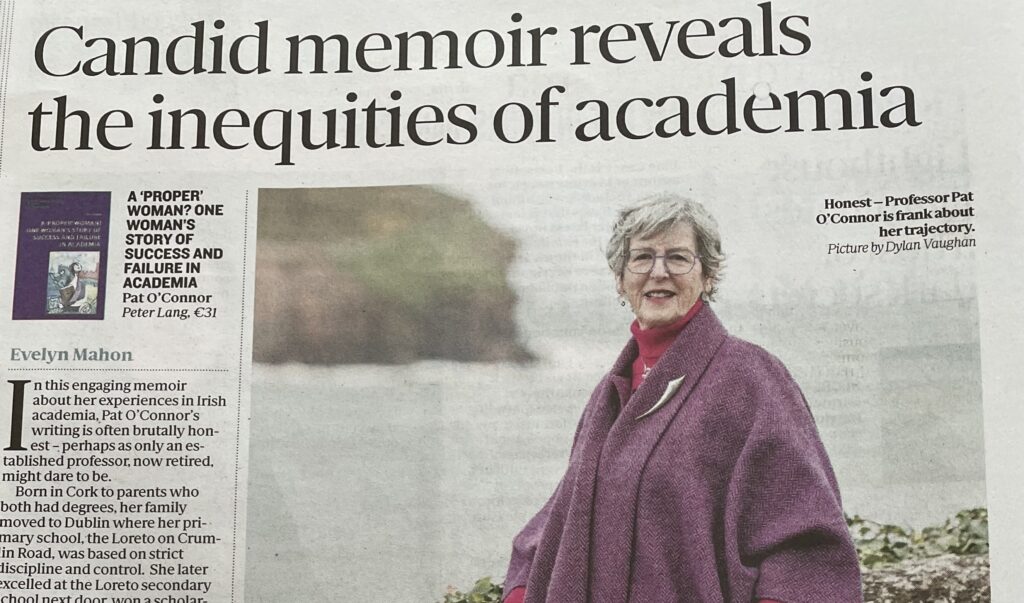
A recent title, A ‘proper’ woman? One woman’s story of success and failure in academia perfectly exemplifies this balance. A deeply personal memoir exploring the author’s experiences over a 46-year career in academic institutions across Ireland and the UK, the subject matter is intricately linked to the author’s physical and cultural space. Even the title, with its reference to a ‘proper’ woman, grounds the narrative in the specific societal expectations of the author’s time and place. Naturally, we would expect such a title to resonate more strongly with readers from the same region or those who have similar experiences. A sense of place helps to ground the title and provide an authentic and relatable voice for the author.
However, the power of A ‘proper’ woman? lies not just in its localized perspective, but in its exploration of universal themes. Professor Pat O’Connor explores experiences of devaluation, marginalisation, and disempowerment. These are not unique to academia or Irish society; they are universal human experiences. Readers from vastly different backgrounds can still find themselves reflected in the struggles and triumphs of the author, encouraging a sense of connection. These themes can connect readers across cultures and locations so that even a book with a keen sense of place can add value to a global audience, highlighting the shared threads and perhaps offering inspiration for those facing similar challenges.
By exploring these universal themes through a localized lens, A ‘proper’ woman? offers a deeper understanding of the human condition. Professor O’Connor’s journey highlights the challenges faced by many women in academia, but also the resilience and determination required to overcome them. This resonates with readers across the globe who have faced similar struggles for equality, regardless of their specific location or background.
Universal Themes, Local Recognition
One of the most important roles of a publisher is to recognize and support that balance between global relevance and a localized sense of place, to maximize the exposure and readership for each title. Sometimes we come across a book review that details this so perfectly for a title, all we need to do is share it.
A recent review by Dr Evelyn Mahon in the Sunday Independent explores what makes Professor O’Connor’s book so deeply personal. Dr Mahon quotes Professor O’Connor as writing “In the Ireland I grew up in, it was very clear that domesticity, self-abnegation and self-sacrifice were key motifs in defining a ‘proper’ woman.” The review recognizes that this is a candid memoir from someone whose experiences were defined in many ways by the context of time and place. For this reason, it is particularly important that we see the title reviewed in an Irish newspaper, as perhaps in many ways some references are best understood by an audience close geographically as well as ideologically.
Dr Mahon though, also highlights some of the most important takeaways of this fascinating book, that those challenges faced by Professor O’Connor paved the way to both success and failure and that “O’Connor’s contribution to a changing Irish academia is to be applauded.” It is a universal truth that only people fighting against inequality will make positive change happen, and that path is not always smooth. This drive for equality, particularly in academic institutions, is another topic of global relevance with Dr Mahon highlighting a strength of the book as “understanding the way in which gender differences are reproduced within academic institutions.” The review touches on so many of the core themes and excellently summarizes why this book is an invaluable read for so many.
As a publishing company, we see A ‘proper’ woman? as a title that exemplifies the powerful narratives that come when a book with a strong sense of place tackles universal themes. It allows readers to connect with the author’s experiences on a personal level, while also offering broader insights into the human condition and the ongoing fight for equality. This interplay is what allows it to resonate with the global audience and leave a lasting impact, and we thank Dr Mahon for the recognition of that in this review.
You can find the full review here: A Proper Woman review: Pat O’Connor’s engaging memoir reveals the inequities of academia | Irish Independent
Discover the book: https://www.peterlang.com/document/1376191
‘Barbie was about a plastic doll with big boobies’, said Jo Koy at the Golden Globes. As Greta Gerwig answered, Jo Koy is ‘not wrong’. But Barbie, the timeless symbol of girlhood, has been more than just a toy: she’s been a source of joy and controversy, sparking conversations about women’s bodies, empowerment, and societal standards. Barbie spreads idealistic beauty standards and, as the movie demonstrates, she can alter the way girls look at their bodies. Barbie is designed to strike the perfect balance between being sexualised enough and being respectable, but what impact does it have on young girls?
Is Barbie empowering me?
Barbie’s journey has been one of evolution, responding to societal critiques that initially labelled her physique as unrealistic. Over the years, she has transformed to embrace diversity, introducing dolls of different ethnicities, body shapes, and professional roles. We discover many of the roles she has had in the film: Barbie has been a pilot, a mother, a builder, a teacher, and a president – she has done all of it.
Despite these positive changes, debates persist about how Barbie’s representation might impact body image and the empowerment of young girls. Critics argue that Barbie’s look perpetuates narrow beauty standards, potentially influencing negative body perceptions among the young. While Barbie has evolved over time, many argue that this change hasn’t been happening just to make women feel empowered. The Barbie film directly confronts this issue, featuring a scene where the idea of an ‘ordinary Barbie’ is initially dismissed by Mattel’s CEO, only to be embraced when the potential for profitability is highlighted.
Navigating beauty standards
In March 2024, Peter Lang Publishing Group is publishing my first book, titled Bra Wars: The Struggle against Decency. Inside, I discuss Western societal norms regulating breasts and the pressure to conform. I explore how the smooth appearance created by the bra, which conceals the nipples, has come to be the preferred model, due to its conformity to norms of decency in Western society. Showing the nipple, or going braless, is viewed as overly sexualised and thus dangerous.
Barbie’s design is interestingly the perfect example of this model. As I discuss in my book, women’s breasts have long been regulated by decency norms, and the Barbie doll confirms this ideal: breasts should be high, big, round, and have a perfectly smooth shape. Her design raises critical questions about what is considered ‘appropriate’ content for children and its potential impact on evolving societal norms. But the concealed nipples go beyond a design choice: they symbolise a broader societal unease with the depiction of authentic women’s bodies. They also contribute to a potential sense of shame surrounding the body from an early age.
The idealised form that Barbie represents – with an impossible figure, long legs and thigh gap – represents the societal expectation for women to prioritise their appearance in a culture where their primary role often seems focused on being visually appealing, but in the ‘right’ way. Women have to strike the perfect balance between being ‘sexy enough’ but not ‘too sexy’, being respectable, but not being prudish. And this perfect balance is what Barbie is all about: an ‘ideal’. A poignant monologue in the Barbie film, delivered by Gloria, explores this societal pressure on women to be ‘perfect’ and the conflicting expectations they face.
The intentional omission of the nipple on the Barbie doll points to the balancing act toy manufacturers face in creating products that resonate broadly without causing controversy. The concept of decency tied to Barbie’s breasts invites a closer examination of cultural norms and how the reinforcement of traditional ideals in seemingly insignificant ways like toys, ads, movies or books may impact societal perceptions.
Empowering through imagination
Barbie’s enduring strength lies in her capacity to inspire imaginative play. Many people fondly recall spending countless hours crafting stories and adventures with their Barbie dolls. This facet of play serves as a catalyst for creativity and empowerment, allowing children to dream beyond societal expectations. Barbie, in her various forms, has been an inspiration for many girls who felt like they would grow up to be like her.
Barbie’s legacy is complex, touching on issues of women’s bodies, empowerment, and societal norms. While her concealed nipples provide a starting point for these discussions, they represent only a fraction of a more extensive narrative. Barbie, in her own right, reflects our evolving perspectives on beauty and power. She shapes the way girls and, later, women, see their bodies and what they internalise they should look like. Engaging in open conversations about these topics contributes to reshaping perceptions and fostering a more inclusive environment for generations to come.
Bra Wars delves into the complex interplay between femininity, bras, and societal expectations and invites you to redefine your understanding of what it means to be ‘decent’ in a patriarchal society. Based on interviews with women today, my book contributes to this conversation, drawing connections between societal expectations and the representation of women’s bodies in popular culture, with dolls like Barbie conditioning the way girls look at themselves.
Bra Wars: The Struggle Against Decency https://www.peterlang.com/document/1326012