


 en
en  fr
fr 
by Graeme D. Eddie, author of Sweden’s Pandemic Story: COVID-19, A Chronology 2020–23. Foolhardy, Exceptional, or Just Principled?
In Spring 2020, pandemic year, many media eyes were on Sweden. Narrated to the rest of Europe was the story of no lockdown, no mask-wearing, children still at school, young people lounging about in cafes and parks, and a working economy instead of one closed down. Harshly critical politicians and scientists in other countries warned of such an unorthodox response to such a cruel virus.
As we watched the Swedish Coronavirus drama unfold, we noted the principal characters —the state epidemiologist, the director of the public health agency, the prime minister, and the health and finance ministers. It was not immediately apparent though, that other prominent actors in the drama would turn out to be Swedish and Danish mink (read the book!) and the proud and confident fixed link structure joining Sweden with Denmark.
History of the Bridge
Opened in 2000, and spanning the Sound, or Öresund — the narrow channel joining an arm of the North Sea to the Baltic Sea — separating Sweden and Denmark, the Öresund Bridge had become an iconic symbol of Nordic co-operation and engineering innovation1. Institutionally, structurally, and then physically after the opening of the bridge-tunnel fixed link, Sweden was connected to Europe and fellow member-states of the EU, which it had joined in 1995.
The fixed link represented a compromise between bridge and tunnel preferences, transitioning from a cable-stay bridge to an underwater tunnel, and creating a tangible, unified link for road and rail travel, trade, and culture. Indeed, the bridge had starred alongside Sofia Helin (playing Saga Norén, a Swedish police investigator with Asperger Syndrome) in the acclaimed Nordic crime drama, The Bridge, running 2011–18, and broadcast all over the world.
In June 2000 and every summer between 2002 and 2006, and again in 2010 and 2025, the Danish capital Copenhagen, the Öresund Bridge, and the Swedish city of Malmö had co-hosted Broloppet Half Marathon (The Bridge Run). Although only an occasional sporting event, the 2000 run was still listed among the top ten races in the world based on the number of participants and finishers.
In the first couple of years of its life, total traffic2 across the bridge, including commuter-, leisure-, business traffic, and freight (motorcycles, cars, cars with trailers, busses, trucks and vans) amounted to 1.6 million (2000) and 2.9 million (2001). By 2006, bridge traffic had reached 5.7 million, and revenue was perhaps too lucrative, and the structure too busy, to slow right down for an athletic event lasting much of the day. In 2010, traffic was 7 million, and in 2019 it had reached 7.4 million. And then in 2020, Covid-19 arrived in Sweden.
A Pandemic Story
In autumn 2019, reports came to the Swedish Foreign Ministry of a novel coronavirus outbreak that had gripped the Hubei Province of China. Into 2020, the outbreak would become a global pandemic, as Covid-19 swept the globe and arrived in Sweden, bringing the first confirmed case to the city of Jönköping, in late-January. On 11 March, the day that the WHO declared the outbreak to be a global pandemic, Sweden’s first recorded death from Covid-19 occurred at the Karolinska University Hospital in Huddinge, Stockholm. The victim had been over 70 years old with underlying health problems. By mid-March, and with agreement at EU level, non-essential travel into Sweden was banned from all countries except those in the EEA and Switzerland to mitigate the effects of the outbreak and to reduce the spread of the disease. From 14 March 2020, when stricter rules for entry into Denmark had been imposed, the Öresund Bridge had been partially closed, 20 years since its formal opening to traffic. By the end of–March, the EU was in lockdown, though in Sweden less so.
Widely reported on at the time had been Sweden’s unique approach to tackling Covid-19. It had often been described as an ‘experiment’ and ‘maverick’ and had been met with both harsh criticism and some admiration, both at home and abroad. The approach had been described by scientists, politicians, and journalists alike, as risky, brave, and sometimes foolhardy. Sweden was an ‘outrider’, an ‘outlier’. The criticism and admiration – a fascination in a way – had been particularly focussed on the decision to keep nurseries and primary schools open, a lack of national lockdown, and no mask-wearing. As the months had passed however, and into the second year of the pandemic, it came to be realized that while Sweden had suffered many more deaths than its Nordic neighbours, particularly among the elderly in care homes, there had been substantially fewer Swedish deaths overall than in other EU members states of comparable size — in Czechia, Greece, Hungary, and Portugal for example.
But no matter, in the months of the pandemic, after EU member states had adopted a ‘traffic-light’ system to limit the spread of Covid-19 and to maintain free movement within the bloc under safe conditions, and as neighbouring countries began to put in place more relaxed travel measures, Sweden found itself kept out of these. The concentration of Covid-19 in Sweden prevented it from being included. Those wishing to travel to Denmark from Sweden say, had to have a valid reason for doing so, such as living or working there, delivering vital goods, or holding Danish citizenship.
Coronavirus and the devastation in its wake had abruptly closed European borders with the travel restrictions put in place ending ‘free movement of people’, a central pillar of the EU Treaty. The European route E20 via the Öresund Bridge and through Sweden was one of the main road traffic routes from Copenhagen to Helsinki, Finland, and while the bridge had remained open to freight traffic in either direction, as well as to private vehicular travel to Sweden, there were stricter rules for travel into Denmark from Sweden.
As for the Öresund Bridge, in May 2020, the total traffic — motorcycles, cars, vans, and coaches — had been 292,806. This compared with 650,211 in May 2019. As part of travel and free movement under safe conditions, and on a bridge with much less traffic than in a ‘normal’ year, checks still had to be carried out, and queues soon built up. That May, when a six-kilometre-long line of Danish traffic built up, returning from Sweden after the weekend holiday marking Ascension Day (Kristi himmelsfärdsdag), resentment had been fuelled in Sweden over Danes being able to travel freely into the country, while they were barred from travelling to Denmark without good reason. It would not be until August 2020 before Swedes found themselves being included in what had become known as ‘travel bubbles’.
A Recovery
Well into 2021, following 18 months of disruption and to encourage renewed travel between Sweden and Denmark, the commercial operator of the Öresund Bridge (registered as Øresundsbro Konsortiet) announced the launch of a 3-month discount offer to kickstart use of the bridge again and re-invigorate the Öresund Region concept. This international region, composed of Sweden’s third city of Malmö and the Danish capital Copenhagen, and their regional hinterlands, was supposed to have been a common metropolitan area, but it had undergone division during the pandemic. The hospitality industry had been hit especially hard. The number of overnight stays on either side of the Sound had crashed to a record low during the first half of 2021. In Region Skåne, Sweden’s most southerly, overnight stays in guest or tourist accommodation had decreased by 81 per cent compared with the first half of 2019. In the Capital Region of Denmark and Region Zealand, overnight stays of guests and tourists from Sweden had decreased by 91 per cent.
The launch of a ‘Buy one journey, get one free’ offer available between 1 September and 30 November 2021 was an attempt by the bridge consortium to inject greater optimism and to encourage increased travel on both sides of the Sound. Travellers using the bridge were offered favourable discounts in hotels across the Öresund Region.
Cross-border cooperation to match Danish jobs to Swedish jobseekers, and vice versa, had also gotten underway again by the autumn. One initiative was a collaboration between the Capital Region of Denmark, Malmö and Copenhagen municipalities, the Danish Chamber of Commerce (Dansk Ehrverv), and the Swedish Public Employment Service, aimed at solving a post-pandemic labour crisis on both sides of the Öresund and to fill 53,500 Danish private sector vacancies with 65,000 unemployed people in Skåne. The hotel and restaurant industries on both sides of the cross-border region had been struggling to fill vacancies, with several hotels keeping rooms closed because they had not been able to find staff.
After the 2- to 3-year pandemic blip, the notion of a common metropolitan area of greater Malmö and greater Copenhagen — the Öresund Region concept — would return. While in 2020 and 2021, bridge traffic had dipped to 4.6 million and 4.8 million respectively, back to 2004 levels basically, and affecting revenue and profits, by 2022 traffic had grown to 6.7 million, in 2023 it was 7.2 million, and in 2024 it had reached 7.5 million — back to pre-Covid 19 levels. The region was moving again.
Pandemic closures and reduced traffic had indeed been ‘but a blip’, and the Öresund Region was now recognized as the largest labour market in the Nordic region with a population of 4.2 million, though Malmö was perhaps more of an observer to Copenhagen’s success, being a capital city after all, to Malmö’s third city status in Sweden. Celebrating the 25th anniversary of the opening of the fixed link, another Broloppet Half Marathon was held in June 2025 with 40,000 participants, the first man over the line with quickest time being Daniel Nilsson from Sweden, and the first woman was Sarah Bruun from Denmark — local successes from both countries.
About the parts played by Swedish and Danish mink in this Nordic coronavirus drama, and to discover more, read Sweden’s Pandemic Story: COVID-19, A Chronology 2020–23. Foolhardy, Exceptional, or Just Principled?
1 The construction of the Øresund Bridge was a joint project undertaken by Denmark and Sweden, and the completed bridge is owned and operated by Øresundsbro Konsortiet, jointly owned by the Danish and Swedish states. The formal name of the bridge is Øresundsbron, a Scandinavian ‘hybrid word’ merging the Danish rendering of Øresundsbroen with the Swedish Öresundsbron.
2 Traffic statistics throughout the article are taken from ‘Traffic Statistics’ on the Øresundsbron website: https://www.oresundsbron.com/about-oresundsbron/statistik-och-rapporter/traffic-statistics
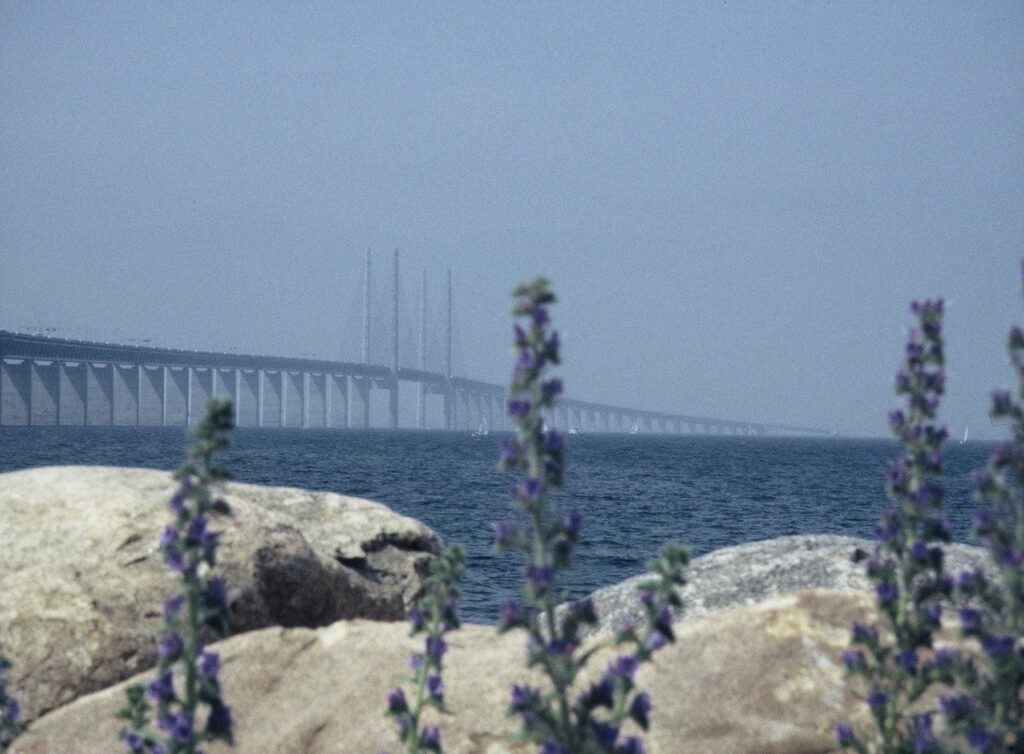
View of the Öresund Bridge from the Swedish abutment. Captured by Graeme D. Eddie.

In our first Author Spotlight of 2026, we are pleased to present Dr. Simon Bennett, whose recent publication, The Russia–Ukraine War – Security Lessons (Peter Lang, 2025), has attracted significant attention in the media and press. Dr. Bennett is a prolific scholar and commentator and has written extensively on the Russia–Ukraine war for a wide range of academic and professional publications.
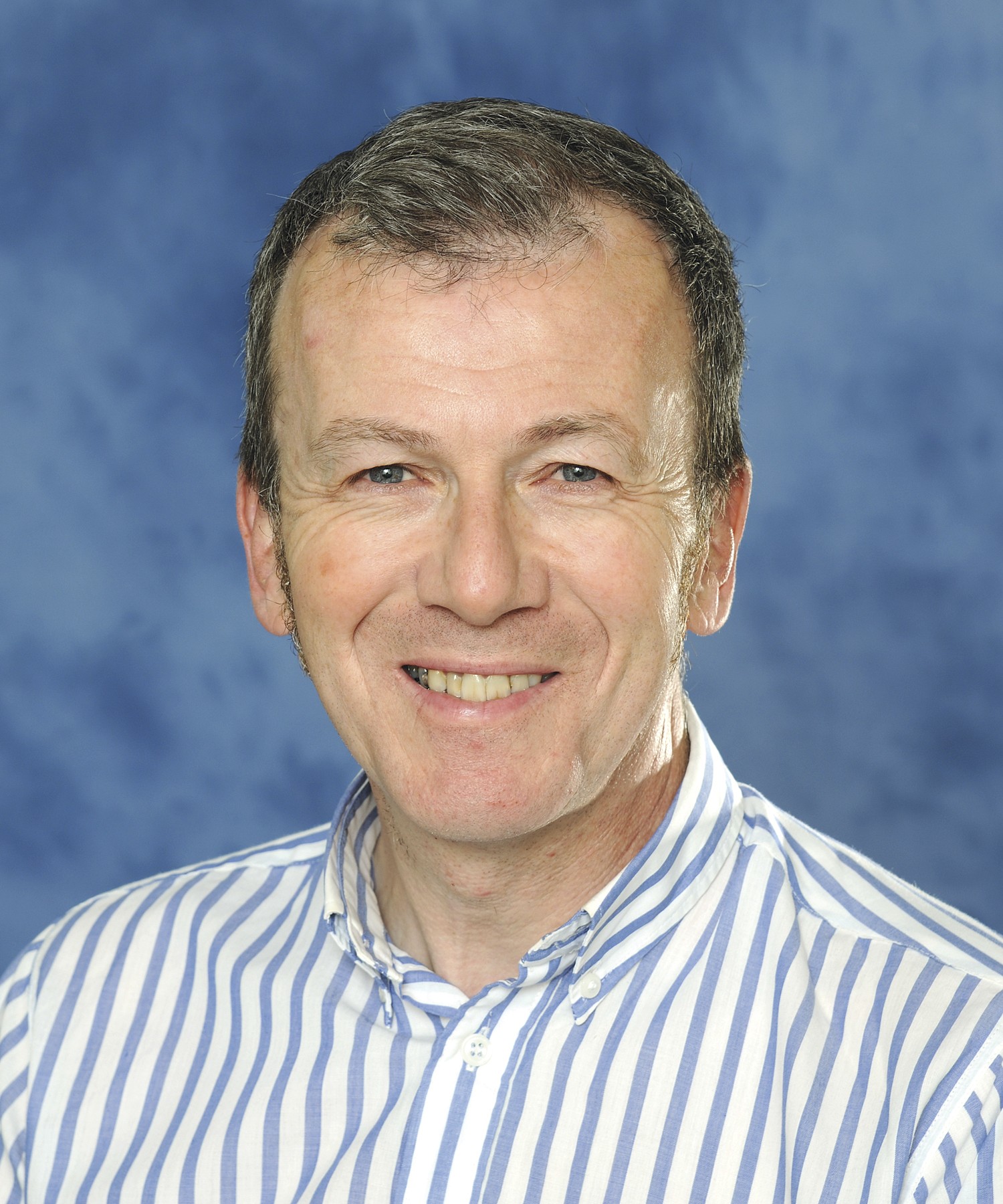
Dr. Bennett is the Series Editor of Systems Thinking for Safety. The series draws on the success of systems-thinking approaches to safety management in commercial and military aviation, with a view to improving safety performance across other complex socio-technical systems, including healthcare, nuclear power generation, chemical production, oil and gas extraction, deep mining, and sea and rail transportation. The series is intended for practitioners, academics, and students alike.
Dr. Bennett’s research interests focus on the organisational, social, economic, and political origins of risk. He has worked closely with the National Police Air Service and the Royal Air Force and currently directs the Civil Safety and Security Unit at the University of Leicester, England.
His recent publications include Atomic Blackmail? The Weaponisation of Nuclear Facilities During the Russia–Ukraine War (Libri, 2023) andCorruption and the Management of Public Safety (Routledge, 2024), alongside earlier works such as How Pilots Live (Peter Lang, 2014), Aviation Safety and Security: The Importance of Teamwork, Leadership, Creative Thinking and Active Learning (Libri, 2015), and Innovative Thinking in Risk, Crisis and Disaster Management (Routledge, 2012).
An aviation human-factors specialist, Dr. Bennett has accumulated approximately 1,500 hours of jump-seat observation and 200 hours on the ramp. His observational experience spans multiple aircraft types, including the Airbus A319, A320, A321, A300, and the Boeing 737 and 757. He has also observed police helicopter operations and undertaken extensive safety and emergency procedures training across several aircraft platforms. In addition, he has trained flight crew in fatigue-risk management and supported a Boeing 757 Line Operations Safety Audit.
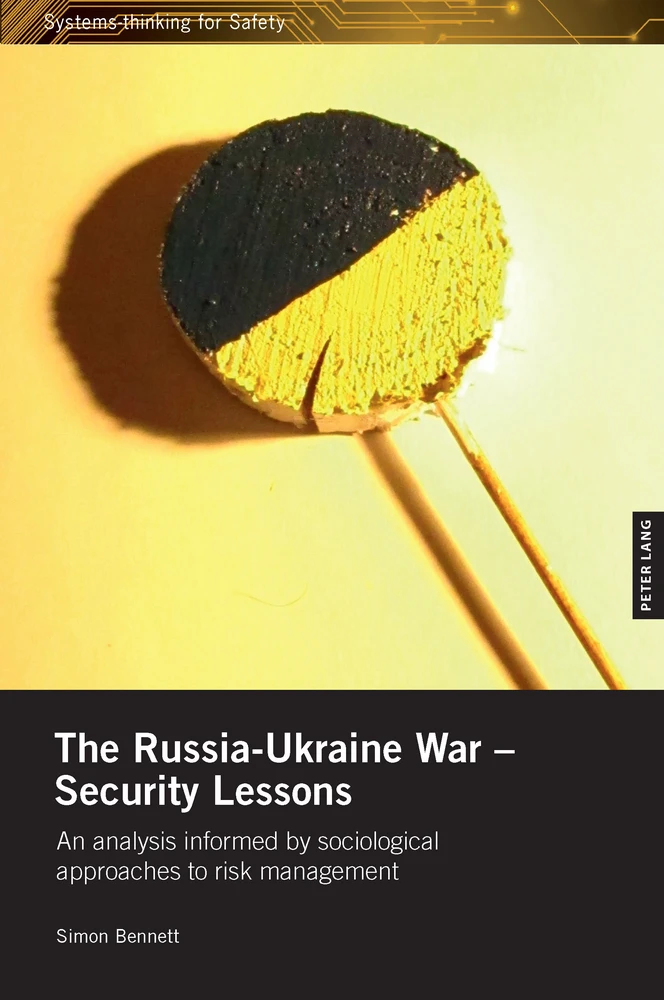
The Russia-Ukraine War – Security Lessons
An analysis informed by sociological approaches to risk management
“As the Russia-Ukraine War sees its fourth year, this book provides a timely analysis of the successes and failures of Ukraine’s campaign to expel Russian forces from sovereign Ukrainian territory. Lessons are drawn using sociological approaches to risk management such as systems-thinking, organising for high-reliability, latent and active error, mindfulness, groupthink, strategic empathy, passive and active learning, single and double-loop learning, isomorphic learning and active foresight.”
‘The Russia-Ukraine War – Security Lessons’ in Recent News
Dr Bennett has been quoted and featured in multiple recent articles, with a selection featured below:
- Will Anyone Prove Trump Wrong And Counter His Steamroller Moves?
Written by Kate Nicholson
HuffPost UK Politics, 9 January 2026
‘Similarly, the University of Leicester’s director of the civil safety and security unit Dr Simon Bennett told HuffPost UK: “Since the 1776 Revolution the US has railed against European colonialism. This is pure hypocrisy.
“The US has been, and is, every bit as colonialist as Europe’s Ancien Régime. Perhaps more so under its current crypto-fascist regime.”
He added: “As Europe’s imperial power has waned, that of the United States has grown, under Trump’s Caesar-like behaviour exponentially and unchecked.”’
- What Could Next Year Look Like For The Ukraine War?
Written by Kate Nicholson
HuffPost UK Politics, 12 December 2025
‘Director of the Civil Safety and Security Unit at the University of Leicester, Dr Simon Bennett, also told HuffPost UK that Trump’s sympathies lie with Putin not Zelenskyy, because he is an “admirer of authoritarian leaders”.’
- ‘‘Lamb To Slaughter’ Trump Envoy Heads To Russia For Peace Talks
Written by Kate Nicholson
HuffPost UK Politics, 2 December 2025
‘Dr Simon Bennett, the director of the civil safety and security unit at the University of Leicester, told HuffPost UK that Putin will “exploit a stupefied Witkoff”.
He said: “The Americans seem determined to once again sideline Europe by sending Steve Witkoff – a man eminently unsuited to international diplomacy – to talk to the Moscow warmonger.
“Witkoff’s ignorance of international politics and diplomacy renders him highly vulnerable to manipulation by Putin. A lamb to the slaughter.”’
- Trump’s Ukraine Deal: Experts Unpick President’s Potential Motive
Written by Kate Nicholson
HuffPost UK Politics, 11 November 2025
‘Dr Simon Bennett, director of the civil safety and security unit at Leicester University, said: “As far as Ukraine is concerned, the plan is a non-starter. Ukraine will never surrender that portion of the Donbas still under its control.”‘
Articles by Dr. Bennett
In addition, Dr. Bennett has also authored several published articles as seen below:
- Russia-Ukraine War: Global Economic Security Implications
The World Financial Review, 11 January 2026
‘The Second World War confirmed the Twentieth Century as The American Century. Like the Second World War, the Russia-Ukraine war is restructuring the world economic system.
- Learning Lessons
Kyiv Post, 3 September 2025
‘The war in Ukraine is not just a regional conflict – it’s a warning. The lessons it offers, if understood and acted upon, could be the difference between a secure West and a wider European or even global war.’
- If you want peace, prepare for war
Continuity Insurance and Risk, 2025
‘In my book I talk about the importance of actioning lessons learned, that is, of active learning. Churchill understood the importance of active learning. “Those who fail to learn from history are doomed to repeat it” he warned. If we want peace we must prepare for war. That is the realpolitik of today’s dangerous world.’
- The West and Ukraine. A loss of nerve?
UK in a Changing Europe, 17 November 2025
‘In my 2025 book The Russia-Ukraine War – Security Lessons I note how the West failed to provide Ukraine sufficient matériel and training to ensure the success of its 2023 counteroffensive.’
Dr. Bennett’s scholarship and public commentary offer a compelling perspective on the Russia–Ukraine war and the wider security lessons it holds for an increasingly uncertain world. We look forward to seeing future publications that continue to share these learnings and offer thoughtful insight from Dr. Bennett.
This is a co-authored blog that sets out to demonstrate in action what this new book series is all about. It is authored in English by Par Kumaraswami, Director of the Centre for Research on Cuba, University of Nottingham, UK; and in Spanish by Adrian Ludet Arevalo Salazar, doctoral student at the University of Western Ontario, Canada
Why do we need to decolonize Cuban Studies?
The most compelling reason for me is that, for purely economic reasons (which are themselves the result of political choices), Cuban views about Cuba are much less easy to find than non-Cuban views. Without suggesting that one set of views is better, or more accurate, than any other, I think this issue can be summed up in one simple question: ‘Wherever you are from, wherever you live, can you imagine if that place were described almost exclusively via the views, impressions and opinions of outsiders, many of whom have never spent any time in that place? Of course, this would be an absurd situation and yet, this is how Cuban Studies operate in the world.
But there’s more. Increasingly, and especially since the end of the Cold War, there are certain perspectives, approaches and assumptions that dominate in Cuban Studies. These come, quite logically, from the centres of academic power which, more often than not, can be mapped onto the centres of economic power. Then through processes of repetition, habituation and normalisation through repeated citation, they create a hermeneutic circle – a reduced and circular set of views and knowledge – about Cuba. In addition, academic scholarship which is published online has now become so accessible in parts of the world – and itself normalised as the only scholarship available – that many voices, visions, approaches and concepts find themselves in the margins, if not altogether invisible. Thus, decolonizing means all kinds of ways of making visible in an established space such as this new Peter Lang collection those other voices, visions and approaches.
What are our aims with this book series?
As a response to the situation which I describe above – which, being a university teacher of Cuban Studies, I know is more widespread than you might imagine – we intend this book series to shine a light on those methods, subjects and approaches which have remained in, or which have been pushed to, the margins. This might mean a focus on Cuban realities outside Havana or Santiago de Cuba, as is the case with the opening volume in the series on educational participation in Granma province, Cuba. It might mean using methods and concepts that derive not from high theories developed in the Global North, but from Cuba or other contexts in the Global South. To decolonize might mean to go beyond the disciplinary boundaries that were established in the colonial university, or that have been celebrated in the neoliberal university, and instead opt for multidisciplinary or interdisciplinary approaches and methods. It might mean to focus efforts on populations and practices that have traditionally been considered as unimportant or peripheral to scholarship, or have been objectified and classified in what academic work exists as exotic or innocent: the lives and cultures of female, black, indigenous or rural populations. It might mean that academic and creative work, high and low cultural forms, sit together on an equal footing in the same volume, and work in dialogue with one another. Decolonization means celebrating and enabling the ability to listen, to accept and embrace contradiction, to recognise that new methods, new subjects and new ways of representing them can yield new concepts, theories and ideas. Finally, by actively encouraging monographs and edited volumes that are written in English and/or Spanish, the collection provides a new place for Cuban authors to represent their own complex realities and perspectives. Through these processes, we aim to create a space that privileges dialogue, so that many more versions of Cuba enter the public domain.
________________
Perspectivas descolonizadoras desde Cuba
¿Por qué necesitamos descolonizar los estudios cubanos?
La necesidad de establecer narrativas y nuevas miradas fuera de los cauces tradicionales me impulsa a pensar en la descolonización desde otras nuevas perspectivas, me refiero a la descolonización de los estudios cubanos desde las voces que generalmente no se escuchan o quedan simplemente subordinadas a otras voces que, tanto dentro como fuera de Cuba se erigen en las voces hegemónicas. La descolonización parte entonces de entender que no hay una sola Cuba, si no muchas Cubas, una Cuba profunda que requiere analizarla y pensarla desde ella misma y desde sus respectivas realidades y desde los componentes sociales que la habitan. Cuba es una comunidad imaginada por seres humanos habituados a la resistencia y la resiliencia, que abarca no solo ese mundo urbano de las grandes ciudades como La Habana o Santiago de Cuba, sus dos ciudades principales. Es también el mundo de las montañas del oriente del país, o de otras partes de la geografía cubana, de las zonas rurales donde se encuentran proyectos culturales tan fantásticos como la Televisión Serrana. Proyectos culturales realizados en el mismo corazón de las comunidades distantes de la Sierra Maestra, con la participación de sus propios habitantes.
Es decir, la descolonización a la que aspiramos, es una descolonización que parte de los centros teóricos que la han definido como una de las más importantes corrientes de pensamiento contemporáneo, asociada a los estudios subalternos y los estudios decolonizadores, entre otros movimientos intelectuales, para dar paso a una praxis que incorpore a esas voces poco escuchadas en sus propios entornos y procesos sociales, culturales y educativos, que de otra manera quedan como espacios y sujetos sin la suficiente visibilidad que han tenido hasta ahora. Cobran entonces protagonismo las periferias cubanas y sus habitantes, sus realidades y diferentes ambientes de producción material y cultural.
¿Cuáles son nuestros objetivos con esta serie de libros?
Esta serie por tanto busca posicionar no solo nuevos temas y procesos del ámbito cubano, poco tratados o soslayados por los cauces académicos regulares, sino que busca nuevos protagonismos y mecanismos metodológicos y conceptuales, que intentan alejarse del tradicional academicismo occidental para incorporar un poco más los enfoques y praxis del sur global y de la propia experiencia cubana de la periferia.
Queremos en un acto de descolonización real, desde una amplia mirada, aceptar la posibilidad, no solo de nuevas formas de comprender la realidad cubana a partir de estas regiones y estas realidades poco transitadas, si no que, a su vez, incorporar el cúmulo de saberes, métodos y formas expresivas que conforman el universo al que se quiere dar voz y brindarle realmente la experiencia descolonizadora que merece. Por tanto, a los ejes transdisciplinar e interdisciplinar, válidos para esta serie, que permiten enriquecer desde diferentes campos académicos los estudios cubanos, se incorpora una especia de intradisciplinariedad que tiene como epicentro el conocimiento y los fundamentos e ideas que han dado forma a estas comunidades.
Por otra parte, pretendemos que la serie sea un punto de encuentro franco y sincero del conocimiento más amplio posible, donde académicos, personas de la cultura y otros sectores de la sociedad, continúen enriqueciendo esa comunidad pensada e imaginada que es Cuba.