en
 fr

Academic books are shaped by countless hours of research, reflection, collaboration, and revision, but every publication also has a unique story behind it. In this feature, we invited a selection of Peter Lang authors and editors to share insights into their latest books, offering a glimpse into the ideas, challenges, and discoveries that shaped their work. From developing original research and exploring overlooked histories to bringing together contributors for edited collections, their experiences highlight the many different paths that lead to publication. Read on to discover the inspirations, methods, and lessons behind these recent titles, in the writers’ own words.
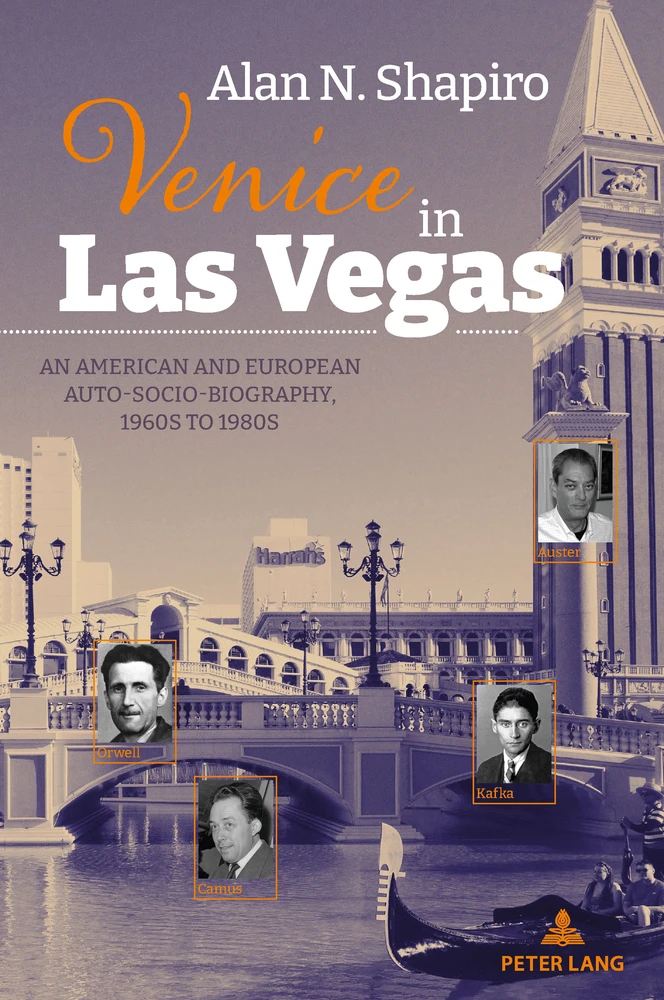
Alan N. Shapiro, author of Venice in Las Vegas
Venice in Las Vegas explores the relationship between two places that might seem worlds apart at first glance. What sparked your interest in examining this connection, and what did you find most fascinating about bringing these two cities into conversation with one another?
“I have spent half my life in the United States and half in Europe, between Italy and Germany. My education and career have also bridged two worlds: computer science and the humanities. My German life partner encouraged me to write an autobiography, saying my life was very unusual, but I did not know where to begin. Then I discovered auto-socio-biography, a genre that had recently gained prominence in literary studies. With my academic background in the sociology of culture, I saw a way to weave the first thirty-five years of my life into an account of the social, cultural, political, and technological changes on both continents from the 1960s through the 1980s. Hyperreality is central to my understanding of America, as I explore in books such as Decoding Digital Culture Through Science Fiction. Las Vegas struck me as an epicenter of this culture of simulation. In the 1990s, casino owners, architects, tourists, and gamblers came to see replicas of European cities such as Venice and Paris as natural settings for hotel-casinos. Donald Trump’s Taj Mahal in Atlantic City, Las Vegas’s East Coast counterpart, reflected the same impulse. In an uncanny parallel, I had won a substantial amount playing blackjack and roulette at a famous historic casino in the “real” Venice while traveling through Europe as a hippie in my early twenties. This mirrored experience sparked a flurry of writing. I introduced a science-fiction element: an imaginary wormhole with underwater entrances linking the two Venices. The resulting book combines literature and cultural theory to explore the relationship between America and Europe. Venice in Las Vegas serves as both a metaphor and a starting point for that inquiry. Some early published reviews have compared my writing to that of Tom Wolfe, Hunter S. Thompson, and Jack Kerouac.”
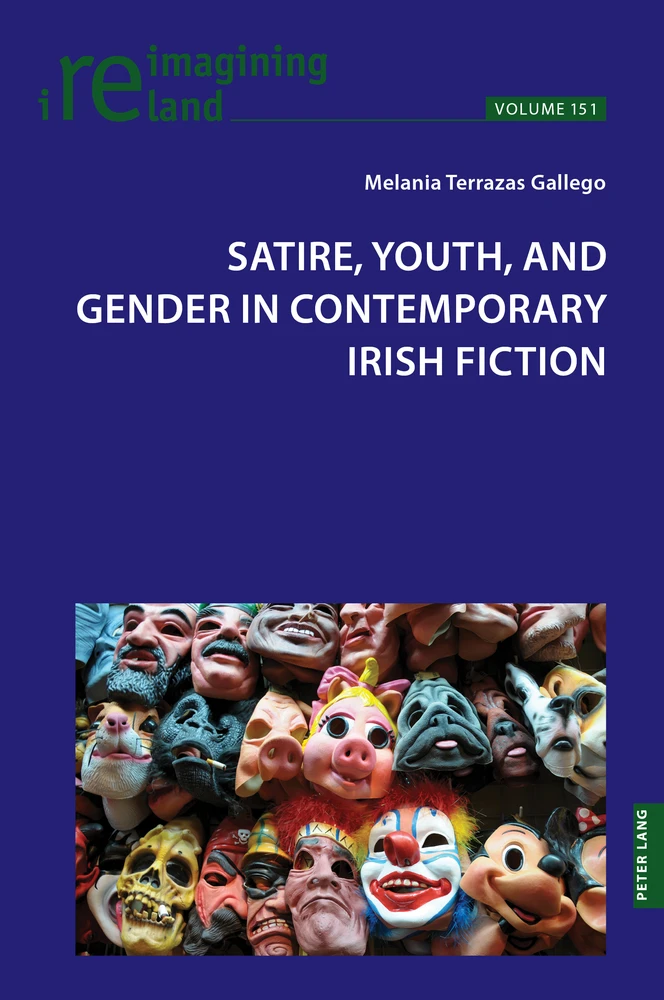
Melania Terrazas Gallego, author of Satire, Youth, and Gender in Contemporary Irish Fiction
Across the writers discussed in your book, satire intersects with questions of gender, sexuality, capitalism, and identity. Were there any recurring patterns or tensions that emerged as particularly significant during your research?
“My investigation of the satirical practice of Patrick McCabe, Emer Martin, Alan McMonagle, and Naoise Dolan spanning over three decades explores tensions, asks questions, and inspires the public with renewed and critical thinking and fresh responses to normative constraints. Such tensions are dialogic and shaped by the contradictory nature of their youngsters’ exchanges with their alter-egos and with other characters. In this regard, their playful language is concerned with how ideas and ways of thinking shape human relationality and action.
“The outrageous principles that motivate the young protagonists’ patterns of conduct and relationships hammer home the artists’ skill in denouncing social functioning, institutions, and certain modes of action and thought in their novels. For example, McCabe’s and Martin’s early novels dramatize the tensions between different consequences of Irish capitalism within their satire precisely because it was the successfully sustained system of economic and political development in since the mid-1950s.
“Finally, the four authors portray youth and gender as part of a power structure and ideology through experimental satirical forms and genres to establish a conversation with the reader and provoke an understanding, a constructive reaction, and an immediate revaluation of the past, present, and future of Ireland and beyond.”
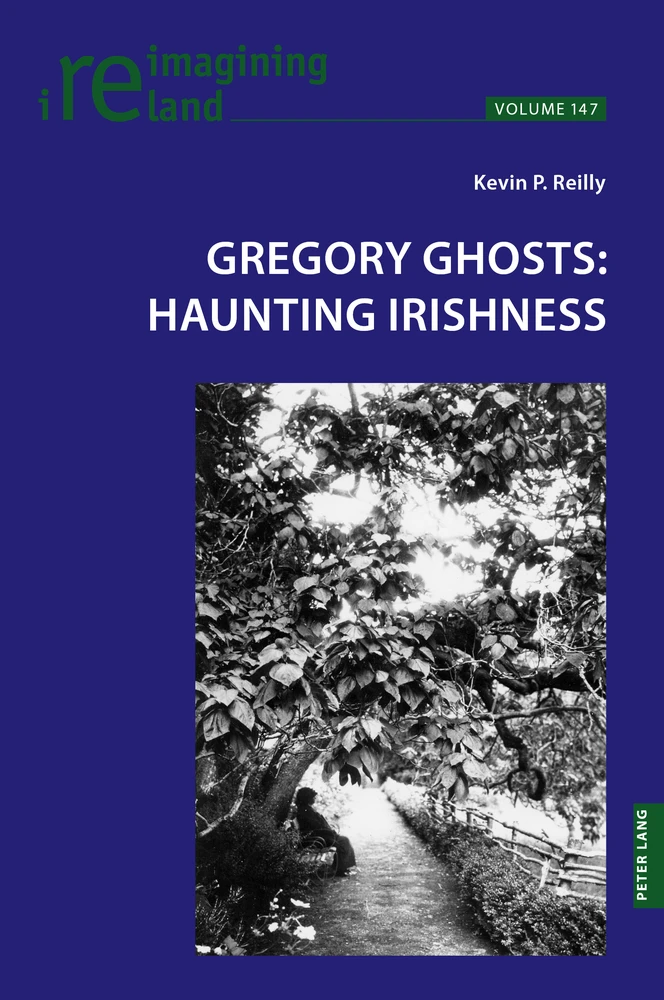
Kevin Reilly, author of Gregory Ghosts: Haunting Irishness
Researching and writing a book that blends historical scholarship with imaginative reconstruction is a unique undertaking. What was your approach to bringing Lady Gregory and her contemporaries to life, and were there any discoveries about these figures that particularly surprised you along the way?
“I wrote the book as a kind of ghost story. It’s about the ghosts of Lady Augusta Gregory and eight of her contemporaries looking back over their lives—and sometimes forward beyond them—to try to make sense of them, their times, and one another. Each chapter is an interior monologue by one of the ghosts. They are talking from beyond the grave with one another, if obliquely, if not directly to one another. These interactions are charged with an enhanced hindsight, and foresight, appropriate to their ghostly personae.
“I did not ‘make up’ any facts about the speakers. What they think about the facts reflects very much what they themselves have written and what credible others have written about them. I shaped what I’ll call their ‘cast of mind’ to project how I believe they might see themselves and others if they knew something of what was to come after their deaths.
“As I cast myself into the minds of the characters, I found myself surprised by how much time I needed to have them confronting the ravages of armed conflict in their day. I should not have been. Lady Gregory herself lived through World War I, the Anglo-Irish War, and the Irish Civil War. Her son Robert was killed in the Royal Flying Corps in 1918. Her nephew Hugh Lane died in the attack on the Lusitania in 1915. She lost six other nephews and one great-nephew in World War I. Her granddaughter Anne’s husband was assassinated during the post-World War II Allied occupation of Italy. Part of the irony, or surprise, in this is how it all plays off against the air of contemplation, creativity, and camaraderie she so ardently cultivated for Irish writers at her Coole Park estate.”
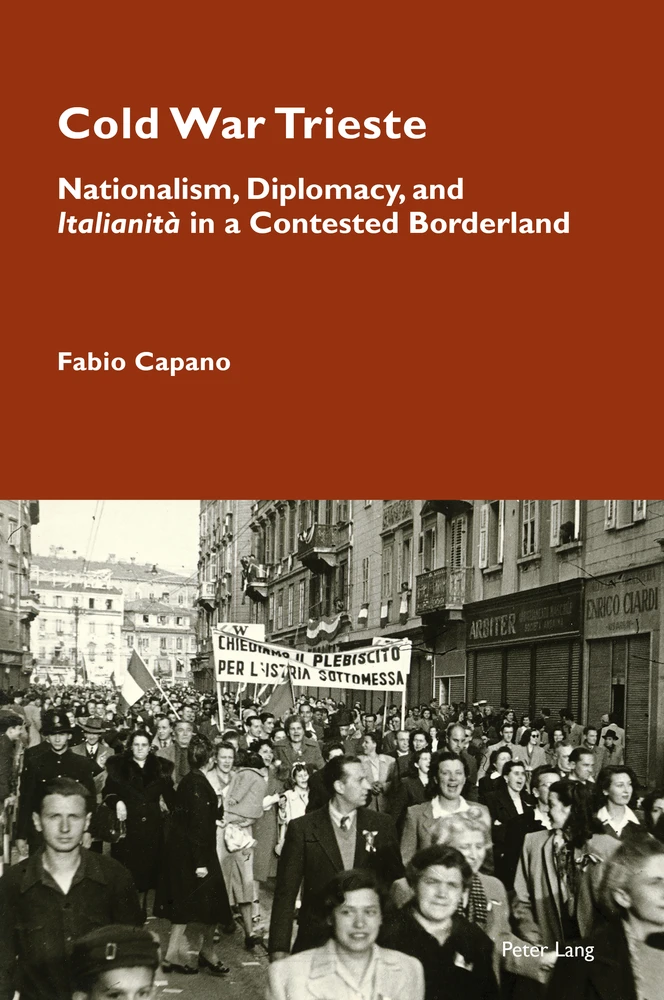
Fabio Capano, author of Cold War Trieste
Trieste occupied a unique position at the crossroads of competing political, national, and ideological interests during the Cold War. What challenges did you face in bringing together the sources and perspectives needed to tell this story, and how did you address them?
“One of the greatest challenges in writing Cold War Trieste was reconstructing a story that unfolded simultaneously at the local, national, and international levels. Trieste was not simply a border city; it was a place where global Cold War rivalries, Italian nation-building, and everyday community experiences intersected. To connect these different scales, I worked across more than twenty state and non-state archives in Italy and the United States, bringing together sources that were often fragmented across national boundaries and shaped by differing institutional priorities.
“A second challenge was the highly politicized nature of the topic. The history of the eastern border, the foibe, and the Istrian exodus has long been interpreted through competing ideological and partisan lenses. Rather than privileging any single narrative, I sought to recover a broader range of perspectives by examining the records of patriotic, émigré, cultural, and political organizations alongside oral interviews with expert observers and leading local political figures.
“The third challenge was historiographical. Both scholarship and public memory have tended to focus on the dramatic years leading to Trieste’s return to Italian administration in 1954, often treating the subsequent decades as an epilogue. Yet the border dispute was not fully resolved until the 1975 Treaty of Osimo, and those intervening years were crucial for understanding how identities, political loyalties, and cross-border relations evolved. Likewise, Cold War history has frequently emphasized superpower imperatives at the expense of local agency.
“To move beyond high diplomacy and geopolitics, I adopted a “political history from below” approach. Alongside extensive archival research, I conducted a granular analysis of more than three decades of newspapers representing the full Italian political spectrum. This allowed me to reconstruct how ordinary people experienced contested sovereignty, displacement, memory, and national belonging, while demonstrating that local actors exercised far more agency in shaping Cold War outcomes than is often assumed.”
Laura Gray-Rosendale and Barbara Gleason, volume editors of Basic Writing in the 21st Century
Bringing together more than thirty contributors, each with their own perspectives on basic writing, presents both opportunities and challenges. How did you go about selecting and coordinating contributors, and what was your approach to shaping the collection into a cohesive volume?
“For many decades, we have each taught graduate students and supervised the work of new teachers at our respective colleges. We were familiar with each other’s work and had even collaborated on a publishing project in the past. So when Laura reached out to invite Barbara to collaborate on a book focused on basic writing, Barbara immediately accepted Laura’s invitation, thereby starting a four-year collaboration that culminated in Basic Writing in the 21st Century.
“Once we began talking, our Table of Contents came together remarkably quickly. We discussed and agreed on the separate sections of our book, starting with a section that focusseon legacy scholars in the field of basic writing. Additional sections include curricula and instruction, student identities, multiliteracies and multilingualism, remote teaching and learning, alternative basic writing classes, LGBTQ perspectives, accessibility, institutional landscapes, and teacher-scholars’ personal narratives. Our understandings of the discipline are quite similar, and—where we differ—our perspectives complement each other astonishingly well.
“After deciding to edit a collection of different authors’ writing, we invited people we knew, scholars’ whose work we viewed as deeply relevant to contemporary writing instruction. We also reached out to people we did not know but whose work we appreciated. We selected people from a wide range of intellectual and institutional contexts. And we invited scholars from diverse cultural backgrounds as well as from many different stages in their careers.
“Key priorities guided us. First, every essay had to be as jargon-free as possible. We believe that unnecessarily obtuse writing tends to get in the way of communicating both simple and complex ideas. Bottom line, the writing must be clear, rigorous, and vivid. Second, every essay had to go through a rigorous editing process. That meant each essay was read by both of us as many as fifteen to twenty times in just the earliest stages and, in some cases, needed to be edited quite substantially before it could make it to the later stages of the process.
“For us, being editors is a tremendously creative process. We are not remotely “hands-off” editors. As dedicated teachers and writers, we treat editing like the real intellectual work we know that it can be–and as a true collaboration between writer and editor.
“Our collection of 33 essays (written by thirty-seven authors) is a source of tremendous pride. We deeply appreciate the attention to detail and careful writing of all the writers who contributed to Basic Writing in the 21st Century. Finally, working together has been a delight for us both—one of the most significant collaborations of our respective professional lives.”
Laima Vincė, volume editor of Heritage, Connection, Writing
Looking back on this collection of conversations with writers across generations of the Lithuanian diaspora, what do you hope readers will take away from these shared experiences of heritage, identity, and cultural memory, and what impact would you like the book to have both within and beyond academia?
“Growing up in the Lithuanian American diaspora shaped my identity and my relationship with storytelling, but perhaps not in the way one would expect. I was fascinating with the stories the elders in our community would not tell. I was shaped by the silences. As a child and young adult, I felt the sadness, the loss, that the World War II generation experienced as exiles, but I also admired their resilience, their resolve not to forget those left behind in Soviet Russian occupied Lithuania. My coming-of-age search for my own Lithuanian identity eventually led to my research on collective memory and historical trauma. I applied the concept of postmemory from Holocaust studies to the Lithuanian historical context of the Holocaust and occupation. Postmemory is at the core of my book, Vanished Lands. When researching Lithuanian diaspora literature in the English language published in North American for Heritage, Connection, Writing, I sought to answer the question: Why do North American writers of Lithuanian and/or Litvak heritage, born, educated, and raised in Canada or the United States, focus the themes of their writing on Lithuania’s historical trauma, postmemory, and the experience of the diaspora? Through deep long-form interviews and literary analysis, I explored the connection between creativity and heritage. That connection is at the core of Heritage, Connection, Writing. Beyond academia, I hope the experience of these writers help readers better understand how intergenerational trauma and collective memory are shaped into creative expression by a diaspora driven out of their homeland through occupation and war. But also how economic migrants pass on heritage even a century after an ancestor emigrated. This knowing can help build understanding of other diaspora groups now living through the same experience. A reviewer of my book commented that each interview reads as a mini drama, a story of a life. Through life stories and literature that evolves from those stories we discover universal human themes that continue to shape us today. The voices of the writers included in this book are relevant beyond the Lithuanian community. First and foremost, these writers are published American and Canadian writers. Heritage, Connection, Writing brings them together for the first time as a literary group. The inclusion of Litvak voices is an important aspect of this book. It is my hope that the wisdom of writers of Litvak descent, like Samuel Bak, who survived the Holocaust in Lithuania, and those who are descendants, like the poet Malachi Black, guide our healing from historical trauma and help rebuild a community that could have been.”