results
-
- Linguistics (69)
- History & Political Science (46)
- Theology & Philosophy (25)
- Science, Society & Culture (21)
- English Studies (16)
- Education (13)
- Media and Communication (11)
- Romance Studies (11)
- German Studies (7)
- The Arts (5)
- Law, Economics & Management (5)
- Slavic Studies (1)
-
-
Kultur und Evolution
1 publications
-
Religions and Discourse
ISSN: 1422-8998
«Religions and Discourse» explores religious language in the major world faiths from various viewpoints, including semiotics, pragmatics and cognitive linguistics, and reflects on how it is situated within wider intellectual and cultural contexts. In particular a key issue is the role of figurative speech. Many fascinating metaphors originate in religion e.g. revelation as a ‘garment’, apostasy as ‘adultery’, loving kindness as the ‘circumcision of the heart’. Every religion rests its specific orientations upon symbols such as these, to name but a few. The series strives after the interdisciplinary approach that brings together such diverse disciplines as religious studies, theology, sociology, philosophy, linguistics and literature, guided by an international editorial board of scholars representative of the aforementioned disciplines. Though scholarly in its scope, the series also seeks to facilitate discussions pertaining to central religious issues in contemporary contexts. The series will publish monographs and collected essays of a high scholarly standard.
64 publications
-
The Age of Revolution and Romanticism
Interdisciplinary StudiesThis series publishes and promotes significant works concerned with a crucial period in European cultural and literary history: from the Enlightenment to the post-revolutionary era. The emphasis is on studies that transcend traditional boundaries between disciplines and that focus on interactions of literature, art, philosophy and politics. This series publishes and promotes significant works concerned with a crucial period in European cultural and literary history: from the Enlightenment to the post-revolutionary era. The emphasis is on studies that transcend traditional boundaries between disciplines and that focus on interactions of literature, art, philosophy and politics. This series publishes and promotes significant works concerned with a crucial period in European cultural and literary history: from the Enlightenment to the post-revolutionary era. The emphasis is on studies that transcend traditional boundaries between disciplines and that focus on interactions of literature, art, philosophy and politics.
32 publications
-
Aufklärung - Vormärz - Revolution
Jahrbuch der Internationalen Forschungsstelle "Demokratische Bewegung in Mitteleuropa 1770-1850" an der Universität Innsbruck8 publications
-
The Modernist Revolution in World Literature
ISSN: 1528-9672
In the stormy time period approximately between the Paris Commune in 1871 and the revolutionary events in May 1968, or between the conclusion of the American Civil War and the withdrawal of American troops from Vietnam, the rise and fall of international modernism was crucial to all historical, political, and intellectual de-velopments around the world. By the time the United States had emerged from its military involvement in Indo-China, the modernist movement had given way to postmodernism. This series investigates the development of international modern-ism in the half century leading up to World War I and its disintegration in the fol-lowing fifty years. High modernism claimed that it represented a break with corrupt values of previous cultural traditions, but we now think that this very drive to make it new is itself derivative. What are the roots and characteristics of modernism? How did the philosophical and pedagogical system supporting modernism develop? Is mod-ernism, perhaps, not a liberating movement but a device to shield high culture from rising democratic vulgarization? What is the role of modernism in postcolonial struggles? Where does feminism fall in the modernist agenda? How do changing systems of patronage and the economy of art influence modernism as an enor-mously expanded reading public becomes augmented by cinema, radio, and televi-sion? Such questions on a worldwide stage, in the century approximately from 1870 to 1970, in all manifestations of literature, art, politics, and culture, represent the scope of this series In the stormy time period approximately between the Paris Commune in 1871 and the revolutionary events in May 1968, or between the conclusion of the American Civil War and the withdrawal of American troops from Vietnam, the rise and fall of international modernism was crucial to all historical, political, and intellectual de-velopments around the world. By the time the United States had emerged from its military involvement in Indo-China, the modernist movement had given way to postmodernism. This series investigates the development of international modern-ism in the half century leading up to World War I and its disintegration in the fol-lowing fifty years. High modernism claimed that it represented a break with corrupt values of previous cultural traditions, but we now think that this very drive to make it new is itself derivative. What are the roots and characteristics of modernism? How did the philosophical and pedagogical system supporting modernism develop? Is mod-ernism, perhaps, not a liberating movement but a device to shield high culture from rising democratic vulgarization? What is the role of modernism in postcolonial struggles? Where does feminism fall in the modernist agenda? How do changing systems of patronage and the economy of art influence modernism as an enor-mously expanded reading public becomes augmented by cinema, radio, and televi-sion? Such questions on a worldwide stage, in the century approximately from 1870 to 1970, in all manifestations of literature, art, politics, and culture, represent the scope of this series In the stormy time period approximately between the Paris Commune in 1871 and the revolutionary events in May 1968, or between the conclusion of the American Civil War and the withdrawal of American troops from Vietnam, the rise and fall of international modernism was crucial to all historical, political, and intellectual de-velopments around the world. By the time the United States had emerged from its military involvement in Indo-China, the modernist movement had given way to postmodernism. This series investigates the development of international modern-ism in the half century leading up to World War I and its disintegration in the fol-lowing fifty years. High modernism claimed that it represented a break with corrupt values of previous cultural traditions, but we now think that this very drive to make it new is itself derivative. What are the roots and characteristics of modernism? How did the philosophical and pedagogical system supporting modernism develop? Is mod-ernism, perhaps, not a liberating movement but a device to shield high culture from rising democratic vulgarization? What is the role of modernism in postcolonial struggles? Where does feminism fall in the modernist agenda? How do changing systems of patronage and the economy of art influence modernism as an enor-mously expanded reading public becomes augmented by cinema, radio, and televi-sion? Such questions on a worldwide stage, in the century approximately from 1870 to 1970, in all manifestations of literature, art, politics, and culture, represent the scope of this series
3 publications
-
-
-
Reform in Revolutionary Times
The Civil-Military Relationship in Early Soviet Russia©2009 Monographs -
-
The Discourses of Dispute Resolution
©2010 Edited Collection -
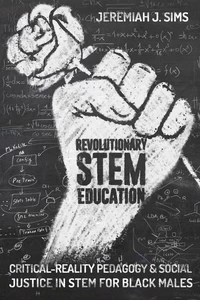
Revolutionary STEM Education
Critical-Reality Pedagogy and Social Justice in STEM for Black Males©2018 Textbook -
-
From Revolutionary Theater to Reactionary Litanies
Gustave Hervé (1871–1944) at the Extremes of the French Third Republic©2016 Monographs -
-
-
Revolutionary Theater and the Classical Heritage
Inheritance and Appropriation from Weimar to the GDR©2007 Monographs -
Negotiating Love in Post-Revolutionary Nicaragua
The role of love in the reproduction of gender asymmetry©2008 Monographs -
The Evolutionary Rhetorical Presidency
Tracing the Changes in Presidential Address and Power©2011 Monographs -
Carlos Bulosan—Revolutionary Filipino Writer in the United States
A Critical Appraisal©2017 Monographs -
Discourses of Violence – Violence of Discourses
Critical Interventions, Transgressive Readings, and Post-National Negotiations©2005 Edited Collection -
-
-
-