results
-
The Modernist Revolution in World Literature
ISSN: 1528-9672
In the stormy time period approximately between the Paris Commune in 1871 and the revolutionary events in May 1968, or between the conclusion of the American Civil War and the withdrawal of American troops from Vietnam, the rise and fall of international modernism was crucial to all historical, political, and intellectual de-velopments around the world. By the time the United States had emerged from its military involvement in Indo-China, the modernist movement had given way to postmodernism. This series investigates the development of international modern-ism in the half century leading up to World War I and its disintegration in the fol-lowing fifty years. High modernism claimed that it represented a break with corrupt values of previous cultural traditions, but we now think that this very drive to make it new is itself derivative. What are the roots and characteristics of modernism? How did the philosophical and pedagogical system supporting modernism develop? Is mod-ernism, perhaps, not a liberating movement but a device to shield high culture from rising democratic vulgarization? What is the role of modernism in postcolonial struggles? Where does feminism fall in the modernist agenda? How do changing systems of patronage and the economy of art influence modernism as an enor-mously expanded reading public becomes augmented by cinema, radio, and televi-sion? Such questions on a worldwide stage, in the century approximately from 1870 to 1970, in all manifestations of literature, art, politics, and culture, represent the scope of this series In the stormy time period approximately between the Paris Commune in 1871 and the revolutionary events in May 1968, or between the conclusion of the American Civil War and the withdrawal of American troops from Vietnam, the rise and fall of international modernism was crucial to all historical, political, and intellectual de-velopments around the world. By the time the United States had emerged from its military involvement in Indo-China, the modernist movement had given way to postmodernism. This series investigates the development of international modern-ism in the half century leading up to World War I and its disintegration in the fol-lowing fifty years. High modernism claimed that it represented a break with corrupt values of previous cultural traditions, but we now think that this very drive to make it new is itself derivative. What are the roots and characteristics of modernism? How did the philosophical and pedagogical system supporting modernism develop? Is mod-ernism, perhaps, not a liberating movement but a device to shield high culture from rising democratic vulgarization? What is the role of modernism in postcolonial struggles? Where does feminism fall in the modernist agenda? How do changing systems of patronage and the economy of art influence modernism as an enor-mously expanded reading public becomes augmented by cinema, radio, and televi-sion? Such questions on a worldwide stage, in the century approximately from 1870 to 1970, in all manifestations of literature, art, politics, and culture, represent the scope of this series In the stormy time period approximately between the Paris Commune in 1871 and the revolutionary events in May 1968, or between the conclusion of the American Civil War and the withdrawal of American troops from Vietnam, the rise and fall of international modernism was crucial to all historical, political, and intellectual de-velopments around the world. By the time the United States had emerged from its military involvement in Indo-China, the modernist movement had given way to postmodernism. This series investigates the development of international modern-ism in the half century leading up to World War I and its disintegration in the fol-lowing fifty years. High modernism claimed that it represented a break with corrupt values of previous cultural traditions, but we now think that this very drive to make it new is itself derivative. What are the roots and characteristics of modernism? How did the philosophical and pedagogical system supporting modernism develop? Is mod-ernism, perhaps, not a liberating movement but a device to shield high culture from rising democratic vulgarization? What is the role of modernism in postcolonial struggles? Where does feminism fall in the modernist agenda? How do changing systems of patronage and the economy of art influence modernism as an enor-mously expanded reading public becomes augmented by cinema, radio, and televi-sion? Such questions on a worldwide stage, in the century approximately from 1870 to 1970, in all manifestations of literature, art, politics, and culture, represent the scope of this series
3 publications
-
Failure: The Humble Narrative of Unsuccessfulness in Late Modernist Fiction
British, Irish and Postcolonial Novels and Stories©2020 Monographs -
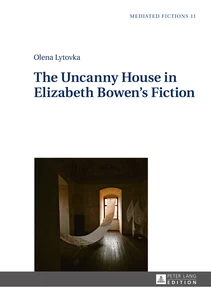
The Uncanny House in Elizabeth Bowen’s Fiction
©2016 Monographs -

-
-

The Modernist Human
The Configuration of Humanness in Stéphane Mallarmé’s "Herodiade</I>, T. S. Eliot’s "Cats</I>, and Modernist Lyrical Poetry©2008 Monographs -
Modernist Translation
An Eastern European Perspective: Models, Semantics, Functions©2016 Monographs -
-
An Apprehensive Aesthetic: The Legacy of Modernist Culture
The Legacy of Modernist Culture©2009 Monographs -
Modernist Visions
Marcel Proust’s «A la recherche du temps perdu» and Jean-Luc Godard’s «Histoire(s) du cinéma»©2012 Monographs -
Beyond the Paradox of the Nostalgic Modernist
Temporality in the Works of J.-K. Huysmans©2004 Monographs -
-
-
Norman Mailer and the Modernist Turn
©2016 Monographs -
-
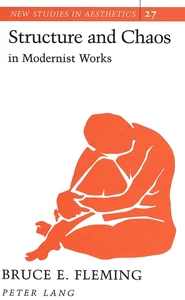
Structure and Chaos in Modernist Works
©1995 Others -
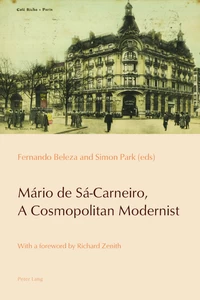
Mário de Sá-Carneiro, A Cosmopolitan Modernist
Edited Collection -
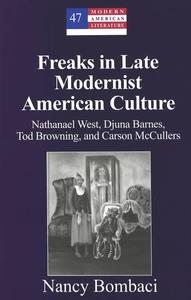
Freaks in Late Modernist American Culture
Nathanael West, Djuna Barnes, Tod Browning, and Carson McCullers©2006 Monographs -
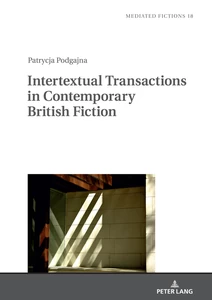
Intertextual Transactions in Contemporary British Fiction
©2021 Monographs