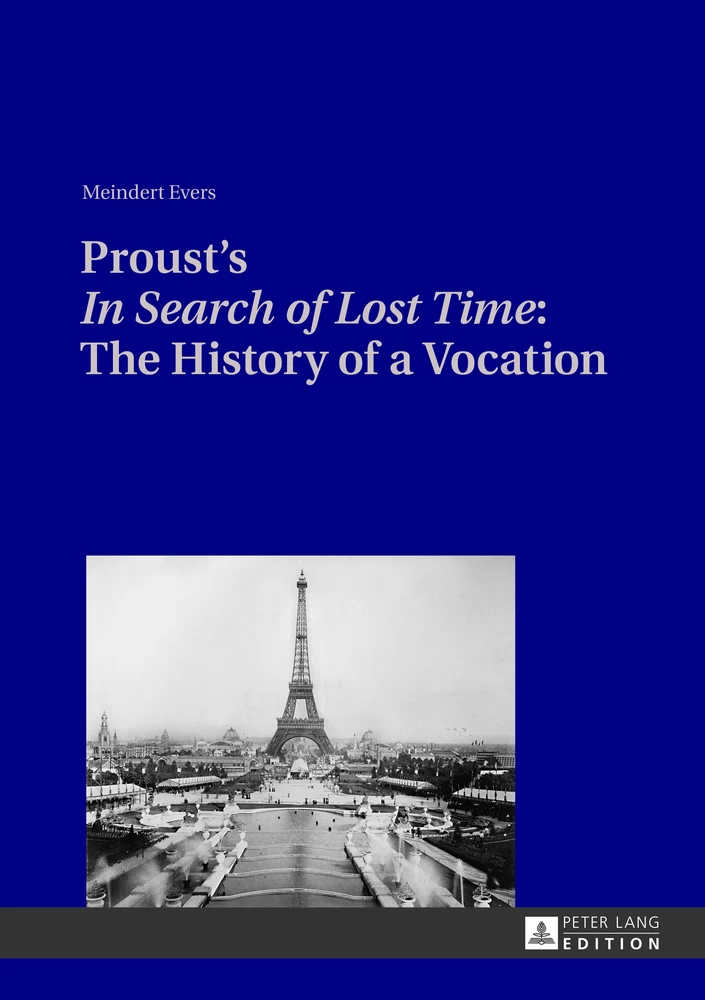
Proust’s «In Search of Lost Time»: The History of a Vocation
©2013
Monographs
206 Pages
Summary
Marcel Proust (1871-1922) grew up in the fin de siècle, a period associated with melancholy and decadence. He knew the temptations of decadence, but freed himself by developing a new conception of art: Perspectivism becomes the aesthetic and philosophical principle of In Search of Lost Time. The novel traces out the path to becoming an artist. It is the history of a «vocation». The main figure is initiated into the hidden beauty of the universe by various artists and by «signs» from his own life, like involuntary memory. A variety of dangers however, lie along the path of the artist. Besides aestheticism, there is the siren call of worldly life which has to be resisted. In the end, art triumphs. For Proust art is not a refuge from life, but the only way to do justice to the modern world. The fascinating and equally disturbing consequence of Proust’s radical conception of art is the complete absence of cultural criticism. An advertisement for soap may contain as much poetry as the Pensées of Pascal.
Details
- Pages
- 206
- Publication Year
- 2013
- ISBN (Hardcover)
- 9783631629314
- ISBN (PDF)
- 9783653031133
- DOI
- 10.3726/978-3-653-03113-3
- Language
- English
- Publication date
- 2013 (May)
- Keywords
- Perspectivism aestheticism conception of art
- Published
- Frankfurt am Main, Berlin, Bern, Bruxelles, New York, Oxford, Wien, 2013. 206 pp.
- Product Safety
- Peter Lang Group AG
