results
-
Ecological Pedagogy, Curriculum and Scholarship
This book series is premised on the ecological understanding that all of education– all of the living fields of knowledge entrusted to teachers and students in schools, all of the gestures of teaching and learning itself – is full of relations, interdependencies, ancestries, places, voices animated by lived and learned experiences. Ecological pedagogy, curriculum and scholarship understands that all living fields of knowledge must be taught and learned as such, with all of their intrinsic and animate rigours, complexities, interrelatedness, and earthly responsibilities. In these ecologically sorrowful times, our individual and collective impulse to raise voices of commiseration and encouragement to those working inside and outside of schools bristles with urgency. And this just at a time when the world also seems to be churning with increasing distractions and fakeries whose beneficiaries are not of this earth. Schools and schooling are caught up in ongoing yet ever-shifting inheritances of place and displacement, privilege, colonialism, gender and so on. They are also subject to legacies of indiscriminate standardization, efficiency, fragmentation and all of the ramped-up, exhausting and exhausted distractions of our current age. Education often drags along with its tenacious legacies of thinking and practice that are mostly silent, often silencing, simply taken for granted as just the way things are. Schooling itself, in so many quarters, has become an ecological disaster. Many teachers have studied and voiced these matters, while pursuing more venturous, ecologically sound work in their classroom, all this in deliberate resistance to the marginalization of such work. The series invites scholarly, enlivening and healing ways of researching and writing that attempt to live up to the ecologies of the topics themselves, each in their own ways and languages, each laden with their own ancestries, troubles, and insights – eco-hermeneutics, interpretive research, poetic inquiry, autobiographical and life writing, currere, Indigenous research, arts-based inquiry, storytelling and emergent ways and means of knowing. None of these are merely methodologies. Each involves myriad encounters, myriad relationships, myriad possibilities. In trying to find the measure of what is written within the things written about, these ways are in themselves ecological and pedagogical. They are locales where our relations are worked out, our songs are sung, our silences are shared, and our individual and collective stories are lived, contested, shaped and re-told. The logo for this book series is a Celtic Knot drawn by Eric Jardine in 1992. It became the cover illustration of a self-published book that year. It is a reminder of how long-standing is this current stream of work in education, stretching far back from there. These stretches are part of the ecological imagination itself. This book series is premised on the ecological understanding that all of education– all of the living fields of knowledge entrusted to teachers and students in schools, all of the gestures of teaching and learning itself – is full of relations, interdependencies, ancestries, places, voices animated by lived and learned experiences. Ecological pedagogy, curriculum and scholarship understands that all living fields of knowledge must be taught and learned as such, with all of their intrinsic and animate rigours, complexities, interrelatedness, and earthly responsibilities. In these ecologically sorrowful times, our individual and collective impulse to raise voices of commiseration and encouragement to those working inside and outside of schools bristles with urgency. And this just at a time when the world also seems to be churning with increasing distractions and fakeries whose beneficiaries are not of this earth. Schools and schooling are caught up in ongoing yet ever-shifting inheritances of place and displacement, privilege, colonialism, gender and so on. They are also subject to legacies of indiscriminate standardization, efficiency, fragmentation and all of the ramped-up, exhausting and exhausted distractions of our current age. Education often drags along with its tenacious legacies of thinking and practice that are mostly silent, often silencing, simply taken for granted as just the way things are. Schooling itself, in so many quarters, has become an ecological disaster. Many teachers have studied and voiced these matters, while pursuing more venturous, ecologically sound work in their classroom, all this in deliberate resistance to the marginalization of such work. The series invites scholarly, enlivening and healing ways of researching and writing that attempt to live up to the ecologies of the topics themselves, each in their own ways and languages, each laden with their own ancestries, troubles, and insights – eco-hermeneutics, interpretive research, poetic inquiry, autobiographical and life writing, currere, Indigenous research, arts-based inquiry, storytelling and emergent ways and means of knowing. None of these are merely methodologies. Each involves myriad encounters, myriad relationships, myriad possibilities. In trying to find the measure of what is written within the things written about, these ways are in themselves ecological and pedagogical. They are locales where our relations are worked out, our songs are sung, our silences are shared, and our individual and collective stories are lived, contested, shaped and re-told. The logo for this book series is a Celtic Knot drawn by Eric Jardine in 1992. It became the cover illustration of a self-published book that year. It is a reminder of how long-standing is this current stream of work in education, stretching far back from there. These stretches are part of the ecological imagination itself.
3 publications
-

-
-
Politics, Patriotism and Language
Niccolò Machiavelli’s «Secular Patria» and the Creation of an Italian National Identity©2005 Monographs -
The Ecological Vision of J.M.G. Le Clézio
©2024 Monographs -
The Ecological Heart of Teaching
Radical Tales of Refuge and Renewal for Classrooms and Communities©2016 Textbook -
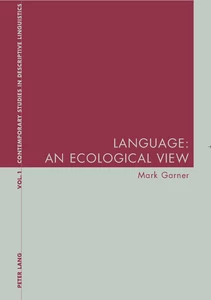
Language: An Ecological View
©2004 Monographs -
-
-
-

America’s Unpatriotic Acts
The Federal Government’s Violation of Constitutional and Civil Rights©2006 Textbook -

American Patriotism and Corporate Identity in Automobile Advertising
«What’s Good for General Motors Is Good for the Country and Vice Versa?»©2019 Thesis -
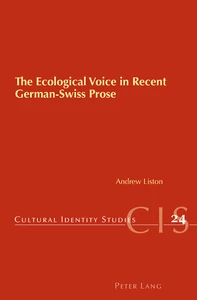
The Ecological Voice in Recent German-Swiss Prose
©2011 Monographs -
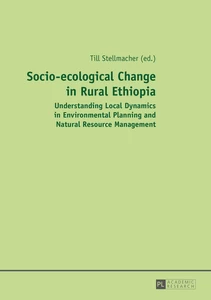
Socio-ecological Change in Rural Ethiopia
Understanding Local Dynamics in Environmental Planning and Natural Resource Management©2015 Conference proceedings -
-

Heinrich Schütz (1585-1672): Kulturpatriotismus und deutsche weltliche Vokalmusik
«Zum Auffnehmen der Music / auch Vermehrung unserer Nation Ruhm»©2004 Thesis -
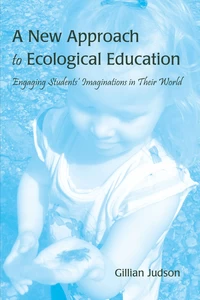
A New Approach to Ecological Education
Engaging Students’ Imaginations in Their World©2010 Textbook -
-
Peter Matthiessen and Ecological Imagination
©2010 Monographs -
GM-Crop Cultivation – Ecological Effects on a Landscape Scale
Proceedings of the Third GMLS Conference 2012 in Bremen©2013 Edited Collection -
Madness in the Woods: Representations of the Ecological Uncanny
©2020 Edited Collection -
-
Towards an Ethical-ecological Assessment of Companies in Nigeria
An Empirical Inquiry into the Relevance or Otherwise of the Frankfurt-Hohenheim Guidelines for the Ethical Assessment of Companies in the Nigerian Context- A Case of the Nigerian Microfinance Banking Sector©2012 Thesis