results
-
- History & Political Science (41)
- Linguistics (24)
- Science, Society & Culture (24)
- Theology & Philosophy (20)
- Law, Economics & Management (16)
- Education (13)
- English Studies (11)
- Romance Studies (10)
- Media and Communication (9)
- German Studies (6)
- The Arts (4)
- Slavic Studies (1)
-
New Approaches to Applied Linguistics
This series provides an outlet for academic monographs and edited volumes that offer a contemporary and original contribution to applied linguistics. Applied linguistics is understood in a broad sense, to encompass language pedagogy and second-language learning, discourse analysis, bi- and multilingualism, language policy and planning, language use in the internet age, lexicography, professional and organisational communication, literacies, forensic linguistics, pragmatics, and other fields associated with solving real-life language and communication problems. Interdisciplinary contributions, and research that challenges disciplinary assumptions, are particularly welcomed. The series does not impose limitations in terms of methodology or genre and does not support a particular linguistic school. Whilst the series volumes are of a high scholarly standard, they are intended to be accessible to researchers in other fields and to the interested general reader. New Approaches to Applied Linguistics is based at the Centre for Language Assessment Research, University of Roehampton.
3 publications
-
Kultur und Evolution
1 publications
-
Theoretical Approaches in Second Language Acquisition
1 publications
-
Plants and Animals Interdisciplinary Approaches
0 publications
-
The Age of Revolution and Romanticism
Interdisciplinary StudiesThis series publishes and promotes significant works concerned with a crucial period in European cultural and literary history: from the Enlightenment to the post-revolutionary era. The emphasis is on studies that transcend traditional boundaries between disciplines and that focus on interactions of literature, art, philosophy and politics. This series publishes and promotes significant works concerned with a crucial period in European cultural and literary history: from the Enlightenment to the post-revolutionary era. The emphasis is on studies that transcend traditional boundaries between disciplines and that focus on interactions of literature, art, philosophy and politics. This series publishes and promotes significant works concerned with a crucial period in European cultural and literary history: from the Enlightenment to the post-revolutionary era. The emphasis is on studies that transcend traditional boundaries between disciplines and that focus on interactions of literature, art, philosophy and politics.
32 publications
-
Aufklärung - Vormärz - Revolution
Jahrbuch der Internationalen Forschungsstelle "Demokratische Bewegung in Mitteleuropa 1770-1850" an der Universität Innsbruck8 publications
-
ALPH: Arbeiten zur Literarischen Phantastik / ALPH: Approaches to Literary Phantasy
This series has been terminated after vol. 9. ALPH: in Coleridges poem Kubla Khan, this is a subterranean river based on the Greek Alphaios, which connects different worlds and thus creates new spaces in secret and surprising ways. The title Alph thus stands for works of fantastic literature/phantasy to which this series devotes new and exciting studies, from all ranges of anglophone writing, but also from other languages. Interdisciplinary and comparative studies are particularly welcome. Band 9 schließt diese Reihe ab. ALPH: In Coleridges Gedicht Kubla Khan ist dies ein unterirdischer Fluss, dem griechischen Alphaios entlehnt, der verschiedene Welten verbindet und dabei auf phantastische Weise neue Räume aufdeckt. Darum geht es in den Büchern dieser Reihe, in der neue Studien zur phantastischen Literatur erscheinen, insbesondere, aber nicht nur, der englischsprachigen Welt. Interdisziplinäre und komparatistische Arbeiten sind besonders willkommen.
9 publications
-
The Modernist Revolution in World Literature
ISSN: 1528-9672
In the stormy time period approximately between the Paris Commune in 1871 and the revolutionary events in May 1968, or between the conclusion of the American Civil War and the withdrawal of American troops from Vietnam, the rise and fall of international modernism was crucial to all historical, political, and intellectual de-velopments around the world. By the time the United States had emerged from its military involvement in Indo-China, the modernist movement had given way to postmodernism. This series investigates the development of international modern-ism in the half century leading up to World War I and its disintegration in the fol-lowing fifty years. High modernism claimed that it represented a break with corrupt values of previous cultural traditions, but we now think that this very drive to make it new is itself derivative. What are the roots and characteristics of modernism? How did the philosophical and pedagogical system supporting modernism develop? Is mod-ernism, perhaps, not a liberating movement but a device to shield high culture from rising democratic vulgarization? What is the role of modernism in postcolonial struggles? Where does feminism fall in the modernist agenda? How do changing systems of patronage and the economy of art influence modernism as an enor-mously expanded reading public becomes augmented by cinema, radio, and televi-sion? Such questions on a worldwide stage, in the century approximately from 1870 to 1970, in all manifestations of literature, art, politics, and culture, represent the scope of this series In the stormy time period approximately between the Paris Commune in 1871 and the revolutionary events in May 1968, or between the conclusion of the American Civil War and the withdrawal of American troops from Vietnam, the rise and fall of international modernism was crucial to all historical, political, and intellectual de-velopments around the world. By the time the United States had emerged from its military involvement in Indo-China, the modernist movement had given way to postmodernism. This series investigates the development of international modern-ism in the half century leading up to World War I and its disintegration in the fol-lowing fifty years. High modernism claimed that it represented a break with corrupt values of previous cultural traditions, but we now think that this very drive to make it new is itself derivative. What are the roots and characteristics of modernism? How did the philosophical and pedagogical system supporting modernism develop? Is mod-ernism, perhaps, not a liberating movement but a device to shield high culture from rising democratic vulgarization? What is the role of modernism in postcolonial struggles? Where does feminism fall in the modernist agenda? How do changing systems of patronage and the economy of art influence modernism as an enor-mously expanded reading public becomes augmented by cinema, radio, and televi-sion? Such questions on a worldwide stage, in the century approximately from 1870 to 1970, in all manifestations of literature, art, politics, and culture, represent the scope of this series In the stormy time period approximately between the Paris Commune in 1871 and the revolutionary events in May 1968, or between the conclusion of the American Civil War and the withdrawal of American troops from Vietnam, the rise and fall of international modernism was crucial to all historical, political, and intellectual de-velopments around the world. By the time the United States had emerged from its military involvement in Indo-China, the modernist movement had given way to postmodernism. This series investigates the development of international modern-ism in the half century leading up to World War I and its disintegration in the fol-lowing fifty years. High modernism claimed that it represented a break with corrupt values of previous cultural traditions, but we now think that this very drive to make it new is itself derivative. What are the roots and characteristics of modernism? How did the philosophical and pedagogical system supporting modernism develop? Is mod-ernism, perhaps, not a liberating movement but a device to shield high culture from rising democratic vulgarization? What is the role of modernism in postcolonial struggles? Where does feminism fall in the modernist agenda? How do changing systems of patronage and the economy of art influence modernism as an enor-mously expanded reading public becomes augmented by cinema, radio, and televi-sion? Such questions on a worldwide stage, in the century approximately from 1870 to 1970, in all manifestations of literature, art, politics, and culture, represent the scope of this series
3 publications
-
-
On Four Approaches to Density
©2014 Monographs -
-
Media with its news, approaches and fractions in the new media age
©2018 Edited Collection -
Approaches to Homer’s «Iliad» and «Odyssey»
©2010 Monographs -
-
-
-
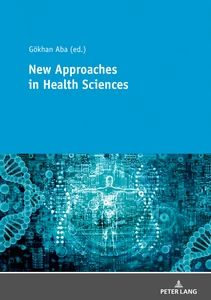
New Approaches in Health Sciences
New Methods and Developments in Health Sciences©2019 Edited Collection -
-
-
Current Approaches in Social Sciences
©2016 Edited Collection -
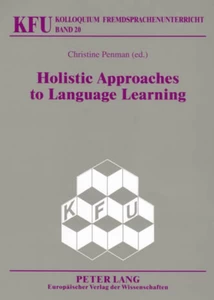
Holistic Approaches to Language Learning
©2003 Conference proceedings -
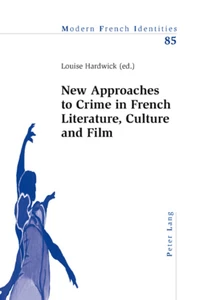
New Approaches to Crime in French Literature, Culture and Film
©2009 Conference proceedings -
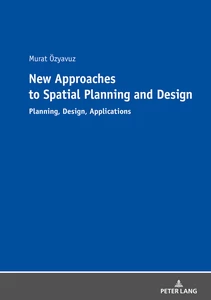
New Approaches to Spatial Planning and Design
Planning, Design, Applications©2019 Edited Collection -
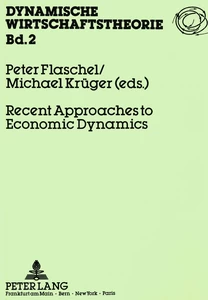
Recent Approaches to Economic Dynamics
Conference Volume (Bielefeld: 7-9th October, 1987)©1988 Edited Collection -
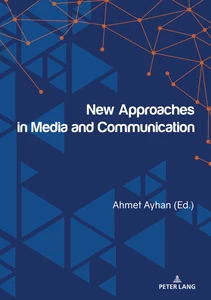
New Approaches in Media and Communication
©2019 Edited Collection