results
-
- History & Political Science (74)
- Science, Society & Culture (36)
- Education (24)
- English Studies (23)
- Theology & Philosophy (18)
- Media and Communication (17)
- Law, Economics & Management (16)
- German Studies (7)
- Linguistics (7)
- Romance Studies (6)
- The Arts (4)
- Slavic Studies (2)
-
Eratosthene
0 publications
-
Post-Anthropocentric Inquiry
In recent years, critical researchers, educators, and activists have become aware of the problems and limitations that have resulted by placing the ‘human’ at the center of all societal conceptualizations, concerns, and practices. Across fields, ranging from medical research laboratory practices—to the construction of the humanities—to the social sciences—to environmental studies (just to name a few), this anthropocentric focus is being called to question. The goal of this book series is to provide scholars and readers with critical opportunities to contest this anthropocentrism, (1) by creating a textual field of Post-Anthropocentric Inquiry that generates critical spaces for (re)thinking philosophies, knowledges, and ways of being/living and performing, as well as methodologies and inquiries, that decenter the human, (2) while at the same time attempting always/already to actively transform inequities and injustices performed by human privilege on nonhuman others, traditionally disqualified human others, and the natural world more broadly. This Post-Anthropocentric Inquiry can represent difference and the multiple, while at the same time exploring and welcoming notions of indistinction. Work that further develops and expands current notions of becoming (animal, earth), new feminist materialisms, critical posthuman sensibilities, hybrid existences (past and present) are example locations from which an intersectional, non-anthropocentric politics may emerge. Additionally, post-anthropocentric inquiry and activism will always include the unthought, not-yet-considered modes of living, thinking, research while critically acknowledging that alternatives can create new dualisms, new forms of human privilege, and are not always liberatory for those labeled not human or for those human beings who have traditionally been marginalized. Further, post-anthropocentric scholarship acknowledges, and attempts to (1) transform, the current post-anthropocentric predicament that facilitates neoliberal capitalism as all forms of life, matter, and relations have been/are constructed to serve market economies, and (2) examine the unprecedented human/nonhuman interaction with the increasingly intrusive and intimate technological order. Post-anthropocentric inquiry is necessary as related to these contemporary aggressive, and all-encompassing post-human conditions. Single or multiple authored manuscripts are encouraged that facilitate the development of Post-Anthropocentric Inquiry by addressing one issue, multiple issues, research purposes, methodologies, and/or forms of activism. Over a wide range of volumes that cross disciplines, the series will address broad issues, as mentioned above, and questions like the following: What is post-anthropocentric inquiry? What is made possible, enabled by post-anthropocentric approaches and research methodologies? How is post-anthropocentric research conducted without (re)privileging the human? How does the work in fields that would decenter the human, like critical animal studies, intersect with professional content and practices in fields like education or medicine? How can coalitions be formed (and actions taken) that decenter the human and increase possibilities for all forms of justice, while countering capitalist and technological orders that devalue all forms of life? Interested authors should contact Gaile S. Cannella, gaile.cannella@gmail.com
2 publications
-
(Post-)Critical Global Childhood & Youth Studies
This book series focuses on post-critical research in global childhood & youth studies and education. It aims to trace the stimulating exchange of ideas on contemporary issues affecting children and young people around the world, while exploring possibilities for local and global social change. The intent is to situate, and possibly deconstruct, the systems of reasoning that govern human development and education, including deconstructing predominant critical paradigms. The series encourages innovative writing formats as well as novel theoretical and methodological approaches to co-producing knowledge in fields such as: urban, rural, and indigenous childhood & youth; child poverty and social policy, ecology and youth activism; immigration & social and educational inequalities; the experience of schooling and machine learning in diverse contexts of global education. It is addressed to relevant scholars and students as well as to policy makers, educators, and youth workers from all over the world. If you are interested to publish a monograph or an edited book with this Book Series, please contact your respective local series editor: Brazil: Prof. Márcia Amador-Mascia, Universidade São Francisco: marciaaam@uol.com.br Spanish-speaking Latin America: Prof. Silvia Grinberg, Consejo Nacional de Investigaciones Científicas y Técnicas, Argentina: grinberg.silvia@gmail.com Asian countries: Ass. Prof. Hongyan Chen, East China Normal University, Shanghai: chenhongyanup@126.com Rest of world: Prof. Michalis Kontopodis, University of Leeds: mkontopodis@pm.me
7 publications
-
Histoire des Échanges, Communications, Postes et Territoires / History of the Exchanges, Communications, Post Offices and Territories
Échanges et territoires / Exchanges and TerritoriesThe Postal Service, guardian of a French-styled public service, has become, under the influence of Europe, a universal service, and by its history and by its roots in its environment, presents an opportunity to reflect on the manner in which traditional and contemporary societies have resolved the issues of communication, exchanges and control of territories. Thanks to the Committee for the history of the Post-Office, researchers in the humanities and social sciences have been allowed to reflect on its past and to shed light on the changes in the societies linked within its network. Thus, now active for nearly two decades, the committee has encouraged and promoted research on the Postal Service, its «tools/instruments» of exchanges, its diplomatic agents, its politics, economy, culture and even its land settlements, without forgetting its legislative and legal aspects. This series brings together work – doctorates, acts of symposia, biographies, testimonials – in French and in English, that specifically deal with the Post-Office and, more broadly, of the problems of commerce, communications and the control of territories. It is a platform for critical analyses of a world in perpetual motion. All the publications in this collection are subject to double peer review. Gardienne d’un service public à la française devenu, sous l’influence de l’Europe, un service universel, la Poste, par son histoire et par son ancrage dans son environnement, permet de réfléchir sur la façon dont les sociétés traditionnelles et contemporaines ont résolu les questions de communication, d’échanges et de maîtrise des territoires. Grâce au Comité pour l’Histoire de la Poste, il est donné aux chercheurs en sciences humaines et sociales à réfléchir sur son passé et à éclairer les mutations des sociétés qu’elle relie grâce à son réseau. Ainsi, actif depuis plus de deux décennies, le comité suscite et encourage les recherches sur les Postes, « outils/instruments » d’échanges, et aussi agent de la diplomatie, de la politique, de l’économie, de la culture ou encore de l’aménagement des territoires, sans oublier les aspects législatifs et juridiques. Cette collection rassemble les travaux – doctorats, actes de colloques, biographies, témoignages –, en français et en anglais, traitant spécifiquement de la Poste/des postes et, de façon plus large, des problématiques des échanges, des communications et de la maîtrise des territoires. Elle se veut une plateforme d’analyses critiques d’un monde en perpétuel mouvement. Toutes les publications de cette collection sont soumises à une double évaluation à l’aveugle.
16 publications
-
Language in the Digital Age / Las lenguas en la era digital
ISSN: 2940-9306
In an increasingly digital world, language is evolving at a rapid pace and new forms of communication and learning are coming into being. Books published in the series Language in the Digital Age / Las lenguas en la era digital explore various aspects of digital linguistics, ranging from natural language processing to translation, transcreation, and discourse analysis. The series is aimed at linguists and practitioners interested in the fascinating and complex ways in which language and technology intersect, and in how this intersection is transforming human interaction in the digital age. Each volume of the series provides readers with a detailed and accessible introduction to the key concepts and techniques in the field, as well as the latest research and developments. The books are written by leading experts in the field and are designed to serve as a comprehensive guide for beginners and a valuable resource for advanced research. En un mundo cada vez más digital, el lenguaje evoluciona a gran velocidad y, con ello, emergen nuevas formas de comunicación y aprendizaje. Los títulos de la colección Las lenguas en la era digital versan sobre diversos ámbitos de la lingüística digital, desde el procesamiento del lenguaje natural hasta la traducción, la transcreación y el análisis del discurso. Esta serie está dirigida a académicos y profesionales de la lingüística interesados en las complejas formas en que convergen lengua y tecnología, y en cómo esta confluencia está transformando la interacción humana en la era digital. Cada volumen de la colección presenta de forma detallada y accesible los conceptos y las técnicas clave, así como las últimas investigaciones y avances en este campo. Los libros, escritos por expertos en la materia, se encuentran diseñados para servir tanto de guía para principiantes como de referente para investigadores experimentados Editorial Board: Carolyn Blume (Technische Universität Dortmund), Karen Miladys Cárdenas Almanza (Universidad Nacional Autónoma de México), Ron Darvin (The University of British Columbia), Óscar Ferreiro Vázquez (Universidade de Vigo), Jesús García Laborda (Universidad de Alcalá), María de los Ángeles Gómez González (Universidade de Santiago de Compostela), Andréia Guerini (Universidade Federal de Santa Catarina), Chuah Kee Man (Universiti Malaysia Sarawak), Blanka Klímová (Univerzita Hradec Králové), Javier Pérez Guerra (Universidade de Vigo), Miguel Luís Poveda Balbuena (Uniwersytet Komisji Edukacji Narodowej w Krakowie), Nino Angelo Rosanía Maza (Universidad de San Buenaventura), William Rowlandson (University of Kent), Giselle Spiteri Miggiani (L-Università ta' Malta), Chelo Vargas Sierra (Universidad de Alicante), José Yuste Frías (Universidade de Vigo), Juan Miguel Zarandona Fernández (Universidad de Valladolid).
6 publications
-

China's Interest in Central Asia
Economic Cooperation, Energy Security, and the Impact of the Belt and Road Initiative©2026 Monographs -

China's Interest in Central Asia
Economic Cooperation, Energy Security, and the Impact of the Belt and Road Initiative©2026 Monographs -
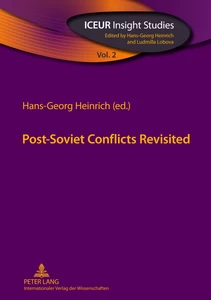
Post-Soviet Conflicts Revisited
©2013 Others -
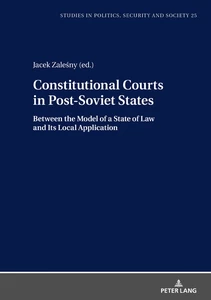
Constitutional Courts in Post-Soviet States
Between the Model of a State of Law and Its Local Application©2019 Edited Collection -
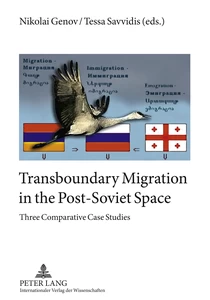
Transboundary Migration in the Post-Soviet Space
Three Comparative Case Studies©2011 Edited Collection -
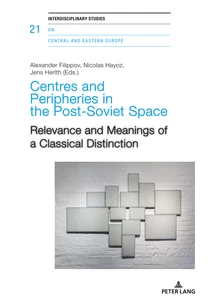
Centres and Peripheries in the Post-Soviet Space
Relevance and Meanings of a Classical Distinction©2020 Edited Collection -
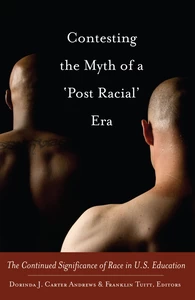
Contesting the Myth of a ‘Post Racial’ Era
The Continued Significance of Race in U.S. Education©2013 Textbook -
-
-
Literature, History and Identity in Post-Soviet Russia, 1991-2006
©2007 Monographs -
-
-
Agricultural Knowledge and Knowledge Systems in Post-Soviet Societies
©2016 Edited Collection -
The European Commission in the Post-Lisbon Era of Crises
Between Political Leadership and Policy Management©2013 Edited Collection -
-
-
-
New Communication in the Post-Pandemic Era: Media, Education, and Information
©2021 Edited Collection -
-
Negotiating Linguistic, Cultural and Social Identities in the Post-Soviet World
©2013 Edited Collection