results
-
Économie et histoire
De 2007 à 2011, le Comité pour l’Histoire Économique et Financière de la France du ministère de l’Économie, des Finances et de l’Emploi et du ministère du Budget, des Comptes publics et de la Fonction publique, a entretenu la collection « Économie et Histoire », dont la direction est à présent vacante. La collection contribue à la diffusion des savoirs en histoire économique et en économie. Les ouvrages concernent toutes les périodes depuis le Moyen Âge jusqu’à nos jours. Cette collection a pour vocation d’accueillir les travaux d’auteurs français mais aussi étrangers, de chercheurs reconnus ou de jeunes universitaires ainsi que d’acteurs de la vie économique et financière, sous forme de monographies ou d’actes de colloques. De 2007 à 2011, le Comité pour l’Histoire Économique et Financière de la France du ministère de l’Économie, des Finances et de l’Emploi et du ministère du Budget, des Comptes publics et de la Fonction publique, a entretenu la collection « Économie et Histoire », dont la direction est à présent vacante. La collection contribue à la diffusion des savoirs en histoire économique et en économie. Les ouvrages concernent toutes les périodes depuis le Moyen Âge jusqu’à nos jours. Cette collection a pour vocation d’accueillir les travaux d’auteurs français mais aussi étrangers, de chercheurs reconnus ou de jeunes universitaires ainsi que d’acteurs de la vie économique et financière, sous forme de monographies ou d’actes de colloques.
5 publications
-
Économie sociale et Économie publique / Social Economy and Public Economy
ISSN: 2030-3408
This «Social Economy & Public Economy» series brings together books and monographs with a common focus: the analysis of the economic activities of formal and informal organisations that aim to serve the «public/general interest» or broad «common welfare» of their societies. Diverse initiatives and a wide variety of organisational forms are concerned: public or private nonprofit organisations and services, social services, public utilities, regulatory rules and actions, public enterprises, local community and regional economic development bodies, cooperatives, mutualist enterprises, etc. The series aims to promote a more scientific, and in-depth international and comparative understanding of this type of research that has been rapidly expanding in recent years. The series will reflect about these developments and through its dissemination, it will also support the increasing inter-disciplinarity and multi-disciplinarity of much of this recent research (e.g. economics, sociology, political science, law, policy evaluation and policy analysis, etc.) Editorial responsibility for the series resides with CIRIEC, an international scientific organisation that promotes, supports and disseminates research on the public economy, the social economy, and cooperatives. One of CIRIEC’s key goals and activities is the promotion, support, and expansion of a large international network of researchers who specialise in these issues. This series will allow the publication of work by members of this network as well as providing an outlet for any related research work by other people outside the existing CIRIEC network. La collection « Économie sociale & Économie publique » rassemble des ouvrages proposant, dans une perspective de comparaison internationale, des analyses des organisations et des activités économiques orientées vers l’intérêt général et l’intérêt collectif : services sociaux, services publics, régulation, entreprises publiques, action économique des entités territoriales (régions, autorités locales), coopératives, mutuelles, associations, ... Dans un contexte de « grande transformation », l’activité scientifique dans ce domaine s’y est fortement développée et la collection se veut un nouveau vecteur de diffusion et de valorisation de cette activité dans une approche pluridisciplinaire (économie, sciences sociales, droit, sciences politiques, ...). La collection est placée sous la responsabilité éditoriale du CIRIEC. Organisation internationale à but scientifique, le CIRIEC a pour objet la réalisation et la diffusion de la recherche sur l’économie publique et l’économie sociale et coopérative. Une de ses principales activités est l’animation d’un vaste réseau international de chercheurs dans ces domaines. La collection permet de publier des ouvrages réalisés par les membres de ce réseau, mais est aussi ouverte à des personnes extérieures à ce réseau.
7 publications
-
-
Komplexe Systeme und Ökonomie
Entwicklungen in der Wirtschaft sind häufig durch Diskontinuitäten, Sprünge und Turbulenzen gekennzeichnet. Wirtschaft und auf Wirtschaft bezogene Teilbereiche können somit als nicht-lineare, dynamische bzw. komplexe Systeme aufgefasst werden. Um diese nicht-linearen Erscheinungen zu modellieren und zu erklären, muss nach neuen Verfahren auf dem Gebiet komplexer dynamischer Systeme geforscht werden. Ein viel versprechender Ansatz ist die Theorie Komplexer Systeme, die im Wesentlichen die Chaos- und Katastrophentheorie, aber auch die Synergetik umfasst. Die Reihe will neue Forschungsfelder im Rahmen der Wirtschaftswissenschaft und ihrer Didaktik darlegen. Sie will die Möglichkeiten der Theorie Komplexer Systeme an Beispielen diskutieren, kritisch analysieren und weiterentwickeln. Dabei können sowohl die inhaltliche, die methodische sowie die mediale Perspektive als auch die Zielebene (ökonomische Bildung) kritisch und konstruktiv thematisiert werden. Homepage des Herausgebers: Prof. Dr. Andreas Liening
3 publications
-
Minderheiten und Autonomien
Eurac Research SchriftenreiheDie Forschungseinrichtung Eurac Research setzt sich seit vielen Jahren mit den Themen Minderheitenschutz und Autonomie auseinander. Während die Südtiroler Autonomie hierfür den Ausgangspunkt bildet, wird insbesondere auch vergleichende Forschung betrieben. Dabei richtet sich das Interesse nicht nur auf Europa, sondern bezieht ebenso globale Entwicklungen in Richtung Föderalismus, Regionalismus und Autonomiekonzepte zur Konfliktbefriedung mit ein. Eurac Research bemüht sich, Fragen des Zusammenlebens und der Selbstverwaltung zu erforschen und Lösungsvorschläge für Fragen rund um Minderheitenschutz und Autonomie zu geben. Dabei werden klassische Föderalismustheorien mit modernen Ansätzen im Umgang mit territorialer und ethnischer Vielfalt kombiniert. Bände 1 bis 34 der Reihe sind beim Nomos-Verlag erschienen: https://www.nomos-elibrary.de/buchreihe/B001031800/schriftenreihe-der-europaeischen-akademie-bozen-bereich-minderheiten-und-autonomien?qReihe=B001031800&qReiheNr=B001031800
3 publications
-
Studien zur Haushaltsökonomie
ISSN: 0724-6544
Die Reihe Studien zur Haushaltsökonomie veröffentlicht aktuelle Untersuchungen aus dem Bereich der Haushaltswissenschaft. Die Monographien und Sammelbände der Reihe decken dabei ein breites Spektrum ab, das sowohl Beiträge zu Themen wie Finanzierung, Mobilität und Konsum privater Haushalte, aber auch ernährungswissenschaftliche Perspektiven umfasst. Die Herausgeber der Reihe sind Professoren für Haushalts-, Dienstleistungs- und Konsumökonomik sowie Ökotrophologie. Die Reihe Studien zur Haushaltsökonomie veröffentlicht aktuelle Untersuchungen aus dem Bereich der Haushaltswissenschaft. Die Monographien und Sammelbände der Reihe decken dabei ein breites Spektrum ab, das sowohl Beiträge zu Themen wie Finanzierung, Mobilität und Konsum privater Haushalte, aber auch ernährungswissenschaftliche Perspektiven umfasst. Die Herausgeber der Reihe sind Professoren für Haushalts-, Dienstleistungs- und Konsumökonomik sowie Ökotrophologie. Die Reihe Studien zur Haushaltsökonomie veröffentlicht aktuelle Untersuchungen aus dem Bereich der Haushaltswissenschaft. Die Monographien und Sammelbände der Reihe decken dabei ein breites Spektrum ab, das sowohl Beiträge zu Themen wie Finanzierung, Mobilität und Konsum privater Haushalte, aber auch ernährungswissenschaftliche Perspektiven umfasst. Die Herausgeber der Reihe sind Professoren für Haushalts-, Dienstleistungs- und Konsumökonomik sowie Ökotrophologie.
30 publications
-
Literatur – Kultur – Ökonomie / Literature – Culture – Economy
ISSN: 2364-1304
The series provides a forum for interdisciplinary discussion of aspects of a cultural science-oriented economics. Representations of economic relationships in literature and other arts, cultural sociological studies on the relationship between art, culture and economics, linguistics and literary analysis of economic narratives and metaphors, and the importance of cultural studies concepts such as fictionality and virtuality in the context of financial economics are topics of the series. Also, studies on the design and manipulation of spaces, time management and cultural practices are within its scope. Manuscript Proposals may be submitted in literary and cultural studies, economics, sociology, and philosophy – like with comparative or interdisciplinary approach. Languages of publication are primarily German and English. All volumes are peer reviewed. Editorial Board: Bernd Blaschke (University of Bern) Elena Esposito (Bielefeld University / Università di Bologna) Nadja Gernalzick (Mainz University / University of Vienna) Anton Kirchhofer (University of Oldenburg) Eva Kormann (Karlsruhe Institute of Technology) Stefan Neuhaus (University of Koblenz) Wolfgang Reinhard (University of Freiburg) Peter Seele (Università della Svizzera italiana, Lugano) Urs Stäheli (University of Hamburg) Die Schriftenreihe bietet ein Forum für die interdisziplinäre Diskussion von Aspekten einer kulturwissenschaftlich orientierten Ökonomik. Darstellungen ökonomischer Zusammenhänge in der Literatur und anderen Künsten, kultursoziologische Untersuchungen zum Zusammenhang zwischen Kunst, Kultur und Ökonomie, sprach- und literaturwissenschaftliche Analysen ökonomischer Narrative und Metaphern sowie die Bedeutung kulturwissenschaftlicher Konzepte wie Fiktionalität und Virtualität im Rahmen der Finanzökonomie sind Themen der Reihe. Auch Studien zur Gestaltung und Veränderung von Raum und Räumen oder Zeitmanagement und kulturellen Praxen entsprechen ihrem Profil. Manuskriptvorschläge können unterbreitet werden aus Literatur- und Kulturwissenschaften, Wirtschaftswissenschaften, Soziologie und Philosophie – gern mit komparatistischem oder interdisziplinärem Ansatz. Publikationssprachen sind in erster Linie Deutsch und Englisch. Alle Bände werden peer reviewed. Wissenschaftlicher Beirat: Bernd Blaschke (Universität Bern) Elena Esposito (Universität Bielefeld / Università di Bologna) Nadja Gernalzick (Universität Mainz / Universität Wien) Anton Kirchhofer (Universität Oldenburg) Eva Kormann (KIT Karlsruhe) Stefan Neuhaus (Universität Koblenz) Wolfgang Reinhard (Universität Freiburg i.Br.) Peter Seele (Università della Svizzera italiana, Lugano) Urs Stäheli (Universität Hamburg)
16 publications
-
Informationstechnologie und Ökonomie
In der seit 1989 bestehenden Reihe Informationstechnologie und Ökonomie werden Monographien und Sammelbände aus dem Gebiet der Volkswirtschaft und Betriebswirtschaft publiziert. Die Bände behandelen mikro- und makroökonomische Fragen im weiteren und engeren Sinne. Dabei liegt der Schwerpunkt stets auf einer Verbindung zu Fragen mit informationstechnologischer Relevanz. Die Herausgeber sind Wirtschaftswissenschaftler mit den Forschungsgebieten IT und eBusiness. In der seit 1989 bestehenden Reihe Informationstechnologie und Ökonomie werden Monographien und Sammelbände aus dem Gebiet der Volkswirtschaft und Betriebswirtschaft publiziert. Die Bände behandelen mikro- und makroökonomische Fragen im weiteren und engeren Sinne. Dabei liegt der Schwerpunkt stets auf einer Verbindung zu Fragen mit informationstechnologischer Relevanz. Die Herausgeber sind Wirtschaftswissenschaftler mit den Forschungsgebieten IT und eBusiness. In der seit 1989 bestehenden Reihe Informationstechnologie und Ökonomie werden Monographien und Sammelbände aus dem Gebiet der Volkswirtschaft und Betriebswirtschaft publiziert. Die Bände behandelen mikro- und makroökonomische Fragen im weiteren und engeren Sinne. Dabei liegt der Schwerpunkt stets auf einer Verbindung zu Fragen mit informationstechnologischer Relevanz. Die Herausgeber sind Wirtschaftswissenschaftler mit den Forschungsgebieten IT und eBusiness.
54 publications
-
Beiträge zur Bildungsökonomie und Bildungspolitik
ISSN: 1864-984X
Die Reihe "Beiträge zur Bildungsökonomie und Bildungspolitik" präsentiert aktuelle Studien zur Pädagogik. Sie enthält sowohl deutsch- als auch englischsprachige Monographien und Sammelbände und umfasst thematisch ein breites Feld der Erziehungswissenschaft, von der Bildungsplanung über die politik und verwaltung bis hin zur Bildungsgeschichte. Herausgegeben wird sie von dem Pädagogen Professor Dieter Timmermann, dessen Fachgebietsschwerpunkt Weiterbildung und Governance of Lifelong Learning ist. Die Reihe "Beiträge zur Bildungsökonomie und Bildungspolitik" präsentiert aktuelle Studien zur Pädagogik. Sie enthält sowohl deutsch- als auch englischsprachige Monographien und Sammelbände und umfasst thematisch ein breites Feld der Erziehungswissenschaft, von der Bildungsplanung über die politik und verwaltung bis hin zur Bildungsgeschichte. Herausgegeben wird sie von dem Pädagogen Professor Dieter Timmermann, dessen Fachgebietsschwerpunkt Weiterbildung und Governance of Lifelong Learning ist. Die Reihe "Beiträge zur Bildungsökonomie und Bildungspolitik" präsentiert aktuelle Studien zur Pädagogik. Sie enthält sowohl deutsch- als auch englischsprachige Monographien und Sammelbände und umfasst thematisch ein breites Feld der Erziehungswissenschaft, von der Bildungsplanung über die politik und verwaltung bis hin zur Bildungsgeschichte. Herausgegeben wird sie von dem Pädagogen Professor Dieter Timmermann, dessen Fachgebietsschwerpunkt Weiterbildung und Governance of Lifelong Learning ist.
11 publications
-
Institutionelle und Sozial-Ökonomie / Institutional and Socio-Economics
"In the "Institutional and Socio-Economics" book series, the economy is studied as a genuinely social system of heterogeneous agents in an institutional context. The series includes a broad range of different methodological approaches, theoretical perspectives and subjects of study. Interdependencies among agents in complex social systems can be studied using evolutionary economic models, as well as institutional economic and simulation studies. Hence, the focus is being laid on approaches that are more explorative than the standard equilibrium analysis; on approaches that allow for complexity; on approaches that consider development, history, institutions, and values. Thus, we may conclude that institutions are more than just devices for the reduction of transaction costs. From an institutionalist perspective, institutions are the common and collective solutions to social decision problems, particularly social dilemma problems, coordination problems, and collective-good problems. Such solutions require recognized interdependence and learned coordination and cooperation, thus a learned culture of a long-run perspective emerging as the result of a process of interactions. Institutions often are transitory only, part of the ongoing dynamics, adequately modeled possibly as an evolutionary process. Also, they may be instrumental solutions to a social decision problem at first and may degenerate into ceremonial power-and-status-based phenomena later, thus limiting the possibility of further innovation and development. In a genealogy of economics, the thematic and methodological spectrum of this book series would embrace the history of thought beginning with the classics including great names such as Adam Smith and Karl Marx but also the late classics who already have struggled with issues like complexity, process, historical time, and evolution. In newer times, the spectrum continues with Veblenian, Keynesian, and Post-Keynesian thinking; it would also include works in the traditions of original institutionalist economics, ecological economics, Neo-Schumpeterian thinking, evolutionary economics, and game theory. Social economics and social policy analysis, behavioral economics, complex modeling, system dynamics, and agent-based computational economics would be embraced as well. Such lists, however, can never be exhaustive. Last not least, institutional and socio-economics deals with the epistemology and substance of values, norms and ethics, value warrants of economic behavior as well as the normative foundations of economics. This series, thus, stands in the best traditions of plural economic research areas and pluralistic theoretical perspectives. It may be called heterodox, but it shall always be cutting-edge and of high quality. Enjoy exploring the works of this book series. The Editors: Wolfram Elsner Editor-in-Chief University of Bremen Torsten Heinrich Managing Editor University of Bremen Wilfred Dolfsma Co-Editor University of Groningen Arne Heise Co-Editor University of Hamburg Helge Peukert Co-Editor University of Erfurt Werner Schönig Co-Editor Catholic University of Applied Sciences Cologne Homepage der Herausgeber: Prof. Dr. Wolfram Elsner (Editor-in-Chief) Dr. rer. pol. Torsten Heinrich (Managing Editor) " "In the "Institutional and Socio-Economics" book series, the economy is studied as a genuinely social system of heterogeneous agents in an institutional context. The series includes a broad range of different methodological approaches, theoretical perspectives and subjects of study. Interdependencies among agents in complex social systems can be studied using evolutionary economic models, as well as institutional economic and simulation studies. Hence, the focus is being laid on approaches that are more explorative than the standard equilibrium analysis; on approaches that allow for complexity; on approaches that consider development, history, institutions, and values. Thus, we may conclude that institutions are more than just devices for the reduction of transaction costs. From an institutionalist perspective, institutions are the common and collective solutions to social decision problems, particularly social dilemma problems, coordination problems, and collective-good problems. Such solutions require recognized interdependence and learned coordination and cooperation, thus a learned culture of a long-run perspective emerging as the result of a process of interactions. Institutions often are transitory only, part of the ongoing dynamics, adequately modeled possibly as an evolutionary process. Also, they may be instrumental solutions to a social decision problem at first and may degenerate into ceremonial power-and-status-based phenomena later, thus limiting the possibility of further innovation and development. In a genealogy of economics, the thematic and methodological spectrum of this book series would embrace the history of thought beginning with the classics including great names such as Adam Smith and Karl Marx but also the late classics who already have struggled with issues like complexity, process, historical time, and evolution. In newer times, the spectrum continues with Veblenian, Keynesian, and Post-Keynesian thinking; it would also include works in the traditions of original institutionalist economics, ecological economics, Neo-Schumpeterian thinking, evolutionary economics, and game theory. Social economics and social policy analysis, behavioral economics, complex modeling, system dynamics, and agent-based computational economics would be embraced as well. Such lists, however, can never be exhaustive. Last not least, institutional and socio-economics deals with the epistemology and substance of values, norms and ethics, value warrants of economic behavior as well as the normative foundations of economics. This series, thus, stands in the best traditions of plural economic research areas and pluralistic theoretical perspectives. It may be called heterodox, but it shall always be cutting-edge and of high quality. Enjoy exploring the works of this book series. May 2012 The Editors: Wolfram Elsner Editor-in-Chief University of Bremen Torsten Heinrich Managing Editor University of Bremen Wilfred Dolfsma Co-Editor University of Groningen Arne Heise Co-Editor University of Hamburg Helge Peukert Co-Editor University of Erfurt Werner Schönig Co-Editor Catholic University of Applied Sciences Cologne Homepage der Herausgeber: Prof. Dr. Wolfram Elsner (Editor-in-Chief) Dr. rer. pol. Torsten Heinrich (Managing Editor) " "In the "Institutional and Socio-Economics" book series, the economy is studied as a genuinely social system of heterogeneous agents in an institutional context. The series includes a broad range of different methodological approaches, theoretical perspectives and subjects of study. Interdependencies among agents in complex social systems can be studied using evolutionary economic models, as well as institutional economic and simulation studies. Hence, the focus is being laid on approaches that are more explorative than the standard equilibrium analysis; on approaches that allow for complexity; on approaches that consider development, history, institutions, and values. Thus, we may conclude that institutions are more than just devices for the reduction of transaction costs. From an institutionalist perspective, institutions are the common and collective solutions to social decision problems, particularly social dilemma problems, coordination problems, and collective-good problems. Such solutions require recognized interdependence and learned coordination and cooperation, thus a learned culture of a long-run perspective emerging as the result of a process of interactions. Institutions often are transitory only, part of the ongoing dynamics, adequately modeled possibly as an evolutionary process. Also, they may be instrumental solutions to a social decision problem at first and may degenerate into ceremonial power-and-status-based phenomena later, thus limiting the possibility of further innovation and development. In a genealogy of economics, the thematic and methodological spectrum of this book series would embrace the history of thought beginning with the classics including great names such as Adam Smith and Karl Marx but also the late classics who already have struggled with issues like complexity, process, historical time, and evolution. In newer times, the spectrum continues with Veblenian, Keynesian, and Post-Keynesian thinking; it would also include works in the traditions of original institutionalist economics, ecological economics, Neo-Schumpeterian thinking, evolutionary economics, and game theory. Social economics and social policy analysis, behavioral economics, complex modeling, system dynamics, and agent-based computational economics would be embraced as well. Such lists, however, can never be exhaustive. Last not least, institutional and socio-economics deals with the epistemology and substance of values, norms and ethics, value warrants of economic behavior as well as the normative foundations of economics. This series, thus, stands in the best traditions of plural economic research areas and pluralistic theoretical perspectives. It may be called heterodox, but it shall always be cutting-edge and of high quality. Enjoy exploring the works of this book series. The Editors: Wolfram Elsner Editor-in-Chief University of Bremen Torsten Heinrich Managing Editor University of Bremen Wilfred Dolfsma Co-Editor University of Groningen Arne Heise Co-Editor University of Hamburg Helge Peukert Co-Editor University of Erfurt Werner Schönig Co-Editor Catholic University of Applied Sciences Cologne Homepage der Herausgeber: Prof. Dr. Wolfram Elsner (Editor-in-Chief) Dr. rer. pol. Torsten Heinrich (Managing Editor) "
11 publications
-
Neue Ökonomie und Banken
Eine Analyse der Wertschöpfung von Banken und der Veränderungen in der Neuen Ökonomie©2005 Thesis -
Kunst der Ökonomie
Die Beobachtung der Wirtschaft in G. Kellers Roman "Der grüne Heinrich"©2008 Thesis -

-
-
Ökonomie, Moral und Bildung
Zur Möglichkeit bildender Vermittlung ökonomischen Wissens in der Schule©2006 Thesis -
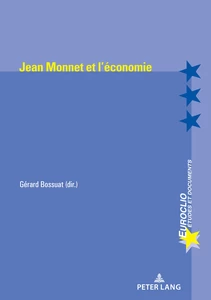
Jean Monnet et l'économie
©2018 Edited Collection -
-
-
-

-
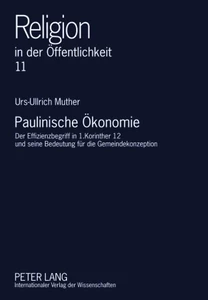
Paulinische Ökonomie
Der Effizienzbegriff in 1.Korinther 12 und seine Bedeutung für die Gemeindekonzeption©2010 Thesis -

-

-
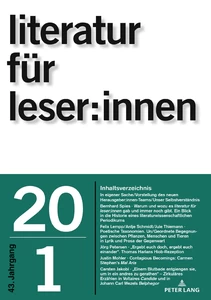
Poetische Taxonomien.
Un/Geordnete Begegnungen zwischen Pflanzen, Menschen und Tieren in Lyrik und Prosa der Gegenwart -