results
-
The City as Place: Emotions, Experiences, and Meanings
ISSN: 2632-0924
The purpose of this series is to examine the city as a lived place. Specifically, we are interested in the ways in which the city is invested with meaning through everyday lived experiences. The series is particularly interested in submissions that focus on the perceptual and felt dimensions of urban places through exploring the experiential, emotional, sensory, and affective dimensions that contribute to how people behave in, feel about, and move around in cities. Books in this series will interrogate the relationship between people and place through a focus on the diverse ways in which subjective and intimate feelings are fundamental constituents of the urban experience. We encourage authors to examine the city as a lived place from a range of different perspectives, and to be inclusive of individual and collective voices in the city to better understand the historical development and contemporary evolution of diverse urban settings. Some of the questions we seek to explore through the series include, but are not restricted to: How is the city experienced, by whom, and how does this change over time? Who shapes the experience of the city and for what reasons? How do individual and shared joy, fear, pride, nostalgia, disgust, or other emotions, shape the meanings attributed to urban spaces? How does the lived experience of, and emotional connections to, urban places inform the way particular spaces within cities are preserved and memorialized, or alternatively demolished and redeveloped? In what ways is our understanding of the lived experience of the city sharpened through the lens of comparative, transnational, and global approaches? The series seeks to examine the real and the imaginary, the representational and the non-representational, the historical and the contemporary, the remembered and the recreated in all historical periods including research on the twenty-first-century city. The series is open to work covering all geographic areas, and we encourage authors, where possible and relevant, to situate their studies in comparative, transnational, or global perspectives. Books may be published in English or in French. Series Editors: Dr Rebecca Madgin, Urban Studies, University of Glasgow and Dr Nicolas Kenny, History, Simon Fraser University. Advisory Board: Dr Anneleen Arnout (Radboud), Prof. Katie Barclay (Macquarie), Prof. Steven Cooke (Deakin), Prof. Nicole Eustace (NYU), Prof. Sian Jones (Stirling), Dr James Lesh (Melbourne), Prof. Piroska Nagy (Québec à Montréal), Dr Joseph Prestel (FU Berlin), Prof. Roey Sweet (Leicester), Prof. Astrid Swenson (Bayreuth).
4 publications
-
Time and Temporality in Language and Human Experience
©2014 Edited Collection -
Motivation and Experience in Foreign Language Learning
©2006 Monographs -
American Experience – The Experience of America
©2013 Edited Collection -
Foreign Language Learning as Intercultural Experience
The Subjective Dimension©2015 Edited Collection -
-
The Experience of Space
The Privileged Role of Spacial Prefixation in Czech and Russian©2003 Thesis -
-
-
Human Experience and the Triune God
A Theological Exploration of the Relevance of Human Experience for Trinitarian Theology©2008 Monographs -
-
International Experiences in Language Testing and Assessment
Selected Papers in Memory of Pavlos Pavlou©2013 Edited Collection -
-
-
L’expérience chez Aristote
Aux confins des connaissances sensible et intellectuelle en perspective aristotélicienne©2005 Thesis -
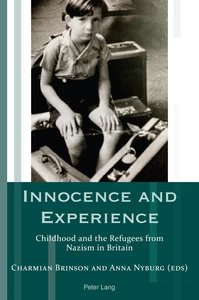
-
-
Personal Experience and the Media
Media Interplay in Rainer Werner Fassbinder’s Work for Theatre, Cinema and Television©2006 Thesis -
The Religious Experience in the Book of Psalms
©2016 Monographs -
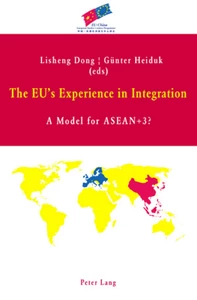
-
Global Experiences in Tourism
Proceedings of the International Competence Network of Tourism Management (ICNT)©2011 Monographs -
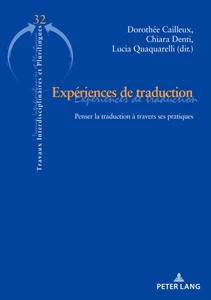
-
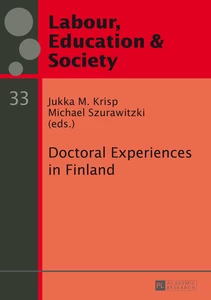
Doctoral Experiences in Finland
©2014 Edited Collection -
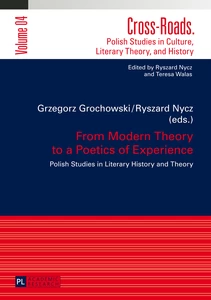
From Modern Theory to a Poetics of Experience
Polish Studies in Literary History and Theory©2014 Edited Collection -
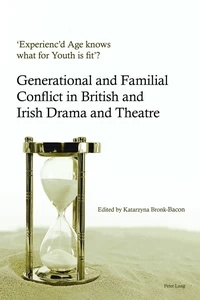
‘Experienc’d Age knows what for Youth is fit’?
Generational and Familial Conflict in British and Irish Drama and Theatre©2019 Edited Collection