results
-
Berkeley Models of Grammars
This series invites an array of grammar types useful both as learning devices and as research tools. The freedom to break away from Latin and Greek grammar models, traditionally required, in particular of Indo-European historical languages, is respected and even urged when appropriate. On the other hand, the valuable genetic study of language should remain a sought-after, well-developed endeavor, and should not be lost to the present and future world of learning. Accordingly, the Berkeley Models of Grammars series seeks forward-looking, theoretically sophisticated methodologies which are at the same time relatively exhaustive or complete grammars of a given language at any period of its existence. This series invites an array of grammar types useful both as learning devices and as research tools. The freedom to break away from Latin and Greek grammar models, traditionally required, in particular of Indo-European historical languages, is respected and even urged when appropriate. On the other hand, the valuable genetic study of language should remain a sought-after, well-developed endeavor, and should not be lost to the present and future world of learning. Accordingly, the Berkeley Models of Grammars series seeks forward-looking, theoretically sophisticated methodologies which are at the same time relatively exhaustive or complete grammars of a given language at any period of its existence. This series invites an array of grammar types useful both as learning devices and as research tools. The freedom to break away from Latin and Greek grammar models, traditionally required, in particular of Indo-European historical languages, is respected and even urged when appropriate. On the other hand, the valuable genetic study of language should remain a sought-after, well-developed endeavor, and should not be lost to the present and future world of learning. Accordingly, the Berkeley Models of Grammars series seeks forward-looking, theoretically sophisticated methodologies which are at the same time relatively exhaustive or complete grammars of a given language at any period of its existence.
7 publications
-
-
Lodz Studies in Language
The prolific series Lodz Studies in Language aims at providing a forum for contributions to the study of Linguistics, especially in English Language and Literature. The monographs and collected volumes of the series focus on Corpus Linguistics, Pragmatics and Language Pedagogy, with such various topics as the cognitive aspects of Linguistics, identity via language, trends in Linguistics and Translational Studies and language and media.
86 publications
-
Language and Forensics
Language and Forensics is a trans- and inter-disciplinary book series dedicated to exploring the complex relationship between language and forensic practice. Bridging theoretical foundations and applied research, the series includes contributions that range from introductory manuals and historical overviews of the field to in-depth analyses of real-world forensic cases and cross-national comparisons of linguistic methodologies. Reflecting the diverse nature of forensic linguistics, the series features three main types of volumes: theoretical works introducing specific subfields (such as audio analysis or textual comparison), applied research addressing linguistic challenges in forensic contexts (e.g., authorship attribution, voice comparison), and edited collections emerging from collaborative research or academic conferences. In line with its inclusive and international scope, Language and Forensics welcomes publications in English as well as other Romance languages. This multilingual approach aims to support a broader scholarly community and provide a prestigious publishing platform for researchers who often face limited options beyond specialized scientific journals.
2 publications
-
Language as Social Action
This Series explores new and exciting advances in the ways in which language both reflects and fashions social reality--and thereby constitutes critical means of social action. As well as these being central foci in face-to-face interactions across different cultures, they also assume significance in the ways that language functions in the mass medias, new technologies, organizations, and social institutions. Language As Social Action does not uphold apartheid against any particular methodological and/or ideological position, but, rather, promotes (wherever possible) cross-fertilization of ideas and empirical data across the many, all-too-contrastive, social scientific approaches to language and communication. Contributors to the Series will also accord due attention to the historical, political, and economic forces that contextually bound the ways in which language patterns are analyzed, produced, and received. The Series will also provide an important platform for theory-driven works that have profound, and oftentimes provocative, implications for social policy.
37 publications
-
Measuring Interlanguage Pragmatic Knowledge of EFL Learners
©2006 Monographs -
-
Grammar Growth in Child Second Language German
Investigating DP Development in an Immersion Setting©2015 Thesis -
Aspects of the Grammar and Lexica of Artificial Languages
©2011 Monographs -
Formalization of Grammar in Slavic Languages
Contributions of the Eighth International Conference on Formal Description of Slavic Languages – FDSL VIII 2009 University of Potsdam, December 2-5, 2009©2011 Edited Collection -
Slavic Languages in the Perspective of Formal Grammar
Proceedings of FDSL 10.5, Brno 2014©2015 Conference proceedings -
Typed Feature Structure Grammars
©2009 Conference proceedings -
Language Family Oriented Perspective in Multilingual Grammar Design
©2007 Postdoctoral Thesis -
-

-
-
A Grammar of Gidar
©2008 Monographs -
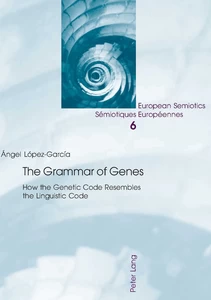
-
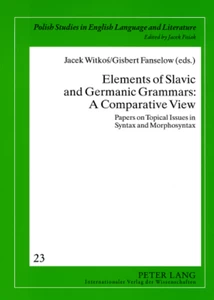
Elements of Slavic and Germanic Grammars: A Comparative View
Papers on Topical Issues in Syntax and Morphosyntax©2008 Edited Collection -
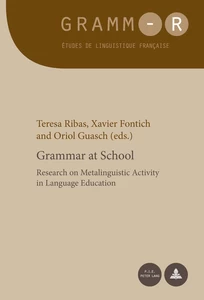
-
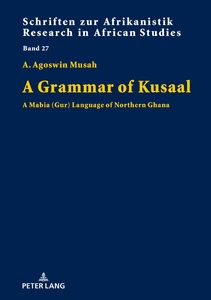
-
First Language versus Foreign Language
Fluency, Errors and Revision Processes in Foreign Language Academic Writing©2015 Thesis -
Variation in Language and Language Use
Linguistic, Socio-Cultural and Cognitive Perspectives©2013 Edited Collection -
Language Contact - Language Conflict
©1993 Others -