results
-
Culture, Curriculum and Education
0 publications
-
Critical Praxis and Curriculum Guides
The Critical Praxis and Curriculum Guides is a curriculum-based series reflective of theory creating praxis. The series targets not only undergraduate and graduate audiences, but also tenured and experienced teachers of all disciplines. Research suggests that teachers need to have well-designed, thematic-centered curricula and lessons at their disposal. This is accomplished when the school works as a community to meet their own needs. Community in this sense includes working collaboratively with students, parents, and local community organizations to help build the curriculum. Practically, this means that time is devoted to professional development workshops, not exam reviews or test preparation pointers, but real learning. Together with administrators, teachers form professional learning communities (PLCs) to discuss, analyze, and revise curricula and share pedagogical strategies that meet the needs of their particular school demographics. This communal approach was found to be more successful than requiring each individual teacher to create lessons on her/his own. Ideally, we would love it if each teacher could create their own authentic lessons because only s/he truly knows her/his students and we encourage it, because it is possible! However, as educators ourselves, we understand the realities our colleagues in public schools face, especially when teaching in high needs areas. The Critical Praxis and Curriculum Guides provides relief for educators needing assistance in preparing their lessons. When possible, and in the spirit of communal practices, the series welcomes co-authored books by theorists and practitioners or solo-authored books by an expert deeply informed by the field. Because we strongly believe that theory guides our practice, each guide will blend theory and curriculum chapters creating a praxis. All, of course, in a critical pedagogical framework. Ultimately, the guides will serve as resources for teachers to use, expand upon, revise, and re-create.
13 publications
-
Ecological Pedagogy, Curriculum and Scholarship
This book series is premised on the ecological understanding that all of education– all of the living fields of knowledge entrusted to teachers and students in schools, all of the gestures of teaching and learning itself – is full of relations, interdependencies, ancestries, places, voices animated by lived and learned experiences. Ecological pedagogy, curriculum and scholarship understands that all living fields of knowledge must be taught and learned as such, with all of their intrinsic and animate rigours, complexities, interrelatedness, and earthly responsibilities. In these ecologically sorrowful times, our individual and collective impulse to raise voices of commiseration and encouragement to those working inside and outside of schools bristles with urgency. And this just at a time when the world also seems to be churning with increasing distractions and fakeries whose beneficiaries are not of this earth. Schools and schooling are caught up in ongoing yet ever-shifting inheritances of place and displacement, privilege, colonialism, gender and so on. They are also subject to legacies of indiscriminate standardization, efficiency, fragmentation and all of the ramped-up, exhausting and exhausted distractions of our current age. Education often drags along with its tenacious legacies of thinking and practice that are mostly silent, often silencing, simply taken for granted as just the way things are. Schooling itself, in so many quarters, has become an ecological disaster. Many teachers have studied and voiced these matters, while pursuing more venturous, ecologically sound work in their classroom, all this in deliberate resistance to the marginalization of such work. The series invites scholarly, enlivening and healing ways of researching and writing that attempt to live up to the ecologies of the topics themselves, each in their own ways and languages, each laden with their own ancestries, troubles, and insights – eco-hermeneutics, interpretive research, poetic inquiry, autobiographical and life writing, currere, Indigenous research, arts-based inquiry, storytelling and emergent ways and means of knowing. None of these are merely methodologies. Each involves myriad encounters, myriad relationships, myriad possibilities. In trying to find the measure of what is written within the things written about, these ways are in themselves ecological and pedagogical. They are locales where our relations are worked out, our songs are sung, our silences are shared, and our individual and collective stories are lived, contested, shaped and re-told. The logo for this book series is a Celtic Knot drawn by Eric Jardine in 1992. It became the cover illustration of a self-published book that year. It is a reminder of how long-standing is this current stream of work in education, stretching far back from there. These stretches are part of the ecological imagination itself. This book series is premised on the ecological understanding that all of education– all of the living fields of knowledge entrusted to teachers and students in schools, all of the gestures of teaching and learning itself – is full of relations, interdependencies, ancestries, places, voices animated by lived and learned experiences. Ecological pedagogy, curriculum and scholarship understands that all living fields of knowledge must be taught and learned as such, with all of their intrinsic and animate rigours, complexities, interrelatedness, and earthly responsibilities. In these ecologically sorrowful times, our individual and collective impulse to raise voices of commiseration and encouragement to those working inside and outside of schools bristles with urgency. And this just at a time when the world also seems to be churning with increasing distractions and fakeries whose beneficiaries are not of this earth. Schools and schooling are caught up in ongoing yet ever-shifting inheritances of place and displacement, privilege, colonialism, gender and so on. They are also subject to legacies of indiscriminate standardization, efficiency, fragmentation and all of the ramped-up, exhausting and exhausted distractions of our current age. Education often drags along with its tenacious legacies of thinking and practice that are mostly silent, often silencing, simply taken for granted as just the way things are. Schooling itself, in so many quarters, has become an ecological disaster. Many teachers have studied and voiced these matters, while pursuing more venturous, ecologically sound work in their classroom, all this in deliberate resistance to the marginalization of such work. The series invites scholarly, enlivening and healing ways of researching and writing that attempt to live up to the ecologies of the topics themselves, each in their own ways and languages, each laden with their own ancestries, troubles, and insights – eco-hermeneutics, interpretive research, poetic inquiry, autobiographical and life writing, currere, Indigenous research, arts-based inquiry, storytelling and emergent ways and means of knowing. None of these are merely methodologies. Each involves myriad encounters, myriad relationships, myriad possibilities. In trying to find the measure of what is written within the things written about, these ways are in themselves ecological and pedagogical. They are locales where our relations are worked out, our songs are sung, our silences are shared, and our individual and collective stories are lived, contested, shaped and re-told. The logo for this book series is a Celtic Knot drawn by Eric Jardine in 1992. It became the cover illustration of a self-published book that year. It is a reminder of how long-standing is this current stream of work in education, stretching far back from there. These stretches are part of the ecological imagination itself.
3 publications
-
Recherches en littérature et spiritualité
ISSN: 1424-4802
La collection « Recherches en littérature et spiritualité », fondée en 2001 par Gérard Nauroy, est dirigée par le centre « Écritures » de l’Université de Lorraine (Metz). Elle rassemble les travaux de ses chercheurs – ouvrages collectifs, éditions de textes, monographies – dans les domaines de l’Antiquité tardive, de la littérature française du Moyen Âge à nos jours, de la littérature générale et comparée. Elle accueille aussi des études sur la poétique et l’esthétique des textes littéraires et sur leur relation avec le fait spirituel, quel qu’en soit le contenu religieux ou idéologique.
29 publications
-
Recherche littéraire / Literary Research
Revue de l’Association internationale de littérature comparée (AILC) / Journal of the International Comparative Literature Association (ICLA)ISSN: 0849-0570
Aims and Scope As the annual peer-reviewed publication of the International Comparative Literature Association (ICLA), Recherche littéraire / Literary Research is an Open Access journal published by Peter Lang. Its mission is to inform comparative literature scholars worldwide of recent contributions to the field. To that end, it publishes scholarly essays, review essays discussing recent research developments in particular sub-fields of the discipline, as well as reviews of books on comparative topics. Scholarly essays are submitted to a double-blind peer review. Submissions by early-career comparative literature scholars are strongly encouraged. Journal published with the support of the International Comparative Literature Association (ICLA). Past issues back to 2014 can be accessed on the ICLA website: https://www.ailc-icla.org/literary-research/ * * * Objectifs et portée En tant que publication annuelle de l’Association internationale de littérature comparée (AILC), Recherche littéraire / Literary Research est une revue expertisée par des pair·e·s et publiée par Peter Lang en libre accès voie dorée. Elle vise à faire connaître aux comparatistes du monde entier les développements récents de la discipline. Dans ce but, la revue publie des articles de recherche scientifique, des essais critiques dressant l’état des lieux d’un domaine particulier de la littérature comparée, ainsi que des comptes rendus de livres sur des sujets comparatistes. Les articles de recherche sont soumis à une évaluation par des pair·e·s en double anonyme. Des soumissions par de jeunes chercheuses et chercheurs en littérature comparée sont fortement encouragées. Revue publiée avec le concours de l’Association internationale de littérature comparée (AILC). Les numéros antérieurs, remontant à 2014, sont accessibles sur le site de l’AILC: https://www.ailc-icla.org/fr/recherche-litteraire/ * * * Editor in Chief / Rédacteur en Chef: Marc Maufort, Université Libre de Bruxelles (ULB), Belgique/Belgium Assistant Editor / Rédactrice adjointe: Jessica Maufort, National Fund for Scientific Research-Belgium & Université Libre de Bruxelles (ULB), Belgique/Belgium Editorial Assistant / Assistant de rédaction: Samuel Pauwels (Brussels, Belgium) Editorial Board / Comité éditorial: Dorothy Figueira, University of Georgia, USA / John Burt Foster, George Mason University, USA / Peter Hajdu, Hungarian Academy of Sciences, Hungary / Helga Mitterbauer, Université Libre de Bruxelles (ULB), Belgium / David O’Donnell, Victoria University of Wellington, New Zealand / Haun Saussy, University of Chicago, USA / Anne Tomiche, Université de Paris, France / ZHANG Longxi, City University of Hong Kong, China Advisory Board / Comité consultatif: Thomas Oliver Beebee, Penn State University, USA / César Dominguez, Universidade de Santiago de Compostela, España / Massimo Fusillo, Università degli studi dell’Aquila, Italia / Scott Miller, Brigham Young University, USA / E.V. Ramakrishnan, Central University of Gujarat, India / Monica Spiridon, Universitatea din Bucureşti, România / Jüri Talvet, University of Tartu, Estonia / Hein Viljoen, North-West University, Potchesfstroom, South Africa * * * Submission Guidelines Reviews and essays are written in French or English, the two official languages of the ICLA. Book reviews should be between 1500 and 2000 words. Edited volumes and journal issues will also be considered for review. Review essays about the state of the art, about several related books, or about a work of major significance for the field will be allowed to exceed 3500 words, excluding works cited and footnotes. Scholarly essays should count between 6000 and 8000 words (excluding works cited and footnotes) and follow the Chicago Style sheet (parenthetical bibliographical references in the body of the text as well as a final list of Works Cited). Scholarly essays should also be preceded by an abstract in English of approximately 250 words and by 6 to 7 keywords for indexation purposes. The stylesheet for all types of submissions can be downloaded here: https://www.peterlang.com/app/uploads/2022/08/3_Literary-Research-Stylesheet-2022.pdf Inquiries and submissions: Marc Maufort, Editor, Email: Marc.Maufort@ulb.be Langues et littératures modernes CP 175 Université libre de Bruxelles (ULB) Av. F.D. Roosevelt 50 1050 Brussels, Belgium * * * Instructions aux auteur·e·s Les comptes rendus ainsi que les articles de recherche peuvent être écrits en français ou en anglais, les deux langues officielles de l’AILC. Un compte rendu comptera entre 1500 et 2000 mots. Des ouvrages collectifs et des numéros de revues pourront également faire l’objet d’un compte rendu. Un essai critique sur l’état de l’art, sur un ensemble d’ouvrages, ou sur un livre ambitieux pourra dépasser 3500 mots, hormis bibliographie et notes en bas de page. Les articles de recherche compteront entre 6000 et 8000 mots (hormis bibliographie et notes en bas de page) et suivront les règles de présentation bibliographique du «Chicago Style» (références bibliographiques entre parenthèses dans le corps du texte et bibliographie en fin d’article). Ces articles de recherche doivent également être précédés d’un résumé en anglais d’environ 250 mots et de 6 à 7 mots-clés à des fins d’indexation. Une traduction en anglais du titre de l’article est également demandée. Les normes de présentation pour tous les types de soumissions peuvent être téléchargées ici: https://www.peterlang.com/app/uploads/2022/08/3_Literary-Research-Stylesheet-2022.pdf Renseignements et soumissions: Marc Maufort, Rédacteur, Email: Marc.Maufort@ulb.be Langues et littératures modernes CP 175 Université libre de Bruxelles (ULB) Av. F.D. Roosevelt 50 1050 Brussels, Belgium *** Statement of Publication Ethics AUTHORS: Submissions should be original and free from any plagiarism. Authors should not offer their submissions concurrently elsewhere. The submitted work should not have been previously published in any language. Authors are fully responsible for the contents of their essays. They should secure permission for the reprinting of any copyrighted material. LR/RL does not charge any fees for the submission of manuscripts and their publication. REVIEWERS: All scholarly articles are rigorously assessed through anonymous peer review (authorship will not be divulged and readers will remain unidentified). Submissions are assessed by at least two international experts in the relevant fields. A third reader will be consulted, if necessary. Peer reviews will last approximately 3 months. The journal and its editorial team adhere to Peter Lang’s code of ethics regarding peer review: reviewers are asked to abide by the COPE Ethical Guidelines for Peer Reviewers (https://www.peterlang.com/app/uploads/2021/07/COPE-Ethical-Guidelines_2016.pdf), which ensures the integrity of the academic research we publish. More information on Peter Lang’s commitment to academic excellence can be found here: https://www.peterlang.com/for-authors/. In case of conflict, the journal will follow the steps outlined by COPE here: https://publicationethics.org/files/Full%20set%20of%20flowcharts.pdf. EDITORS: LR/RL is committed to the impartiality of the editorial process. The journal will pay particular attention to any conflict of interests. The journal will promote good editorial practice, such as the adherence to clear instructions. LR/RL does not endorse the opinions of authors once their work is published. The journal is published in Gold Open Access, under the copyright license Creative Commons CC-BY-ND-NC 4.0 International. Each issue will be immediately available in its entirety on Peter Lang’s website upon publication. *** Déclaration d’éthique de publication AUTEUR·E·S: Les soumissions doivent être originales et exemptes de tout plagiat. Les auteur·e·s ne doivent pas proposer leurs soumissions simultanément ailleurs. Le travail soumis ne doit avoir été publié auparavant dans aucune langue. Les auteur·e·s sont entièrement responsables du contenu de leurs essais. Il·Elle·s doivent obtenir l’autorisation de réimprimer tout matériel protégé par le droit d’auteur. LR/RL ne facture aucun frais pour la soumission des manuscrits et leur publication. ÉVALUATEUR·RICE·S: Tous les articles scientifiques sont rigoureusement évalués par un examen anonyme par des pairs (la paternité des auteur·e·s ne sera pas divulguée et les lecteur·rice·s resteront non identifié·e·s). Les soumissions sont évaluées par au moins deux expert·e·s internationaux·ales dans les domaines concernés. Une troisième personne sera consultée, si nécessaire. Les évaluations par les pairs dureront environ 3 mois. La revue et son équipe éditoriale adhèrent au code de déontologie de Peter Lang concernant l’évaluation par les pairs: les évaluateur·rice·s sont prié·e·s de respecter les Directives éthiques du COPE pour l'évaluation par les pairs (https://www.peterlang.com/app/uploads/2021/07/COPE-Ethical-Guidelines_2016.pdf), qui garantissent l’intégrité de la recherche scientifique que nous publions. Pour plus d’informations sur l’engagement de Peter Lang en faveur de l’excellence académique, cliquez ici: https://www.peterlang.com/for-authors/. En cas de conflit, la revue suivra les étapes décrites par COPE ici: https://publicationethics.org/files/Full%20set%20of%20flowcharts.pdf. ÉDITEUR·RICE·S: LR/RL s’engage à respecter l’impartialité du processus éditorial. La revue portera une attention particulière à tout conflit d’intérêts. Elle encouragera les bonnes pratiques éditoriales, telles que le respect d’instructions claires. LR/RL ne cautionne pas l’opinion des auteur·e·s une fois leur travail publié. La revue est publiée en Open Access voie dorée, sous la licence de copyright Creative Commons CC-BY-ND-NC 4.0 International. Chaque numéro sera immédiatement disponible dans son intégralité sur le site web de Peter Lang dès sa publication. *** Abstracting and Indexing / Indexation EBSCO, MLA Directory of Periodicals, OAPEN
9 publications
-
Recherches comparatives sur les livres et le multimédia d'enfance
Cette collection, destinée à créer un espace d’analyse sur les littératures et les productions culturelles dédiées à l’enfance et à la jeunesse, et ce quel qu’en soit le support – littérature orale, livre, multimédia, audiovisuel – se veut être un terrain d’échanges et un chantier ouvert à des questionnements éclairés. Dans cette perspective, elle s’attache à insérer la réflexion dans le vaste champ des approches critiques liées à la littérature en général et aux sciences humaines, tout en ayant le souci de présenter des études comparatives émanant d’horizons multiples et de pays divers. À ce titre, la collection, principalement orientée vers le monde francophone, pourra donner lieu à la publication d’ouvrages critiques en d’autres langues.
11 publications
-
-
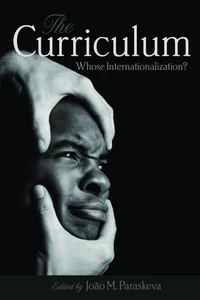
-
-
-
-
-
-
-
-
-
-
The Curriculum of Horror
Or, the Pedagogies of Monsters, Madmen, and the Misanthropic©2019 Monographs -
-
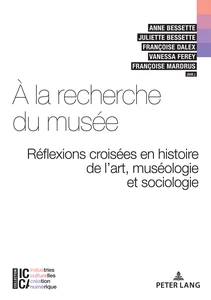
À la recherche du musée
Réflexions croisées en Histoire de l’art, Muséologie et Sociologie©2023 Edited Collection -
-
-
-
-
Curriculum Studies Gone Wild
Bioregional Education and the Scholarship of Sustainability©2011 Textbook