results
-
-
Gender and the History of Institutions
The aim of this book series is to examine the history of institutions around the world through the lens of gender. Of interest are institutions established with the specific purpose of regulating gender and sexuality (e.g. the Magdalen asylums, Magdalen hospitals, penitentiaries, refuges, mother and baby institutions) as well as those with more general purposes where gender has had an important role in their operation and function (e.g. prisons, workhouses, lunatic asylums), including both religious and private organisations. The series supports the increasing interest in these institutions internationally, both in academia and in the treatment of ‘historical’ abuse. The series highlights the range of archives that can be considered in examining this history, not only in English-speaking countries but also in countries where the institutions described above have existed and determined the lives of many people. It will also broaden the conversation by widening the scope of institutions being considered. The series has as its main objective expanding the discussion of gender in reference to these lesser known institutions. At the same time, its purpose is to provide academia with a forum for discussion and a critical approach to the concepts of gender and institutions that attract both researchers and the general public. All projects undergo rigorous peer review before acceptance for publication.
0 publications
-
Institutionelle und Sozial-Ökonomie / Institutional and Socio-Economics
"In the "Institutional and Socio-Economics" book series, the economy is studied as a genuinely social system of heterogeneous agents in an institutional context. The series includes a broad range of different methodological approaches, theoretical perspectives and subjects of study. Interdependencies among agents in complex social systems can be studied using evolutionary economic models, as well as institutional economic and simulation studies. Hence, the focus is being laid on approaches that are more explorative than the standard equilibrium analysis; on approaches that allow for complexity; on approaches that consider development, history, institutions, and values. Thus, we may conclude that institutions are more than just devices for the reduction of transaction costs. From an institutionalist perspective, institutions are the common and collective solutions to social decision problems, particularly social dilemma problems, coordination problems, and collective-good problems. Such solutions require recognized interdependence and learned coordination and cooperation, thus a learned culture of a long-run perspective emerging as the result of a process of interactions. Institutions often are transitory only, part of the ongoing dynamics, adequately modeled possibly as an evolutionary process. Also, they may be instrumental solutions to a social decision problem at first and may degenerate into ceremonial power-and-status-based phenomena later, thus limiting the possibility of further innovation and development. In a genealogy of economics, the thematic and methodological spectrum of this book series would embrace the history of thought beginning with the classics including great names such as Adam Smith and Karl Marx but also the late classics who already have struggled with issues like complexity, process, historical time, and evolution. In newer times, the spectrum continues with Veblenian, Keynesian, and Post-Keynesian thinking; it would also include works in the traditions of original institutionalist economics, ecological economics, Neo-Schumpeterian thinking, evolutionary economics, and game theory. Social economics and social policy analysis, behavioral economics, complex modeling, system dynamics, and agent-based computational economics would be embraced as well. Such lists, however, can never be exhaustive. Last not least, institutional and socio-economics deals with the epistemology and substance of values, norms and ethics, value warrants of economic behavior as well as the normative foundations of economics. This series, thus, stands in the best traditions of plural economic research areas and pluralistic theoretical perspectives. It may be called heterodox, but it shall always be cutting-edge and of high quality. Enjoy exploring the works of this book series. The Editors: Wolfram Elsner Editor-in-Chief University of Bremen Torsten Heinrich Managing Editor University of Bremen Wilfred Dolfsma Co-Editor University of Groningen Arne Heise Co-Editor University of Hamburg Helge Peukert Co-Editor University of Erfurt Werner Schönig Co-Editor Catholic University of Applied Sciences Cologne Homepage der Herausgeber: Prof. Dr. Wolfram Elsner (Editor-in-Chief) Dr. rer. pol. Torsten Heinrich (Managing Editor) " "In the "Institutional and Socio-Economics" book series, the economy is studied as a genuinely social system of heterogeneous agents in an institutional context. The series includes a broad range of different methodological approaches, theoretical perspectives and subjects of study. Interdependencies among agents in complex social systems can be studied using evolutionary economic models, as well as institutional economic and simulation studies. Hence, the focus is being laid on approaches that are more explorative than the standard equilibrium analysis; on approaches that allow for complexity; on approaches that consider development, history, institutions, and values. Thus, we may conclude that institutions are more than just devices for the reduction of transaction costs. From an institutionalist perspective, institutions are the common and collective solutions to social decision problems, particularly social dilemma problems, coordination problems, and collective-good problems. Such solutions require recognized interdependence and learned coordination and cooperation, thus a learned culture of a long-run perspective emerging as the result of a process of interactions. Institutions often are transitory only, part of the ongoing dynamics, adequately modeled possibly as an evolutionary process. Also, they may be instrumental solutions to a social decision problem at first and may degenerate into ceremonial power-and-status-based phenomena later, thus limiting the possibility of further innovation and development. In a genealogy of economics, the thematic and methodological spectrum of this book series would embrace the history of thought beginning with the classics including great names such as Adam Smith and Karl Marx but also the late classics who already have struggled with issues like complexity, process, historical time, and evolution. In newer times, the spectrum continues with Veblenian, Keynesian, and Post-Keynesian thinking; it would also include works in the traditions of original institutionalist economics, ecological economics, Neo-Schumpeterian thinking, evolutionary economics, and game theory. Social economics and social policy analysis, behavioral economics, complex modeling, system dynamics, and agent-based computational economics would be embraced as well. Such lists, however, can never be exhaustive. Last not least, institutional and socio-economics deals with the epistemology and substance of values, norms and ethics, value warrants of economic behavior as well as the normative foundations of economics. This series, thus, stands in the best traditions of plural economic research areas and pluralistic theoretical perspectives. It may be called heterodox, but it shall always be cutting-edge and of high quality. Enjoy exploring the works of this book series. May 2012 The Editors: Wolfram Elsner Editor-in-Chief University of Bremen Torsten Heinrich Managing Editor University of Bremen Wilfred Dolfsma Co-Editor University of Groningen Arne Heise Co-Editor University of Hamburg Helge Peukert Co-Editor University of Erfurt Werner Schönig Co-Editor Catholic University of Applied Sciences Cologne Homepage der Herausgeber: Prof. Dr. Wolfram Elsner (Editor-in-Chief) Dr. rer. pol. Torsten Heinrich (Managing Editor) " "In the "Institutional and Socio-Economics" book series, the economy is studied as a genuinely social system of heterogeneous agents in an institutional context. The series includes a broad range of different methodological approaches, theoretical perspectives and subjects of study. Interdependencies among agents in complex social systems can be studied using evolutionary economic models, as well as institutional economic and simulation studies. Hence, the focus is being laid on approaches that are more explorative than the standard equilibrium analysis; on approaches that allow for complexity; on approaches that consider development, history, institutions, and values. Thus, we may conclude that institutions are more than just devices for the reduction of transaction costs. From an institutionalist perspective, institutions are the common and collective solutions to social decision problems, particularly social dilemma problems, coordination problems, and collective-good problems. Such solutions require recognized interdependence and learned coordination and cooperation, thus a learned culture of a long-run perspective emerging as the result of a process of interactions. Institutions often are transitory only, part of the ongoing dynamics, adequately modeled possibly as an evolutionary process. Also, they may be instrumental solutions to a social decision problem at first and may degenerate into ceremonial power-and-status-based phenomena later, thus limiting the possibility of further innovation and development. In a genealogy of economics, the thematic and methodological spectrum of this book series would embrace the history of thought beginning with the classics including great names such as Adam Smith and Karl Marx but also the late classics who already have struggled with issues like complexity, process, historical time, and evolution. In newer times, the spectrum continues with Veblenian, Keynesian, and Post-Keynesian thinking; it would also include works in the traditions of original institutionalist economics, ecological economics, Neo-Schumpeterian thinking, evolutionary economics, and game theory. Social economics and social policy analysis, behavioral economics, complex modeling, system dynamics, and agent-based computational economics would be embraced as well. Such lists, however, can never be exhaustive. Last not least, institutional and socio-economics deals with the epistemology and substance of values, norms and ethics, value warrants of economic behavior as well as the normative foundations of economics. This series, thus, stands in the best traditions of plural economic research areas and pluralistic theoretical perspectives. It may be called heterodox, but it shall always be cutting-edge and of high quality. Enjoy exploring the works of this book series. The Editors: Wolfram Elsner Editor-in-Chief University of Bremen Torsten Heinrich Managing Editor University of Bremen Wilfred Dolfsma Co-Editor University of Groningen Arne Heise Co-Editor University of Hamburg Helge Peukert Co-Editor University of Erfurt Werner Schönig Co-Editor Catholic University of Applied Sciences Cologne Homepage der Herausgeber: Prof. Dr. Wolfram Elsner (Editor-in-Chief) Dr. rer. pol. Torsten Heinrich (Managing Editor) "
11 publications
-
-
Reports of the Research Institute / Berichte des Forschungsinstituts Gastein-Tauernregion
ISSN: 1437-496X
4 publications
-
Research on Korea
ISSN: 2196-0895
The series Research on Korea responds to the fact that interest in Korea and the need for reliable information on the country's history and present have risen considerably during the last decades, both in- and outside of academia. The series offers an interdisciplinary platform for academic works engaging with Korea. Not being restricted to specific methodological or historiographical approaches, the series is open for studies of Korea in any field as long as they make use of Korean primary sources and systematically engage with Korean language secondary literature. Based on solid methodology, the studies assembled in this series aim to open up paths for new insights and new research questions on Korea and Korea's role in the regional and international context. In der Schriftenreihe Research on Korea werden neuere Ergebnisse der Koreaforschung veröffentlicht, um dem in den letzten Jahrzehnten stark gesteigerten Interesse der akademischen und allgemeinen Öffentlichkeit an verlässlichen Informationen zu Korea nachzukommen. Sie bietet ihr eine interdisziplinäre Plattform, ohne sich dabei methodisch oder historiographisch bestimmten Richtungen verpflichtet zu fühlen. Allerdings legen die Herausgeber großen Wert darauf, dass koreanische Primärquellen ebenso wie in koreanischer Sprache verfasste Sekundärliteratur umfassend und systematisch verwendet werden. Die Reihe ist offen für Korea-Studien jeder Art, die auf der Grundlage von Quellenarbeit und solider Methodologie den Weg zu neuen Erkenntnissen und Fragestellungen in der historischen, sozial- und kulturwissenschaftlichen Forschung zu Korea und zu Koreas Rolle im regionalen wie internationalen Kontext ebnen.
12 publications
-
Researching with GEMMA
ISSN: 2813-0766
The main purpose of the series "Researching with GEMMA" is to present innovative, in-depth, and culturally provocative research on critical issues in Gender and Women’s Studies produced within the GEMMA Erasmus Mundus community. GEMMA is an interdisciplinary programme that provides high quality academic education and professional skills for people who are working or intend to work in the areas of Women's Studies, Gender Studies and Equal Opportunities across Europe and beyond. The main objective of GEMMA is to train experts in gender equality, taking into account the intersections of ethnicity, class and sexuality and contributing to the construction of a caring and responsible citizenship. GEMMA brings together the teaching and research work in Women's and Gender Studies in the fields of Humanities and Social Sciences of the participating universities and leading to a programme that provides a wide range of options, taught by lecturers of great prestige in the aforementioned fields in each of the institutions and centers.
4 publications
-
-
-
-
Institutions of Hanseatic Trade
Studies on the Political Economy of a Medieval Network Organisation©2016 Monographs -
Institution und Handlung
Hermann Hellers Staatslehre im Lichte analytischer Theorien sozialen Handelns©2008 Thesis -
An Emerging Institution?
Multiple Citizenship in Europe – Views of Officials©2008 Edited Collection -
Institutionen und institutioneller Wandel in Südosteuropa
©1994 Edited Collection -
-
Neue Institutionenökonomik und politische Institutionen
Zur Anwendung der ökonomischen Theorie auf politische Institutionen und Organisationen©2001 Thesis -
The Institutions of State Business Relations
The Case of Food and Agriculture Sector of Georgia©2021 Thesis -
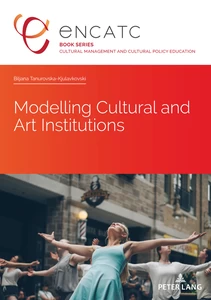
Modelling Cultural and Art Institutions
©2021 Thesis -
Erziehung, Bildung, Bildungsinstitutionen – Education, Training and their Institutions
©2006 Edited Collection -
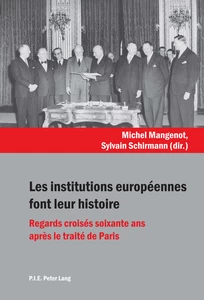
Les institutions européennes font leur histoire
Regards croisés soixante ans après le traité de Paris©2012 Edited Collection -
«Iranian Disease» und «Institutional Gap»
Zur Bedeutung des Erdölsektors und der Islamisierung von Institutionen für die iranische Volkswirtschaft©1998 Thesis -

The Constitution and the Nation
The Civil War and American Constitutionalism, 1830-1890©2003 Textbook -

-
Institutions, Inequality and Development
©2011 Thesis -