

 de
de  fr
fr 
Contact: Marketing@peterlang.com
The Peter Lang Group partners with Zeitfracht Medien GmbH to continue their commitment of worldwide availability and distribution of their list for the DACH market.
“English literature is becoming more and more popular in Germany. As the largest and most modern book wholesaler in Germany, we want to serve local retailers and their customers quickly and reliably in this segment with as many titles as possible. Our print-on-demand process provides a considerable logistical advantage, protects the environment, and reduces transport distances. We already have more than 300,000 English titles from major non-fiction and specialist book publishers in our portfolio.
I am very pleased that with Peter Lang, we have the complete front- and backlist available to the German market, with over 50 percent in English, Spanish, and French language.” Kay Wissendorf, Leiter Print on Demand & Leiter operativer Einkauf
Peter Lang Group CEO, Arnaud Béglé, states “The Peter Lang Group is thrilled to expand cooperation with Zeitfracht as a trusted business partner for print-on-demand supply of our titles in multiple languages. The speed to market and excellent quality Zeitfracht provides will surely benefit the Peter Lang total customer experience whether it be bookshop, library, or individual.”
Contact Zeitfracht Medien GmbH to fulfill your order of Peter Lang titles today.
Contact: marketing@peterlang.com
The Peter Lang Group are excited to be attending the 2023 London Book Fair, with new collaborations onboard and projects underway. With a global leadership team that embodies the services and values of the company, the company continues to work towards meeting the digital needs of the changing world and supporting the dissemination of scholarly work in a sustainable way. The Peter Lang leadership team combines extensive experience across academic publishing with a strategic interest in investments, technology, and business strategy and is well-positioned to meet these goals.
With the recent opening of Peter Lang Pvt Ltd in Chennai, India, Peter Lang continues its commitment to expansion in the East and offering global publishing expertise at a local level. The regional team, Indrani Dutta acquiring in Social Sciences, and Nandini Ganguli for the Humanities list, will work closely with the global finance and sales teams. Together they offer the scholarly community regional distribution of academic content at INR market pricing.
Peter Lang continues to build pace with key projects and internal investments. As well as the recently announced increased title availability with Gardners Books Ltd and Zeitfracht for customer fulfillment in the UK, Germany, and beyond, there are now over 27,000 titles available via PoD and more than 18,000 eBooks.
The 2023 Emerging Scholars Competition recently announced its winners and Peter Lang is thrilled to be able to support exciting new voices in fields including Ethnography, Hispanic & Latin American Studies, and Utopian Studies. For the full list of winners visit: https://www.peterlang.com/winners-announced-for-the-2022-peter-lang-emerging-scholars-competition/
Continuing the focus on Open Access, Peter Lang remains committed to the Greenlight pilot project in collaboration with Jisc. Alongside this, the global sales team is investing in new offerings and packages for academic librarian customers to better support this important channel.
If you are attending the 2023 London Book Fair be sure to stop by the Peter Lang Group exhibit at stand 7E50 with IPG to speak with us about our new ventures.
Truly ‘All In’ as a global team, we’re passionate about the work that we do and the scholarly community and research we support.
Check out our video about Peter Lang at the 2023 London Book Fair and discover what the team is most looking forward to during the event.
Peter Lang is delighted to announce the results of the 2022 Peter Lang Emerging Scholars Competition in Women, Gender and Sexuality Studies:
Winner in Ethnography
Itzel Abril Tinoco González
Mujeres centroamericanas en el centro de México:
Trayectorias migratorias, violencias y circulación de cuidados
Winner in Hispanic & Latin American Studies
Francisco José García Ramos
VIH y sida en el audiovisual español e iberoamericano.
Discursos y representaciones tras el cambio de siglo
Joint Winners in Literature & Culture
Peyker Özler
Queer(ing) Practices of Women’s Temporalities:
A Reflection on the Selected Works of Romana Petri, Simona Vinci, Elvira Dones, and Valeria Parrella
Isabella Villanova
The Politics of Gender in Nigerian and Zimbabwean Women’s Fiction:
Agencies and Strategies of Resistance
Winner in Media & Communication
Charlin Nukul
The Third Sex: Beyond a Gender Binary in Thai Culture and Films
Winner in Utopian Studies
Chiara Xausa
Intersectional World-Making in Climate Fiction:
Toward a Decolonial Ecofeminist Imaginary of the Environmental Crisis
We congratulate our winners! Thank you to our distinguished editorial board and to all those who took part in the competition.
The Peter Lang Emerging Scholars Competition is an annual competition in selected fields. Please check back here for announcements about upcoming competitions next year.
For more information, please contact Dr Laurel Plapp, Senior Acquisitions Editor, Peter Lang Oxford. E-mail: l.plapp@peterlang.com.
The Peter Lang Group is pleased to announce increased title availability with Gardners Books Ltd for customer fulfillment in the UK and beyond.
As Gardners, located in Eastbourne, UK is a well-known provider of books and media products in Europe, their recent partnership with CPI UK allows for immediate service to clients locally and globally.
With over 25,000 Peter Lang titles available PoD via CPI UK, customers can now order direct from Gardners to meet market demands swiftly and accurately.
Feel free to contact the Peter Lang Group (sales@peterlang.com) or Gardners (uksales@gardners.com) with any questions.
The Peter Lang Group is delighted to announce the addition of Peter Lang Pvt Ltd in Chennai. With the opening of this office in December 2022, we are continuing our commitment to the needs of Indian scholars and global expansion in the East.
Our local editorial team consists of Indrani Dutta, acquiring in Social Sciences, and Nandini Ganguli for the Humanities list. The Finance team is supported by Varsha Vijay. Together with the global sales team, the goal is to offer the scholarly community regional distribution of academic content at INR market pricing. The close collaboration between the global and local teams will be a key component as we continue to develop our regional strategy.
The MLA convention 2023 took place in January in San Francisco.
See our Series Highlights here: https://www.peterlang.com/de/serviceleistungen/veranstaltungen/mla-convention/
Click here to read all our latest news & articles
Join us on the countdown to Christmas and discover a little surprise every day.
We will show you something interesting, something worth knowing or something to brighten up the pre-Christmas period.”
Check out our Advent Calendar
The Trustees of the Institute of General Semantics have awarded the 2021 Samuel I. Hayakawa Book Prize to Carolyn Wiebe and Susan Maushart (Eds.) for The Genes of Culture: Towards a Theory of Symbols, Meaning and Media Volumes One and Two. First given in 2009, the Institute of General Semantics awards the S. I. Hayakawa Book Prize to the most outstanding work published in the past five years on topics of direct relevance to the discipline of general semantics.
Learn more at https://www.generalsemantics.org/Media-Press-Publications/12965291

Contact: Marketing@peterlang.com
The Peter Lang Group plans its return to the 2022 Frankfurt Book Fair after several years restructuring and creating new collaborations. As the world has been in transition since the global pandemic, the Peter Lang Group has been busy reinventing themselves after facing serious challenges in their business. The scholarly publisher, established in 1970, is under the direction of the new global leadership team, with its headquarters based in Lausanne, Switzerland. Peter Lang is working in particular with Newgen KnowledgeWorks Pvt Ltd to help bring their mission of championing research, to realization.
This resolute team, most with a long tenure within the company, is practicing what they preach. They have been quietly making investments in technology, a shift to zero inventory fulfilment and adding key editorial staff. These changes allow the group to provide a set of advanced services to academics, libraries, researchers and students who share their dedication to the dissemination of scholarly work. Peter Lang continues its commitment to global expansion in the East with the opening of a new office in India – Peter Lang Pvt Ltd.
Currently the group is working towards digitizing its rich 40,000+ title backlist in the Humanities and Social Sciences to meet the digital needs of the changing world. The additional agreements with global print on demand distributors such as Ingram Publisher Services, Zeitfracht, Amazon, Books on Demand and Books International will ensure swift availability to the marketplace. The annual Emerging Scholars Competition has ensured Peter Lang’s editorial list includes research from some of the most exciting new scholars in the field. With the recent launch of the Greenlight pilot project in collaboration with Jisc, Peter Lang continues to build its Open Access programme and supports new business models for library collection.
Arnaud Béglé, Group CEO, emphasizes “The Peter Lang Group is focused on publishing unique academic research that empowers a community of dedicated authors to reach eager readers. Our worldwide partnerships coupled with our motivated team’s ‘All in’ attitude guarantee fast delivery of high-quality products on paper and beyond.”
As a top 10 ranking publisher with the Spanish National Research Council, Peter Lang is excited to promote titles in Spanish language, history and culture in honour of the Frankfurt Book Fair’s special guest, Spain. If you are attending the 2022 Frankfurt Book Fair be sure to stop by the Peter Lang Group exhibit with LivreSuisse E15 in Hall 3.1 to speak with us about our new mission and the offerings we have for the academic community.
Please do check out our video about Peter Lang at the 2022 Frankfurt Book Fair.
Series co-editors Patrícia Vieira and Susan McHugh share their vision
With our new book series Plants and Animals: Interdisciplinary Approaches, we aim to grow connections between the emerging fields of critical plant studies and animal studies. Our editorial partnership represents a rare convergence of strengths in both areas, so we bring to the book series a keen sense of potentials for bridging them. In tandem with related fields like posthumanism and ecocriticism, the series is geared to enrich scientific knowledge by shining a spotlight on the connections across vegetal and animal life through studies grounded in the humanities. What can animal studies scholars learn from current plant research and vice versa? How do studies that encompass both plants and animals (and, potentially, other living and non-living forms of existence) enrich our understanding of our planet in all its diversity? Recognizing that a need for more equitable and harmonious forms of coexistence cuts across the most pressing social and environmental issues, Plants and Animals embraces both imaginative critique as well as creative problem solving in order to overcome obstacles to growing relations.
Until recently, plants and animals alike were studiously avoided as serious subjects for academic humanists. Worse, efforts to correct this mistake sometimes contributed to the further misperceptions of them as two mutually exclusive areas of interest for non-scientists. Critical plant studies, which has accelerated in the last decade, was initially posited as having been developed in opposition to the exponential growth in animal-centered research in the humanities since the end of the last century. Perceptions of the neglect of the vegetal in favour of the animate gained traction, particularly in studies that emphasized the western tradition. What is more, those seeking to define critical plant studies against animal studies scholarship characterized animal studies scholars as actively undermining interests in vegetal life. The heterogeneity of animal studies — a field variously known as human-animal studies, critical animal studies, or anthrozoology, and home to such diverse offshoots as vegan studies, literary animal studies, and cryptozoology — makes room for such criticisms. But the ever-growing multiplicity of voices espousing interests that bridge animal and plant studies also helps to erode claims that the barriers between them are insurmountable.
Intriguingly, few critical plant studies or animal studies researchers today appear to perceive each other as threats. If anything, the numbers of established animal studies scholars now also publishing in critical plant studies and vice versa are on the rise, meaning that any old sense of rivalry simply rings untrue. Instead, the disproportionately slow development of institutional support for humanistic studies of nonhuman life has emerged as one among many common causes, and a pressing reason for thinking that moves across academic silos, not to mention what/ why/ how different species converge in their literal referents. The stakes have never been higher.
Pushing traditional humanist thought beyond anthropocentrism, animal together with plant thinking is vital to solving the global problems of climate change and anthropogenic extinction. To support and develop the mutual growth of critical plant and animal studies, we want the series to publish scholarship that connects them more immediately, and ultimately to provide a framework that guides these nascent fields toward more purposeful interactions for years to come. The genuinely new knowledges that can emerge from crossover conversations need to be nurtured. Doing so entails not only dispelling the specters of schisms that may be holding back students and junior faculty from owning allegiances in both fields, but also providing them with encouragement to develop new pathways of research.
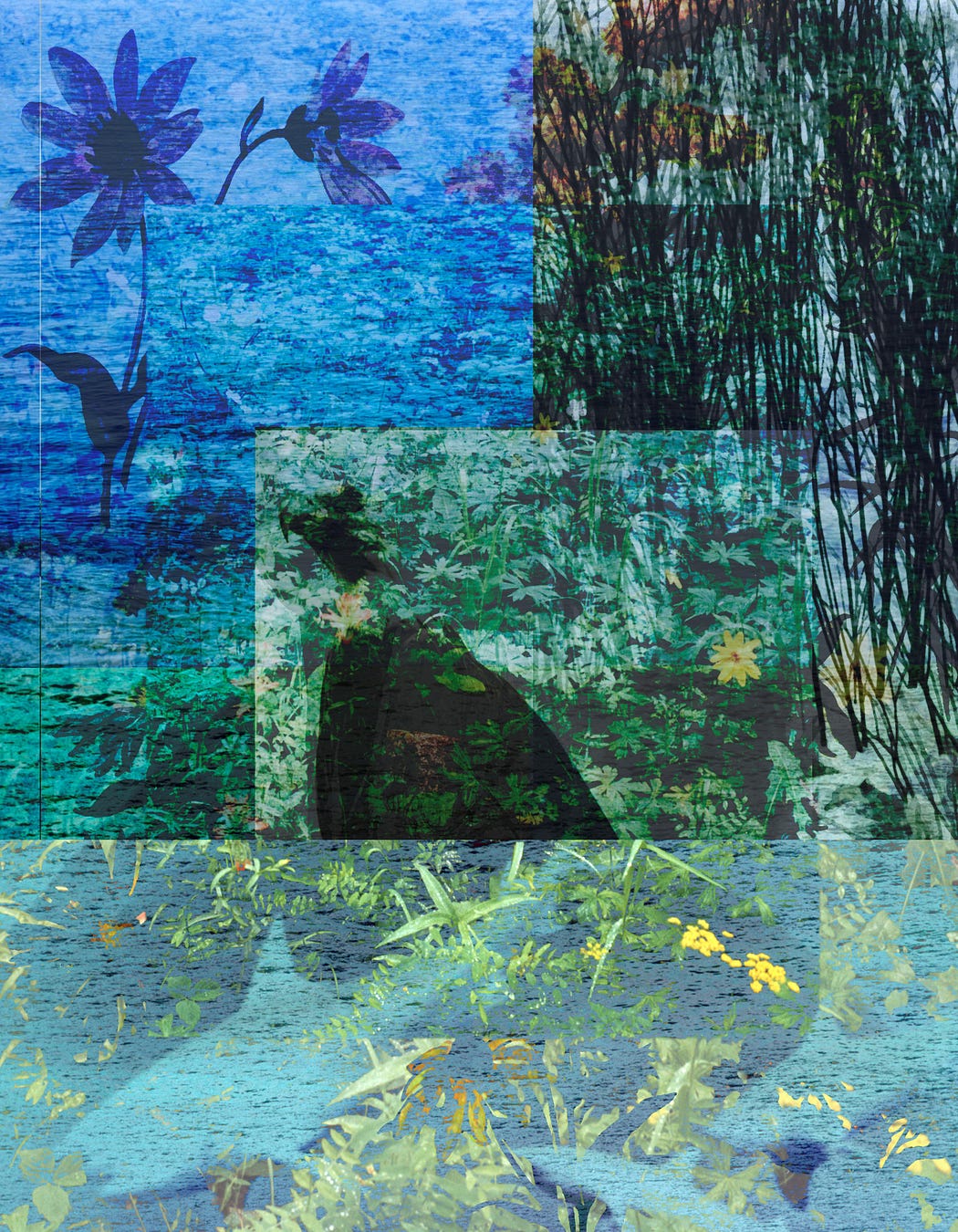
To be clear, we seek to learn from past mistakes, especially in order to create a robustly welcoming environment for equitable, inclusive, and diverse scholarship across plant and animal studies. It cannot be said often enough that the success of the “animal turn” in humanities and social sciences research can be credited to scholars reaching across disciplinary divides, particularly in the early days when nonhumans were considered scientific (again vs. humanistic) subjects. The strong feminist and queer-theoretical orientations of many early animal studies scholars had the significant benefit of rendering self-reflexive critique along the lines of feminist ecocriticism unnecessary. That said, the emergence only within the past few years of a robust body of animal studies scholarship that directly addresses the concerns of critical race and decolonial studies indicates how the field has been hampered in its inception by inattention to a broader range of social justice issues and contexts.
The over-representation of Anglophone and Euro-American scholars and projects is an ongoing issue in the academy, though one that the persistence of plants and animals across places and times can enable us to overcome. As editors, the global reach of our own different research networks — and those of our international editorial board — empowers our search for greater representation. The goal is a robust future for plant and animal studies research that will inspire action, ideally leading to meaningful socio-environmental changes for the benefit of all.
Critics should take note that the material history of writing alone makes the series a no-brainer. From ancient times, bark, bast, and vellum have been used as writing surfaces, inked in with ingredients like tree resin or gallnuts, animal bone or hide glue. Before the twentieth-century invention of synthetic adhesives, even books promoting animal rights contained remains of the proverbial horse sent to the glue factory. The detail in Nobel laureate Toni Morrison’s novel Beloved (1987) that enslaved protagonist Sethe is tasked with making the gallnut ink used by her white tormentor Schoolteacher likewise serves as a subtle reminder that the modern proliferation of writing materials has deep roots in the plantations of settler colonialism. That such details are not — or not yet — common knowledge, however, gives pause to consider how justice for those written out of the human fold can be advanced only by taking plants and animals seriously.
Non-human beings, including plants and animals, exist, like humans, in tight communities, where mutual exchanges are ongoing. Humanistic knowledge should embrace these complexities and avoid artificial compartmentalizations of different forms of life. With Plants and Animals, we want to encourage the creation of scholarship that overcomes such boundaries, which exist nowhere but as relics of hackneyed thought. Among many other vital connections, plants need animals, such as insects, to reproduce, and animals need plants to breathe. What better example is there than symbiotic relationships to illustrate the kinds of scholarly exchanges we wish to foster with our series?
Learn more here. For further information, please contact Dr. Laurel Plapp, Senior Acquisitions Editor, at Peter Lang at l.plapp@peterlang.com