


 de
de  fr
fr In light of recent world events, thinking about monsters almost inevitably leads one to ideas of disease and contagion. The monsters swirling around the Covid-19 are many, depending on your ideological view of the pandemic and where you are in the world — with geographical location being perhaps slightly less important than your economic one. The manifestation of the monstrosity of the virus can take the form of governmental inaction and/or ignorance, the face of those not wearing a mask or social distancing, or even the neo-liberalist supply and demand system itself. Indeed, it would seem in a pandemic there are too many monsters, too many faces that stare back at us and reflect our anxieties, or seem to embody the very danger of the virus.
We are still too close to the current outbreak for there to have been many artistic cultural expressions created in direct regard to it, but that does not mean that there are not earlier films that manage to touch on and express many of the societal and individual concerns that have arisen from it. Films such as Outbreak (Petersen: 1995) and Contagion (Soderbergh: 2011) would seem obvious choices, and unsurprisingly the latter film has seen a huge spike in popularity in recent months.
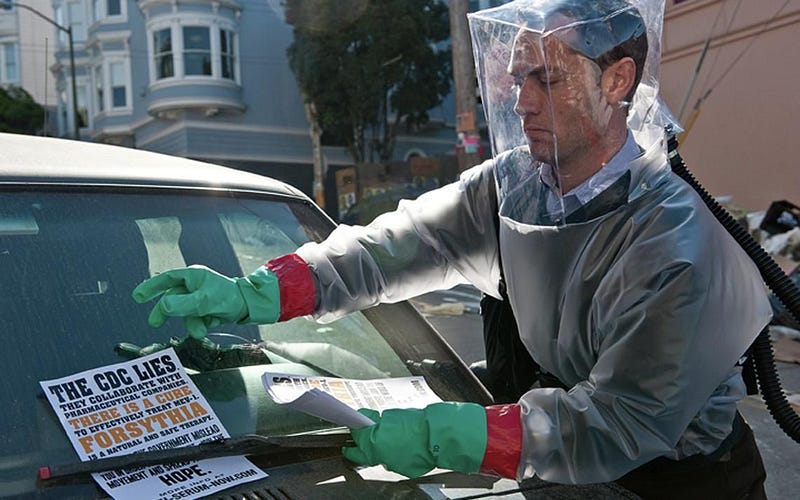
But these films often contain extraneous narrative points to create dramatic thrust that can obfuscate the realities of real-world pandemics. Contagion, in particular, promotes an over-importance on the elusive “patient zero” by attributing judgement and retribution on a philandering wife and mother, Beth Emhoff, and blame on a self-styled false prophet, Adam Krumwiede (Jude Law), who denies the virus, as opposed to the system that promotes and facilitates what he does. Similarly, there have been two subsequent films called Patient Zero — one by Bryan T. Jaynes (2012) and one by Stefan Ruzowitzky (2018) — and Cabin Fever 3: Patient Zero (Andrews: 2014), alongside various television series of the same name, that focus on this issue.

In fact, human anxieties connected to contagion, such as the unseen dangers from strangers and even those we love, have long been part of the Horror genre, in general, and the construction of its monsters, in particular. It is worth considering a wider range of examples that pick up on some central concerns around the Covid-19 outbreak and seeing what kinds of “faces” they propose for the monster of contagion. These features are not necessarily part of the virus’ “own story” as such, as with many monsters it does not get to speak for itself; rather, it is the narrative placed upon it by the communities trying to control, explain, and eradicate it.
At least for Western culture, the virus is seen as an invader from the East and in a curious way subliminally linked with the idea of the War on Terror, envisioning a kind of ideological weapon released on world. This equally explains much of the language around “war”, “battle”, “siege”, etc. that surrounds the reporting of the virus’ spread. Connected to this is the idea of “patient zero”, but here it is not just about the point of origin in the East, but in each country or community where the disease is found. The infected person becomes a monster that is perhaps unknowingly a carrier of the virus, keeping his or her presence a secret until others have been infected. Alongside this is the contagion’s invisibility, which means it is simultaneously everywhere and nowhere, creating a constant anxiety around where and how one might get infected: from another person, touching a surface, or inhaling a stranger’s breath. This anxiety can only be relieved by covering one’s face or protecting oneself from the outside world, which then leads on to isolation and confinement.
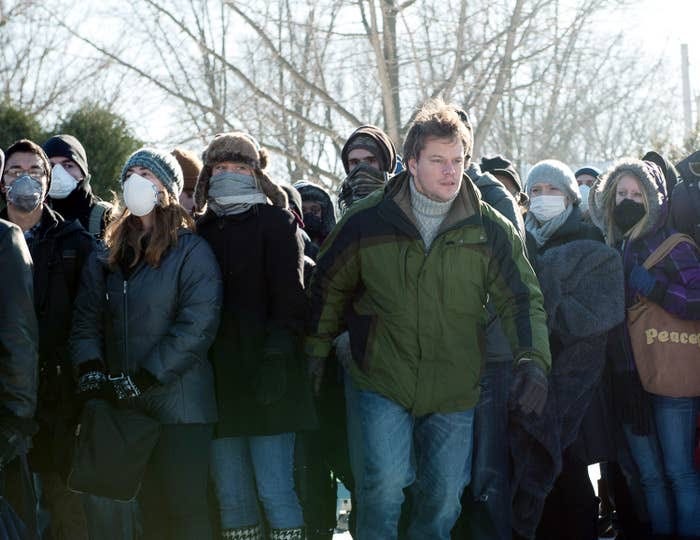
The last important trope is disinformation, or the dissemination of willfully wrong and contrary information. One might almost assign this to the immune system of the virus itself in that it infects the “body” of the community by convincing it that the virus, or the danger it presents, does not exist.
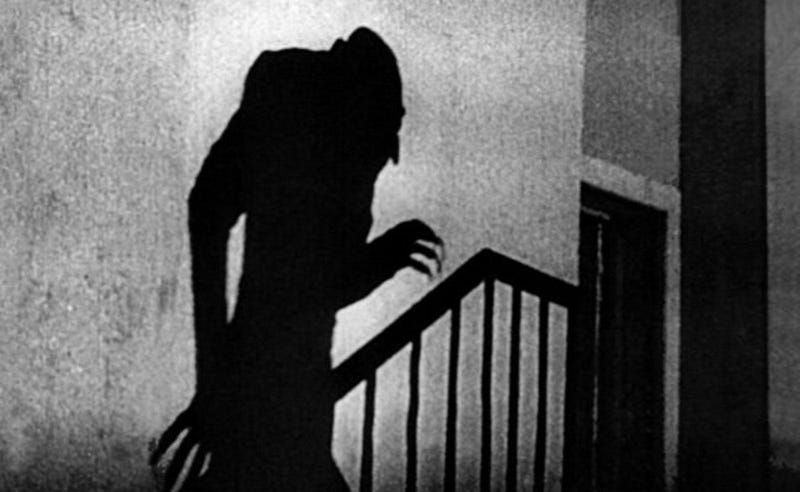
There is certainly much here that resonates with vampire narratives: a contagion from the East, and which arrives in secret; the infected do not look different yet are carriers of the contagion and infect others; misinformation and hysteria accompany the burgeoning contagion spread by “agents” of the disease. Vampires like Renfield (Dwight Frye) in Dracula (Browning: 1931) and Knock (Alexander Granach) in Nosferatu (Murnau: 1922) seem to embody the virus as we know it. Nosferatu, in particular, shows death arriving with the vampire, spreading uncontrolled through the town, a silent almost invisible presence, just like the vampire’s shadow that can travel and enter in wherever it likes. In contrast, Dracula can only enter where he is invited in, and wearing special accoutrements can keep him at bay.
Richard Matheson’s I Am Legend (1954) even more obviously plays on the idea of contagion, where a mysterious dust cloud blows around the globe, infecting everyone with an unknown disease. Some, with the help of medication, are able to survive, if not totally destroy the contagion, and move into an uncertain future. Matheson’s novel has been linked to the rise of the zombie apocalypse as envisioned by George Romero first scene in Night of the Living Dead (1968). In its many subsequent permutations, it often mirrors the spread of a virus, moving across populations, borders and continents. Whilst the zombie apocalypse represents a rather extreme scenario given the fortunately lower than expected mortality rate of Covid-19, the sense of anxiety and fear aroused in communities where the outbreak is heading towards is very real. World War Z, both novel (Brooks 2006) and film (Forster: 2013), capture the panic of the approaching and unstoppable contagion that either gently seeps into a population or breaks like a tremendous wave across its borders — interestingly, Brooks’ novel sees the outbreak originating in China due to the incursion of man into nature.

Something similar is seen in The Girl With All the Gifts where humanity becomes infected with a fungus. The fungus is shown as a variant of one that ordinarily only occurs in the South America rainforest and “zombifies” ants to spread its spores, but equally suggests that mankind has incurred into territory that should be left alone. As with Matheson’s novel, the effects upon the human population are catastrophic but similarly suggest that there is the hope of a new kind of society once the original contagion has receded.
The Strain (2014–17) by Guillermo del Toro and Chuck Hogan more directly focuses on the nature of the world that the current pandemic has so expertly taken advantage of. The original trilogy of novels (2009–11) by the same authors, from which the television series is taken, made much of the Master Vampire’s exploitation of consumerism and white corporate America in its bid to infect the world. However, by the time the series began in 2014, the rise of populism was already being felt and, by its conclusion, it can be seen to be directly criticizing the ideology behind Donald Trump’s administration.
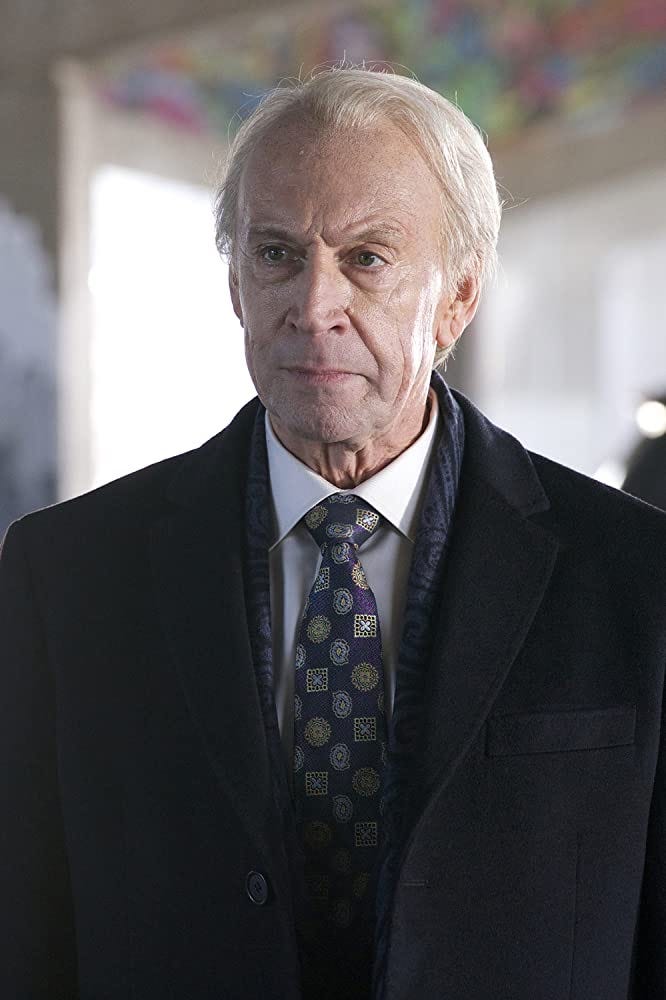
The contagion here arrives in America by plane, a major contributor to the spread of the recent pandemic, and sees the asymptotic infected being released back into the wider community of New York where the contagion then runs riot. The Master Vampire in control of this outbreak has taken advantage of corporate America — largely through the figure of Eldritch Palmer, who literally embodies white privilege and wealth — and its integration into every part of human life, so that his contagion has an open invitation into the heart of the city and the nation. They have control over the communications networks and media outlets, allowing them to misdirect the people with “fake” news as the disease spreads further and wider across the community. Once the contagion has taken hold, the uninfected become cowed in their anxiety and fear of those infected (the vampires), meaning that they prefer staying isolated in the safety of their own homes.
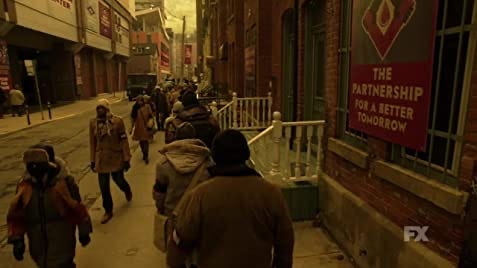
Curiously the series ends with the world returning quickly to normal after the source of the contagion is destroyed — in the novels, the world is forever changed by it — however, the infection lays dormant, waiting to be re-energized at some unknown point in the future.
As such, The Strain captures much of the details around the edges of contagion and the ideological background that facilitates the disease’s entry and unchecked spread through society. What it fails to capture fully is the facelessness and ambiguity of the monster at the heart of the current Covid-19 outbreak: it probably was not manufactured, it possibly started in bats, it most likely came from a wet-market in Wuhan. Although the Master Vampire is actually more of a “soul” that travels between hosts, it is the various hosts’ faces, in their vampiric similarity — hairless, bloodless, ghostly white with pointed ears — that solidify it and give it form.
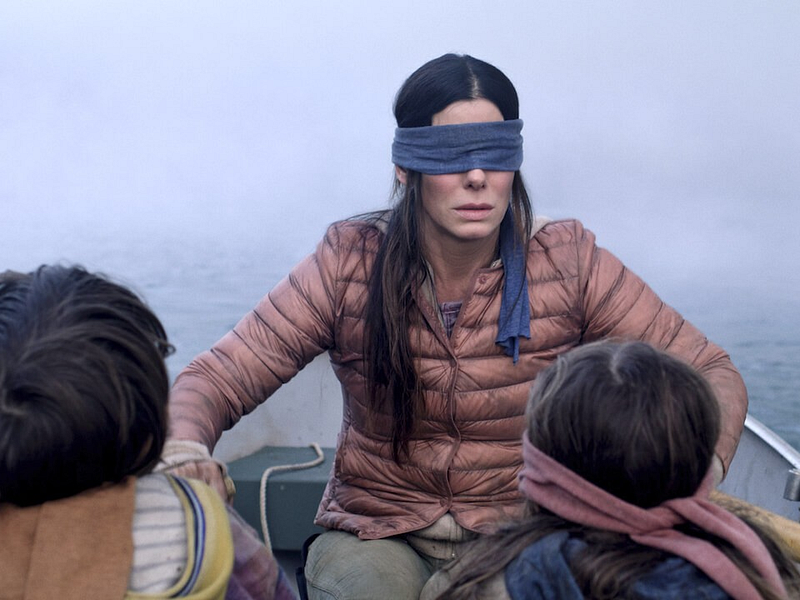
A film that escapes such explicitness and captures something more visceral about the Covid-19 pandemic is the film of Bird Box (Bier: 2019) based on the 2014 novel by Josh Malerman. As with many of the examples mentioned above, the unknown contagion spreads from the East — early reports suggesting Siberia in Russia — so that we see the main protagonist in the film, Malorie (Sandra Bullock), is with her sister Jessica (Sarah Paulson), watching reports on television about a mysterious disease in Europe in the morning and, by the afternoon, the pandemic has hit the city where they live and it has descended into panic and confusion.
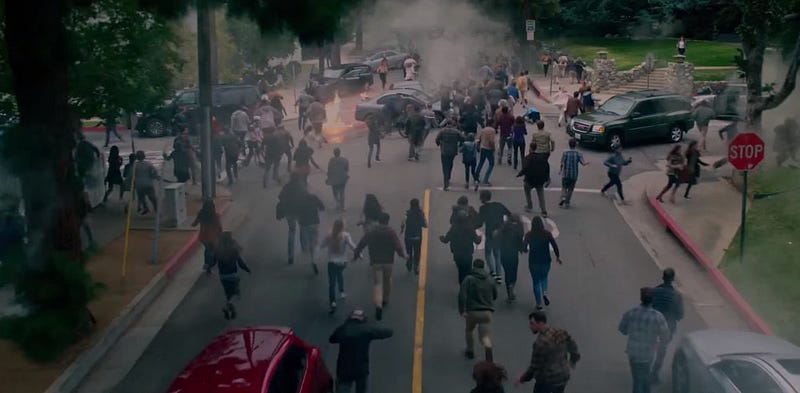
People quite literally lose who they are and begin acting hysterically, lost within themselves and literally dead to the outside world. The only refuge is total isolation indoors and reducing any contact with the outside world to an absolute minimum. Indeed, the anxiety created around leaving the house, or letting anyone or anything in, reflects the kinds of extreme emotional states that typify many individual experiences around the recent coronavirus outbreak. Malorie shares the house with a few others and each of them describes a different face to the contagion with no two stories sounding the same, other than they risked their very lives in being “seen” by the unseeable virus.
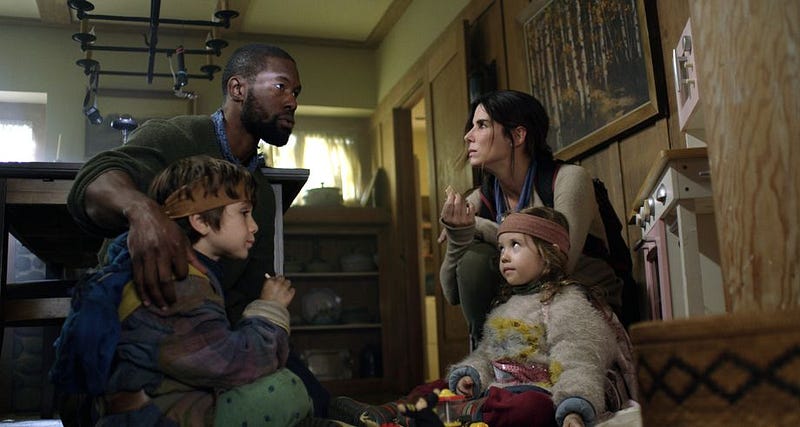
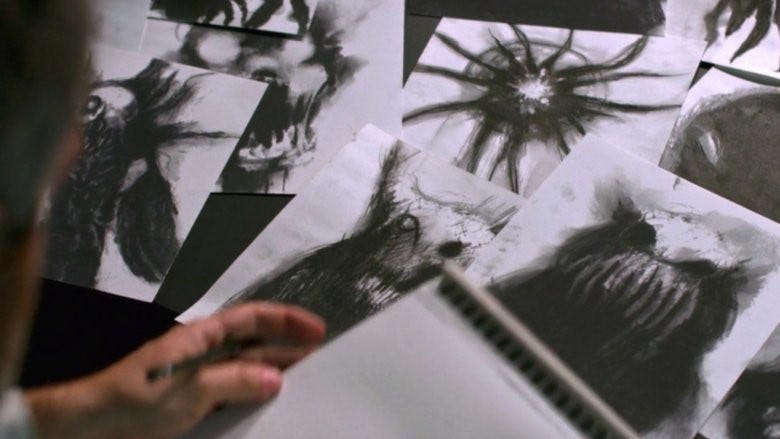
However, others seem to revel in the dangers presented by the pandemic, trying to encourage others to embrace its deadly ramifications. One such person enters the house: Gary (Tom Hollander) has no signs of contagion (asymptomatic) until he begins drawing images of what he has “seen”, and every picture shows a different monsters, suggesting the pandemic does not just have a thousand faces but an entirely different manifestation for each of them. It is not so much invisible but so infinite to be beyond our comprehension.

The presence of the contaminated stranger destroys the isolated safety of the home, forcing Malorie to leave with Tom (Trevante Rhodes) and two babies that she refuses to name other than “Girl” and “Boy”. Five years pass and Tom is killed, forcing Malorie and the children to move on and take to the river. However, to ensure the safety of herself and the children, they all have to wear protection over their faces to stop the contagion entering their bodies. As they travel there are constant shouts and distractions encouraging her to remove her face covering, but she resists. After many hours on the river and a long trek through woodlands she finally reaches sanctuary. Once there she uncovers her face and names the children — Olympia and Tom — knowing this new place is safe from the contagion, envisioning it as a future that this disease will never be able to touch and she will never need to see any of the faces of the monster again.
In a sense, then, many of the contagion narratives here are not so much about how humanity deals with the outbreak, but what changes it leaves in its wake. As seen with recent events in relation to Covid-19, many envision a radically different future, or a “new now,” as seen in Bird Box, Girl With All the Gifts, or the novel of World War Z, where it ushers in a redistribution wealth and influence around the world. In these the “work” of the contagion is complete, its power spent signaling a time when whoever is left can rebuild an environment beyond the ideologies that unleashed and/or invited the disease to begin with. More troubling are narratives such as the film of World War Z, and the television series The Strain, as here the world returns to what it was almost immediately. No lessons have been learned and no change in behaviour or lifestyle is required: the same environment that created the outbreak is recreated, regardless of the inevitability of the outcome. The future becomes one of waiting for the undead monsters of contagion to raise again.
Simon Bacon, editor of Monsters: A Companion
In response to the COVID – 19 crisis we would like to update you as we respond to the challenges created by this global emergency. As online retailers are shifting their focus away from books to prioritize household health and safety items, we want to take this time to reassure you that all our books are still available directly from our website. At this time, our printing partners are still operational, and orders are still being processed. If this changes, we will let you know. Additionally, most of our titles are available as e-books, which can also be ordered from our website and many titles are available as Open-Access. We would also like to assure our authors that we are committed to continuing our work together with minimum disturbance his difficult time. However, please note that our staff members are currently working remotely, so it is best to contact us by email.
We are pleased to announce that Japan’s Awakening: Moving toward an Autonomous Security Policy written by Lionel P. Fatton and Oreste Foppiani has been awarded the 2019 Otto Hieronymi Prize. The award ceremony will take place at the 25th International Humanitarian & Security Conference in Geneva.
The Otto Hieronymi Prize is a bi-annual book prize for the best scholarly monograph in the field of International Relations.It was created and sponsored by the faculty of the Department of International Relations at Webster University Geneva in 2019 to honor Otto Hieronymi, former head of the Department and founder of the annual International Humanitarian and Security Conference.
Published in 2019, Japan’s Awakening presents the arguement that the Japan faces an entrapment-abandonment dilemma in which any attempt to prevent abandonment by the United States vis-à-vis China negatively affects its national security by heightening the risk of entrapment in the Korean Peninsula, and vice versa.
Please join us for a wine reception and discussion of climate change!
Cli-Fi: A Companion, edited by Axel Goodbody and Adeline Johns-Putra, will be launched at the Oxfam Bookshop (56 St Giles, Oxford) at 6 pm on Wednesday 11 March. Axel Goodbody and guests will speak about cli-fi (climate change fiction) and its value for teaching and learning about the environmental crisis. Special guest Robin Willoughby, Head of Food and Climate Policy and Campaigns for Oxfam GB, will talk about Oxfam’s work to fight the causes and consequences of climate change.
A book display of cli-fi titles is now available in the Oxfam Bookshop window. Please stop by and browse!
The event coincides with Academic Book Week, 9-13 March 2020, whose theme is ‘Academic Books and the Environment’. Free admission: Reserve your place now!.
Jana Buresova has been awarded the Honorary Silver Medal of Jan Masaryk by the Czech Republic for her book The Dynamics of Forced Female Migration from Czechoslovakia to Britain, 1938–1950
Dr. Buresova was honoured at an event at the Czech Embassy on 5 November 2019. The Honorary Silver Medal is awarded by the Ministry of Foreign Affairs of the Czech Republic for outstanding contributions to the development of relations between the Czech Republic and the United Kingdom, and is one of the highest awards that can be received by foreign nationals. Read more about her research and activities at the IMLR’s Research Centre for German & Austrian Exile Studies here
Dr. Buresova’s book was published in the Exile Studies book series edited by Andrea Hammel earlier this year.
We are pleased to report that Interpersonal Arguing by Dale Hample has won the 2019 Gerald R. Miller Outstanding Book Award presented by the Interpersonal Communication Division of the National Communication Association (NCA). The award was announced at the 2019 NCA Annual Convention in Baltimore on November 16.
The National Communication Association (NCA) is a not-for-profit membership-based scholarly society founded in 1914. NCA’s mission is to advance Communication as the discipline that studies all forms, modes, media, and consequences of communication through humanistic, social scientific, and aesthetic inquiry. The Interpersonal Communication Division exists to (a) stimulate research and scholarship on interpersonal communication; (b) develop and disseminate methods and materials for instruction about interpersonal communication; (c) facilitate communication among those interested in the study of interpersonal communication, both within the association and with other parties; and (d) plan convention programs and preconference workshops dealing with interpersonal communication.
Published in 2018, Interpersonal Arguing aims to address intercultural, gender, intersectional and critical communication courses but is also suited for those in the general public who wish to understand the deceptive nature of the media.
We are pleased to announce that Muslim Women and White Femininity by Haneen Shafeeq Ghabra has won the 2019 Outstanding Book of the Year for the International and Intercultural Communication Division (IICD) of the National Communication Association (NCA). The award was announced at the 2019 NCA Annual Convention in Baltimore on November 15.
The National Communication Association (NCA) is a not-for-profit membership-based scholarly society founded in 1914. NCA’s mission is to advance Communication as the discipline that studies all forms, modes, media, and consequences of communication through humanistic, social scientific, and aesthetic inquiry. The International and Intercultural Communication Division of NCA (IICD) promotes research and teaching in intercultural, international, and intergroup (including interracial/interethnic) communication.
Published in 2018, Muslim Women and White Femininity aims to address intercultural, gender, intersectional and critical communication courses but is also suited for those in the general public who wish to understand the deceptive nature of the media.
We are pleased to announce that The Mabo Turn in Australian Fiction by Geoff Rodoreda has won the Association for the Study of Australian Literature‘s Alvie Egan Award 2019! The winner was announced at ASAL’s annual conference in Perth on 2-5 July 2019.
The award is for the best first book of literary scholarship by an early career researcher (ECR) on an Australian subject, published in the preceding two calendar years.
Published in 2018, The Mabo Turn in Australian Fiction is the first volume in the Australian Studies: Interdisciplinary Perspectives series edited by Anne Brewster. This is the first in-depth, broad-based study of the impact of the Australian High Court’s landmark Mabo decision of 1992 on Australian fiction. It takes a closer look at nineteen contemporary novels – including works by David Malouf, Alex Miller, Kate Grenville, Thea Astley, Tim Winton, Michelle de Kretser, Richard Flanagan, Alexis Wright and Kim Scott – in order to define and describe Australia’s literary imaginary as it reflects and articulates post-Mabo discourse today.
This article looks at three recent, highly successful horror films A Quiet Place (Krasinski: 2018), Bird Box (Bier: 2018) and The Silence (Leonetti: 2019), all of which centre their respective plots around the horror of life in the twenty-first century and its intersection with ideas around deafness and/or blindness. It should be noted that whilst all the narratives contain characters that are shown as being either blind or deaf, it is actually the actions of not seeing, not hearing and not making-a-sound that are of prime importance to the various films’ outcomes.
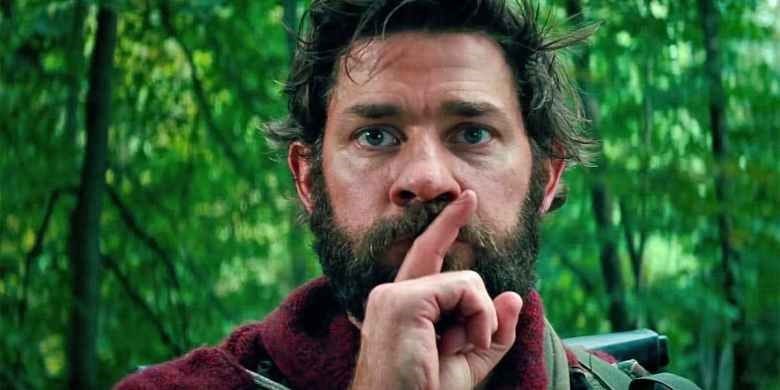
Broadly speaking, all three movies fit into the category of Smart Horror, where narrative takes precedence over, though does not preclude, jump scares or graphic gore. The three films fit alongside other recent movies such as Hush (Flanagan: 2016) and Don’t Breathe (Alvarez: 2016), which feature blind and deaf central characters and represent these ways of being as equally a curse (a “disability”) and a blessing (a “gift”). Indeed, as with many other films showing blindness or deafness, they can be seen to fit into the rather simplistic and demeaning normative adage that both will inevitably cause heightened acuity in the other senses to “make up” for the deficiency. This, however, does not recognize difference and equality but replaces it with the category of “special” and/or “gifted”, which labels the deaf or blind person as being “safe” but still separate from normative society.[1] What is particular about A Quiet Place, Bird Box and The Silence is that they do not show individually motivated threats or household invasion, such as in Hush or Don’t Breathe, but an all-consuming plague and existential threat to humanity itself and it is only through being or mimicking deafness or blindness that a few might survive this barrage of excess.
The horror manifested by the plague is usually of mysterious origin, being from outer-space or a pre-historic cavern, and seems to be everywhere at once, but it is worth looking more closely at each film to see how blindness or deafness works within each and what it might say about the source and meaning of horror in each story.
Bird Box is set in the present day and shows a world succumbing to a mysterious invasion that is completely based on or around seeing. It began with unexplained mass suicides in Siberia — which resonates with The Thing (Carpenter: 1982) and an unearthed contagion that produces mass hysteria — and quickly spread across the globe. It is never specified exactly what the cause is other than that it’s possibly from beyond our world and that even a glimpse of these alien entities will cause the viewer to go insane — here there is a reference to Event Horizon (Anderson: 1997) and a Hell dimension where sensory excess causes people to gouge their own eyes out. The only way to survive this visual plague is to constantly wear a blindfold, effectively making oneself blind. The story follows Majorie (Sandra Bullock) who leaves the city to try to find a safe haven for herself and two children she has with her. This she eventually does when she comes across a school for the blind that is far away from built-up areas and has created something of a sanctuary for the “unsighted” away from the world, though in the book from which the film is taken the sanctuary is peopled by those who have gouged their eyes out. The screen adaptations of John Wyndham’s The Day of the Triffids (1951) also use the idea of a sanctuary in a world of the blind, though in the first film adaption of the same name by Peter Sekely in 1963, the sanctuary is overrun and abused by the sighted and, in the more recent mini-series by Nick Copus, is shown as corrupt from within. What is interesting in the film is that the unseen, but all-seeing, plague is more strongly associated with populated areas — Marjorie leaves the city to find safety — and is a kind of sensory overload, as though the victims are receiving too much sensation or information through their eyes for their brains to cope with, hence driving them insane.
A Quiet Place shows an indeterminate post-apocalyptic future where civilization has already collapsed and the cities have been abandoned. All this has happened due to the sudden invasion of a huge amount of deadly, flying creatures from another world — it is never revealed where the creatures might be from — who have amazingly sensitive hearing with which to pinpoint their victims. The film follows the Abbott family, whose eldest daughter, Regan (Millicent Simmonds), is deaf and which somehow makes them uniquely prepared for the situation they are in.[2] In fact, not only does the ability to use sign language keep them alive, but the cochlear implant that the father makes for his daughter turns out to be a weapon against the creatures. Although the set-up is slightly different from Bird Box, there is also the idea of sensory overload here as the creatures themselves can be seen to materialize or coalesce from the sensory excess of the twenty-first century and hence the need to abandon cities, as the focus of such excess, and retreat to places of extreme quiet. Even the dramatic effects that sonic feedback have on the monsters, discovered by accident, can be seen to be a kind of anti-sensory device, where the excess that created them also nullifies them.

Something similar occurs in The Silence, which is again set in the present, and where the Andrews family have a daughter, Ally (Kiernan Shipka), who has been deaf for the previous three years, when everything suddenly changes. Some researchers break into an underground cavern and release swarms of voracious, flesh-eating prehistoric flying reptiles, called Vesps, that have super sensitive hearing. The Vesps are attracted to noise and immediately head to the nearest cities to feed, prompting the Andrews to leave for quieter surroundings in the countryside.
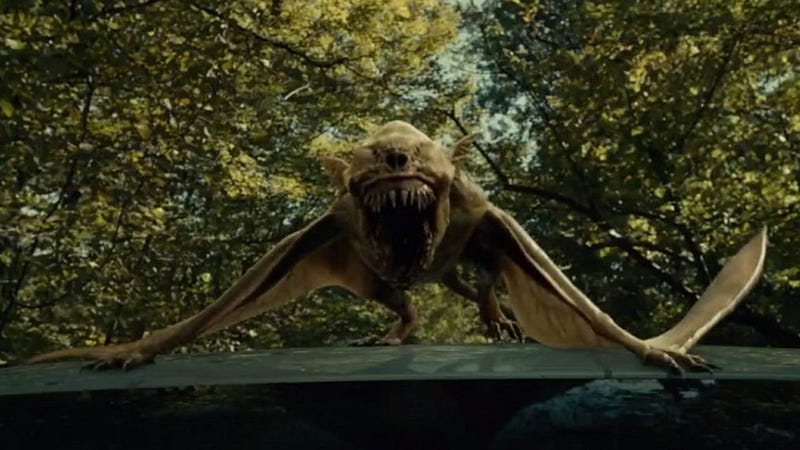
As in A Quiet Place, the ability to communicate without speaking is central to the family surviving and, after a run-in with a cult that wants the girl for themselves, the use of silent communication allows the Andrews to reach a refuge and plan for a future where, maybe, everyone learns to live quietly. The film combines the two earlier ones, seeing the creatures released by twenty-first-century technology but not so easily dispelled, requiring sanctuary away from the sensory excess of the modern world to plan some kind of possible future.
In this way, it is possible to read all these creatures as a manifestation of our lifestyles in the twenty-first century and the kinds of sensory overload that can be provided via visual, aural and even smart technology. All the films show humanity being literally consumed by this over-stimulation that will drive them either mad or tear them apart. Horror here, then, is invisible, a psychologically affective environment born of cognitive dissonance, which is the uncontrollable and uncontainable essence of life in the twenty-first century: not the extremes of politics, religion, greed, or even climate, but the “noise” created by, in, and around them.
In this sense the films go against the premise of other such recent Smart Horror narratives such as The Ritual (Bruckner: 2017), Get Out (Peele: 2017) and The Apostle (Evans: 2018), where leaving the city is the most dangerous thing you can do, and usually because there is a loss of communication and/or signal which separates the protagonists from civilization and the present.[3] In Bird Box, A Quiet Place and The Silence these are the very things that bring about death and destruction: the modern world will literally kill you. Within this then, anything that separates individuals from social normativity is a vital means of survival; perceived disability, social exclusion and otherness then become the markers of those that can survive the horrors of twenty-first century, an evolutionary adaptation that can negate the sensorial and cognitive overload or a world that is just too much.
Simon Bacon, editor of Horror: A Companion
[1] See Terri Thrower, ‘Overcoming the Need to “Overcome”: Challenging Disability Narratives in “The Miracle”,’ in Marja Evelyn Mogk, ed., Different Bodies: Essays on Disability in Film and Television (Jefferson: McFarland & Co.: 2013), pp 205–18. (Go Back)
[2] Though it should be mentioned they lose their youngest son to the creatures. (Go Back)
[3] Interestingly, It Follows (Mitchell: 2014) occurs on the suburban area between the city and the countryside where urban decay is seeing the rural slowly reclaiming the land, or the city slowly regressing back to it. (Go Back)
Toxic Silence: Race, Black Gender Identity, and Addressing the Violence against Black Transgender Women in Houston by Dr. William T. Hoston has won the 2019 Lambda Literary Award in LGBTQ studies. The award was announced at the 31st Annual Lambda Literary Award Ceremony at the NYU Skirball Center for the Performing Arts, in New York City.
Presented by the LAMBDA Literary Foundation, the Lambda Literary Awards (the “Lammys”) is the most prestigious LGBTQ literary event in the world. For over 30 years, the “Lammys” have honored the best of lesbian, gay, bisexual, and transgender literature.
Published in 2018, Toxic Silence examines the patriarchal and heteronormative frames within the black community and larger American society that advances the toxic masculinity which violently castigates and threatens the collective embodiment of black transgender women in the USA.