results
-
Sociología política para los desafíos del siglo XXI
11 publications
-
Studies in Sociology: Symbols, Theory and Society
"The series has been created by Elzbieta Halas and Risto Heiskala in order to stimulate and develop cooperation in research on the meaning, forms and functions of symbolism in society. The series is open to various theoretical and methodological orientations in the studies of social symbolism. The aim of the series is to show the central place of the problems of symbolization and symbolism in sociology - processes of symbolization in everyday life, in collective actions, social movements, organizations, in the public sphere of institutions, as well as in the construction of collective memories and identities, in the construction of the state and the nation, and in international relations and in globalization processes. The series presents theoretical and empirical questions of symbolic power, symbolic hegemony, symbolic control and symbolic politics; integrating as well as transforming and liberating functions of social symbolism in the processes of interactions and communication which shape knowledge, values and social sentiments."
15 publications
-
Soziologie und Anthropologie. Studies in Sociology and Anthropology
ISSN: 0721-4073
Die Reihe Soziologie und Anthropologie widmet sich engagierter Forschung zu aktuellen und gesellschaftspolitisch relevanten Themen. Ein Schwerpunkt der Reihe liegt auf empirischen und ethnografischen Arbeiten, die eine Brücke zwischen gesellschaftlicher Analyse und anthropologischer Forschung schlagen und über die jeweiligen Grenzen hinaus eine Bedeutung entfalten können. Themen wie Sicherheit, Überwachung, Polizei, Rassismus, Migration, Grenzen, Intersektionalität, Macht und Herrschaft sind dabei ebenso vertreten wie Ansätze aus der kritischen Kriminologie oder Geografie, der politischen Anthropologie oder der Stadtforschung. Ziel der Reihe ist eine kritische, perspektivenvielfältige und emanzipatorische Wissenschaft.
13 publications
-
Black Studies and Critical Thinking
ISSN: 1947-5985
Black Studies and Critical Thinking is an interdisciplinary series which examines the intellectual traditions of and cultural contributions made by people of African descent throughout the world. Whether it is in literature, art, music, science, or academics, these contributions are vast and far-reaching. As we work to stretch the boundaries of knowledge and understanding of issues critical to the Black experience, this series offers a unique opportunity to study the social, economic, and political forces that have shaped the historic experience of Black America, and that continue to determine our future. Black Studies and Critical Thinking is positioned at the forefront of research on the Black experience, and is the source for dynamic, innovative, and creative exploration of the most vital issues facing African Americans. The series invites contributions from all disciplines but is specially suited for cultural studies, anthropology, history, sociology, literature, art, and music. Subjects of interest include (but are not limited to): Education, Sociology, History, Media/Communication, Spirituality and Indigenous Thought, Womens Studies, Policy Studies, Advertising, African American Studies, Black Political Thought.
167 publications
-
Critical Education and Ethics
ISSN: 2166-1359
The Critical Education and Ethics series intends to systematically analyze the pitfalls of social structures such as race, class, and gender as they relate to edu-cational issues. Books in the series contain theoretical work grounded in prag-matic, society-changing practices. The series places value on ethical responses, as prophetic commitments to change the conditions under which education takes place. The series aims to (1) Further the ethical understanding linking broader social issues to education by exploring the environmental, health-related, and faith/spiritual responses to our educational times and policy, and (2) Ground these works in the everyday world of the classroom, viewing how schools are impacted by what critical researchers do. Both theoretically and practically, the series aims to identify itself as an agent for community change. The Critical Education and Ethics series welcomes work from emerging scholars as well as those already established in the field.
18 publications
-
Critical Praxis and Curriculum Guides
The Critical Praxis and Curriculum Guides is a curriculum-based series reflective of theory creating praxis. The series targets not only undergraduate and graduate audiences, but also tenured and experienced teachers of all disciplines. Research suggests that teachers need to have well-designed, thematic-centered curricula and lessons at their disposal. This is accomplished when the school works as a community to meet their own needs. Community in this sense includes working collaboratively with students, parents, and local community organizations to help build the curriculum. Practically, this means that time is devoted to professional development workshops, not exam reviews or test preparation pointers, but real learning. Together with administrators, teachers form professional learning communities (PLCs) to discuss, analyze, and revise curricula and share pedagogical strategies that meet the needs of their particular school demographics. This communal approach was found to be more successful than requiring each individual teacher to create lessons on her/his own. Ideally, we would love it if each teacher could create their own authentic lessons because only s/he truly knows her/his students and we encourage it, because it is possible! However, as educators ourselves, we understand the realities our colleagues in public schools face, especially when teaching in high needs areas. The Critical Praxis and Curriculum Guides provides relief for educators needing assistance in preparing their lessons. When possible, and in the spirit of communal practices, the series welcomes co-authored books by theorists and practitioners or solo-authored books by an expert deeply informed by the field. Because we strongly believe that theory guides our practice, each guide will blend theory and curriculum chapters creating a praxis. All, of course, in a critical pedagogical framework. Ultimately, the guides will serve as resources for teachers to use, expand upon, revise, and re-create.
13 publications
-
Critical Studies in Democracy and Political Literacy
ISSN: 2166-5036
Why do so few people vote? What is political engagement? How does education intersect with democracy and political literacy? What can be learned from interdisciplinary studies on democracy? How do we cultivate political literacy? What is the relevance of elections in light of war, poverty, discrimination, social inequalities, etc.? What are the alternatives to the traditional electoral, representative, party-politics models that have characterized our societies? Is the mainstream media holding government to account, disseminating propaganda or fuelling the need to pacify the population? How do international systems, approaches and realities related to democracy compare, and what can we learn from others? These are some of the questions that are addressed through this book series. Seeking to fill an important gap in the literature, this book series takes on the theme of democracy in a multi-/inter-disciplinary, comprehensive, and critical way. Some books have democracy in the title but do not make it the focus, and often books that address more directly, for example, multiculturalism, media studies, or school reform may delve into the area of democracy without fully deconstructing what it is, how it functions, how people can shape and intersect with it, and how it is used (or misused) to distort power relations, which is at the base of teaching, learning and action. Thus, a broader range of materials specifically tailored to teacher-education and scholars within the education field is desirable. Similarly, the overlapping and interdisciplinary nature of the study of democracy bleeds naturally into the areas of media studies, sociology, political science, peace studies, multiculturalism, feminist studies, and cultural studies, etc., all of which have a natural and inextricable relationship to and within education.
6 publications
-
Critical Studies of Latinxs in the Americas
ISSN: 2372-6830
The Latinx presence continues to grow and intersect with every aspect of life in the 21st century. This is evident when one considers the appointment of Sonia Sotomayor as Associate Justice to the United States Supreme Court. As well as the prominence of distinct Latinx individuals in various spheres of social, cultural, and political life such as Mario J. Molina, Nobel Prize winner and recipient of the Medal of the Presidential Medal of Freedom in 2013; and Jorge Maria Bergoglio (Pope Francis) who has revolutionized the Catholic church since he became the highest ecclesiastical authority of the Catholic world in 2013. Latino Studies, as an academic field of inquiry, began to emerge during the early 1990s surfacing from the more recognized field of Chicano Studies. As such, the major contributions to the field first emerged from Mexican/Chicano scholarship—publications such as Aztlán, the most important journal in the field of Chicano Studies since 1970; Gloria Anzaldúa’’s groundbreaking memoir/essay, Borderlands/La Frontera: The New Mestiza (1987); George J. Sanchez’s historical account, Becoming Mexican American: Ethnicity, Culture, and Identity in Chicano Los Angeles, 1900-1945 (1995); and the two volumes of The Chicano Studies Reader: An Anthology of Aztlan, 1970-2010. These are a few examples of the consolidation and the continuing development of Chicano Studies in the United States. In the past two decades, Latino Studies have grown and expanded significantly. There have been a large number of publications about Latinxs in the Midwest and North East; in addition, due to the fast-growing population of Latinxs in the area, new scholarship has emerged about the Latinxs in the New South. Some examples of the emerging field of Latino Studies are the Latinos on the East Coast (2015) edited by Yolanda Medina and Ángeles Donoso Macaya, Global Cities and Immigrants (2015) by Francisco Velasco Caballero and María de los Angeles Torres; the Handbook of Latinos and Education (2010) edited by Enrique Murillo, et al.; Angela Anselmo’s and Alma Rubal-Lopez’s 2004 On Becoming Nuyoricans; David Carey Jr. and Robert Atkinson (2009) Latino Voices in New England; Yolanda Prieto’s case study entitled, The Cubans of Union City: Immigrants and Exiles in a New Jersey Community (2009); and Lawrence La Fontaine-Stokes’ Queer Ricans Cultures and Sexualities in the Diaspora (2009). Critical Studies of Latinxs in the Americas will become the counterpart of the aforementioned research about the Latinx diaspora that deserve equal scholarly attention and will add to the academic field of inquiry that highlights the lived experience, consequential progress and contributions, as well as the issues and concerns that all Latinxs face in present times. This provocative series will offer a critical space for reflection and questioning of what it means to be Latinx living in the Americas, extending the dialogue to include the North and South hemispheric relations that are prevalent in other fields of global studies such as Post-Colonial Theory, Post-Colonial Feminism, Latin American and Caribbean Studies, Critical Race Theory, and others. This broader scope can contribute to prolific interdisciplinary research and can also promote changes in policies and practices that will enable today’s leaders to deal with the overall issues that affect us all. Topics that explore contemporary inequalities and social exclusions associated with processes of racialization, economic exploitation, health, education, transnationalism, immigration, identity politics, and abilities that are not commonly highlighted in the current literature as well as the multitude of socio-economic, and cultural commonalities and differences among the Latinxs in the Americas will be at the center of the series. As the Latinx population continues to grow and change, and universities enhance their Latino Studies programs to be inclusive of all types of Latinx identities, a series dedicated to the lived experience of Latinxs in the Americas and a consideration of their progress and concerns in the social, cultural, political, economic, and artistic arenas is of incredible value in the quest for pedagogical practices and understandings that apply a critical perspective to the issues facing scholars in this area of study. Scholars, faculties, and students alike will benefit from this series. Expressions of interest for authored or edited books will be considered on a first come basis. A Book Proposal Guideline is available on request. For individual or group inquiries please contact the Series Editors at ymedina@bmcc.cuny.edu & Margarita.MachadoCasas@UTSA.edu.
49 publications
-
-
(Post-)Critical Global Childhood & Youth Studies
This book series focuses on post-critical research in global childhood & youth studies and education. It aims to trace the stimulating exchange of ideas on contemporary issues affecting children and young people around the world, while exploring possibilities for local and global social change. The intent is to situate, and possibly deconstruct, the systems of reasoning that govern human development and education, including deconstructing predominant critical paradigms. The series encourages innovative writing formats as well as novel theoretical and methodological approaches to co-producing knowledge in fields such as: urban, rural, and indigenous childhood & youth; child poverty and social policy, ecology and youth activism; immigration & social and educational inequalities; the experience of schooling and machine learning in diverse contexts of global education. It is addressed to relevant scholars and students as well as to policy makers, educators, and youth workers from all over the world. If you are interested to publish a monograph or an edited book with this Book Series, please contact your respective local series editor: Brazil: Prof. Márcia Amador-Mascia, Universidade São Francisco: marciaaam@uol.com.br Spanish-speaking Latin America: Prof. Silvia Grinberg, Consejo Nacional de Investigaciones Científicas y Técnicas, Argentina: grinberg.silvia@gmail.com Asian countries: Ass. Prof. Hongyan Chen, East China Normal University, Shanghai: chenhongyanup@126.com Rest of world: Prof. Michalis Kontopodis, University of Leeds: mkontopodis@pm.me
7 publications
-
Critical Qualitative Research
Critical research serves to address societal structures and institutions that oppress and exclude so that transformative actions can be generated that reduce inequitable power conditions. We invite proposals for authored and edited volumes that describe critical social science research (re)conceptualizations, practices, and methodologies that can be used by other scholars who wish to design and implement critical qualitative inquiry. Critical Qualitative Research challenges modernist orientations toward research by using social theory, designs, and research practices that emerge from critical questions like: Who/what is heard? Who/what is silenced? Who is privileged? Who is disqualified? How are forms of inclusion/exclusion being created? How are relations of power constructed and managed? How do various forms of privilege and oppression intersect to impact life possibilities for various individuals and groups? How do the arts inform research? How can multiple knowledges be engaged in research? How can research be socially just?
46 publications
-
-
-
-
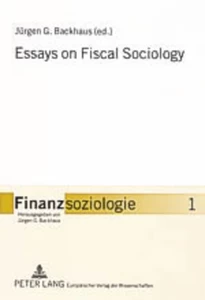
Essays on Fiscal Sociology
©2005 Edited Collection -
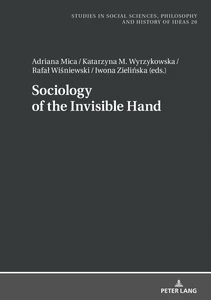
Sociology of the Invisible Hand
©2018 Edited Collection -
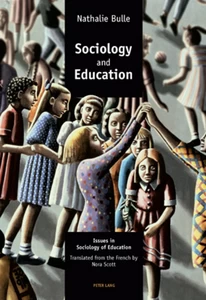
-
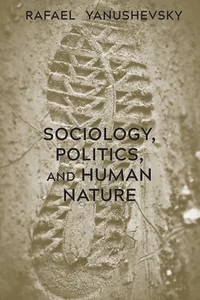
Sociology, Politics, and Human Nature
©2021 Monographs -
-
-
-
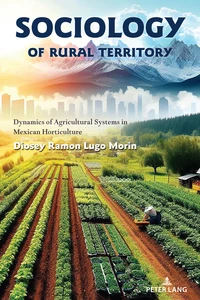
Sociology of rural territory
Dynamics of agricultural systems in Mexican horticulture©2024 Monographs -
From Critical Theory to Critical Political Theology
Personal Autonomy and Universal Solidarity©1994 Others -
New Horizons in Philosophy and Sociology
©2017 Edited Collection -