results
-
Culture, Curriculum and Education
0 publications
-
Critical Praxis and Curriculum Guides
The Critical Praxis and Curriculum Guides is a curriculum-based series reflective of theory creating praxis. The series targets not only undergraduate and graduate audiences, but also tenured and experienced teachers of all disciplines. Research suggests that teachers need to have well-designed, thematic-centered curricula and lessons at their disposal. This is accomplished when the school works as a community to meet their own needs. Community in this sense includes working collaboratively with students, parents, and local community organizations to help build the curriculum. Practically, this means that time is devoted to professional development workshops, not exam reviews or test preparation pointers, but real learning. Together with administrators, teachers form professional learning communities (PLCs) to discuss, analyze, and revise curricula and share pedagogical strategies that meet the needs of their particular school demographics. This communal approach was found to be more successful than requiring each individual teacher to create lessons on her/his own. Ideally, we would love it if each teacher could create their own authentic lessons because only s/he truly knows her/his students and we encourage it, because it is possible! However, as educators ourselves, we understand the realities our colleagues in public schools face, especially when teaching in high needs areas. The Critical Praxis and Curriculum Guides provides relief for educators needing assistance in preparing their lessons. When possible, and in the spirit of communal practices, the series welcomes co-authored books by theorists and practitioners or solo-authored books by an expert deeply informed by the field. Because we strongly believe that theory guides our practice, each guide will blend theory and curriculum chapters creating a praxis. All, of course, in a critical pedagogical framework. Ultimately, the guides will serve as resources for teachers to use, expand upon, revise, and re-create.
13 publications
-
LaCuLi. Language Culture Literacy
In the LaCuLi. Language Culture Literacy series, studies in foreign language research and intercultural communication will be published, as well as studies in foreign-language didactics. Research on the processes of language acquisition and language teaching, with a special focus on language awareness, cultural awareness and learner perspectives, is central to the series. It focuses on empirical research in intercultural foreign didactics as well as on cultural aspects of the workplace. Multi-perspective, multi-language and multi-cultural comparative approaches are highlighted. Fields of application are comparative analyses of political speeches, news, ads and business communication in an international context, as well as in learner texts in multi-language and multi-cultural learning environments. In der Reihe LaCuLi. Language Culture Literacy erscheinen Studien zur Fremdsprachenlehr- und -lernforschung und Interkulturellen Kommunikation sowie zur Fremdsprachendidaktik. Im Zentrum stehen Forschungsergebnisse im Bereich von Spracherwerbs- und -vermittlungsprozessen mit den Schwerpunkten Language und Cultural Awareness und Lernerperspektivität, ebenso empirische Untersuchungen zur interkulturellen Fremdsprachendidaktik sowie zu kulturellen Aspekten des Arbeitsplatzes. Im Fokus stehen mehrperspektivisch, mehrsprachig und mehrkulturell vergleichende Herangehensweisen. Anwendungsfelder sind vergleichende Analysen von politischen Reden, Nachrichten, Werbetexten und Businesskommunikation im internationalen Kontext sowie von Lernertexten in mehrsprachigen und multikulturellen Lernumgebungen.
20 publications
-
Ecological Pedagogy, Curriculum and Scholarship
This book series is premised on the ecological understanding that all of education– all of the living fields of knowledge entrusted to teachers and students in schools, all of the gestures of teaching and learning itself – is full of relations, interdependencies, ancestries, places, voices animated by lived and learned experiences. Ecological pedagogy, curriculum and scholarship understands that all living fields of knowledge must be taught and learned as such, with all of their intrinsic and animate rigours, complexities, interrelatedness, and earthly responsibilities. In these ecologically sorrowful times, our individual and collective impulse to raise voices of commiseration and encouragement to those working inside and outside of schools bristles with urgency. And this just at a time when the world also seems to be churning with increasing distractions and fakeries whose beneficiaries are not of this earth. Schools and schooling are caught up in ongoing yet ever-shifting inheritances of place and displacement, privilege, colonialism, gender and so on. They are also subject to legacies of indiscriminate standardization, efficiency, fragmentation and all of the ramped-up, exhausting and exhausted distractions of our current age. Education often drags along with its tenacious legacies of thinking and practice that are mostly silent, often silencing, simply taken for granted as just the way things are. Schooling itself, in so many quarters, has become an ecological disaster. Many teachers have studied and voiced these matters, while pursuing more venturous, ecologically sound work in their classroom, all this in deliberate resistance to the marginalization of such work. The series invites scholarly, enlivening and healing ways of researching and writing that attempt to live up to the ecologies of the topics themselves, each in their own ways and languages, each laden with their own ancestries, troubles, and insights – eco-hermeneutics, interpretive research, poetic inquiry, autobiographical and life writing, currere, Indigenous research, arts-based inquiry, storytelling and emergent ways and means of knowing. None of these are merely methodologies. Each involves myriad encounters, myriad relationships, myriad possibilities. In trying to find the measure of what is written within the things written about, these ways are in themselves ecological and pedagogical. They are locales where our relations are worked out, our songs are sung, our silences are shared, and our individual and collective stories are lived, contested, shaped and re-told. The logo for this book series is a Celtic Knot drawn by Eric Jardine in 1992. It became the cover illustration of a self-published book that year. It is a reminder of how long-standing is this current stream of work in education, stretching far back from there. These stretches are part of the ecological imagination itself. This book series is premised on the ecological understanding that all of education– all of the living fields of knowledge entrusted to teachers and students in schools, all of the gestures of teaching and learning itself – is full of relations, interdependencies, ancestries, places, voices animated by lived and learned experiences. Ecological pedagogy, curriculum and scholarship understands that all living fields of knowledge must be taught and learned as such, with all of their intrinsic and animate rigours, complexities, interrelatedness, and earthly responsibilities. In these ecologically sorrowful times, our individual and collective impulse to raise voices of commiseration and encouragement to those working inside and outside of schools bristles with urgency. And this just at a time when the world also seems to be churning with increasing distractions and fakeries whose beneficiaries are not of this earth. Schools and schooling are caught up in ongoing yet ever-shifting inheritances of place and displacement, privilege, colonialism, gender and so on. They are also subject to legacies of indiscriminate standardization, efficiency, fragmentation and all of the ramped-up, exhausting and exhausted distractions of our current age. Education often drags along with its tenacious legacies of thinking and practice that are mostly silent, often silencing, simply taken for granted as just the way things are. Schooling itself, in so many quarters, has become an ecological disaster. Many teachers have studied and voiced these matters, while pursuing more venturous, ecologically sound work in their classroom, all this in deliberate resistance to the marginalization of such work. The series invites scholarly, enlivening and healing ways of researching and writing that attempt to live up to the ecologies of the topics themselves, each in their own ways and languages, each laden with their own ancestries, troubles, and insights – eco-hermeneutics, interpretive research, poetic inquiry, autobiographical and life writing, currere, Indigenous research, arts-based inquiry, storytelling and emergent ways and means of knowing. None of these are merely methodologies. Each involves myriad encounters, myriad relationships, myriad possibilities. In trying to find the measure of what is written within the things written about, these ways are in themselves ecological and pedagogical. They are locales where our relations are worked out, our songs are sung, our silences are shared, and our individual and collective stories are lived, contested, shaped and re-told. The logo for this book series is a Celtic Knot drawn by Eric Jardine in 1992. It became the cover illustration of a self-published book that year. It is a reminder of how long-standing is this current stream of work in education, stretching far back from there. These stretches are part of the ecological imagination itself.
3 publications
-
Critical Studies in Democracy and Political Literacy
ISSN: 2166-5036
Why do so few people vote? What is political engagement? How does education intersect with democracy and political literacy? What can be learned from interdisciplinary studies on democracy? How do we cultivate political literacy? What is the relevance of elections in light of war, poverty, discrimination, social inequalities, etc.? What are the alternatives to the traditional electoral, representative, party-politics models that have characterized our societies? Is the mainstream media holding government to account, disseminating propaganda or fuelling the need to pacify the population? How do international systems, approaches and realities related to democracy compare, and what can we learn from others? These are some of the questions that are addressed through this book series. Seeking to fill an important gap in the literature, this book series takes on the theme of democracy in a multi-/inter-disciplinary, comprehensive, and critical way. Some books have democracy in the title but do not make it the focus, and often books that address more directly, for example, multiculturalism, media studies, or school reform may delve into the area of democracy without fully deconstructing what it is, how it functions, how people can shape and intersect with it, and how it is used (or misused) to distort power relations, which is at the base of teaching, learning and action. Thus, a broader range of materials specifically tailored to teacher-education and scholars within the education field is desirable. Similarly, the overlapping and interdisciplinary nature of the study of democracy bleeds naturally into the areas of media studies, sociology, political science, peace studies, multiculturalism, feminist studies, and cultural studies, etc., all of which have a natural and inextricable relationship to and within education.
6 publications
-
Complicated Conversation
A Book Series of Curriculum StudiesISSN: 1534-2816
Reframing the curricular challenge educators face after a decade of school deform, the books published in Peter Lang's Complicated Conversation Series testify to the ethical demands of our time, our place, our profession. What does it mean for us to teach now, in an era structured by political polarization, economic destabilization, and the prospect of climate catastrophe? Each of the books in the Complicated Conversation Series provides provocative paths, theoretical and practical, to a very different future. In this resounding series of scholarly and pedagogical interventions into the nightmare that is the present, we hear once again the sound of silence breaking, supporting us to rearticulate our pedagogical convictions in this time of terrorism, reframing curriculum as committed to the complicated conversation that is intercultural communication, self-understanding, and global justice.
100 publications
-
Critical Literacies and Language
Pedagogies of Social JusticeOne of the most fundamental aspects of a just society is the right to create equitable and inclusive spaces of belonging for all people while also confronting injustice and oppression. However, we are now in a time where seeking justice and equity is met with neoliberalism, which pervades the academy at all levels of education. Yet, for many, this is not a time for retreat, but rather a moment of solidarity, a time to create new knowledge and understanding through struggle. As Freire wrote, "Knowledge emerges only through invention and re-invention, through the restless, impatient, continuing, hopeful inquiry human beings pursue in the world, with the world, and with each other." Thus, the purpose of this series is to provide literacy and language researchers, practitioners, as well as community activists, with a space to actualize and embody a restless, impatient never-finished objective of critical literacies and language education. It is the aim of this series to create a space to share research that promotes pedagogies of equity. We also recognize that different audiences have different needs. To that end, we seek to provide, when applicable, a "notebook" as a companion to research volumes to facilitate actionable steps for the PK-12 classroom or community spaces. This series is different as it approaches the dissemination of critical work from a place of intentionality to address the gap in disseminating research (typically read by scholars) and the need to have it "on the ground" for classroom teachers, community activists, and workers. By creating companion volumes (where applicable), there is a greater chance for sustained criticality in literacy education.
6 publications
-
New Literacies and Digital Epistemologies
ISSN: 1523-9543
New literacies emerge and evolve apace as people from all walks of life engage with new technologies, shifting values and institutional change, and increasingly assume 'postmodern' orientations toward their everyday worlds. Despite many efforts to take account of such changes, educational institutions largely remain out of touch with the range of new ways of making and sharing meanings that increasingly mediate and shape the lives of the young people they teach and the futures they face. This series aims to explore some key dimensions of the changes occurring within social practices of literacy and the educational challenges they present, with a view to informing educational practice in helpful ways. It asks what are new literacies,how do they impact on life in schools, homes, communities, workplaces, sites of leisure, and other key settings of human cultural engagement, and what significance do new literacies have for how people learn and how they understand and construct knowledge? It aims to challenge established and 'official' ways of framing literacy, and to ask what it means for literacies to be powerful, effective, and enabling under current and foreseeable conditions. Collectively, the works in this series will help to reorient literacy debates and literacy education agendas.
120 publications
-
Ghosts of No Child Left Behind
©2011 Textbook -
-
-

Critical Literacy for Socio-emotional Learning
Empowering Teachers to Write Children's Literature©2026 Textbook -
Critical Literacy as Resistance
Teaching for Social Justice Across the Secondary Curriculum©2009 Textbook -
-
-
Critical Literacy in English Literature
©2013 Textbook -
-
Empowering Education: Research, Theory And Practice
©2020 Edited Collection -
Critical Literacy in Early Childhood Education
Artful Story and the Integrated Curriculum©2009 Textbook -
Empowering Educational Leaders
How to thrive in a volatile, uncertain, complex and ambiguous world©2023 Edited Collection -
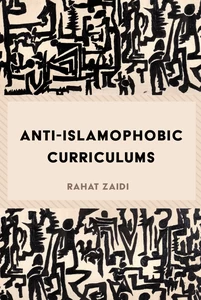
Anti-Islamophobic Curriculums
©2017 Textbook -
-
-
-