results
-
Sozio-ökonomische Perspektiven in Südosteuropa / Socio-Economic Perspectives in South-Eastern Europe
In englischer und deutscher Sprache behandelt die Reihe Sozio-ökonomische Perspektiven in Südosteuropa / Socio-Economic Perspectives in South-Eastern Europe aktuelle Themen wie den Annäherungsprozess Kroatiens an die EU, sowie Reflektionen zu Wirtschaftsformen wie dem kognitiven Kapitalismus in weiteren südosteuropäischen Staaten wie Ungarn und Slowenien.
4 publications
-
Institutionelle und Sozial-Ökonomie / Institutional and Socio-Economics
"In the "Institutional and Socio-Economics" book series, the economy is studied as a genuinely social system of heterogeneous agents in an institutional context. The series includes a broad range of different methodological approaches, theoretical perspectives and subjects of study. Interdependencies among agents in complex social systems can be studied using evolutionary economic models, as well as institutional economic and simulation studies. Hence, the focus is being laid on approaches that are more explorative than the standard equilibrium analysis; on approaches that allow for complexity; on approaches that consider development, history, institutions, and values. Thus, we may conclude that institutions are more than just devices for the reduction of transaction costs. From an institutionalist perspective, institutions are the common and collective solutions to social decision problems, particularly social dilemma problems, coordination problems, and collective-good problems. Such solutions require recognized interdependence and learned coordination and cooperation, thus a learned culture of a long-run perspective emerging as the result of a process of interactions. Institutions often are transitory only, part of the ongoing dynamics, adequately modeled possibly as an evolutionary process. Also, they may be instrumental solutions to a social decision problem at first and may degenerate into ceremonial power-and-status-based phenomena later, thus limiting the possibility of further innovation and development. In a genealogy of economics, the thematic and methodological spectrum of this book series would embrace the history of thought beginning with the classics including great names such as Adam Smith and Karl Marx but also the late classics who already have struggled with issues like complexity, process, historical time, and evolution. In newer times, the spectrum continues with Veblenian, Keynesian, and Post-Keynesian thinking; it would also include works in the traditions of original institutionalist economics, ecological economics, Neo-Schumpeterian thinking, evolutionary economics, and game theory. Social economics and social policy analysis, behavioral economics, complex modeling, system dynamics, and agent-based computational economics would be embraced as well. Such lists, however, can never be exhaustive. Last not least, institutional and socio-economics deals with the epistemology and substance of values, norms and ethics, value warrants of economic behavior as well as the normative foundations of economics. This series, thus, stands in the best traditions of plural economic research areas and pluralistic theoretical perspectives. It may be called heterodox, but it shall always be cutting-edge and of high quality. Enjoy exploring the works of this book series. The Editors: Wolfram Elsner Editor-in-Chief University of Bremen Torsten Heinrich Managing Editor University of Bremen Wilfred Dolfsma Co-Editor University of Groningen Arne Heise Co-Editor University of Hamburg Helge Peukert Co-Editor University of Erfurt Werner Schönig Co-Editor Catholic University of Applied Sciences Cologne Homepage der Herausgeber: Prof. Dr. Wolfram Elsner (Editor-in-Chief) Dr. rer. pol. Torsten Heinrich (Managing Editor) " "In the "Institutional and Socio-Economics" book series, the economy is studied as a genuinely social system of heterogeneous agents in an institutional context. The series includes a broad range of different methodological approaches, theoretical perspectives and subjects of study. Interdependencies among agents in complex social systems can be studied using evolutionary economic models, as well as institutional economic and simulation studies. Hence, the focus is being laid on approaches that are more explorative than the standard equilibrium analysis; on approaches that allow for complexity; on approaches that consider development, history, institutions, and values. Thus, we may conclude that institutions are more than just devices for the reduction of transaction costs. From an institutionalist perspective, institutions are the common and collective solutions to social decision problems, particularly social dilemma problems, coordination problems, and collective-good problems. Such solutions require recognized interdependence and learned coordination and cooperation, thus a learned culture of a long-run perspective emerging as the result of a process of interactions. Institutions often are transitory only, part of the ongoing dynamics, adequately modeled possibly as an evolutionary process. Also, they may be instrumental solutions to a social decision problem at first and may degenerate into ceremonial power-and-status-based phenomena later, thus limiting the possibility of further innovation and development. In a genealogy of economics, the thematic and methodological spectrum of this book series would embrace the history of thought beginning with the classics including great names such as Adam Smith and Karl Marx but also the late classics who already have struggled with issues like complexity, process, historical time, and evolution. In newer times, the spectrum continues with Veblenian, Keynesian, and Post-Keynesian thinking; it would also include works in the traditions of original institutionalist economics, ecological economics, Neo-Schumpeterian thinking, evolutionary economics, and game theory. Social economics and social policy analysis, behavioral economics, complex modeling, system dynamics, and agent-based computational economics would be embraced as well. Such lists, however, can never be exhaustive. Last not least, institutional and socio-economics deals with the epistemology and substance of values, norms and ethics, value warrants of economic behavior as well as the normative foundations of economics. This series, thus, stands in the best traditions of plural economic research areas and pluralistic theoretical perspectives. It may be called heterodox, but it shall always be cutting-edge and of high quality. Enjoy exploring the works of this book series. May 2012 The Editors: Wolfram Elsner Editor-in-Chief University of Bremen Torsten Heinrich Managing Editor University of Bremen Wilfred Dolfsma Co-Editor University of Groningen Arne Heise Co-Editor University of Hamburg Helge Peukert Co-Editor University of Erfurt Werner Schönig Co-Editor Catholic University of Applied Sciences Cologne Homepage der Herausgeber: Prof. Dr. Wolfram Elsner (Editor-in-Chief) Dr. rer. pol. Torsten Heinrich (Managing Editor) " "In the "Institutional and Socio-Economics" book series, the economy is studied as a genuinely social system of heterogeneous agents in an institutional context. The series includes a broad range of different methodological approaches, theoretical perspectives and subjects of study. Interdependencies among agents in complex social systems can be studied using evolutionary economic models, as well as institutional economic and simulation studies. Hence, the focus is being laid on approaches that are more explorative than the standard equilibrium analysis; on approaches that allow for complexity; on approaches that consider development, history, institutions, and values. Thus, we may conclude that institutions are more than just devices for the reduction of transaction costs. From an institutionalist perspective, institutions are the common and collective solutions to social decision problems, particularly social dilemma problems, coordination problems, and collective-good problems. Such solutions require recognized interdependence and learned coordination and cooperation, thus a learned culture of a long-run perspective emerging as the result of a process of interactions. Institutions often are transitory only, part of the ongoing dynamics, adequately modeled possibly as an evolutionary process. Also, they may be instrumental solutions to a social decision problem at first and may degenerate into ceremonial power-and-status-based phenomena later, thus limiting the possibility of further innovation and development. In a genealogy of economics, the thematic and methodological spectrum of this book series would embrace the history of thought beginning with the classics including great names such as Adam Smith and Karl Marx but also the late classics who already have struggled with issues like complexity, process, historical time, and evolution. In newer times, the spectrum continues with Veblenian, Keynesian, and Post-Keynesian thinking; it would also include works in the traditions of original institutionalist economics, ecological economics, Neo-Schumpeterian thinking, evolutionary economics, and game theory. Social economics and social policy analysis, behavioral economics, complex modeling, system dynamics, and agent-based computational economics would be embraced as well. Such lists, however, can never be exhaustive. Last not least, institutional and socio-economics deals with the epistemology and substance of values, norms and ethics, value warrants of economic behavior as well as the normative foundations of economics. This series, thus, stands in the best traditions of plural economic research areas and pluralistic theoretical perspectives. It may be called heterodox, but it shall always be cutting-edge and of high quality. Enjoy exploring the works of this book series. The Editors: Wolfram Elsner Editor-in-Chief University of Bremen Torsten Heinrich Managing Editor University of Bremen Wilfred Dolfsma Co-Editor University of Groningen Arne Heise Co-Editor University of Hamburg Helge Peukert Co-Editor University of Erfurt Werner Schönig Co-Editor Catholic University of Applied Sciences Cologne Homepage der Herausgeber: Prof. Dr. Wolfram Elsner (Editor-in-Chief) Dr. rer. pol. Torsten Heinrich (Managing Editor) "
11 publications
-
Financial Economics & Economic Policy
Die Buchreihe Financial Economics & Economic Policy veröffentlicht aktuelle Studien mit Ansätzen aus dem Fachgebiet der Volkswirtschaft und der Betriebswirtschaft. In den Beiträgen spielen insbesondere Fragen zur Makroökonomie, der Bankenregulierung, aber auch supranationale Organisationen eine übergeordnete Rolle. Der Herausgeber Paul G. Schmidt ist Professor für Volkswirtschaftslehre mit den Schwerpunkten internationale Finanzmärkte und vergleichende Analyse von Finanzplätzen. Die Buchreihe Financial Economics & Economic Policy veröffentlicht aktuelle Studien mit Ansätzen aus dem Fachgebiet der Volkswirtschaft und der Betriebswirtschaft. In den Beiträgen spielen insbesondere Fragen zur Makroökonomie, der Bankenregulierung, aber auch supranationale Organisationen eine übergeordnete Rolle. Der Herausgeber Paul G. Schmidt ist Professor für Volkswirtschaftslehre mit den Schwerpunkten internationale Finanzmärkte und vergleichende Analyse von Finanzplätzen. Die Buchreihe Financial Economics & Economic Policy veröffentlicht aktuelle Studien mit Ansätzen aus dem Fachgebiet der Volkswirtschaft und der Betriebswirtschaft. In den Beiträgen spielen insbesondere Fragen zur Makroökonomie, der Bankenregulierung, aber auch supranationale Organisationen eine übergeordnete Rolle. Der Herausgeber Paul G. Schmidt ist Professor für Volkswirtschaftslehre mit den Schwerpunkten internationale Finanzmärkte und vergleichende Analyse von Finanzplätzen.
2 publications
-
European Studies in Lifelong Learning and Adult Learning Research
The European Studies in Lifelong Learning and Adult Learning Research series publishes interdisciplinary editions on Education. The main focus is on adult education. Topics include among others gender and pedagogy, biographical and life history approaches or the trias of state, civil society and citizens from an educational perspective. The editors are professors in the field of pedagogy with a strong emphasis on adult education. The European Studies in Lifelong Learning and Adult Learning Research series publishes interdisciplinary editions on Education. The main focus is on adult education. Topics include among others gender and pedagogy, biographical and life history approaches or the trias of state, civil society and citizens from an educational perspective. The editors are professors in the field of pedagogy with a strong emphasis on adult education. The European Studies in Lifelong Learning and Adult Learning Research series publishes interdisciplinary editions on Education. The main focus is on adult education. Topics include among others gender and pedagogy, biographical and life history approaches or the trias of state, civil society and citizens from an educational perspective. The editors are professors in the field of pedagogy with a strong emphasis on adult education.
7 publications
-
-
Europäische Hochschulschriften / European University Studies / Publications Universitaires Européennes
Reihe 29: Sozialökonomie / Series 29: Social Economics / Série 29: Economie socialeISSN: 0721-3573
The books within this series include a broad range of topics within the category of Social Economics. Cette collection présente une riche palette de travaux scientifiques dans le domaine de l'Economie sociale. In dieser Reihe erscheinen wissenschaftliche Arbeiten zu einem breiten Themenspektrum im Fachgebiet Sozialökonomie.
15 publications
-
Studien zum Europäischen und Internationalen Wirtschaftsrecht / Studies in European and International Economic Law
Diese Reihe veröffentlicht aktuelle Untersuchungen zum europäischen und internationalen Wirtschaftsrecht. Rechtsvergleiche bilden einen besonderen Schwerpunkt der hier erscheinenden Monographien. Die Themen der in dieser Reihe erscheinenden Publikationen umfassen zum Beispiel Studien zum Wettbewerbsrecht, Gesellschaftsrecht und Kollisionsrecht.
27 publications
-
Research on Korea
ISSN: 2196-0895
The series Research on Korea responds to the fact that interest in Korea and the need for reliable information on the country's history and present have risen considerably during the last decades, both in- and outside of academia. The series offers an interdisciplinary platform for academic works engaging with Korea. Not being restricted to specific methodological or historiographical approaches, the series is open for studies of Korea in any field as long as they make use of Korean primary sources and systematically engage with Korean language secondary literature. Based on solid methodology, the studies assembled in this series aim to open up paths for new insights and new research questions on Korea and Korea's role in the regional and international context. In der Schriftenreihe Research on Korea werden neuere Ergebnisse der Koreaforschung veröffentlicht, um dem in den letzten Jahrzehnten stark gesteigerten Interesse der akademischen und allgemeinen Öffentlichkeit an verlässlichen Informationen zu Korea nachzukommen. Sie bietet ihr eine interdisziplinäre Plattform, ohne sich dabei methodisch oder historiographisch bestimmten Richtungen verpflichtet zu fühlen. Allerdings legen die Herausgeber großen Wert darauf, dass koreanische Primärquellen ebenso wie in koreanischer Sprache verfasste Sekundärliteratur umfassend und systematisch verwendet werden. Die Reihe ist offen für Korea-Studien jeder Art, die auf der Grundlage von Quellenarbeit und solider Methodologie den Weg zu neuen Erkenntnissen und Fragestellungen in der historischen, sozial- und kulturwissenschaftlichen Forschung zu Korea und zu Koreas Rolle im regionalen wie internationalen Kontext ebnen.
12 publications
-
Intercultural Research
4 publications
-
Towards a Knowledge Based Economy?
Knowledge and Learning in European Educational Research©2006 Edited Collection -
-
Socio-Economic Impact of Special Economic Zones in Gujarat
©2021 Monographs -
Market Constellation Research
A Modern Governance Approach to Macroeconomic Policy©2012 Edited Collection -
Globalization, Institutions and Socio-Economic Performance
Macro and Micro Perspectives©2018 Conference proceedings -
Socio-Economic Constitutional Rights in Democratisation Processes
An Account of the Constitutional Dialogue Theory©2013 Thesis -
Contemporary Research in Sports Economics
Proceedings of the 5 th ESEA Conference©2014 Conference proceedings -

Globalization and Its Socio-Economic Consequences, Volume I
23rd International Scientific Conference Proceedings©2025 Conference proceedings -
Globalization and Its Socio-Economic Consequences, Volume II
23rd International Scientific Conference Proceedings©2025 Conference proceedings -
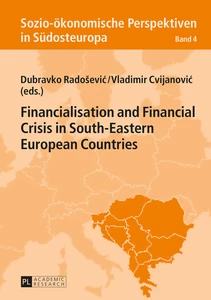
Financialisation and Financial Crisis in South-Eastern European Countries
©2015 Edited Collection -
Romania: Migration, Socio-economic Transformation and Perspectives of Regional Development
©1998 Edited Collection -
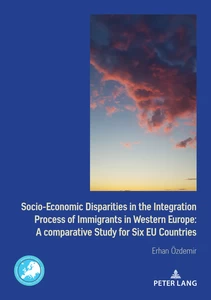
Socio-Economic Disparities in the Integration Process of Immigrants in Western Europe
A Comparative Study for Six EU Countries©2022 Monographs -
-
Zwischen Euphorie und Ernüchterung – Kroatien auf dem Weg in die EU
©2007 Monographs -
Indian Villages between Tradition and Transformation
An Empirical Investigation into the Effects of Innovation on Socio-Economic, Agricultural and Socio-Cultural Change in Two South Indian Villages©1981 Others -
Emerging Issues in European Economic Diplomacy
©2025 Monographs