results
-
Major Concepts in Politics and Political Theory
This series invites book manuscripts and proposals on major concepts in politics and political theoryjustice, equality, virtue, rights, citizenship, power, sovereignty, property, liberty, etc.in prominent traditions, periods, and thinkers. This series invites book manuscripts and proposals on major concepts in politics and political theoryjustice, equality, virtue, rights, citizenship, power, sovereignty, property, liberty, etc.in prominent traditions, periods, and thinkers. This series invites book manuscripts and proposals on major concepts in politics and political theoryjustice, equality, virtue, rights, citizenship, power, sovereignty, property, liberty, etc.in prominent traditions, periods, and thinkers.
26 publications
-
Contemporary Critical Concepts and Pre-Enlightenment Literature
ISSN: 1074-6781
"Writers who worked before the beginning of rationalist universalism's triumphal period which may be ending now-explored issues of consciousness, ideology, and culture that recent criticism and critical theory, using various specialized vocabularies of concepts, have returned to the center of literäry and social criticism. These early modern figures often anticipated some of our clilemmas; How to manipulate an apparently quite mutable world and, at the same time, preserve belief in an immutable "centered" self? How to reconcile rationalist universalism with personal and cultural stability? Rene Descartes's postulate of man as the master and proprietor of an increasingly built world is fundamentally incompatible with his effort to underwrite man as a stable philosophical subject. Man's technical and linguistic mastery devours his "transcendent subjectivity." Students of literature are now using the ideas of what Larry Riggs calls "post-enlightenment thinkers"-Max Horkheimer, Jacques Lacan, Michael Foucault, Rene Girard, and others-to elucidate the implicit and explicit debates about rationalism that are embedded in literary works. This trend is most usefully seen as a renewal of contact with preoccupations that were quite current in medieval, Renaissance, and seventeenth-century European literature. To date, however, innovative criticism has focused an more recent literature. Some post-structuralists-most notably Jacques Lacan-have tried their hand at interpreting early works. Their ideas are interesting, but their knowledge of the periods in question is often weak. Manuscripts on Elizabethan and Restoration theater, French, Italian, and German writers of the medieval and Renaissance periods, and die seventeenth-century French dramatists and moralists are welcome. " "Writers who worked before the beginning of rationalist universalism's triumphal period which may be ending now-explored issues of consciousness, ideology, and culture that recent criticism and critical theory, using various specialized vocabularies of concepts, have returned to the center of literäry and social criticism. These early modern figures often anticipated some of our clilemmas; How to manipulate an apparently quite mutable world and, at the same time, preserve belief in an immutable "centered" self? How to reconcile rationalist universalism with personal and cultural stability? Rene Descartes's postulate of man as the master and proprietor of an increasingly built world is fundamentally incompatible with his effort to underwrite man as a stable philosophical subject. Man's technical and linguistic mastery devours his "transcendent subjectivity." Students of literature are now using the ideas of what Larry Riggs calls "post-enlightenment thinkers"-Max Horkheimer, Jacques Lacan, Michael Foucault, Rene Girard, and others-to elucidate the implicit and explicit debates about rationalism that are embedded in literary works. This trend is most usefully seen as a renewal of contact with preoccupations that were quite current in medieval, Renaissance, and seventeenth-century European literature. To date, however, innovative criticism has focused an more recent literature. Some post-structuralists-most notably Jacques Lacan-have tried their hand at interpreting early works. Their ideas are interesting, but their knowledge of the periods in question is often weak. Manuscripts on Elizabethan and Restoration theater, French, Italian, and German writers of the medieval and Renaissance periods, and die seventeenth-century French dramatists and moralists are welcome. " "Writers who worked before the beginning of rationalist universalism's triumphal period which may be ending now-explored issues of consciousness, ideology, and culture that recent criticism and critical theory, using various specialized vocabularies of concepts, have returned to the center of literäry and social criticism. These early modern figures often anticipated some of our clilemmas; How to manipulate an apparently quite mutable world and, at the same time, preserve belief in an immutable "centered" self? How to reconcile rationalist universalism with personal and cultural stability? Rene Descartes's postulate of man as the master and proprietor of an increasingly built world is fundamentally incompatible with his effort to underwrite man as a stable philosophical subject. Man's technical and linguistic mastery devours his "transcendent subjectivity." Students of literature are now using the ideas of what Larry Riggs calls "post-enlightenment thinkers"-Max Horkheimer, Jacques Lacan, Michael Foucault, Rene Girard, and others-to elucidate the implicit and explicit debates about rationalism that are embedded in literary works. This trend is most usefully seen as a renewal of contact with preoccupations that were quite current in medieval, Renaissance, and seventeenth-century European literature. To date, however, innovative criticism has focused an more recent literature. Some post-structuralists-most notably Jacques Lacan-have tried their hand at interpreting early works. Their ideas are interesting, but their knowledge of the periods in question is often weak. Manuscripts on Elizabethan and Restoration theater, French, Italian, and German writers of the medieval and Renaissance periods, and die seventeenth-century French dramatists and moralists are welcome. "
3 publications
-
-

The Concept of Time in Origen
©1991 Monographs -
Photo / Objet / Concept
Pour une lecture élargie de la photographie dans l’art conceptuel©2020 Edited Collection -
The Concept of «Tugend»
An Alternative Method of Eighteenth-Century German Novel Classification©1988 Others -
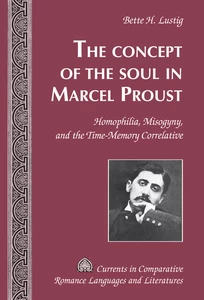
The Concept of the Soul in Marcel Proust
Homophilia, Misogyny, and the Time-Memory Correlative©2016 Monographs -
-

The Concept of Utopia
©2010 Monographs -
L’enfance en conception(s)
Comment les industries culturelles s’adressent-elles aux enfants ?©2018 Edited Collection -
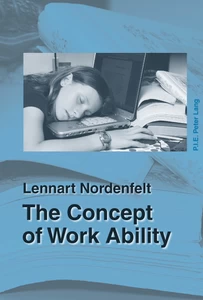
The Concept of Work Ability
©2008 Monographs -
-
The Traditional African Concept of God and the Christian Concept of God
Chukwu bụ ndụ – God is Life (The Igbo Perspective)©2004 Thesis -
The Conception of Man in the Works of John Amos Comenius
©2016 Monographs -
The Essential Concept of Law
©2002 Textbook -
-
The Concept of the Relevant Product Market
Between Demand-side Substitutability and Supply-side Substitutability in Competition Law©2008 Monographs -
The Concept of Man in the Advaita Vedanta of Sankara
An Inquiry into Theological Perspectives©2005 Thesis -
A Path to a Conception of Symbolic Truth
©2017 Monographs -
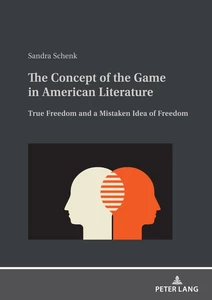
The Concept of the Game in American Literature
True Freedom and a Mistaken Idea of Freedom©2022 Thesis -
Language and Concepts in Action
Multidisciplinary Perspectives on Linguistic Research©2013 Monographs -
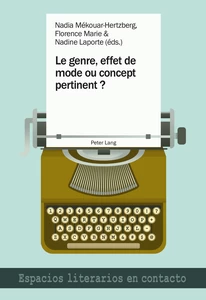
Le genre, effet de mode ou concept pertinent ?
©2016 Edited Collection -
J.L. Austin’s Concept of «Performative Word»
A Systematic Theological Analysis in Sacramental Theology and in Igbo Traditional Religion- Its Impact on the Use of Igbo Language for Effective Evangelization in Igboland©2012 Thesis -
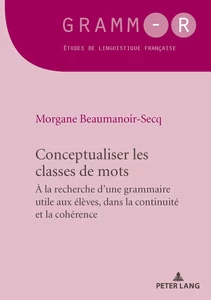
Conceptualiser les classes de mots
Pour une grammaire utile aux élèves, dans la continuité et la cohérence©2018 Thesis -