results
-
Nationalisms across the Globe
ISSN: 1662-9116
Although in the 1980s the widely shared belief was that nationalism had become a spent force, the fragmentation of the studiously non-national Soviet Union, Yugoslavia, and Czechoslovakia in the 1990s into a multitude of successor nation-states reaffirmed its continuing significance. Today all extant polities (with the exception of the Vatican) are construed as nationstates, and hence nationalism is the sole universally accepted criterion of statehood legitimization. Similarly, human groups wishing to be recognized as fully fledged participants in international relations must define themselves as nations. This concept of world politics underscores the need for openended, broad-ranging, novel, and interdisciplinary research into nationalism and ethnicity. It promotes better understanding of the phenomena relating to social, political, and economic life, both past and present. This peer-reviewed series publishes monographs, conference proceedings, and collections of articles. It attracts well-researched, often interdisciplinary, studies which open new approaches to nationalism and ethnicity or focus on interesting case studies. The language of the series is usually English. The series is affiliated with the Institute for Transnational and Spatial History at the University of St Andrews, headed by Bernhard Struck and Tomasz Kamusella. The Institute gathers scholars with a strong interest in the comparative, entangled and transnational history of modern Europe and the globalized world. Editorial Board: Balazs Apor (Dublin) – Peter Burke (Cambridge) – Monika Baár (Groningen) – Andrea Graziosi (Naples) – Akihiro Iwashita (Sapporo) – Sławomir Łodziński (Warsaw) – Alexander Markarov (Yerevan) – Elena Marushiakova and Veselin Popov (Sofia) – Alexander Maxwell (Wellington) – Anastasia Mitrofanova (Moscow) – Michael Moser (Vienna) - Frank Lorenz Müller (St Andrews) – Sabelo J. Ndlovu-Gatsheni (Pretoria) – Balázs Trencsényi (Budapest) – Sergei Zhuk (Muncie, Indiana).
21 publications
-
Internationalism and the Arts
ISSN: 2235-0160
Internationalism and the Arts explores the multiple ways in which the arts have operated internationally, responded to internationalist ideology, and helped shape thinking about world organization. The series challenges the emphasis on nationalism and national schools that has developed over the past 250 years. Instead, it draws attention to internationalist art and ideology; the lives and work of cosmopolitan artists and theorists; international networks, systems and practices; and societies that promote international exchange. The series speaks to the rise of transnationalism as a major approach across a number of research fields. Within this literature, it addresses a relative dearth of publications which focus on international art practice as a crucial element of human experience. Proposals are invited across the performing and visual arts, including art history, music, dance and theatre. Our geographical scope is global and we welcome projects that look beyond the Western world or that examine cross-cultural exchanges. We are open to proposals for monographs and edited collections, anthologies of primary sources and textbooks, and scholarly catalogues that showcase visual material. All proposals and manuscripts will be subject to peer review.
6 publications
-
Studies in Transnationalism
ISSN: 2578-9317
This series is designed to advance the publication of interdisciplinary research in transnationalism from scholars in history, literature, politics, sociology, geography, and related disciplines in the social sciences and humanities. The series seeks to publish works that trace the ways in which concepts and ideas are expressed across national borders, focusing on imperialism, globalism, cosmopolitanism, diaspora, and other themes of interest in transnational studies. It embraces both established and innovative methodologies and welcomes submissions in various formats, including monographs, textbooks, colloquia, and reference books.
12 publications
-
Régionalisme & Fédéralisme / Regionalism & Federalism
The contemporary nation-state is undergoing a series of transformations which question its traditional role as a container of social, political and economic systems. New spaces are emerging with the rise of regional production systems, movements for territorial autonomy and the rediscovery of old and the invention of new identities. States have responded by restructuring their systems of territorial government, often setting up an intermediate or regional level. There is no single model, but a range, from administrative deconcentration to federalization. Some states have regionalized in a uniform manner, while others have adopted asymmetrical solutions. In many cases, regions have gone beyond the nation-state, seeking to become actors in broader continental and transnational systems. The series covers the gamut of issues involved in this territorial restructuring, including the rise of regional production systems, political regionalism, questions of identity, and constitutional change. It will include the emergence of new systems of territorial regulation and collective action within civil society as well as the state. There is no a priori definition of what constitutes a region, since these span a range of spatial scales, from metropolitan regions to large federated states, and from administrative units to cultural regions and stateless nations. Disciplines covered include history, sociology, social and political geography, political science and law. Interdisciplinary approaches are particularly welcome. In addition to empirical and comparative studies, books focus on the theory of regionalism and federalism, including normative questions about democracy and accountability in complex systems of government. L’État-nation contemporain a subi une série de transformations qui remettent en cause son rôle traditionnel de cadre pour les systèmes sociaux, politiques et économiques. Des nouveaux espaces ont émergé avec la mise en place de systèmes de production régionaux, le développement des mouvements pour l’autonomie territoriale et la redécouverte des anciennes identités aussi bien que l’invention de nouvelles. Les États ont répondu à ces mutations par la restructuration de leurs systèmes de gouvernement territoriaux, le plus souvent par l’instauration d’un niveau intermédiaire ou régional. Il n’y a pas de modèle unique mais bien une gamme allant de la décentralisation administrative à la fédéralisation. Certains États se sont régionalisés de manière uniforme, tandis que d’autres ont adopté des solutions asymétriques. Dans plusieurs cas, les régions ont dépassé le cadre des États-nations, cherchant à devenir des acteurs au sein des systèmes continentaux et transnationaux. La collection s’intéresse à toute étude concernant cette restructuration territoriale, incluant le développement des systèmes de production régionaux, le régionalisme politique, les questions d’identité et les changements constitutionnels. Elle prend également en compte l’émergence de nouveaux systèmes de régulation territoriale et l’action collective au niveau de la société civile aussi bien que de l’État. Il n’y a pas de définition a priori de ce qui constitue une région, celle-ci pouvant embrasser un éventail de niveaux territoriaux, des régions métropolitaines aux grands États fédérés et des unités administratives aux régions culturelles et aux nations-sans-État. La collection comprend des études dans des disciplines variées telles que l’histoire, la sociologie, la géographie sociale et politique, la science politique et le droit. Les approches interdisciplinaires sont particulièrement bienvenues. Enfin, parallèlement aux études empiriques et comparatives, certains ouvrages s’intéressent à la théorie du régionalisme et du fédéralisme, incluant des questions normatives sur la démocratie et la responsabilité dans les systèmes complexes de gouvernement. The contemporary nation-state is undergoing a series of transformations which question its traditional role as a container of social, political and economic systems. New spaces are emerging with the rise of regional production systems, movements for territorial autonomy and the rediscovery of old and the invention of new identities. States have responded by restructuring their systems of territorial government, often setting up an intermediate or regional level. There is no single model, but a range, from administrative deconcentration to federalization. Some states have regionalized in a uniform manner, while others have adopted asymmetrical solutions. In many cases, regions have gone beyond the nation-state, seeking to become actors in broader continental and transnational systems. The series covers the gamut of issues involved in this territorial restructuring, including the rise of regional production systems, political regionalism, questions of identity, and constitutional change. It will include the emergence of new systems of territorial regulation and collective action within civil society as well as the state. There is no a priori definition of what constitutes a region, since these span a range of spatial scales, from metropolitan regions to large federated states, and from administrative units to cultural regions and stateless nations. Disciplines covered include history, sociology, social and political geography, political science and law. Interdisciplinary approaches are particularly welcome. In addition to empirical and comparative studies, books focus on the theory of regionalism and federalism, including normative questions about democracy and accountability in complex systems of government.
14 publications
-
La Fabrique du politique
Sociologie de l'action publiqueL’analyse des politiques publiques, des institutions et acteurs qui les conçoivent, a beaucoup gagné à s’ouvrir largement aux autres sciences sociales et particulièrement à la sociologie. Qu’il s’agisse des organisations internationales, des institutions européennes, des administrations nationales ou encore des collectivités territoriales, les enquêtes quantitatives et qualitatives sur leur personnel et leurs interlocuteurs privilégiés, l’observation ethnographique, le travail sur archives, permettent de renouveler le regard sur l’action publique. Attentives à la diversité des acteurs engagés dans la formulation des politiques publiques, ces recherches peuvent en outre s’appuyer avec profit sur les enseignements et concepts de la sociologie du droit, des organisations, des professions, ou des institutions pour éclairer la façon dont élus, fonctionnaires, experts, représentants d’intérêts, ou encore usagers y contribuent. La collection accueille des travaux inscrits dans une telle perspective de recherche et mobilisant à cette fin tous types d’enquêtes et de données empiriques de nature à éclairer la fabrique du politique, de l’échelle locale à l’échelle internationale. ****** Comité scientifique Pascal Bonnard, Université Jean Monnet Saint Etienne, Triangle Dorota Dakowska, Sciences Po Aix, Mesopolhis Anne-Cécile Douillet, Université de Lille, Ceraps Brigitte Gaïti, Université Paris 1 Panthéon Sorbonne, CESSP Niilo Kauppi, University of Helsinki, CNRS Ulrike Lepont, CNRS, CEE, Sciences Po Jacques de Maillard, Université Versailles Saint Quentin, CESDIP Elise Massicard, CNRS, CERI, Sciences Po Stéphanie Novak, Université Ca’Foscari, Venise Olivier Quéré, Université de Haute Alsace, Sage Raphaëlle Parizet, Université Paris Créteil, Lipha Cécile Robert, Sciences Po Lyon, Triangle Luc Sigalo-Santos, Université Aix Marseille, Lest Anne-France Taiclet, Université Paris 1 Panthéon Sorbonne, CESSP Rachel Vanneuville, CNRS, Triangle Fanny Vincent, Université Jean Monnet Saint Etienne, Triangle
15 publications
-

Critique d’art et nationalisme
Regards français sur l’art européen au XIXe siècle©2017 Edited Collection -
Identité nationale et politique de la langue
Une analyse foucaldienne du cas moldave©2016 Monographs -
-
Le Nationalisme en littérature (III)
Écritures « françaises » et nations européennes dans la tourmente (1940-2000)©2022 Edited Collection -

-

Le Nationalisme en littérature (II)
Le « génie de la langue française » (1870-1940)©2020 Edited Collection -
-
Nationalisms Today
©2010 Conference proceedings -
-
-

National Monuments and Nationalism in 19th Century Germany
©2009 Monographs -
Le Bureau international d’éducation, matrice de l’internationalisme éducatif
(Premier 20e siècle) Pour une charte des aspirations mondiales en matière éducative©2022 Edited Collection -
Economic Crisis and New Nationalisms
German Political Economy as Perceived by European Partners©2014 Edited Collection -
-
Ethnic Identity, Nationalism and Culture
Phenomenological Grounding for Otherness in the North East India©2025 Monographs -

Narrating Victimhood Nationalism
Cultural Memory in Polish and South Korean History Museums©2026 Monographs -
Redemptive or Grotesque Nationalism
Rethinking Contemporary Politics in Zimbabwe©2011 Conference proceedings -
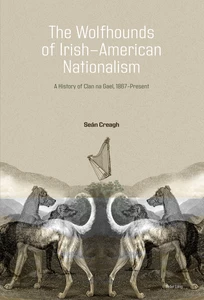
The Wolfhounds of Irish-American Nationalism
A History of Clan na Gael, 1867-present.©2023 Monographs -

-
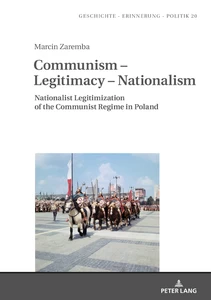
Communism – Legitimacy – Nationalism
Nationalist Legitimization of the Communist Regime in Poland©2019 Monographs