results
-
Major Concepts in Politics and Political Theory
This series invites book manuscripts and proposals on major concepts in politics and political theoryjustice, equality, virtue, rights, citizenship, power, sovereignty, property, liberty, etc.in prominent traditions, periods, and thinkers. This series invites book manuscripts and proposals on major concepts in politics and political theoryjustice, equality, virtue, rights, citizenship, power, sovereignty, property, liberty, etc.in prominent traditions, periods, and thinkers. This series invites book manuscripts and proposals on major concepts in politics and political theoryjustice, equality, virtue, rights, citizenship, power, sovereignty, property, liberty, etc.in prominent traditions, periods, and thinkers.
26 publications
-
-
Sozio-ökonomische Perspektiven in Südosteuropa / Socio-Economic Perspectives in South-Eastern Europe
In englischer und deutscher Sprache behandelt die Reihe Sozio-ökonomische Perspektiven in Südosteuropa / Socio-Economic Perspectives in South-Eastern Europe aktuelle Themen wie den Annäherungsprozess Kroatiens an die EU, sowie Reflektionen zu Wirtschaftsformen wie dem kognitiven Kapitalismus in weiteren südosteuropäischen Staaten wie Ungarn und Slowenien.
4 publications
-
Schriftenreihe der Società. Forum für Ethik, Kunst und Recht
Die Società Forum für Ethik, Kunst und Recht bietet in ihrer Schriftenreihe dem Austausch all jener Wissenschaften ein Forum, die sich der Erforschung der Grundlagen einer freien Gemeinschaft verschrieben haben. Besonderes Augenmerk wird hierbei auf die Geisteswissenschaften, die Rechtswissenschaften und die Informationswissenschaften gelegt. Die Ergebnisse der interdisziplinären Konferenzen der Società sowie ausgewählte Monografien helfen Antworten auf die Frage zu finden, wie der Gesellschaftsvertrag einer Gemeinschaft freier gestaltender Individuen aussehen könnte vor allem angesichts technologischer Innovation und divergierender ethischer Konzepte.
2 publications
-
Institutionelle und Sozial-Ökonomie / Institutional and Socio-Economics
"In the "Institutional and Socio-Economics" book series, the economy is studied as a genuinely social system of heterogeneous agents in an institutional context. The series includes a broad range of different methodological approaches, theoretical perspectives and subjects of study. Interdependencies among agents in complex social systems can be studied using evolutionary economic models, as well as institutional economic and simulation studies. Hence, the focus is being laid on approaches that are more explorative than the standard equilibrium analysis; on approaches that allow for complexity; on approaches that consider development, history, institutions, and values. Thus, we may conclude that institutions are more than just devices for the reduction of transaction costs. From an institutionalist perspective, institutions are the common and collective solutions to social decision problems, particularly social dilemma problems, coordination problems, and collective-good problems. Such solutions require recognized interdependence and learned coordination and cooperation, thus a learned culture of a long-run perspective emerging as the result of a process of interactions. Institutions often are transitory only, part of the ongoing dynamics, adequately modeled possibly as an evolutionary process. Also, they may be instrumental solutions to a social decision problem at first and may degenerate into ceremonial power-and-status-based phenomena later, thus limiting the possibility of further innovation and development. In a genealogy of economics, the thematic and methodological spectrum of this book series would embrace the history of thought beginning with the classics including great names such as Adam Smith and Karl Marx but also the late classics who already have struggled with issues like complexity, process, historical time, and evolution. In newer times, the spectrum continues with Veblenian, Keynesian, and Post-Keynesian thinking; it would also include works in the traditions of original institutionalist economics, ecological economics, Neo-Schumpeterian thinking, evolutionary economics, and game theory. Social economics and social policy analysis, behavioral economics, complex modeling, system dynamics, and agent-based computational economics would be embraced as well. Such lists, however, can never be exhaustive. Last not least, institutional and socio-economics deals with the epistemology and substance of values, norms and ethics, value warrants of economic behavior as well as the normative foundations of economics. This series, thus, stands in the best traditions of plural economic research areas and pluralistic theoretical perspectives. It may be called heterodox, but it shall always be cutting-edge and of high quality. Enjoy exploring the works of this book series. The Editors: Wolfram Elsner Editor-in-Chief University of Bremen Torsten Heinrich Managing Editor University of Bremen Wilfred Dolfsma Co-Editor University of Groningen Arne Heise Co-Editor University of Hamburg Helge Peukert Co-Editor University of Erfurt Werner Schönig Co-Editor Catholic University of Applied Sciences Cologne Homepage der Herausgeber: Prof. Dr. Wolfram Elsner (Editor-in-Chief) Dr. rer. pol. Torsten Heinrich (Managing Editor) " "In the "Institutional and Socio-Economics" book series, the economy is studied as a genuinely social system of heterogeneous agents in an institutional context. The series includes a broad range of different methodological approaches, theoretical perspectives and subjects of study. Interdependencies among agents in complex social systems can be studied using evolutionary economic models, as well as institutional economic and simulation studies. Hence, the focus is being laid on approaches that are more explorative than the standard equilibrium analysis; on approaches that allow for complexity; on approaches that consider development, history, institutions, and values. Thus, we may conclude that institutions are more than just devices for the reduction of transaction costs. From an institutionalist perspective, institutions are the common and collective solutions to social decision problems, particularly social dilemma problems, coordination problems, and collective-good problems. Such solutions require recognized interdependence and learned coordination and cooperation, thus a learned culture of a long-run perspective emerging as the result of a process of interactions. Institutions often are transitory only, part of the ongoing dynamics, adequately modeled possibly as an evolutionary process. Also, they may be instrumental solutions to a social decision problem at first and may degenerate into ceremonial power-and-status-based phenomena later, thus limiting the possibility of further innovation and development. In a genealogy of economics, the thematic and methodological spectrum of this book series would embrace the history of thought beginning with the classics including great names such as Adam Smith and Karl Marx but also the late classics who already have struggled with issues like complexity, process, historical time, and evolution. In newer times, the spectrum continues with Veblenian, Keynesian, and Post-Keynesian thinking; it would also include works in the traditions of original institutionalist economics, ecological economics, Neo-Schumpeterian thinking, evolutionary economics, and game theory. Social economics and social policy analysis, behavioral economics, complex modeling, system dynamics, and agent-based computational economics would be embraced as well. Such lists, however, can never be exhaustive. Last not least, institutional and socio-economics deals with the epistemology and substance of values, norms and ethics, value warrants of economic behavior as well as the normative foundations of economics. This series, thus, stands in the best traditions of plural economic research areas and pluralistic theoretical perspectives. It may be called heterodox, but it shall always be cutting-edge and of high quality. Enjoy exploring the works of this book series. May 2012 The Editors: Wolfram Elsner Editor-in-Chief University of Bremen Torsten Heinrich Managing Editor University of Bremen Wilfred Dolfsma Co-Editor University of Groningen Arne Heise Co-Editor University of Hamburg Helge Peukert Co-Editor University of Erfurt Werner Schönig Co-Editor Catholic University of Applied Sciences Cologne Homepage der Herausgeber: Prof. Dr. Wolfram Elsner (Editor-in-Chief) Dr. rer. pol. Torsten Heinrich (Managing Editor) " "In the "Institutional and Socio-Economics" book series, the economy is studied as a genuinely social system of heterogeneous agents in an institutional context. The series includes a broad range of different methodological approaches, theoretical perspectives and subjects of study. Interdependencies among agents in complex social systems can be studied using evolutionary economic models, as well as institutional economic and simulation studies. Hence, the focus is being laid on approaches that are more explorative than the standard equilibrium analysis; on approaches that allow for complexity; on approaches that consider development, history, institutions, and values. Thus, we may conclude that institutions are more than just devices for the reduction of transaction costs. From an institutionalist perspective, institutions are the common and collective solutions to social decision problems, particularly social dilemma problems, coordination problems, and collective-good problems. Such solutions require recognized interdependence and learned coordination and cooperation, thus a learned culture of a long-run perspective emerging as the result of a process of interactions. Institutions often are transitory only, part of the ongoing dynamics, adequately modeled possibly as an evolutionary process. Also, they may be instrumental solutions to a social decision problem at first and may degenerate into ceremonial power-and-status-based phenomena later, thus limiting the possibility of further innovation and development. In a genealogy of economics, the thematic and methodological spectrum of this book series would embrace the history of thought beginning with the classics including great names such as Adam Smith and Karl Marx but also the late classics who already have struggled with issues like complexity, process, historical time, and evolution. In newer times, the spectrum continues with Veblenian, Keynesian, and Post-Keynesian thinking; it would also include works in the traditions of original institutionalist economics, ecological economics, Neo-Schumpeterian thinking, evolutionary economics, and game theory. Social economics and social policy analysis, behavioral economics, complex modeling, system dynamics, and agent-based computational economics would be embraced as well. Such lists, however, can never be exhaustive. Last not least, institutional and socio-economics deals with the epistemology and substance of values, norms and ethics, value warrants of economic behavior as well as the normative foundations of economics. This series, thus, stands in the best traditions of plural economic research areas and pluralistic theoretical perspectives. It may be called heterodox, but it shall always be cutting-edge and of high quality. Enjoy exploring the works of this book series. The Editors: Wolfram Elsner Editor-in-Chief University of Bremen Torsten Heinrich Managing Editor University of Bremen Wilfred Dolfsma Co-Editor University of Groningen Arne Heise Co-Editor University of Hamburg Helge Peukert Co-Editor University of Erfurt Werner Schönig Co-Editor Catholic University of Applied Sciences Cologne Homepage der Herausgeber: Prof. Dr. Wolfram Elsner (Editor-in-Chief) Dr. rer. pol. Torsten Heinrich (Managing Editor) "
11 publications
-
Studies in Political Transition
ISSN: 2191-3307
The Studies in Political Transition are a series dedicated to publishing interdisciplinary approaches to Political Sciences, Law, and Media and Communication. Scholars examine various forms of regime changes and their impact on social and institutional matters by analyzing the mechanisms and procedures leading to those changes. The series’ editor, Professor Klaus Bachmann, is a widely known critical commentator on issues concerning the European Union as well as contemporary Polish culture.
19 publications
-
Frontiers in Political Communication
ISSN: 1525-9730
At the heart of how citizens, governments, and the media interact is the communication process, a process that is undergoing tremendous change. Never has there been a time when confronting the complexity of these evolving relationships been so important to the maintenance of civil society. This series seeks books that advance the understanding of this process from multiple perspectives and as it occurs in both institutionalized and non-institutionalized political settings. While works that provide new perspectives on traditional political communication questions are welcome, the series also encourages the submission of manuscripts that take an innovative approach to political communication, which seek to broaden the frontiers of study to incorporate critical and cultural dimensions of study as well as scientific and theoretical frontiers.
89 publications
-
Political and Social Change
ISSN: 2198-8595
Political and Social Change is a multidisciplinary series dedicated to the analysis and understanding of changes in modern society. It includes topics such as democratic transformations, cultural dynamics, genealogies of change, collective identities, articulation of alternative discourses, and the role of civil society in processes of change. It covers both historical readings and contemporary studies. It directs attention toward multi-scalar changes in the global world where local, national and transnational practices are intertwined. The series welcomes innovative theoretical approaches in the field of social and political change as well as applied studies that offer new insight about the mentioned topics. It is open to edited volumes and monographs and welcomes comparative studies and transnational perspectives.
13 publications
-
Explosive Politics
10 publications
-
-

Central and Eastern European Socio-Political and Legal Transition Revisited
©2017 Edited Collection -
-
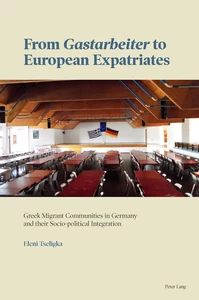
From «Gastarbeiter» to European Expatriates
Greek Migrant Communities in Germany and their Socio-political Integration©2020 Monographs -
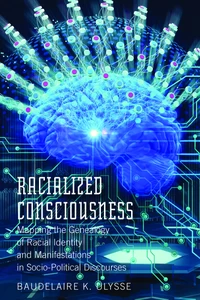
Racialized Consciousness
Mapping the Genealogy of Racial Identity and Manifestations in Socio-Political Discourses©2018 Monographs -
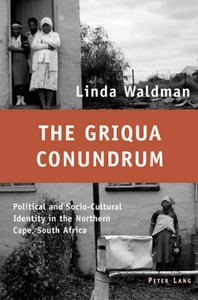
The Griqua Conundrum
Political and Socio-Cultural Identity in the Northern Cape, South Africa©2007 Monographs -
Sozialstrukturelle Cleavages bei Bundestagswahlen in Theorie und Empirie
Persistenz, Realignment oder Dealignment?©2000 Thesis -
Church and Civil Society in 21st Century Africa
Potentialities and Challenges Regarding Socio-Economic and Political Development with Particular Reference to Nigeria©2017 Thesis -
Retranslation and Socio-Cultural Changes
©2025 Edited Collection -

-
Political Geography
©2021 Monographs -
Globalization, Institutions and Socio-Economic Performance
Macro and Micro Perspectives©2018 Conference proceedings -
Political Participation Capital
©2021 Monographs -

Socio-ecological Change in Rural Ethiopia
Understanding Local Dynamics in Environmental Planning and Natural Resource Management©2015 Conference proceedings -

-