results
-
Educational Equity in Community Colleges
ISSN: 2690-4438
This series centers theory and practice in enacting educational equity, and, ultimately, educational justice at the administrative, institutional/programmatic, governance, and pedagogical levels of community colleges and other institutions of higher learning (Woods & Harris, 2016; Nevarez & Wood, 2010). There is a corpus of literature on the pernicious effects of oppressive pedagogy at the K-12 level, especially for traditionally marginalized, minoritized students (Nasir, 2011; Delpit, 2012; Leonardo, 2010). However, this is not the case at the community college level even though these same traditionally marginalized, minoritized students overwhelming start their college careers in two-year community colleges. Frankly, though there are many valuable contributions to community college education, overall there is a dearth of literature on critical, justice-centered pedagogy, theory and practice (i.e., praxis) within community college administration, governance, programming, and pedagogy. Community college practitioners are interested in enacting educational equity. However, there is little community college-specific literature for them to use to reimagine and, ultimately, reconstruct their administrative, programmatic, and pedagogical practices so that these institutionalized practices become commensurate with educational equity and justice (Tuck & Yang, 2018). Therefore, the goal of this series is to blend the work of university researchers and community college practitioners to illuminate best practices in achieving educational equity and justice via a critical-reality pedagogical framework (Giroux, 2004; Emdin, 2017; Sims, 2018). This series aims to highlight work that illuminates both the successes and struggles in developing institutionalized practices that positively impact poor ethno-racially minoritized students of color. Therefore, we will be looking at pedagogies, policies, and practices that are intentionally developed, curated and sustained by committed educators, administrators, and staff at their respective college campuses that work to ensure just learning conditions for all students.
4 publications
-
Cahiers du Collège d’Europe / College of Europe Studies
L'Europe subit des mutations permanentes. La vie politique, l'économie, le droit, mais également les sociétés européennes, changent rapidement. L'Union européenne s'inscrit dès lors dans un processus d'adaptation constant. Des défis et des nouvelles demandes surviennent sans cesse, provenant à la fois de l'intérieur et de l'extérieur. La collection des « Cahiers du Collège d'Europe » publie les résultats des recherches menées sur ces thèmes au Collège d'Europe, au sein de ses deux campus (Bruges et Varsovie). Focalisés sur l'Union européenne et le processus d'intégration, ces travaux peuvent être spécialisés dans les domaines des sciences politiques, du droit ou de l'économie, mais ils sont le plus souvent de nature interdisciplinaire. La collection vise à approfondir la compréhension de ces questions complexes et contribue ainsi au débat européen. Critères pour l'acceptation des manuscrits dans la collection : - Un manuscrit abouti et finalisé, rédigé dans un anglais et/ou français correct, ne demandant pas ou pratiquement pas de correction linguistique - Un manuscrit mis aux normes éditoriales de la maison d'édition - L'excellent développement d'un sujet relevant d'un des quatre domaines de recherche du Collège d’'Europe (Droit, Économie, Science politique et diplomatie, Relations internationales ou une approche interdisciplinaire) ; qui est à jour qui ouvre des perspectives sur le futur - Un texte original, qui représente une valeur ajoutée aux études européennes et qui est destiné à une audience académique internationale - Un texte qui montre une expertise dans le champ des études européennes, ou une discipline annexe, qui rencontre les attentes (élevées) des lecteurs de la collection - Un livre qui se veut être académique et analytique, et non politique ou idéologique, même si, bien entendu, les recommandations peuvent laisser transparaitre des préférences. On conseille aux futurs auteurs de faire relire leur manuscrit par un ou deux collègues, pour augmenter les chances d'acceptation du manuscrit. Les manuscrits proposés seront soumis pour évaluation aux directeurs de collection ainsi que, de façon anonyme, à un comité d'évaluation externe. Europe is in a constant state of flux. European politics, economics, law and indeed European societies are changing rapidly. The European Union itself is in a continuous situation of adaptation. New challenges and new requirements arise continually, both internally and externally. The «College of Europe Studies» series seeks to publish research on these issues done at the College of Europe, both at its Bruges and its Warsaw campus. Focused on the European Union and the European integration process, this research may be specialised in the areas of political science, law or economics, but much of it is of an interdisciplinary nature. The objective is to promote understanding of the issues concerned and to make a contribution to ongoing discussions. Criteria for acceptance of manuscripts include: - a fully-fledged mature manuscript in correct English and/or French, which requires little or no language editing - a manuscript which is technically up to standard and in conformity with the publishers editorial guidelines - a good treatment of a subject in the four areas that the College of Europe has expertise in (Law, economics, political science and diplomacy + International Relations or a solid interdisciplinary treatise); which is up-to-date and preferably also forward looking - a text which is original and presents an added value in EU studies for a sophisticated international academic readership - a text showing expertise in EU studies, or the relevant segment of it, which reflects the (high) expectations or readers of the College of Europe series - a book which is academic and analytical, not political or ideological, although of course (policy) recommendations can express certain preferences. Potential authors are well advised to have the manuscript read critically by one or two colleagues, so that the chances of being accepted increase. Submitted manuscripts will be subject to a critical review by the book series editors as well as external «blind» peer review. L’Europe subit des mutations permanentes. La vie politique, l’économie, le droit, mais également les sociétés européennes, changent rapidement. L’Union européenne s’inscrit dès lors dans un processus d’adaptation constant. Des défis et des nouvelles demandes surviennent sans cesse, provenant à la fois de l’intérieur et de l’extérieur. La collection des « Cahiers du Collège d’Europe » publie les résultats des recherches menées sur ces thèmes au Collège d’Europe, au sein de ses deux campus (Bruges et Varsovie). Focalisés sur l’Union européenne et le processus d’intégration, ces travaux peuvent être spécialisés dans les domaines des sciences politiques, du droit ou de l’économie, mais ils sont le plus souvent de nature interdisciplinaire. La collection vise à approfondir la compréhension de ces questions complexes et contribue ainsi au débat européen. Critères pour l’acceptation des manuscrits dans la collection : - Un manuscrit abouti et finalisé, rédigé dans un anglais et/ou français correct, ne demandant pas ou pratiquement pas de correction linguistique - Un manuscrit mis aux normes éditoriales de la maison d’édition - L’excellent développement d’un sujet relevant d’un des quatre domaines de recherche du Collège d’Europe (Droit, Économie, Science politique et diplomatie, Relations internationales ou une approche interdisciplinaire) ; qui est à jour qui ouvre des perspectives sur le futur - Un texte original, qui représente une valeur ajoutée aux études européennes et qui est destiné à une audience académique internationale - Un texte qui montre une expertise dans le champ des études européennes, ou une discipline annexe, qui rencontre les attentes (élevées) des lecteurs de la collection - Un livre qui se veut être académique et analytique, et non politique ou idéologique, même si, bien entendu, les recommandations peuvent laisser transparaitre des préférences. On conseille aux futurs auteurs de faire relire leur manuscrit par un ou deux collègues, pour augmenter les chances d’acceptation du manuscrit. Les manuscrits proposés seront soumis pour évaluation aux directeurs de collection ainsi que, de façon anonyme, à un comité d’évaluation externe. Europe is in a constant state of flux. European politics, economics, law and indeed European societies are changing rapidly. The European Union itself is in a continuous situation of adaptation. New challenges and new requirements arise continually, both internally and externally. The «College of Europe Studies» series seeks to publish research on these issues done at the College of Europe, both at its Bruges and its Warsaw campus. Focused on the European Union and the European integration process, this research may be specialised in the areas of political science, law or economics, but much of it is of an interdisciplinary nature. The objective is to promote understanding of the issues concerned and to make a contribution to ongoing discussions. Criteria for acceptance of manuscripts include: - a fully-fledged mature manuscript in correct English and/or French, which requires little or no language editing - a manuscript which is technically up to standard and in conformity with the publishers editorial guidelines - a good treatment of a subject in the four areas that the College of Europe has expertise in (Law, economics, political science and diplomacy + International Relations or a solid interdisciplinary treatise); which is up-to-date and preferably also forward looking - a text which is original and presents an added value in EU studies for a sophisticated international academic readership - a text showing expertise in EU studies, or the relevant segment of it, which reflects the (high) expectations or readers of the College of Europe series - a book which is academic and analytical, not political or ideological, although of course (policy) recommendations can express certain preferences. Potential authors are well advised to have the manuscript read critically by one or two colleagues, so that the chances of being accepted increase. Submitted manuscripts will be subject to a critical review by the book series editors as well as external «blind» peer review. L'Europe subit des mutations permanentes. La vie politique, l'économie, le droit, mais également les sociétés européennes, changent rapidement. L'Union européenne s'inscrit dès lors dans un processus d’adaptation constant. Des défis et des nouvelles demandes surviennent sans cesse, provenant à la fois de l'intérieur et de l'extérieur. La collection des « Cahiers du Collège d'Europe » publie les résultats des recherches menées sur ces thèmes au Collège d'Europe, au sein de ses deux campus (Bruges et Varsovie). Focalisés sur l'Union européenne et le processus d'intégration, ces travaux peuvent être spécialisés dans les domaines des sciences politiques, du droit ou de l'économie, mais ils sont le plus souvent de nature interdisciplinaire. La collection vise à approfondir la compréhension de ces questions complexes et contribue ainsi au débat européen. Critères pour l'acceptation des manuscrits dans la collection : - Un manuscrit abouti et finalisé, rédigé dans un anglais et/ou français correct, ne demandant pas ou pratiquement pas de correction linguistique - Un manuscrit mis aux normes éditoriales de la maison d'édition - L'excellent développement d'un sujet relevant d'un des quatre domaines de recherche du Collège d’Europe (Droit, Économie, Science politique et diplomatie, Relations internationales ou une approche interdisciplinaire) ; qui est à jour qui ouvre des perspectives sur le futur - Un texte original, qui représente une valeur ajoutée aux études européennes et qui est destiné à une audience académique internationale - Un texte qui montre une expertise dans le champ des études européennes, ou une discipline annexe, qui rencontre les attentes (élevées) des lecteurs de la collection - Un livre qui se veut être académique et analytique, et non politique ou idéologique, même si, bien entendu, les recommandations peuvent laisser transparaitre des préférences. On conseille aux futurs auteurs de faire relire leur manuscrit par un ou deux collègues, pour augmenter les chances d’'acceptation du manuscrit. Les manuscrits proposés seront soumis pour évaluation aux directeurs de collection ainsi que, de façon anonyme, à un comité d'évaluation externe. Europe is in a constant state of flux. The European Union’s politics, economics, law and external action are changing rapidly. The European Union itself is in a continuous situation of adaptation. New challenges and new requirements arise continually, both internally and externally. The College of Europe Studies series seeks to publish new research on these issues carried out by members of its academic community. Focused on the European Union and the European integration process, this research may be specialised in the areas of political science, law, economics or international relations, but much of it is of an interdisciplinary nature. The objective is to promote the understanding and explanation of the issues concerned and to make a contribution to ongoing discussions. Criteria for acceptance of manuscripts include: - a fully-fledged mature manuscript in correct English and/or French, which requires little or no language editing - a manuscript which is technically up to standard and in conformity with the publishers editorial guidelines - a good treatment of a subject in the four areas that the College of Europe has expertise in (Law, economics, political science and diplomacy + International Relations or a solid interdisciplinary treatise); which is up-to-date and preferably also forward looking - a text which is original and presents an added value in EU studies for a sophisticated international academic readership - a text showing expertise in EU studies, or the relevant segment of it, which reflects the (high) expectations or readers of the College of Europe series - a book which is academic and analytical, not political or ideological, although of course (policy) recommendations can express certain preferences. Potential authors are well advised to have the manuscript read critically by one or two colleagues, so that the chances of being accepted increase. Submitted manuscripts will be subject to a critical review by the book series editors as well as external «blind» peer review.
21 publications
-
-
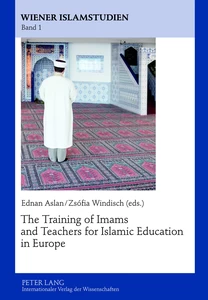
The Training of Imams and Teachers for Islamic Education in Europe
©2013 Conference proceedings -
Professional Training of Singers and Teachers of Singing
A Comparative Study of Selected Vocal Performance and Pedagogy Programs in the United States of America and the Federal Republic of Germany©2007 Thesis -
-
Strategien der Lehrerbildung / Strategies for Teacher Training
Zur Steigerung von Lehrkompetenzen und Unterrichtsqualität / Concepts for Improving Skills and Quality of TeachingEdited Collection -
-
Effektives EDV-Training
Eine Untersuchung zu den Determinanten des Lernerfolgs bei der informationstechnischen Qualifizierung von Erwachsenen©1994 Thesis -
-
Management and Further Training
©2003 Monographs -
-
Bewerbungstraining
Fachtheoretisches und fachpraktisches Ausbildungscurriculum unter Einbeziehung von Berufswahlprozess und rationalem Entscheidungsverhalten©2002 Thesis -
-
-
Asserti-Care- Assertion Training for the Elderly Client
Assertion Training for the Elderly Client©1983 Others -
Coachingbasiertes Training
Einsatzbereiche – Methodik – Sprechwissenschaftliche Studie zur Transferqualität©2014 Thesis -
Managementtraining in China
Neue Erkenntnisse über Akzeptanz und Relevanz westlicher Managementtheorien und Trainingsmethoden- (Beispiele aus dem Siemens Management Institute in Peking)©2003 Monographs -
-
Minding the Obligation Gap in Community Colleges and Beyond
Theory and Practice in Achieving Educational Equity©2020 Textbook -
Education and Training in a Globalized World Society
Conforming – Resistance – Ego-boosting©2006 Monographs -
Teaching College Students How to Solve Real-Life Moral Dilemmas
An Ethical Compass for Quarterlifers©2016 Textbook -
-
-