


 de
de  fr
fr Peter Lang is delighted to announce the results of the 2024 Emerging Scholars Competition in Environmental Humanities:
Winners
Yolanda López-Maldonado
Indigenous Knowledge Explained
and
Amy Ainsworth
The Ecological and the ecoGothic in German Literature and Culture (1885-1930)
to be published in the Plants and Animals: Interdisciplinary Approaches book series
We congratulate our winners! Thank you to our distinguished editorial board and to all those who took part in the competition.
2025 Emerging Scholars Competition
We invite you to take part in our Peter Lang 2025 Emerging Scholars Competition in Queer Studies. You can find information on our 2025 competition here: https://www.peterlang.com/2025-emerging-scholars-competition/
For more information, please contact Dr Laurel Plapp (l.plapp@peterlang.com) or Dr Phil Dunshea, (p.dunshea@peterlang.com).
About the Peter Lang Emerging Scholars Competition
The Peter Lang Emerging Scholars Competition (previously known as the Young Scholars Competition) is an annual competition for early career researchers in selected fields. It has been held every year since 2011, in fields such as Black Studies, Irish Studies, Women’s Writing, Education, French Studies, and more.
In each competition, book proposals for monographs are invited from emerging scholars to be evaluated by a distinguished editorial board. Winners receive a contract for a fully funded book and the title of winner. Runners-up and other participants may also have opportunities to publish.
We’re proud to have a community of over 30 winners of the competition over the years, and we’re pleased to feature some of our winning books. Please watch the interviews with three winners of our 2019 French Studies competition – Polly Galis, Mathew Rickard, and Natalie Berkman – to learn what winning the competition has meant to them.
This is a co-authored blog that sets out to demonstrate in action what this new book series is all about. It is authored in English by Par Kumaraswami, Director of the Centre for Research on Cuba, University of Nottingham, UK; and in Spanish by Adrian Ludet Arevalo Salazar, doctoral student at the University of Western Ontario, Canada
Why do we need to decolonize Cuban Studies?
The most compelling reason for me is that, for purely economic reasons (which are themselves the result of political choices), Cuban views about Cuba are much less easy to find than non-Cuban views. Without suggesting that one set of views is better, or more accurate, than any other, I think this issue can be summed up in one simple question: ‘Wherever you are from, wherever you live, can you imagine if that place were described almost exclusively via the views, impressions and opinions of outsiders, many of whom have never spent any time in that place? Of course, this would be an absurd situation and yet, this is how Cuban Studies operate in the world.
But there’s more. Increasingly, and especially since the end of the Cold War, there are certain perspectives, approaches and assumptions that dominate in Cuban Studies. These come, quite logically, from the centres of academic power which, more often than not, can be mapped onto the centres of economic power. Then through processes of repetition, habituation and normalisation through repeated citation, they create a hermeneutic circle – a reduced and circular set of views and knowledge – about Cuba. In addition, academic scholarship which is published online has now become so accessible in parts of the world – and itself normalised as the only scholarship available – that many voices, visions, approaches and concepts find themselves in the margins, if not altogether invisible. Thus, decolonizing means all kinds of ways of making visible in an established space such as this new Peter Lang collection those other voices, visions and approaches.
What are our aims with this book series?
As a response to the situation which I describe above – which, being a university teacher of Cuban Studies, I know is more widespread than you might imagine – we intend this book series to shine a light on those methods, subjects and approaches which have remained in, or which have been pushed to, the margins. This might mean a focus on Cuban realities outside Havana or Santiago de Cuba, as is the case with the opening volume in the series on educational participation in Granma province, Cuba. It might mean using methods and concepts that derive not from high theories developed in the Global North, but from Cuba or other contexts in the Global South. To decolonize might mean to go beyond the disciplinary boundaries that were established in the colonial university, or that have been celebrated in the neoliberal university, and instead opt for multidisciplinary or interdisciplinary approaches and methods. It might mean to focus efforts on populations and practices that have traditionally been considered as unimportant or peripheral to scholarship, or have been objectified and classified in what academic work exists as exotic or innocent: the lives and cultures of female, black, indigenous or rural populations. It might mean that academic and creative work, high and low cultural forms, sit together on an equal footing in the same volume, and work in dialogue with one another. Decolonization means celebrating and enabling the ability to listen, to accept and embrace contradiction, to recognise that new methods, new subjects and new ways of representing them can yield new concepts, theories and ideas. Finally, by actively encouraging monographs and edited volumes that are written in English and/or Spanish, the collection provides a new place for Cuban authors to represent their own complex realities and perspectives. Through these processes, we aim to create a space that privileges dialogue, so that many more versions of Cuba enter the public domain.
________________
Perspectivas descolonizadoras desde Cuba
¿Por qué necesitamos descolonizar los estudios cubanos?
La necesidad de establecer narrativas y nuevas miradas fuera de los cauces tradicionales me impulsa a pensar en la descolonización desde otras nuevas perspectivas, me refiero a la descolonización de los estudios cubanos desde las voces que generalmente no se escuchan o quedan simplemente subordinadas a otras voces que, tanto dentro como fuera de Cuba se erigen en las voces hegemónicas. La descolonización parte entonces de entender que no hay una sola Cuba, si no muchas Cubas, una Cuba profunda que requiere analizarla y pensarla desde ella misma y desde sus respectivas realidades y desde los componentes sociales que la habitan. Cuba es una comunidad imaginada por seres humanos habituados a la resistencia y la resiliencia, que abarca no solo ese mundo urbano de las grandes ciudades como La Habana o Santiago de Cuba, sus dos ciudades principales. Es también el mundo de las montañas del oriente del país, o de otras partes de la geografía cubana, de las zonas rurales donde se encuentran proyectos culturales tan fantásticos como la Televisión Serrana. Proyectos culturales realizados en el mismo corazón de las comunidades distantes de la Sierra Maestra, con la participación de sus propios habitantes.
Es decir, la descolonización a la que aspiramos, es una descolonización que parte de los centros teóricos que la han definido como una de las más importantes corrientes de pensamiento contemporáneo, asociada a los estudios subalternos y los estudios decolonizadores, entre otros movimientos intelectuales, para dar paso a una praxis que incorpore a esas voces poco escuchadas en sus propios entornos y procesos sociales, culturales y educativos, que de otra manera quedan como espacios y sujetos sin la suficiente visibilidad que han tenido hasta ahora. Cobran entonces protagonismo las periferias cubanas y sus habitantes, sus realidades y diferentes ambientes de producción material y cultural.
¿Cuáles son nuestros objetivos con esta serie de libros?
Esta serie por tanto busca posicionar no solo nuevos temas y procesos del ámbito cubano, poco tratados o soslayados por los cauces académicos regulares, sino que busca nuevos protagonismos y mecanismos metodológicos y conceptuales, que intentan alejarse del tradicional academicismo occidental para incorporar un poco más los enfoques y praxis del sur global y de la propia experiencia cubana de la periferia.
Queremos en un acto de descolonización real, desde una amplia mirada, aceptar la posibilidad, no solo de nuevas formas de comprender la realidad cubana a partir de estas regiones y estas realidades poco transitadas, si no que, a su vez, incorporar el cúmulo de saberes, métodos y formas expresivas que conforman el universo al que se quiere dar voz y brindarle realmente la experiencia descolonizadora que merece. Por tanto, a los ejes transdisciplinar e interdisciplinar, válidos para esta serie, que permiten enriquecer desde diferentes campos académicos los estudios cubanos, se incorpora una especia de intradisciplinariedad que tiene como epicentro el conocimiento y los fundamentos e ideas que han dado forma a estas comunidades.
Por otra parte, pretendemos que la serie sea un punto de encuentro franco y sincero del conocimiento más amplio posible, donde académicos, personas de la cultura y otros sectores de la sociedad, continúen enriqueciendo esa comunidad pensada e imaginada que es Cuba.
Why I decided to write this book?
As a new lecturer in both FE (further education) and HE (higher education), I found research terminology quite difficult to grasp when doing my own action research project for my Level 7 Postgraduate Diploma in Education and Training. There was almost a decade-long gap between completing my dissertation at undergraduate level, and then doing my postgraduate action research project. It took a while for me to re-acquaint myself with the differences and overlap between terms such as systematic reviews and meta-analysis. There weren’t any books or resources available which made research principles relatable to practice, so I decided to write one.
Potentially many researchers who are conducting action research/ research are in the same position as I was, so the ambition was to help others with my book, ‘A 101 Action Research Guide for Beginners’. It was always daunting not knowing where to begin, and there are probably many action researchers out there who feel the same way, so a book like this, written with the frankness of a Yorkshire person, could be a huge asset to others.
What it offers to readers?
The main premise of the book is to demystify research terminology for those teaching, and completing action research projects. Research terms such as systematic reviews, meta-analysis, primary research, and literature reviews are explained simply, with solid links to practice included (with a STEM and healthcare field focus). A book like this offers a much-needed bridge between research concepts and doing research in the real world.
With those new to research it may be difficult to know where to start. Managing a research project is difficult at times. Having a book to refer to that explores the practical side of research, and explains how to format research proposals and conduct research projects, will be an advantage to both up and coming and experienced researchers. Linking practice and research concepts together in a joined-up manner, rather than considering them as separate entities facilitates readers in gaining a deeper comprehension of research terminology. The book conveys how the researcher tackled issues they faced in their action research project by working with others to overcome obstacles. An action research project conducted in a FE college in West Yorkshire is shared in its entirety. This encompasses the research proposal, ethical considerations for the research project, literature review, methodology, results, results discussion and conclusion/ recommendations; right through to it being published in TES (a UK national magazine for teachers) to provide a bonafide practical research example.
Themes such as ethics and maintaining an unbiased approach in research are explained meaningfully. The book depicts how to structure a research proposal and research project report using a contemporary action research project as a template. The book chronicles the rationale behind the choices in methodology selected, and unscrambles research principles, so it connects with researchers at all levels.
Other areas covered in the book include reflection (with reflective account exemplars), artificial intelligence, and quality assurance. It has a free website with more examples of action research in STEM teaching, to provide supplementary resources to further support the readers.
The book is available here: A 101 Action Research Guide for Beginners – Peter Lang Verlag, and at other online retailers, and may be a welcome gift to researchers at all levels doing research projects at undergraduate or postgraduate level.
Readers can benefit from a 10% discount when using code ARG10, valid until 31 March 2025. Please note that discount codes are not valid in regions with fixed book pricing.
Find it here: https://www.peterlang.com/document/1466014
Good luck to all of you doing research projects!
Black Friday Deal 2024: Sichern Sie sich gratis Versand
Am Black Friday bieten wir unseren Kund:innen einen besonderen Vorteil: Für alle Bestellungen, die an Adressen in Europa und den kontinentalen USA versendet werden, übernehmen wir die Versandkosten. Sie profitieren doppelt: Entdecken Sie spannende wissenschaftliche Literatur und sparen Sie auch bei den Versandkosten. Jetzt reinschauen und Lieblingswerke bequem nach Hause liefern lassen.
Nutzen Sie diese Gelegenheit, um wissenschaftliche Werke für sich selbst oder als Freude für andere zu entdecken. Stöbern Sie in unserem umfangreichen Sortiment an hochwertigen Publikationen aus den Geistes- und Sozialwissenschaften – hier ist für jede:n etwas dabei.
Wann? Nur am 29. November 2024
Wo? Auf www.peterlang.com
Verpassen Sie nicht die Chance, Ihre Wissenssammlung zu erweitern oder das perfekte Geschenk zu finden. Besuchen Sie unseren Shop und sichern Sie sich Ihre favorisierten Titel – dieses exklusive Angebot gilt nur am 29. November 2024.
——–
Black Friday Deal 2024: Get free shipping
On Black Friday, we offer our customers a special benefit: We will cover the shipping costs for all orders shipped to addresses in Europe and the continental USA. You benefit twice over: discover exciting scientific literature and save on shipping costs. Have a look now and have your favourite books easily delivered to your home.
Take this opportunity to explore our range of scholarly works, spanning various disciplines in the humanities and social sciences. Whether you’re looking to expand your personal library, support your academic pursuits, or find the perfect gift for a colleague or friend, this is the ideal moment to shop.
When? Only on November 29, 2024
Where? At www.peterlang.com
Don’t miss out – visit our store and make the most of this exclusive offer. Enjoy free shipping on your favourite academic publications – only on November 29, 2024.
——–
Shop at www.peterlang.com.
By Laurel Plapp
Three years after launching the DEI Working Group, we are pleased to have a story to tell about our commitment to a diverse and inclusive publishing program.
Why DEI?
For me, the introduction of a DEI initiative at Peter Lang was an extension of what I had been striving to do as an Acquisitions Editor since I joined the company in 2010. But it also reflected a long-term commitment that was part of my academic career before Peter Lang.
While a PhD student and then Lecturer at the University of California, San Diego, my main aim was to help students think critically about the world around them, including dismantling a worldview guided by the white, patriarchal mainstream. In the “Dimensions of Culture” program, I had the opportunity to educate students about the history of slavery and oppression in America, introduce them to the work of great writers like Gloria Anzaldúa and Leslie Marmon Silko, and break down barriers to talking about gender and sexual identity. I often think back on the texts and themes we taught and how they may have shaped that generation, and what positive effects that may have had on progress, even if that fight takes a while.
These threads influenced the later development of my own courses while a Lecturer at UCSD, where I was tasked with teaching German and comparative literature and film. I created for the first time at UCSD a course on “Multicultural Germany,” giving students access to literature and film created by People of Color and immigrants to Germany. Introducing students to Fatih Akin, Yoko Tawada, May Ayim, Angelina Maccarone and more, we explored themes like transnational and transgender identity, experiences of oppression and resistance, and possibilities of solidarity across ethnic groups in Germany. The aim of the course was to change students’ perspective on what it means to be German and, by extension, what that might mean for their own lives in America.
DEI in Practice
When I joined Peter Lang, I was keen to continue to give voice to the oppressed and dismantle the canon through my work as an Acquisitions Editor. This role gives us a unique opportunity to shape the direction of publications in the fields in which we acquire and, for me, my overriding goal was to transform the program into one that was diverse and inclusive.
Over the past 14 years, I have been launching new series intended to privilege the work of creators from persistently marginalized groups and to shine a light on topics like health and disability, feminist and anti-racist movements, social justice and equality. The series editors and editorial boards I recruited were also intended to reflect equity and inclusion, helping to give scholars from underrepresented groups the chance to have their work reviewed in a fair and unbiased way. Read more about these series in our latest Diversity, Equity and Inclusion catalogue.
I also strive to integrate diverse perspectives throughout the books I publish, regardless of the series. This has become a particular hallmark of books in the series Genre Fiction and Film Companions, where every companion includes texts reflecting international, inclusive, and diverse voices.
DEI Working Group at Peter Lang
Starting the DEI Working Group was, for me, a logical extension of these efforts to diversify our publishing program, integrating these principles into all levels of the company. We launched the group in 2021 to explore both internal and external efforts that we can undertake as a company to encourage a diverse and equitable approach to our work. The central aims of the group are to think about how we are presenting ourselves to our contacts, how we can support contacts of all identities and abilities, and how we can enable more inclusive and diverse publications. The following describes our activities thus far.
Supporting Emerging Scholars
One of the first initiatives of the DEI Working Group was to launch the Emerging Scholars Competition, a reimagining of our long-running Young Scholars Competition. The aim of this new competition was to support early career academics working in fields that have been historically underrepresented, offering them the opportunity to win a prestigious contract for publication through a rigorous review process.
Our competitions in Black Studies (2021), in Women, Gender and Sexuality Studies (2022) and in Indigenous Studies (2023) have resulted in 15 emerging scholars benefiting from contracts for publication. The winner(s) of this year’s competition, in Environmental Humanities, receive a Gold Open Access contract, furthering our efforts to make scholarship accessible to as broad an audience as possible. Planning for our 2025 competition, in Queer Studies, is already underway.
Read more about the Emerging Scholars Competition here.
Changing our Language
The DEI Working Group developed a statement of our commitment to DEI, acknowledging our privileged role as a publisher and recognizing the importance of offering a platform for voices and topics that have gone unheard and unseen. We also recognize the need to continually analyze our own practices and policies and reflect on how these may be affecting our partners both externally and internally. We state our commitment to always strive to do better.
With those aims in mind, we revisited documentation that is sent out to authors, examining the kinds of questions we ask on our proposal and peer review forms to ensure that we are supporting an equitable approach to evaluating the work of scholars in the fields in which we publish.
We have also written an internal DEI Handbook with information for our team about best practice for equitable peer review, building of diverse editorial boards, use of gender-inclusive language, respect for pronoun usage, and more.
These efforts are ongoing by our dedicated team, with the aim of making DEI part of our practice across the entire company.
Lifting up Voices
We are meanwhile pleased to feature on our DEI webpage the voices of our authors, including an annual catalogue with educational resources for DEI practice, books that cover diverse and inclusive subjects and approaches, and series that invite new proposals in these fields.
We welcome authors who wish to take part in our Peter Lang et al. blog by writing about their research, their experiences and their own take on DEI. Recent blog posts have set the stage for these discussions, and we invite all our authors to participate.
We hope you will join us on this journey, whether by entering our Emerging Scholars Competition, becoming a peer reviewer, or coming to us with a new book proposal. We always welcome new book proposals and series on DEI topics and scholars from diverse backgrounds. Please reach out to us at editorial@peterlang.com or via our webform. We look forward to hearing from you.
Sean Howard and Lee-Anne Broadhead
October 2024
As settlers living and working on the unceded territory of Una’maki (Cape Breton), part of the vast homeland of the Mi’kmaw people, we have had the privilege of witnessing and participating in a bold experiment in cross-cultural dialogue known as ‘Two-Eyed Seeing’. First articulated, two decades ago, by Mi’kmaw elders Murdena and Albert Marshall, the two ‘eyes’ in question are those of Western and Indigenous Science, a sometimes jarring juxtaposition of two radically distinct sets of approaches – reductionist/instrumentalist v. wholistic, quantitative v. qualitative – to nature and knowledge.
So distinct, indeed, are these approaches that western reductionism has traditionally arrogated to itself the status of ‘science proper,’ consigning to its periphery alternative modes and methods of inquiry, whether within or beyond the mainstream laboratory and academy: classifying, for example, Indigenous modes and methods as traditional knowledge rather than modern science, a set of ‘pre-scientific’ (even pseudo-scientific) beliefs and practices at best capable of producing results and data that ‘science itself’ can properly (reductively) study and explain.
The core moral and intellectual motivation of ‘Two-Eyed Seeing’ is to counter this bitter legacy of colonial condescension, to break the false Eurocentric equation of reductionism with science. The problem with Eurocentrism, of course, lies not with the ‘Euro’ but the ‘centrism,’ the denigration and sometimes extermination of ways of knowing other than those associated with and materially assisting imperial Europe’s rise to global power. Indeed, Eurocentrism has often acted to marginalize alternative ways of knowing in Europe itself, and so successful has this process been that another false equation has largely taken hold, that of ‘western science’ with and as the relentless advance of mechanistic reductionism.
In the conviction that dispelling this notion holds the key to a new depth of both inter- and intra-cultural dialogue about science and society, our forthcoming book from Peter Lang – Cultivating Perception, Countering Faust: The Radical Resonance of Goethean and Indigenous Science – seeks to compare Indigenous science not to reductionism but rather to ‘Goethean Science,’ shorthand for the wholistic, qualitative, phenomenological approach pioneered by one of the most influential and misunderstood figures of European Enlightenment, Johann Wolfgang von Goethe (1749-1832).
In his methodological dedication to what he called “delicate empiricism” – his corresponding rejection, as an unscientific “pathology”, of the “grim torture chamber of [indelicate] empiricism, mechanism, and dogmatism” from which “the phenomena must be freed once and for all” – Goethe vested his hopes for authentic, relational human knowledge of nature on the cultivation of a poetic perceptiveness of the lifeways of the world, convinced as he was from experience that “every new object, clearly seen, opens up a new organ of perception in us.” In this reverential fidelity to clear-eyed seeing of creation, Goethe’s science, and that of his distinguished inheritors, bears a striking resemblance in key features – as well as cultural distinctiveness in others – to the ethos and methods of Indigenous Science as practiced across vast swathes of time and space.
Drawing on the landmark contributions of Indigenous scientists and thinkers such as Gregory Cajete (Tewa), Leroy Little Bear (Haudenosaunee), Sákéj Henderson (Chicksaw), Oscar Kawagley (Yupiaq), and contemporary research by Mi’kmaq ecologists at the Una’maki Institute of Natural Resources – into, for example, the extraordinary, now-endangered lifeways of the Kataq, the ‘Eel People’ of the Bras d’Or Lakes – we approach Indigenous Science as a “subtle seeking” (to quote Cajete) “establishing an ongoing and dynamic relationship based on traditions of holistic participation,” an immersion in the structure and agency, rhythms and reasons of phenomena understood as the innumerable, ever-evolving forms of being assumed by the ‘Great Spirit’ or ‘sacred energy’ at work and play in Creation. Because, as Cajete says, the “Americas are an ensouled and enchanted geography” Indigenous Science, as a practice of attunement of people to place, logically develops and rigorously deploys a “spiritual ecology,” again understanding ‘spirit’ as ‘energy’ and phenomena as, in our words, units of spiritual in-formation.
Central, then, to both Goethean and Indigenous Science is the cultivation of what Goethe calls an “exact sensorial imagination”, and Kawagley an “ecopsychology” of inquiry, commensurate with the poetic, qualitative challenge of practising a truly natural science of reality. Remarkably, this electrifying resonance has drawn little attention in the literature of either tradition, and it is one aim of our detailed comparative analysis to enable these ‘two eyes’ to see each other more clearly, hopefully opening new currents of dialogue and cooperation. This work – the heart of the book – relates to the first part of our title, ‘cultivating perception’. But what does that have to do with the second part, ‘countering Faust’?
To prepare our survey of Goethean and Indigenous Science, we consider Goethe’s unparalleled depiction in his sprawling mock-epic Faust drama of the rise and fall of a figure disastrously dedicated to the conquest and engineered harnessing of the elemental forces of natural reality through violently-reductionist science and technology, the methodical dismemberment of reality, from the atom up, long perverting and now existentially threatening reality itself. Tellingly, as we consider in detail, Faust’s flight from reality begins with his attempt to conjure the ‘Earth Spirit’ as his supposed equal, consort in his attempt to rule over the Earth and break her spirit! Incapable of grasping this paradox, or of accepting his rejection, Faust turns on the world – the definition, perhaps, of selling one’s soul? – and sets the vast Mechanism of the very modern, absurd drama in motion.
Our main focus in these sections is on what has aptly been dubbed, including by some of those involved, as the ‘Faustian Bargain’ at the core of the Manhattan Project producing the ultimate perversity and threat of nuclear weapons. But in his brutal rejection of co-existence with all those who reject or obstruct his increasingly frantic hyper-development of the planet – up to and including taming the ocean tide – Goethe’s Faust, in addition to personifying the antithesis of the Goethean scientist – embodies many aspects of the era of explosive Eurocentrism: ecologically insupportable industrialism, enabling and requiring the ‘extractivist’ plunder of the Earth; the mechanization of mass-murder (a.k.a. war) featuring bioweapons and foreshadowing the Bomb; constant surveillance of the increasingly powerless many by the overpowerful few; etc.
Not even Goethe could quite anticipate the degree of uncanny surveillance and pre-programmed, algorithmic dehumanization characterizing the digital Technosphere, though Mephistopheles does constitute his artificial intelligence, a co-pilot of the doomed plane. Neither, we suspect, could he have anticipated the failure of his astounding, unclassifiable play to dislodge Faust from the ironically deified ‘culture hero’ of modernity.
Had such an overthrow occurred, we suspect that Goethe would be taken far more seriously as a scientist today, and that western culture would value Indigenous Science far more highly. Conversely, though, our hope in writing our book was to invite a Goethean-Indigenous dialogue capable of forging a new, counter-Faustian alliance: common cause based on common ground, the endangered Earth herself.
Celebrating Open Access Week here at Peter Lang Group, we asked our dedicated Open Access team to explore what Open Access means to Peter Lang in 2024.
- What Open Access Means to Peter Lang
As a longstanding advocate for Open Access (OA) publishing, the Peter Lang Group has consistently supported and enhanced the dissemination of academic research. With over 2,000 Open Access titles published to date, we remain committed to offering innovative and accessible OA models that empower both authors and the academic community.
- Opening a World of Knowledge
At Peter Lang, we are dedicated to breaking down barriers to research. Open Access allows knowledge to reach a broader audience, while also fostering greater visibility, engagement, and collaboration across the global academic landscape. Studies show that OA publications receive higher viewership, citation rates, and downloads compared to traditional, restricted-access titles. This aligns with our mission to promote knowledge sharing and advance academic discourse.
- Gold Open Access: A Key Offering
Our Gold Open Access model ensures that research is freely accessible to all, immediately upon publication. Authors and editors can publish their work for a fee, often funded by research grants or institutions, under an agreed Creative Commons (CC) license. This ensures that copyright remains with the author, while their work benefits from Peter Lang’s full distribution network, discoverability, and our rigorous peer review standards—just like any of our traditional publications.
- The Launch of Open EBA
In our ongoing efforts to innovate, Peter Lang recently introduced the Open Evidence-Based Acquisition (Open EBA) model. Open EBA integrates a successful library acquisition approach with a streamlined method for funding OA monographs. This model provides libraries access to our entire catalogue, enabling them to either purchase highly used titles or fund Open Access monographs. We see this as a vital step toward helping more institutions adopt OA publishing.
- Commitment to the Future of Open Access
Peter Lang’s Open Access initiatives go beyond simply offering publication models—they reflect our commitment to fostering constructive dialogue between researchers, libraries, funders, and publishers. We are continuously exploring new approaches and business models to ensure that Open Access evolves in a way that benefits the entire academic ecosystem.
By focusing on accessibility, discoverability, and compliance with funder mandates, we aim to make high-quality research freely available to everyone, ensuring that the academic community can continue to grow and thrive.
- What’s Next?
As part of Open Access Week, we are excited to reaffirm our commitment to Open Access. Through initiatives like Open EBA, we aim to make Open Access a cornerstone of academic publishing. Stay tuned for upcoming promotions, collaborations, and new developments.
For more information, visit our Open Access page or contact our editorial team at openaccess@peterlang.com.
Locating Intersections Between Middle-Grades
Science and Social Studies Curricula Through
Provocative Storytelling
Editors: Margery Gardner, Randa Elbih, and Anita Bright
As part of Shirley Steinberg’s edited series, Counterpoints, published by Peter Lang, we invite chapter proposals for inclusion in a forthcoming text, with an anticipated publication date of December, 2025.
Science and social studies curricula possess inextricable interconnections, with aspects of each informing the other. Since the onset of formalized public schooling, disciplinary structures have offered little opportunity to explore intersections in content areas. This siloing effect contributes to a loss of texture and contextual situatedness for both subjects. This book focuses on reintegrating the two intersectional content areas, focused on the middle grades. The middle-grade band is an area with an urgent need to present compelling and meaningful content in order to spark and maintain ongoing student engagement. We engage the construct of provocative storytelling to center the controversial nature of this integration and to further foster the critical thinking of young adolescent learners—our world makers of tomorrow. Provocative storytelling aims to emotionally connect learners to the content and context, and to promote conversations about socially contested topics such as climate change, disease/medicine, and global conflict, as well as countless other ethical dilemmas. For example, Henrietta Lacks’ cancer cells extracted without her consent have led to major advances in science. It was only until 2023 that her family received a legal settlement for their commercialization and the public exposure of her genetic information. Another example is the impact of climate change on Tangier Island, Virginia, which is currently impacted by the effects of climate change. Although the island is on track to disappear in the next 50 years due to rising sea levels, many local residents remain skeptical of the extant science related to this issue, which will continue to have a profound impact on their social lives.
We invite a cross-section of voices to share stories to expand educational possibilities. Through provocative stories, this critical work addresses a gap in the interlocking contextualization of science and social studies in the existing literature focused on adolescent education. This text offers commentary that can be generative to middle grades science and social studies teachers, and the education community writ large, pushing the fields of science and social studies education to new horizons.
Submissions will demonstrate an explicit connection between middle grade science and social studies disciplines. Provocative storytelling must also be an integral part of the chapter.
Chapter Proposal Guidelines:
Each chapter will begin with a provocative story, followed by ethical questions, leading to a dissection of the different facets of the dilemma. Finally, the chapters offer implications and/or steps to ground educators and students in the middle grades science and social studies classrooms. Authors should acknowledge the tensions around meeting disciplinary standards while fully addressing the curiosities and needs of the students in the classroom.
Please send a proposal of about 1000 words (excluding references) by November 30, 2024, along with a short biography (approx. 200 words).
Acceptance decisions will be made by December 31, 2024.
The final chapters should be approximately 7,000-9,000 words.
The first complete chapter drafts are due on March 31, 2025.
Final chapter submissions are due on August 31, 2025.
Please submit proposals to: locatingintersections@gmail.com
If you have an idea that you’re not sure about submitting for review, we invite you to contact us (the editorial team) to have a conversation about your ideas before you create your proposal. We seek to include a broad range of voices and topics, and invite you to share and still-developing or emergent ideas for chapters. We are happy to think with you!
In the aftermath of war, the bodies of fallen soldiers, whether hastily buried in makeshift graves or left scattered across battlefields, emerge as potent symbols of unresolved questions. My research delves into the complex and often overlooked issue of how to manage these remains, particularly those of soldiers from an invading force, such as German soldiers buried in Russia after World War II. How should these remains be treated? What responsibilities do the living have to the dead? Who has the right to access these graves, repatriate remains, and what role do these actions play in national memory, diplomacy, and ethical considerations?
I focus specifically on the post-World War II context in Russia and the enduring challenge of managing the millions of soldiers’ bodies left behind when relations between former enemies remain fraught. A key part of my research involves examining how the German Wehrmacht handled burials during the war and how Germany, in the war’s aftermath, sought access to the graves of its soldiers. Central to this inquiry are the moral and diplomatic questions surrounding a defeated nation’s right to commemorate its war dead on foreign soil—especially in countries they once invaded.
A significant part of my research explores the role of the Volksbund Deutsche Kriegsgräberfürsorge (VDK), the German War Graves Commission, which has taken on the monumental task of locating and exhuming Wehrmacht graves, identifying remains, constructing new cemeteries, and reburying the dead. Through my work, I shed light on the meticulous and sensitive efforts of the VDK, which involves not only recovery and identification but also navigating complex diplomatic relationships with local and national authorities. These efforts adhere to international humanitarian law, including the Geneva Conventions, ensuring dignified burials for the fallen.

Soviet Union, 1941/ 1942 (Bundesarchiv Bild 121- 1257A
Germany’s Struggle with Remembrance and Responsibility
This ongoing endeavor is not merely about recovering and burying soldiers; it embodies Germany’s profound struggle to come to terms with its own losses while confronting the far more significant responsibility for the immense suffering it caused. Remembrance in Germany is inherently complex and multifaceted. Crucially, this process must prioritize the acknowledgment of the atrocities committed by the Nazi regime, ensuring that the memory of the dead is not used to glorify them but rather to recognize the crimes they were part of, directly or indirectly. It is not about honoring the soldiers as individuals detached from their actions but about confronting the brutal reality of the past and the roles these soldiers played in it. In this way, remembrance becomes not an act of hero worship, but a necessary reckoning with history—a sober reflection on how these individuals contributed to the horrors of war, and how their legacy must serve as a reminder of the dangers of unchecked ideology and the consequences of complicity.
The ongoing dedication of the German government and the VDK emphasizes the importance of these activities in the realms of state diplomacy, wider society, and the military. This commitment is seen in the resources allocated for materials, personnel, and the planning of exhumations. Efforts are made to meticulously collect individual remains and try to name the soldiers, often involving the identification of remains with intact ID tags and reaching out to potential living relatives. This process reflects Germany’s struggle to come to terms with its losses while grappling with its responsibility for the immense suffering it caused during the war.
However, the recovery and burial of soldiers stir deep emotions, both in Germany and in the nations once occupied by German forces. A central challenge lies in balancing the acknowledgment of the atrocities committed by the Nazi regime with the act of commemorating the fallen soldiers. Remembrance in Germany is inherently complex and multifaceted, requiring a careful approach that prioritizes the acknowledgment of historical realities and war crimes without glorifying the military that supported a regime responsible for genocide.
This question is central to my research: how can a nation remember its fallen soldiers without glorifying the military that supported a regime responsible for so much suffering? In my exploration, I trace the evolution of German war graves, from symbols of heroism under the Nazi regime to places of peace and reconciliation under the stewardship of the VDK. This transformation mirrors Germany’s broader journey of reckoning with its past while striving for peace and reconciliation in the present. The ongoing maintenance of these graves, guided by international agreements and conventions, underscores the moral and ethical obligations nations hold toward their fallen soldiers, regardless of their roles in wartime atrocities.
The complexity of these questions resonates with General Alexander Suvorov’s 1799 observation: “A war is not over until the last soldier is buried.” This truth lies at the heart of my research, emphasizing that the dead continue to influence the living. Until every soldier is accounted for, the shadows of war persist. I trace the difficult and often controversial path taken by Germany and Russia in addressing this deeply emotional and politically charged issue. Despite ongoing tensions, my research explores how the Soviet Union and later Russia ultimately allowed Germany access to its soldiers’ graves—a process fraught with controversy and far from straightforward.
These burial sites have evolved into integral components of Europe’s memorial landscape, protected by war grave agreements and recognized for their universal value. The question of whether and how to continue exhumation and commemoration efforts remains a moral and ethical challenge. From a humanitarian perspective, regardless of nationality, the recovery and proper burial of a soldier’s remains are acts of compassion and respect. Nations uphold a lasting responsibility to commemorate their fallen soldiers, even as the decades pass and the likelihood of living relatives becomes increasingly remote.

The Evolving Meaning of Soldiers’ Graves in Post-War Europe
The treatment of soldiers’ graves plays a crucial role in shaping international relations and transnational memory. Bilateral negotiations over grave access and reburial efforts often mark the beginning of post-war reconciliation. These negotiations, extending beyond mere access to Soviet and Russian territories, also involve a re-evaluation of the war and the formation of national narratives tied to soldiers’ graves. The VDK has deliberately positioned its work as a means of fostering peace and reconciliation, as seen in its reconstruction of military cemeteries such as Sologubovka near St. Petersburg. However, Russia has been somewhat hesitant in fully embracing this approach, reflecting the complexity of the post-war relationships between former enemies. While the VDK aims to transform war graves into symbols of collective memory and reconciliation, Russia’s reaction underscores the ongoing sensitivities surrounding the interpretation of these sites. What began as the glorification of fallen soldiers under the Nazi regime has, over time, been reinterpreted as part of the broader process of reconciliation and peace—albeit one shaped by shifting social, state, and temporal dynamics.
The ongoing care of war graves has been enshrined in international treaties and agreements such as the Hague Convention and the Geneva Conventions, emphasizing the protection and preservation of the graves of prisoners of war and soldiers. However, this responsibility goes beyond mere legal obligations. It touches on broader humanitarian principles, the dignity of the dead, and the sensitivity required to navigate these complex narratives. The care given to the dead serves as a reflection of a society’s values and how it confronts the legacy of death and violence resulting from war.
In conclusion, my work underscores the need for critical reflection on how societies remember the war dead, the roles they played in the conflict, and the actions leading to their deaths. This reflection should always be sensitive to the reactions of others, particularly in the context of international memory and reconciliation. Through respectful burial practices and commemoration, nations can move toward a more just and peaceful future, ensuring that the legacies of conflict are acknowledged without being glorified. The ongoing care of these graves serves not only a cultural purpose but stands as a reminder of the past’s lessons for future generations.
Discover the book: Remnants of Wehrmacht Soldiers. Burial and Commemoration Practices of German Soldiers of the Second World War in Russia and Europe, 1941 – 2023.
We’re always thrilled to see the great reviews that come in for our titles. As a publisher, we know that all our titles are worthy of positive reviews but to see confirmation of that in print is always exciting.
For our authors, these positive reviews are a fantastic reward for their work, validating their research and inspiring them to (hopefully) write their next work.
Discover Peter Lang titles through the eyes of a fellow reader and maybe find one to add to your reading list.
Congratulations to all our reviewed authors, we hope you enjoy reading these reviews as much as we did. We thank those who took the time to read and review our titles.
Review Highlights
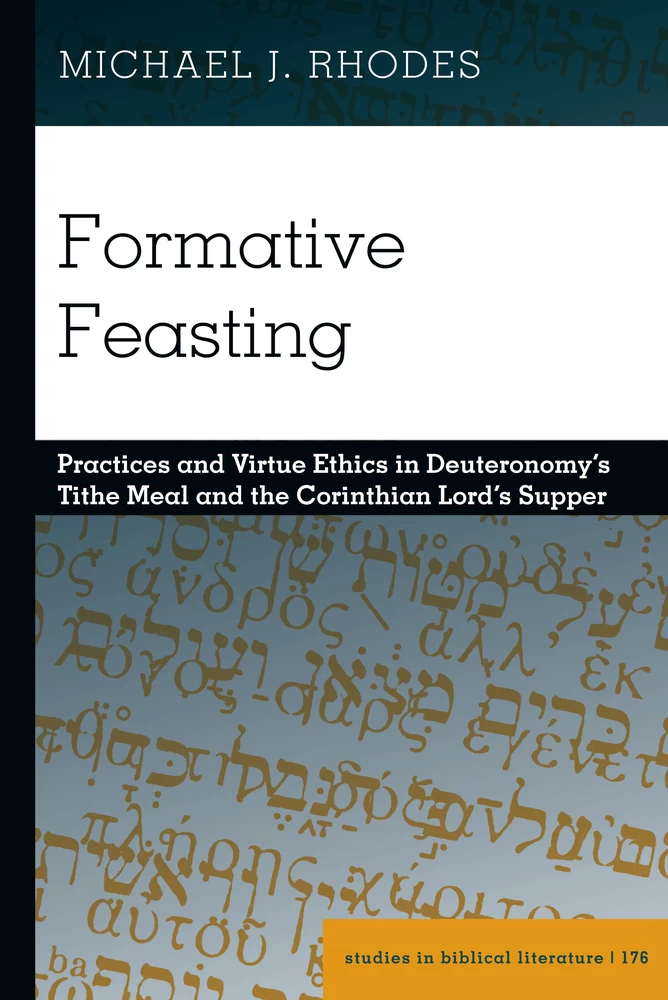
Title: Formative Feasting: Practices and Virtue Ethics in Deuteronomy’s Tithe Meal and the Corinthian Lord’s Supper by Michael J. Rhodes
Review by: Gregory Soderberg
“even non-academic readers, who have the patience to wade through the typical academic conventions, will benefit from it and discover key insights and practical implications for preaching, ministry, outreach, and the communal life of local churches”
Featured in: Evangelical Quarterly: An International Review of Bible and Theology, Volume 95, Issue 2 (2024) p 174 – 176
DOI: https://doi.org/10.1163/27725472-09502009
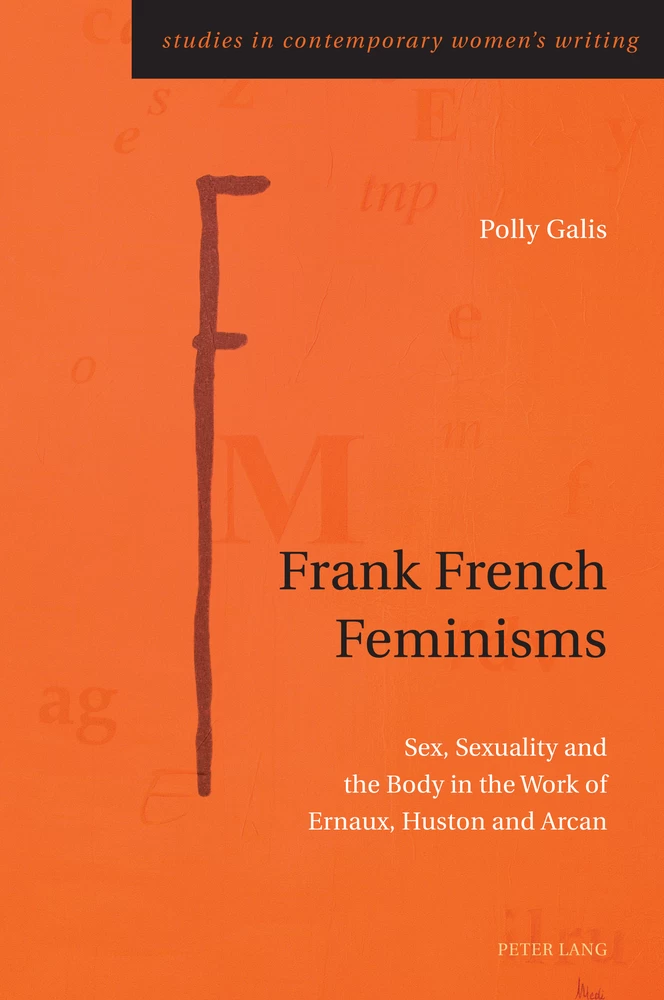
Title: Frank French Feminisms: Sex, Sexuality and the Body in the Work of Ernaux, Huston and Arcan by Polly Galis
Review by: Joëlle Papillon, McMaster University
“That said, what Galis accomplishes is significant. The analyses are compelling and speak well to one another. Although all three writers studied now have considerable scholarship dedicated to them, Frank French Feminisms offers new insights on the works of Ernaux, Huston, and Arcan.”
Featured in: H-France Review Vol. 24 (July 2024), No. 52
Link: https://h-france.net/h-france-reviews-volume-24-2024/
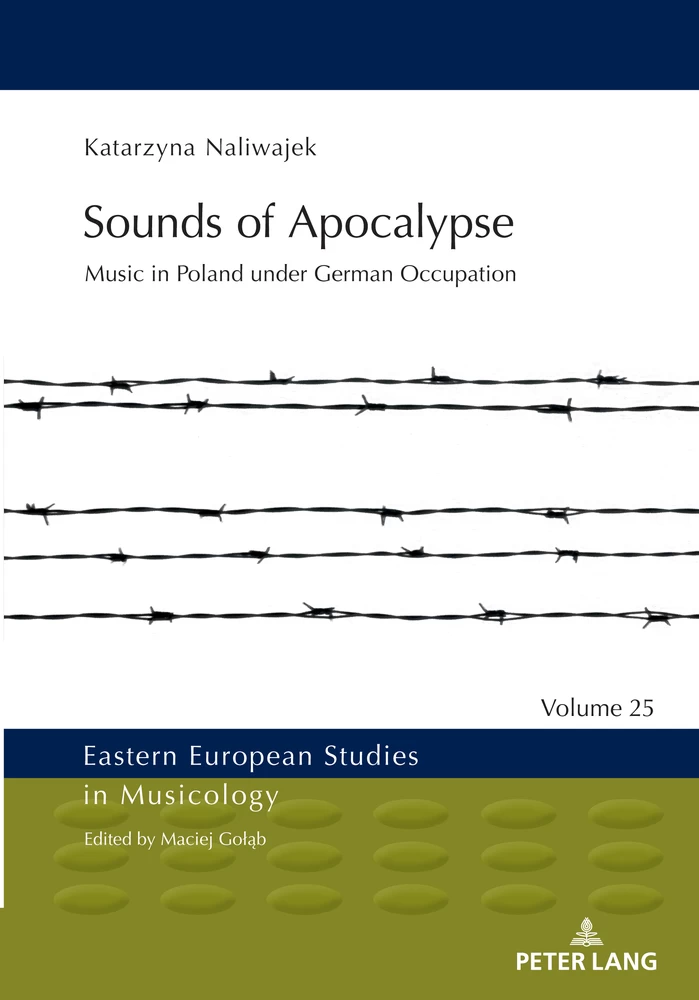
Title: Sounds of Apocalypse. Music in Poland Under German Occupation by Katarzyna Naliwajek
Review by: Lesley Hughes, Sam Houston State University
“To my knowledge, her monograph is the first comprehensive, English-language work on the role of music in Poland during the German Occupation, making this topic accessible to a much wider audience. Her study will be a useful resource for historians and musicologists, and the broad scope of her work will doubtless provide many entry points for further research on this topic.”
Featured in: Notes: The Quarterly Journal of the Music Library Association, September 2024
DOI: https://doi.org/10.1353/not.2024.a934859
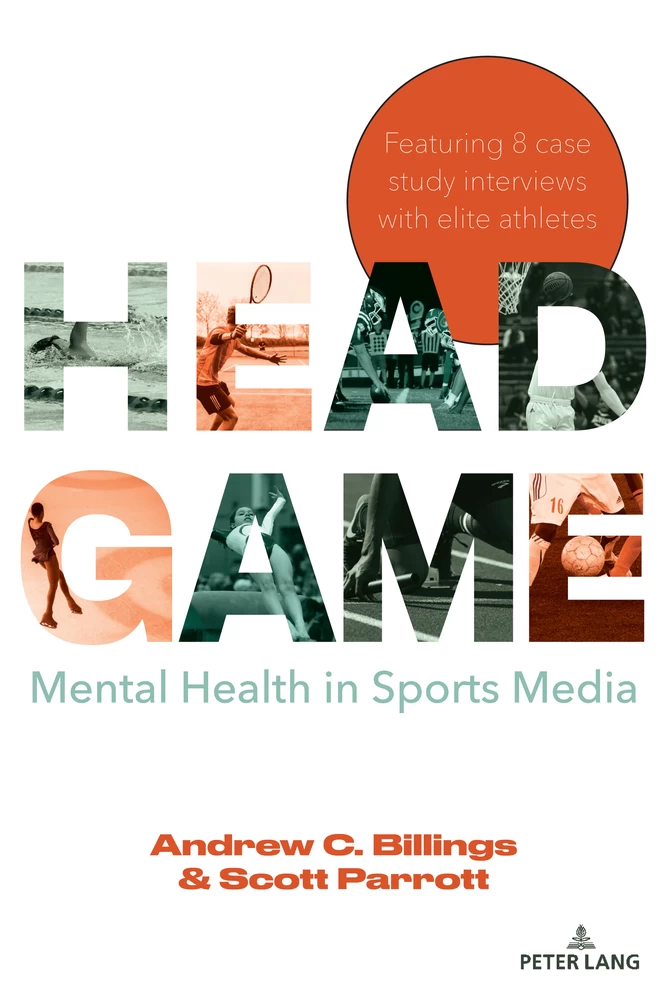
Title : Head Game. Mental Health in Sports Media
Review by: Mahdi Latififard, Tarbiat Modares University, Tehran, Iran
“Emphasizing the control of both favorable and unfavorable consequences stemming from the public disclosure of athletes’ mental health issues through mass and modern media channels, Head Game provides readers with a nuanced perspective on elite athletes’ psychological struggles blending with the context of media outlets.”
Featured in: International Journal of Sport Communication, 2024, 17, 353-354