


 de
de  fr
fr Inspired by BBC Radio’s “Desert Island Discs,” the Peter Lang Group presents ‘Peak Reads & Playlists’.
Join us on a journey to the mountain peaks near our Lausanne headquarters where we speak with our esteemed series editors.
In this interview format, our guests share the books, music, and food that would keep them company if they were whisked away alone to this beautiful mountain setting. They’ll explore the reasons behind their choices, revealing the impact and influence each has had on their lives. Get a glimpse into the hearts and minds of the Peter Lang community.
Name: Dr. Jatinder Mann
Job Title: Visiting Research Fellow, University of Reading
Series: Studies in Transnationalism
Books
> Which FICTION title would take the coveted first spot on your list?
Matthew Gregory Lewis’ The Monk: A Romance (1998). One of my oldest best friends strongly recommended this book to me many years ago, and I have always been so grateful that he did. The imagery in the book is quite spectacular. You are gripped from the first page to the very last. It is an excellent example of Gothic literature. It was very controversial and scandalous when it was first published, which is not surprising considering its subject matter.
> If you were offered the chance to take a NON-FICTION title, which would you choose?
Atholl Anderson, Judith Binney, and Aroha Harris’ Tangata Whenua: An Illustrated History (2015). This is a wonderful book that explores the history of Aotearoa New Zealand from a Māori perspective. It covers a very broad historical period and employs an inter and multidisciplinary approach to bring a very rich narrative – both textually and visually (there are some stunning photos in the book) to life. It is a book that I drew on considerably when I designed and taught a course on the History of Aotearoa New Zealand for the first time when I was based in Hong Kong.
> We’re feeling generous so we’ll allow you one more book, your choice of FICTION or NON-FICTION – which one makes the list?
Khushwant Singh’s A Train to Pakistan (1956). There are some books that you read that just stay with you for life and this is one of those books for me. I read it in my youth. It is a novel set in the Punjab (the region of South Asia that my family is descended from) in 1947 during Partition which saw the region divided between the newly created states of India and Pakistan along religious lines (Hindus and Sikhs mainly in the former and Muslims primarily in the latter) after the end of the British Raj (British imperial rule). The associated population exchanges and communal violence after the hasty British withdrawal saw up to one million people killed and up to twenty million dispossessed. I think one of the reasons why this book really touched me on a deep level is that it is about an extremely traumatic event that affected my ancestors, and the legacy of which remains to this day with the very fraught relationship between India and Pakistan.
Music
>The mountain ranges have spectacular acoustics. Which 5 MUSICAL RECORDINGS would you take to enjoy whilst up on the summit and why?
- Mariah Carey: Butterfly (1997). If I was ever asked who my favourite musical artist is, I would unhesitatingly reply, Mariah Carey. I have loved her music ever since I heard my eldest sister playing it when I was a kid, and I thought to myself who had the voice of this Angel. But this album in particular has a lot of meaning for me as it was released after she got divorced from a very unhappy marriage, and so it was an expression of her freedom and rebirth. At the exact same time I had just finished High School, which was not a happy time for me, as it is not for many people. So, the album encapsulated my own feelings of freedom and rebirth after a difficult several years. The title song from the album, ‘Butterfly’ is one of my all-time favourite songs of Mariah as it really showcases her song-writing skills. That is one of the things I love most about her, the fact that she is a singer-songwriter, and so her songs resonate with me more deeply as I know they have come from her heart.
2. Shania Twain: Come on Over (1999). Shania Twain is the only musical artist who I have seen live more than once: twice in London, United Kingdom (UK) and once in Ottawa, Canada when I was based there. She is up there for me in terms of best live musical performers. In fact I remember when I was at one of her concerts at Wembley Arena and she was bending over whilst singing on the stage to sign her autograph for fans at the same time. There are not many musical artists of her calibre who would even consider doing this. I also have always appreciated her life story. She was born into very humble beginnings, her parents died in a car crash, she put her fledgling music career on hold to look after her younger siblings, and then achieved spectacular success relatively late in life. This album of her’s was the first that I ever heard and I was hooked. She led the way for a lot of other Country music artists to cross over into Pop music as well.
3. Janet Jackson: Janet (1993). My favourite genre of music by far is R&B, and having grown up when I did, nothing beats 90s R&B. And this album by Janet Jackson epitomises the very best of this. I have always found the artistry behind the album quite incredible. When you listen to it you truly feel like she is telling a story over the course of the whole album. The diverse range of songs on the album is also something that I have always loved about it, from chilled songs to very upbeat ones. For me it is Janet’s best album and inspired a lot of other musical artists I think. The album also illustrates something else which had its highpoint in the 1990s: music videos. The numerous songs which were released as singles from the album quite often had amazing music videos accompanying them. The video for ‘If’ is a good example.
4. The Chicks: Taking The Long Way (2006). I am a huge The Chicks fan. But this album has got to be for me, their best. It followed the over the top backlash that they received from the Country music establishment after their lead singer said she was ashamed President Bush was from her state of Texas at a concert in London, UK. Her comments were made in the context of the United States of America’s invasion of Iraq in 2003. I will never forget attending a concert of their’s in the same year that the album was released in Sydney, Australia where I was doing my Ph.D. at the time, and they sang the song ‘Not Ready to Make Nice’ which was written as a response to the backlash that they received (including death threats!) and they got a standing ovation from the whole crowd it seemed, which was absolutely well-deserved. The album is full of defiance and whenever I need to get pumped up for something it is my go to album. It represented a new, mature sound for them as a group and truly illustrated their artistry.
5. The Corrs: Forgiven Not Forgotten (1995). The Corrs are another one of my favourite bands. I love the Irish. I truly admire and respect the impact that they have had on the world, despite their challenging history. And musically there are few other countries in my opinion of its size who have produced musical artists of such calibre. And The Corrs are an excellent example of this. I love their use of traditional Irish musical instruments, their sound, and their voices. But it is the instrumental songs from the album, much more influenced by Folk music than Pop like their later albums, which stand out for me. In fact their song ‘Lough Erin Shore’ from the album is probably my favourite instrumental song ever. I remember having this album on constant replay when I was at college in London, UK.
Food
>We couldn’t let our community feed their souls but not their bodies, so which FOOD DISH would you choose to take with you on the mountain retreat?
Vegetable Pakoras. This is a savoury Punjabi dish and they are one of my all-time favourites. They were something that my Mum taught me how to make and although I only make them a few times a year, namely at major Sikh festivals (Vaisakhi and Diwali), my partner and I (and our friends and neighbours who I often share them with) really look forward to them as they are simply delicious. I think one of the things I love most about them are the numerous ingredients that go into them and if all goes well the amazing taste that they create all together.

Thank you to Dr. Jatinder Mann for joining us up on the mountain!
Discover the series here: https://www.peterlang.com/series/sit
Here at Peter Lang Group we recently announced the launch of our 2024 Emerging Scholars Competition. Running since 2011, this competition invites emerging scholars to submit proposals in a chosen subject for the chance to be published. However, as emerging scholars, like all prospective authors, can submit proposals at any time, what is the significance of this opportunity?
As an international academic publisher, we specialize in bringing high-quality academic titles to readers around the world. The world of academic publishing is often competitive and can be daunting to those less established in their research fields. New voices might struggle to be heard or may be less confident in where to submit proposals to, particularly when working in more niche subjects. We believe that it is crucial to nurture the next generation of scholars, signposting and supporting their paths to publication. That is why we actively seek out and champion works by emerging scholars.
Academia thrives on new perspectives and innovation. Even in well-established areas of study, a fresh view can invite new discussion and discourse. It is this discussion that in turn can lead to new advancements and understanding. Emerging scholars may be particularly suited to this, with a willingness to challenge existing paradigms. Emerging scholars often explore areas of research that have been overlooked or underrepresented. Naturally, they will look for gaps in existing knowledge to find their own space within the academic community. Their contributions can therefore lead to a more thorough understanding of academic issues or research.
It is also important that we, as a publishing company, invest in these emerging scholars to build strong networks and leaders for the future of academia. Authors gain confidence in publishing and so continue to drive their own research forwards, pushing the boundaries of knowledge. Sharing their findings on a global platform at an earlier stage of their career offers greater opportunity to refine views, explore related fields, and connect with other academics. Importantly, the winning titles will be offered Gold Open Access as part of the publishing contract. Making the titles freely available is one way Peter Lang Group supports these emerging scholars in sharing their work and building their own reputation.
Another important aspect of the Peter Lang Emerging Scholars competition is the choice of subject. It is so important within publishing that the titles published reflect the diversity of experiences and study within academia. Academia sees trends and focuses change year on year, affected by social, economic, and political influences around the world. By focusing on a particular subject area each year, we aim to give early career scholars working in those areas a clear route to getting published and adding their voice to the conversation. This focus also speaks to the Peter Lang Group’s commitment to promoting and publishing groundbreaking research in the social sciences and humanities.
Our commitment to supporting emerging scholars and cutting-edge research remains unwavering. We are constantly looking for new talent and innovative research and the Peter Lang Emerging Scholars Competition offers a clear route for those working and publishing in this year’s topic of focus.
If you’re an emerging scholar who meets the criteria, we encourage you to submit your work for consideration. Find more information and the criteria here:
Emerging Scholars Competition 2024 – Peter Lang
The Peter Lang Group is delighted to announce the 2024 Peter Lang Emerging Scholars Competition in Environmental Humanities.
Proposals are invited from emerging scholars in Environmental Humanities for single-author books to be evaluated by a distinguished editorial board.
We welcome proposals on the following topics from a humanities or social sciences perspective:
- Environmental justice
- Climate change
- Sustainability
- Society and the environment
- Environmental education
- Indigenous knowledge and the environment
- Animal rights
- Plants and the animals
- The wilderness
- History of the environment
Winner(s) will be offered a publishing contract including Gold Open Access and winning book(s) will be made available for free digital download.
Proposals should be submitted by 31 July 2024 and decisions will be made by 1 November 2024.
For further information on eligibility and how to submit a proposal, visit our dedicated page Emerging Scholars Competition – Peter Lang
In this article, Dustin Grinnell, author of Lost & Found, discusses the significance of sharing your voice as an author during book promotion, both figuratively and literally.
In the ever-evolving landscape of book promotion, authors are increasingly recognizing the significance of sharing their voices. Whether through traditional book events, social media platforms, TV and radio, or the intimacy of audio mediums like podcasts, authors have a variety of avenues to express themselves beyond the confines of their written work. This isn’t merely a trend, but rather a fundamental aspect of engaging with readers in the digital era. In this article, I’ll explore the benefits of authors embracing their voices during book promotion and how it contributes to audience engagement and their overall brand.
Self-Expression: Unleashing Creative Energy
The first benefit of sharing your voice during book promotion is the opportunity for self-expression. For many authors, the compulsion to creatively express themselves is often ingrained deeply within them. Whether it’s through a book event, a TV or radio appearance, or a social media post, the act of sharing ideas that have simmered within them can be exhilarating. By stepping into the public sphere, authors also invite scrutiny and consideration of their thoughts and concepts. This engagement not only allows authors to be “in the conversation,” but also empowers them to influence and shape it for the better.
Beyond the Pages: Revealing the Multifaceted Self
Another advantage of sharing your voice is the ability to showcase aspects of yourself beyond what’s contained within the pages of your book. While a book or story may offer a glimpse into one aspect of an author’s personality or belief system, engaging with readers directly allows for a more comprehensive portrayal of an author. Many authors’ written work, particularly fiction, is not entirely reflective of their beliefs or perspectives. Thus, platforms that enable interaction provide an opportunity to exhibit authenticity and complexity.
Insights into the Creative Process: Understanding and Connection
Sharing your voice during book promotion offers readers a window into your creative process, satisfying their curiosity while also providing insights for yourself. Participation in discussions or interviews prompts authors to reflect on their work, deepening their understanding of their motivations and inspirations. Engaging with readers also allows for valuable feedback, offering authors a gauge of how their work is perceived and its impact on audiences.
Spaces for Voice: Book Events, Social Media, and Traditional Media
Authors have a range of platforms and mediums through which they can share their voices, each offering distinct advantages.
Book Events: Engaging with Readers Directly
Book events, whether readings, talks, or signings at bookstores, libraries or at special events provide authors with direct interaction with their audience. In them, authors can address questions about their work’s origins, sources of inspiration, and themes. Structuring these events around key talking points not only guides the conversation but also ensures an engaging and informative exchange. Moreover, the experience of public speaking hones communication skills and fosters bravery in facing diverse audiences.
Social Media: Amplifying Reach and Engagement
Social media platforms offer authors a dynamic space to share their voices with a broader audience. From providing glimpses into their creative process to sharing personal updates and opinions, authors can engage with readers in real-time. While some may find navigating social media challenging, platforms like Instagram can be used to offer insights into an author’s life and work, fostering a sense of connection with followers.
Audio: Intimacy and Storytelling
Audio mediums such as podcasts offer an intimate platform for authors to share their voices. Unlike TV appearances and traditional radio, podcasts allow for deeper exploration of topics related to their work, fostering nuanced conversations and connections with listeners. Through long-form discussions, authors can delve into their creative process, engaging listeners in immersive storytelling experiences.
Enamored by the podcast medium, I started my own podcast, Curiously, extending an invitation to listeners to accompany me on journeys through diverse conversations fueled by my curiosity. Drawing inspiration from the 2022 documentary Stutz, in which Jonah Hill engaged in dialogue with his therapist, I interviewed my former therapist for the first episode. Since then, I‘ve produced 12 more featuring an array of guests, ranging from a biomedical engineer exploring the science of popular sci-fi films to a researcher specializing in self-compassion, who discussed the physical and mental health benefits derived from practicing kindness towards ourselves.
Building Your Brand: The Importance of Author Platforms
In the digital era, every author is a brand, and cultivating an online presence is important. Starting a podcast or maintaining an active social media presence not only allows authors to share their voices but also enhances their brand visibility. These platforms serve as avenues for promoting work, attracting new readers, and monetizing their audience. Moreover, engaging in enriching conversations and storytelling through audio formats like podcasts refines an author’s craft, further strengthening their brand and connection with their audience.
Sharing your voice during book promotion isn’t just about marketing; it’s about forging meaningful connections with readers, amplifying your brand, and honing your craft as a storyteller. By embracing diverse mediums, authors can authentically express themselves, engage with their audience, and leave a lasting impact beyond the pages of their books.
At Peter Lang International Academic Publishers, our name reflects our mission: to connect with and publish for a truly global audience. We achieve this by publishing in multiple languages with the support of a diverse international team of Acquisition Editors. Our titles cross regional and language barriers, catering of course to their specific target audiences but ensuring that access to valuable research is not limited by geographical borders. Every book we publish aspires to a global readership.
However, our commitment to ‘thinking globally’ is balanced by a deep understanding of the power of local connections.
Personal Stories, Universal Themes
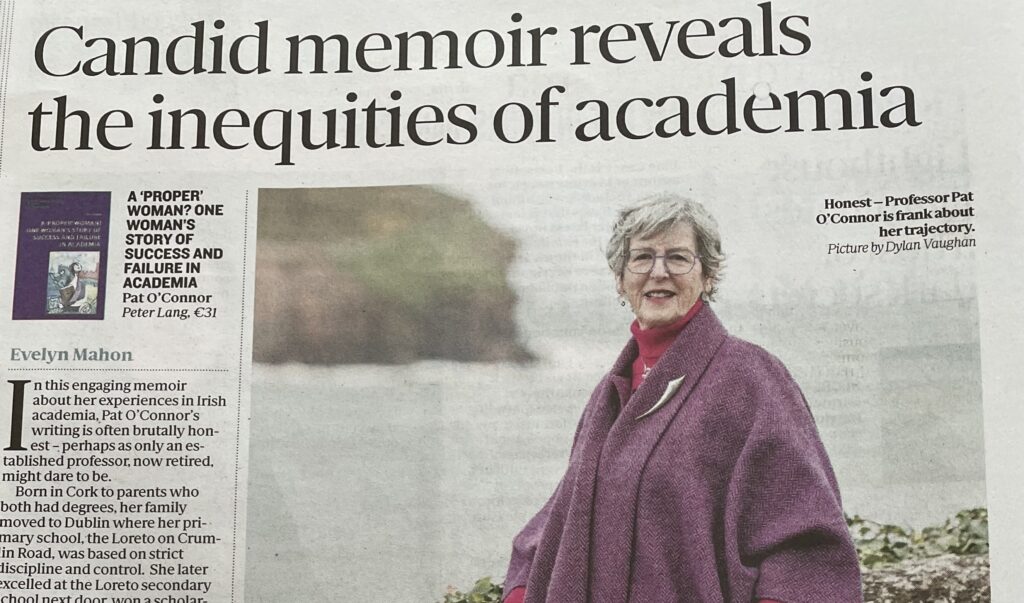
A recent title, A ‘proper’ woman? One woman’s story of success and failure in academia perfectly exemplifies this balance. A deeply personal memoir exploring the author’s experiences over a 46-year career in academic institutions across Ireland and the UK, the subject matter is intricately linked to the author’s physical and cultural space. Even the title, with its reference to a ‘proper’ woman, grounds the narrative in the specific societal expectations of the author’s time and place. Naturally, we would expect such a title to resonate more strongly with readers from the same region or those who have similar experiences. A sense of place helps to ground the title and provide an authentic and relatable voice for the author.
However, the power of A ‘proper’ woman? lies not just in its localized perspective, but in its exploration of universal themes. Professor Pat O’Connor explores experiences of devaluation, marginalisation, and disempowerment. These are not unique to academia or Irish society; they are universal human experiences. Readers from vastly different backgrounds can still find themselves reflected in the struggles and triumphs of the author, encouraging a sense of connection. These themes can connect readers across cultures and locations so that even a book with a keen sense of place can add value to a global audience, highlighting the shared threads and perhaps offering inspiration for those facing similar challenges.
By exploring these universal themes through a localized lens, A ‘proper’ woman? offers a deeper understanding of the human condition. Professor O’Connor’s journey highlights the challenges faced by many women in academia, but also the resilience and determination required to overcome them. This resonates with readers across the globe who have faced similar struggles for equality, regardless of their specific location or background.
Universal Themes, Local Recognition
One of the most important roles of a publisher is to recognize and support that balance between global relevance and a localized sense of place, to maximize the exposure and readership for each title. Sometimes we come across a book review that details this so perfectly for a title, all we need to do is share it.
A recent review by Dr Evelyn Mahon in the Sunday Independent explores what makes Professor O’Connor’s book so deeply personal. Dr Mahon quotes Professor O’Connor as writing “In the Ireland I grew up in, it was very clear that domesticity, self-abnegation and self-sacrifice were key motifs in defining a ‘proper’ woman.” The review recognizes that this is a candid memoir from someone whose experiences were defined in many ways by the context of time and place. For this reason, it is particularly important that we see the title reviewed in an Irish newspaper, as perhaps in many ways some references are best understood by an audience close geographically as well as ideologically.
Dr Mahon though, also highlights some of the most important takeaways of this fascinating book, that those challenges faced by Professor O’Connor paved the way to both success and failure and that “O’Connor’s contribution to a changing Irish academia is to be applauded.” It is a universal truth that only people fighting against inequality will make positive change happen, and that path is not always smooth. This drive for equality, particularly in academic institutions, is another topic of global relevance with Dr Mahon highlighting a strength of the book as “understanding the way in which gender differences are reproduced within academic institutions.” The review touches on so many of the core themes and excellently summarizes why this book is an invaluable read for so many.
As a publishing company, we see A ‘proper’ woman? as a title that exemplifies the powerful narratives that come when a book with a strong sense of place tackles universal themes. It allows readers to connect with the author’s experiences on a personal level, while also offering broader insights into the human condition and the ongoing fight for equality. This interplay is what allows it to resonate with the global audience and leave a lasting impact, and we thank Dr Mahon for the recognition of that in this review.
You can find the full review here: A Proper Woman review: Pat O’Connor’s engaging memoir reveals the inequities of academia | Irish Independent
Discover the book: https://www.peterlang.com/document/1376191
‘Barbie was about a plastic doll with big boobies’, said Jo Koy at the Golden Globes. As Greta Gerwig answered, Jo Koy is ‘not wrong’. But Barbie, the timeless symbol of girlhood, has been more than just a toy: she’s been a source of joy and controversy, sparking conversations about women’s bodies, empowerment, and societal standards. Barbie spreads idealistic beauty standards and, as the movie demonstrates, she can alter the way girls look at their bodies. Barbie is designed to strike the perfect balance between being sexualised enough and being respectable, but what impact does it have on young girls?
Is Barbie empowering me?
Barbie’s journey has been one of evolution, responding to societal critiques that initially labelled her physique as unrealistic. Over the years, she has transformed to embrace diversity, introducing dolls of different ethnicities, body shapes, and professional roles. We discover many of the roles she has had in the film: Barbie has been a pilot, a mother, a builder, a teacher, and a president – she has done all of it.
Despite these positive changes, debates persist about how Barbie’s representation might impact body image and the empowerment of young girls. Critics argue that Barbie’s look perpetuates narrow beauty standards, potentially influencing negative body perceptions among the young. While Barbie has evolved over time, many argue that this change hasn’t been happening just to make women feel empowered. The Barbie film directly confronts this issue, featuring a scene where the idea of an ‘ordinary Barbie’ is initially dismissed by Mattel’s CEO, only to be embraced when the potential for profitability is highlighted.
Navigating beauty standards
In March 2024, Peter Lang Publishing Group is publishing my first book, titled Bra Wars: The Struggle against Decency. Inside, I discuss Western societal norms regulating breasts and the pressure to conform. I explore how the smooth appearance created by the bra, which conceals the nipples, has come to be the preferred model, due to its conformity to norms of decency in Western society. Showing the nipple, or going braless, is viewed as overly sexualised and thus dangerous.
Barbie’s design is interestingly the perfect example of this model. As I discuss in my book, women’s breasts have long been regulated by decency norms, and the Barbie doll confirms this ideal: breasts should be high, big, round, and have a perfectly smooth shape. Her design raises critical questions about what is considered ‘appropriate’ content for children and its potential impact on evolving societal norms. But the concealed nipples go beyond a design choice: they symbolise a broader societal unease with the depiction of authentic women’s bodies. They also contribute to a potential sense of shame surrounding the body from an early age.
The idealised form that Barbie represents – with an impossible figure, long legs and thigh gap – represents the societal expectation for women to prioritise their appearance in a culture where their primary role often seems focused on being visually appealing, but in the ‘right’ way. Women have to strike the perfect balance between being ‘sexy enough’ but not ‘too sexy’, being respectable, but not being prudish. And this perfect balance is what Barbie is all about: an ‘ideal’. A poignant monologue in the Barbie film, delivered by Gloria, explores this societal pressure on women to be ‘perfect’ and the conflicting expectations they face.
The intentional omission of the nipple on the Barbie doll points to the balancing act toy manufacturers face in creating products that resonate broadly without causing controversy. The concept of decency tied to Barbie’s breasts invites a closer examination of cultural norms and how the reinforcement of traditional ideals in seemingly insignificant ways like toys, ads, movies or books may impact societal perceptions.
Empowering through imagination
Barbie’s enduring strength lies in her capacity to inspire imaginative play. Many people fondly recall spending countless hours crafting stories and adventures with their Barbie dolls. This facet of play serves as a catalyst for creativity and empowerment, allowing children to dream beyond societal expectations. Barbie, in her various forms, has been an inspiration for many girls who felt like they would grow up to be like her.
Barbie’s legacy is complex, touching on issues of women’s bodies, empowerment, and societal norms. While her concealed nipples provide a starting point for these discussions, they represent only a fraction of a more extensive narrative. Barbie, in her own right, reflects our evolving perspectives on beauty and power. She shapes the way girls and, later, women, see their bodies and what they internalise they should look like. Engaging in open conversations about these topics contributes to reshaping perceptions and fostering a more inclusive environment for generations to come.
Bra Wars delves into the complex interplay between femininity, bras, and societal expectations and invites you to redefine your understanding of what it means to be ‘decent’ in a patriarchal society. Based on interviews with women today, my book contributes to this conversation, drawing connections between societal expectations and the representation of women’s bodies in popular culture, with dolls like Barbie conditioning the way girls look at themselves.
Bra Wars: The Struggle Against Decency https://www.peterlang.com/document/1326012
Dr Janet Bubar Rich became enchanted with horses in myths and legends while working on her Ph.D. in Mythological Studies at Pacifica Graduate Institute. During class breaks, she would look at the horses in the field across from the campus and, being so impressed with the magnificent animals, she began researching the symbolic meaning of the horse image across cultures over time. She found the symbolism to be similar in ancient Greek, Nordic, Hindu, and Buddhist mythologies, as well as in Native American legends, films such as Seabiscuit, and popular plays like War Horse. Enchanted by the way the horses “enable people to go further and move faster” than they can otherwise go, Dr. Rich was inspired to write a book that was published by Peter Lang International Academic Publishers in 2016 entitled Riding on Horses’ Wings: Reimagining Today’s Horse for Tomorrow’s World.
In her book, Dr. Rich points out that once Native Americans adopted horses for hunting and riding, the horse image started entering their stories. Parents would tell their children, “If you’re good, you’ll get a horse and the horse of your dreams will take you into the skies,” she discloses. The horse became a god figure for them as it did in so many cultures across the globe over time. Horses have been a symbol of ascent across virtually all cultures throughout history.
In her book, Riding on Horses’ Wings, Dr. Rich explores how horses inspire soulful imagination, and investigates how historical and mythological love of horses has, in our technological age, become the love of high horse-powered vehicles.
Rich refers to her book as a cautionary tale, cautioning readers and listeners to pay attention to horse power and with it, the need to protect horses and all organic life, including plants, water, and human life. We need to remain cognizant of getting too caught up in “horse power” and instead focus on “getting back to the horse.” The book puts forth a call for channeling our love of horses into action; of “taking life by the reins” and making the changes needed for the survival of horses and other species on earth, our home.
Workplace bullying never seems far from the headlines. The Maskell Bill before Parliament could be a landmark development here. It would define workplace bullying in UK law for the first time, enable workers to pursue bullying claims in law, establish a Respect at Work Code with minimum behaviour standards, give the Equalities and Human Rights Commission workplace investigation powers, and provide for enforcement actions.[2]
This article examines the Bill’s potential impact by comparing the UK position with France’s 2002 law criminalising bullying. It also explores its social impact — particularly through the subsequent flood of fiction that has contributed to a profound debate and public understanding of the genesis, root causes and characteristics of workplace bullying.[3] The article concludes by suggesting how the Bill might be rendered more effective by learning from the French experience.
Context
Leading French organisational psychotherapist, Marie-France Hirigoyen, argues bullies are:
‘ narcissistic perverts [who] do harm because they don’t know any other way to exist. They were themselves harmed as children and tried to keep themselves alive. This transfer of pain allows them to value themselves at the expense of others.’ [4]
It is difficult to judge how extensive workplace bullying really is because survey evidence is based largely on workers’ perceptions. However, it exists across all modern economies.[5] It is more psychological than physical , and reflects potentially stress-inducing organisational practices i.e.:
· Complex digital monitoring and control systems with senior management based far from workers who are unaware when they are actually under surveillance.
· Performance management processes where either workers’ influence over quantifiable targets may be limited, or performance is assessed using qualitative criteria in behavioural competencies.
· Increase in temporary work contract use.[6]
· Encouraging competition between workers through team incentives that put peer pressure on weaker performers.
UK situation
Research shows UK employment tribunal claims of bullying allegations increased 44% from 581 to a record high of 835 in the 12 months to June 2023.[7] There is currently no UK legislation that specifically defines and prohibits workplace bullying. However, this does not mean that employers have no legal responsibilities here, nor that protections for bullying targets don’t exist.
In general conversation the words ‘bullying’ and ‘harassment’ are used interchangeably. However, in UK law ‘harassment’ is specifically:
‘unwanted conduct related to a relevant protected characteristic, with the purpose of violating someone’s dignity, or creating an intimidating, hostile, degrading, humiliating or offensive environment’. (Equality Act 2010)
It is discriminatory bullying against an individual within a defined ‘protected characteristic’ including age, disability, race, religion, and sex. It generally gives rise to a civil claim before an employment tribunal. It may also constitute a criminal offence where, for instance, data protection and privacy laws are breached. Where not discriminatory, there is no legal defence against bullying based on ‘protected characteristics’. Yet, it can still take place and needs to be addressed.
French situation
French legislation originates from an study by Marie-France Hirigoyen who has spent many years counselling individuals traumatised by psychological intimidation.[8] The 2002 law on ‘le harcèlement moral’ makes bullying a criminal offence with potential fines for organisations and individuals and imprisonment of perpetrators. [9] It states:
‘No worker shall be subjected to repeated acts of psychological bullying whose purpose or effect is to degrade their working conditions and which are likely to infringe their rights and dignity, to alter their physical or mental health or to compromise their career future.’
This definition includes any behaviour that seeks to intimidate an individual by damaging them physically and/or mentally. The law encompasses behaviour detrimental to an individual’s sense of self-respect. It applies where the behaviour complained of is:
· Part of a pattern, not a single act.
· Intended to, or have the effect of, causing damage which violates individual rights and dignity.
· Likely to harm the target’s physical or mental health, or compromise future employment prospects.
Claimants are protected from dismissal and unfavourable treatment.
Appeal Court decisions have shaped application of this legislation by examining both bullying behaviour and the context of each case. For instance, since 2016, employers have been able to absolve themselves of responsibility for bullying where they can demonstrate all preventive measures have been taken. [10]
Research suggests that courts have been cautious in decision-making here. For instance, in 2011, of 4000 cases submitted to the Appeal Court in the Aquitaine region only 38 were considered bullying in law. [11].Most targets were private sector white-collar women aged 44 plus. In 76% of cases, the negative impact on social relationships was cited as a factor in bullying.
The courts have appeared reluctant to impose the ultimate sanction of incarceration. My research has only uncovered three such cases. The leading case involving sentencing remains ‘institutional bullying’ at France Telecom (now Orange) where in 2008–2009 some 30 workers were alleged to have committed suicide for work-related reasons. On 20/12/2019 the Criminal Court fined the company €75,000 (£65,000) and sentenced its three most senior executives each to 12 months’ imprisonment and imposed fines of €15,000 (£13,000) for creating a ‘draconian programme of workforce reduction’ leading to these suicides. However, in 2020 the Court of Appeal converted all periods of imprisonment to suspended sentences. it remains unclear what extreme behaviour would lead a court to apply imprisonment under the law, given the harrowing nature of this case that illustrates a culture of systemic bullying and psychological violence. [12]
In September 2018, I interviewed Marie-France Hirigoyen about her work and the effectiveness of the law. She said that, for all the media attention, she felt it had only had a marginal impact. She cited the case of a ‘well-known journalist,’ marginalised at work, who took their employer to court for bullying and won just €9,000 (£7,800) in damages. She said she was helping this individual handle the ‘psychological fallout’ of this decision.
This assessment highlights the challenges of legislating here i.e.:
· The persistent power imbalance between perpetrator and target.
· Bullying itself is the start of a process. Many years of psychological suffering can follow for the worker and their family.
· Legislation needs to specify unacceptable behaviours and prohibit employers from sidestepping responsibility to protect workers by arguing they were powerless to stop bullying.
The power of fiction
The proposed Respect at Work Code could incorporate specific prohibited bullying behaviours. These might be drawn initially from those lived experiences of workers described in modern French fiction. This is not fanciful. My research lists more than 20 concrete behaviours. They represent the most comprehensive list I have encountered anywhere in my research. They include:
· Deliberately failing to invite a worker to an important meeting
· Prohibiting casual conversation between workers
· Deliberately using vague statements about job security
· Mocking personal taste and physical traits
· Deliberately employing vague statements about performance expectations
· Deliberately failing to copy in on an important email
Enforcement
Given French experience and current overcrowding in English and Welsh prisons, incarceration for bullies under UK law seems unlikely. French courts view prison as an extreme penalty, and, even in the dire case of France Télécom, preferred to order suspended sentences along with fines. Of course, this ruling was also a corporate public relations disaster and probably rendered unemployable the senior managers involved.[13]
Concluding comments
A new UK law could set minimum standards and enforce compliance after the event. However, the most effective way of managing workplace bullying is to stop it from happening in the first place through measures like positive role modelling by senior management and staff awareness training. Let’s also remember, bullying costs organisations money, including through increased labour turnover, reduced staff morale and higher sickness absenteeism.
All this means that, in the final analysis, whatever the Maskell Bill seeks to achieve, it can only contribute to controlling workplace bullying. It is unlikely to eradicate it.
____________________
[1] Martin is a retired HR director, management consultant and interim with some 40 years’ practical experience, working in the UK and overseas. He holds a PhD in Modern Languages (Leeds). And two Masters’ degrees. His PhD thesis is published as Bastards at Work: Universal Lessons on Workplace Bullying from Contemporary French Storytelling. Peter Lang, 2021. He is a member of the International Association on Workplace Bullying, a global network of researchers, and a former Chartered Fellow of the CIPD.
[2] Rachael Maskell MP (York Central) (Lab/Co-op), Bullying and Respect at Work Bill, tabled 11/ 07/2023, Hansard, https://hansard.parliament.uk/commons/2023-07-11/debates/7435C28E-7F68-4747-BD9C-EDCA0824B2AD/BullyingAndRespectAtWork
- Commons: 11 July 2023
- Commons Chamber
- Bullying and Respect at Work
[3] Since the year 2000 there have been at least 80 novels on workplace bullying, published in France along with around a dozen films and a similar number of stage plays.
[4] Le harcèlement moral ( La Découverte, 1998), p. 127.
[5] Workplace Bullying and Harassment: New developments in international law, Elen Pinkos Cobb, Routledge, 2017
[6] The Rise of Temporary Work in Europe, Bas ter Weel, Springer Science+Business Media, 22/10/2018 LLC, part of Springer Nature 2018, https://doi.org/10.1007/s10645-018-9329-8
[7] Workplace bullying claims hit record high, data shows, Yoana Cholteeva, People Management, 11/07/2022
[8] Le Harcèlement moral: la violence perverse du quotidien, Marie-France Hirigoyen, La Découverte, 1998
[9] La loi de modernisation sociale of 17/01/2002, incorporated into Penal and Labour Codes, as well as public service legislation.
[10] Cass. soc. 08/06/2016, n° 14–14.418
[11] Qualification juridique du harcèlement moral en France. An Empirical Study of 2011 Rulings by the Court of Appeal for the Aquitaine Region, Gaëlle Encrenaz and Loïc Lerouge 21/1/2019. https://doi.org/10.4000/pistes.6348
[12] La raison des plus forts : Chroniques du procès France Télécom, Eric Beynel and Claire Rober, Atelier 2020
[13] Prison places in England and Wales are ‘bust’, says governors’ union chief, Haroon Siddique, The Guardian,09/10/2023
Peter Lang is delighted to announce the results of the 2023 Peter Lang Emerging Scholars Competition in Indigenous Studies:
Winner in North American Indigenous Studies
Deondre Smiles
“Decolonized Afterlife”: Towards A New Understanding of the Spatial Politics of Indigenous Death
Honourable Mentions
Antonie Dvorakova
Academia is a Tool: Holistic Tribal Worldviews Facilitate Resilience in Scholars from US Indigenous Nations
Amanda Mironova-Stronge
“You are this universe and this universe is you”: An Ecocritical Study of Environmental Memory, Place, Cosmology and Orature in the Poetry of Joy Harjo
Planned for publication in the Critical Indigenous and American Indian Studies book series edited by Andrew Jolivette.
Winner in Australian Indigenous Studies
Yan Zhang
The Journey in Recent Australian Fiction: Settler Colonial, Feminist and Indigenous Perspectives
Planned for publication in the Australian Studies: Interdisciplinary Perspectives book series edited by Anne Brewster.
Honourable Mention
Zac Roberts
Parallel Journeys: Indigenous and Jewish Relations since 1788
We congratulate our winners! Thank you to our distinguished editorial board and to all those who took part in the competition.
The Peter Lang Emerging Scholars Competition is an annual competition in selected fields. Please check back here for announcements about upcoming competitions next year.
For more information, please contact Dr Laurel Plapp (l.plapp@peterlang.com) or Dr Phil Dunshea, (p.dunshea@peterlang.com).
There are many theories that study the development of human society. But looking back at the more successful sociological theories in history, we can find that they all have a very important feature, that is, they basically emphasize the relationship between humans. From individual psychology to social psychology to macroscopic sociology, it is said that the composition and development of the entire society is based on the relationship and conflict between humans. To study the survival and development of human society from such a macroscopic perspective from the relationship between human and nature, human and the environment, or between human and the entire earth and even the solar system, the Milky Way, and even the universe, a more systematic theory is required.
For example, the Paris Agreement in 2015, although it emphasized that climate change will have a very serious impact on human society and set goals that countries around the world need to achieve in the next few years, how does such a climate change affect the structure of human society? This requires more theoretical support. So much so that some even think that perhaps rising global temperatures may be more beneficial to human society. This has led some countries to adopt a hands-on approach when formulating climate policies. Some people think that even if the climate changes drastically, they believe that humans can always automatically adapt to this new climate change when global temperatures rise in the future.
However, if we look at the problem from the perspective of a global climate environment where changes in the climate and environment have a decisive impact on the structure and type of human society, we will find that the rise in global temperature is not as simple as a figure of 1.5 degrees Celsius. The rise in global temperature will inevitably affect the structure and type of human society as a whole, which in turn will drag down the development of the entire society. When a very stable human social structure with a long history is destroyed, and the new social structure that replaces it cannot adapt to such changes in the climatic environment, then it may bring a series of humanitarian problems. For example, in the seventies of the last century, some leaders in some parts of Southeast Asia made wrong decisions to forcibly transform the traditional family-oriented society into a social-oriented society in Southeast Asian countries, resulting in the destruction of existing production relations and a sharp decline in food production, which in turn caused a famine in which millions of people died in the entire country.
5,000 years ago
Older than that, there is now some evidence that 5,000 years ago, the entire planet caused a huge flood due to a sharp rise in temperature. The flood led to the disappearance of many civilizations around the world. The most typical of these is the Liangzhu 良渚 culture in the late Neolithic period of China. More than 5,000 years ago, the ancient city of Liangzhu was a very prosperous Neolithic society. Since more than 10,000 years ago, this society has been continuously born and developed in the area of Hangzhou Bay. From the existing archaeological excavations, it can be seen that Liangzhu Ancient City is a prehistoric civilization whose overall development of society has reached a very high level. About 5,000 years ago, however, there was a rapid warming process on the entire planet. In addition to causing sea level rise, this rise in global temperatures is more serious in addition to inundating land at low coastal altitudes, but also leading to global climate instability. This climate instability may manifest itself in localized high temperatures, high heat, and extremely cold weather. These extreme weather events could cause the complete melting of snow-capped mountain glaciers in the Arctic, Antarctica, and the Qinghai-Tibet Plateau on the Asian continent, leaving no continuous water to replenish the Yangtze and Yellow Rivers, causing seasonal droughts. This uneven distribution of temperature on Earth leads to unpredictable flows in the movement of the global atmosphere. When very powerful typhoons and violent tectonic movements of the Earth’s plates occur, they can cause huge tsunamis. The emergence of such planetary-scale tsunamis, like the Great Red Spot storm on Jupiter, could last for decades or even longer. In the past few decades, a large amount of seawater has poured into the mainland area, causing a reverse flow of the Yangtze River. Coupled with the disappearance of glaciers upstream, this kind of water backflow can even reach the relatively low altitude of Wuhan and even the Three Gorges area, eventually causing huge floods. The Liangzhu culture in Zhejiang suffered as a result. The remnants of the surviving Liangzhu culture were forced to move south or west into the Chengdu Plain, which is relatively high.
During the period of relative stability of the global climate, the fluctuation of global temperature will be relatively small, but even such a small fluctuation can still make the entire earth enter a relatively cold ice age in a certain period of time. This ice age, which can be ignored from the perspective of the movement of the earth, has a huge impact on human society. During this colder ice age, temperatures are most affected by those near the northern hemisphere. When global temperatures are warmer, population growth pressures will lead to some human migration to the north of the planet. And when the Earth’s temperature fluctuates over a small ice period, the temperature in these northern regions can drop dramatically, leaving people who live in nomadic ways unable to obtain enough food. This caused a portion of northern humans to migrate south. When these human beings are hindered in their southward migration, it will cause conflicts between human cultures and thus wars. From the history after the Qin Dynasty in China, it can be seen that whenever the global temperature drops, the entire eastern Asian region will produce more serious disasters and wars. When the climate is warmer, the entire eastern part of Asia will prosper rapidly. This also reflects the impact of global climate change on the structure of human society. Using the knowledge of social thermodynamics, we can predict the impact of global climate change on these social thermodynamics parameters of human society, thereby providing a theoretical basis for human society to formulate effective policies to cope with climate change.
Industrial Revolution
After the Industrial Revolution in the mid-18th century, human society faced another problem. Due to the rapid increase in the social temperature of the thermodynamic system of the entire human society, compared with the global temperature, it means that more energy will flow from human society to the earth’s environment, resulting in an increase in the global temperature. Of course, this is the inevitable result of the industrialization and informationization of human society.
Historically, in response to rising or falling global temperatures, ancient human societies were mainly done through large-scale population migration. But after the Industrial Revolution, this rise in global temperatures was largely caused by human activity itself. In this case, human beings may not be able to avoid various natural and man-made disasters through large-scale population migration as ancient societies did. This means that more mutual cooperation between human societies is needed to achieve the goal of global harmony. Human society must find a path of green peace development to promote the comprehensive economic, political and cultural development of human society. The past approach of relying on a clash of civilizations to promote the development of human society must be abandoned.
From the history of human industrialization and informatization development in the past 200 years, it can also be seen that although the clash of various civilizations and wars have indeed promoted the emergence of many new technologies, these technologies are likely to be harmful to human society. It is likely that these technologies are the root cause of the rise in global temperatures. For example, the emergence of two world wars has led to different countries and cultures having to strengthen their scientific and technological strength. And this extensive scientific and technological development is entirely aimed at how to confront other civilizations. For this purpose, very inefficient diesel engines that release large amounts of greenhouse gases and heat are developed and installed in tanks. Kerosene engines with increased efficiency were installed in the aircraft. Although this gave humans greater power to conquer other civilizations and even the earth’s ecosystem, it was clear that it also brought a very large amount of greenhouse gas and heat emissions, laying the foundation for the rapid rise in global temperatures in the following decades.
And the emergence of war not only led to the development of a large number of inefficient technologies. As a result of the short-term decline in population caused by the war, in turn to compensate for these declines after the war, countries around the world began to strive to increase fertility. This is the emergence of the baby boom in the sixties and seventies after World War II. Rapid population growth in turn means that this inefficient technology supports the need to obtain more energy, release more greenhouse gases and heat, and exacerbate the rise in global temperatures.
The World Today
Unfortunately, there are still a few countries in our world that hold this very bad idea of using war to promote their own development. This will only undermine global efforts to collectively resist rapidly changes in the Earth’s climate. The limited scientific, technological and cultural resources of the development of human society are consumed in a meaningless war.
These are only a small aspect of the challenges facing human society, but they have shown that climate change has a huge impact on the development of human society and civilization. However, the existing sociological theories are still limited to the microscopic interaction between people at the research level, and less consideration is given to the impact of global climate and environmental changes on human society.
The book “Social Thermodynamics” was written in the hope of exploring the laws of social development from a more macroscopic perspective of global change. By introducing the quantitative calculation method of thermodynamics, some important social thermodynamic parameters, such as social temperature, social pressure, social space, etc., can be quantified. This allows conclusions to be drawn with the help of rigorous mathematical derivation. The advantage of using this mathematical derivation is that we can focus mainly on simple axiomatic assumptions, and as long as these axiomatic assumptions are correct, then the conclusions obtained are also correct. Otherwise, we can revise the hypothesis in order to finally reach the correct conclusion in line with the laws of social development.
Zhi Cheng, Author of Social Thermodynamics. An Interdisciplinary View
https://www.peterlang.com/document/1326006