


 de
de  fr
fr In collaboration with Jisc, Peter Lang has strengthened its commitment to Open Access publishing. A new pilot project called Greenlight offers institutions the opportunity to grow their lists and support Open Access publication in the Humanities and the Sciences.
The Greenlight package includes monographs by UK authors on current topics in medicine, technology, sexuality studies and environmental studies. Participating institutions pay a one-off fee to receive perpetual unlimited multi-user access planned for publication in the course of 2023.
Peter Lang offers more than 2,000 Open Access titles to date and is proud to support the dissemination of academic research to the global community.
To learn more about Greenlight and how to participate, visit https://subscriptionsmanager.jisc.ac.uk/catalogue/2832 And to explore all of Peter Lang’s Open Access models, go to https://www.peterlang.com/our-services/open-access/
A (S)Mothering Inheritance in an Age of Precarity, or, We’re Too Removed from the World to Ever Be in It
This blog post will look at two films, Hereditary (2018) by Ari Aster and Incantation (2022) by Kevin Ko. On the surface they seem very different from each other, with Aster’s film being labelled as “elevated” horror, with a very thoughtful and aestheticized approach to set design, camera work and pacing, while Ko’s relies heavily on a found-footage aesthetic, frenetic action and continual jump scares. In many senses, they serve as examples of the opposing poles of recent horror, one concentrating on a more intellectual and artistic approach (Hereditary) and the other being very referential to the wider genre and often dependent on many sudden shocks and scares (Incantation).
However, while both share elements often attributed to the Folk Horror subgenre — plots involving non-majority religious cults and rural settings — this article will argue they share a far deeper connection through what we might call an “undead heritage” that is focused around a maternal figure. This can seen to be linked to the more well-known ideas of a family curse or “the sins of the fathers/mothers”, although strong male figures are largely absent in both films. This theme has very specific connotations in the twenty-first century that are strongly indicative of the “age of precarity” we are currently experiencing in the 2020s and our inability to protect our futures.
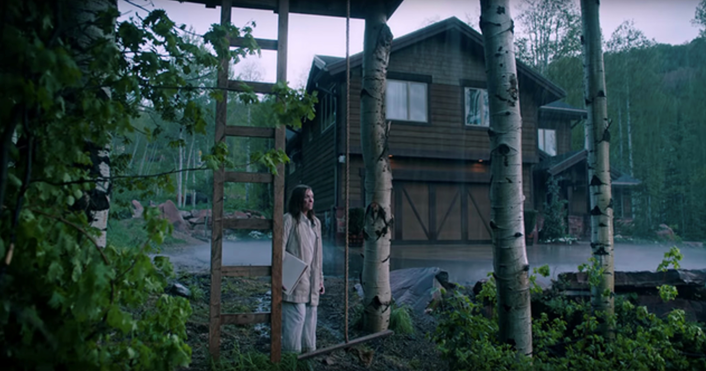
“Undead”, here, as more fully explored in The Undead in the 21st Century: A Companion, signifies an entity that is neither dead nor alive — even beyond life and death, in some way — and driven by an insatiable desire to consume, or find sustenance in, humanity. In both these films, this “undeadness” is manifested in a god-like, supernatural entity that is outside human conceptions of life and death — effectively immortal in most senses of the word — and which is compelled to draw the life from humanity,[1] and, more specifically, humans linked by family bonds, using a ritual of some kind (this often requires the recitation of a text that “invites” the undead entity “in” and consequently “curses” the recitee). Curses or undead language is of note in each film as the person being cursed does not need to know what they’re saying, but the performative nature of the recitation acts as an invitation to the undead entity.
This idea of unknowing is important for the undead heritage theme, as it often belies an inability of the present — as embodied in the victim — to understand the meaning of the past that is often in plain sight. The victims inevitably only understand the meaning of the “clues” of the past when it is too late and they are about to be consumed by their undead heritage (a common theme in Folk Horror). Indeed, unknowingness plays a large part in many forms of precarity, particularly in relation to contemporary ecological and political environments.
Before looking at the films more closely, it should be mentioned that the two narratives look at undead heritage slightly differently and, cultural specificity aside, also point to a slightly different view of the world in 2022 than in pre-pandemic 2018.

Hereditary features Annie (Toni Collette), who is grieving the recent death of her mother. Their relationship in life was extremely problematic, even abusive, and although Annie is surrounded by both physical and psychological memories of her mother’s past, she prefers to reconstruct the present to try to understand her increasing sense of foreboding. On top of this, her daughter, Charlie (Milly Shapiro) is decapitated in a freak accident involving Peter (Alex Wolff), her son and Charlie’s brother. Annie meets Joan (Ann Dowd) at a bereavement group and she admits to her she had “given” Charlie to her mother as a placatory measure, but it had left her even more excluded from both of their lives. Indeed, Annie appears deeply removed both from the feminine heritage of her own family (her mother and her daughter) and the world around her, and the lifelike models she makes are attempts to control and place herself in her environment.
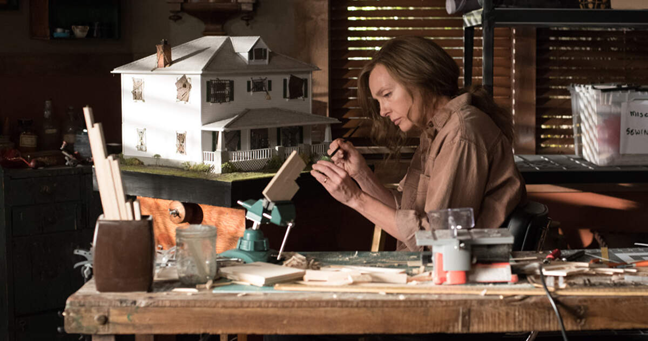
Joan gets increasingly close to her and reveals that she has managed to contact the dead and can show Annie how to do it, too. Annie then performs the ritual as described to her by Joan, importantly reciting a verse of a language she doesn’t understand, and forcing her husband and son to do so with her. This effectively invites the demon king Paimon into the human world, allowing him to possess the body of her son and kill all those that are not supplicants to his power. It seems that Annie’s mother was a high priestess who had linked Paimon to the “soul” of Charlie, who should have been born a boy, and now wants to inhabit Peter. It is only at this point, once her undead heritage has overtaken her, that Annie realizes what is occurring and that the clues were all around her in her mother’s belongings: Joan is in her mother’s photos of occult rituals, and highlighted passages in her copies of esoteric books all point toward worship of Paimon and inviting him into the world through the body of a boy.[2]

It also gives further meaning to the distance from her own children and her subconscious attempts to kill them — in not killing them, she has effectively ended the world as we know it. Overwhelmed by her undead heritage and her inability to protect her family or herself, Annie loses her grip on reality, her identity and literally, her head, as Paimon possesses the body of Peter and becomes manifest. Exactly what Paimon intends is not made clear, though one suspects it will add to the precarity of a world already out of balance, though one that neither Annie or her family will be part of.
Incantation focuses on Ruo-nan (Hsuan-yen Tsai), whose life is a frantic pastiche of flashbacks and ragged camera footage as she tries to hold on to the present and envision a future for her young daughter. The curse she now carries is not her own but one that she stumbled upon, bringing the undead heritage of others into her own familial lineage. Some time ago, Ruo-nan and a group of “Ghostbuster” friends went to the ancestral village in rural Taiwan of one of their number. The villagers and the friend’s relations told them to leave as a special and potentially dangerous ritual was being performed, but the rebellious friends stayed, interrupting the ceremony and breaking into the shrine, despite all the warnings they were repeatedly given.

Not all the friends escape, as some unseen power overtakes them and Ruo-nan, who unbeknownst to herself was pregnant, was forced to recite a “blessing” while placing her hands in a special configuration. Deeply affected by the events, Ruo-nan gives up her child and only many years later feels strong enough to reclaim her from those caring for her. It is only at this point that her undead heritage begins to catch up with her and she soon realizes that it’s been passed on to her daughter. Now that the curse is starting to affect her life, she decides to investigate further to understand what she and her friends had done and pieces together what the past actually means for her daughter’s future.
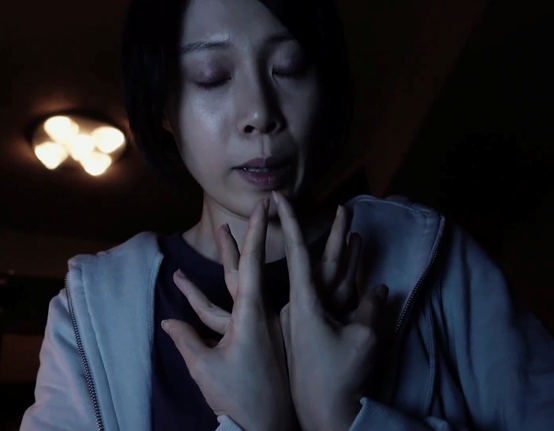
The curse seems to take the form of ever-increasing precarity as Ruo-Nan’s actions become progressively frantic and her life spins out of her control.
It transpires that the village worshiped a malevolent deity and that the “blessing” — which takes the form of a multi-syllabic phrase — is in fact a curse, that when repeated invites it into your life and slowly kills you. Ruo-nan’s daughter, Dodo (Sin-ting Huang), even after following the advice of local religious healers, is getting increasingly worse, so she goes back to the village, the past, to undo the present. However, once there, she goes into the depths of the underground shrine to confront the image of the deity and realizes that once the curse, the undead heritage, has been invited in, it cannot be revoked but only lessened through sharing.

Ruo-nan then ends the film as it started, as she has done at various points throughout the narrative, inviting us the audience to recite the inverted blessing so that we might share the curse and lessen its affects on her daughter. Here, then, Ruo-nan’s gradual understanding of the undead heritage she has released mirrors our own, as we realize that the phrase we have been asked to recite has cursed us: Ruo-Nan’s daughter might live, but we could be forgoing our own futures to make that happen.
Both films show maternal figures that discover too late that they have unknowingly become imbricated into an undead heritage that will cost them their children and, by implication, any kind of future. In Hereditary, ignoring of the signs of the past is almost wilful in Annie’s pursuit of an understanding of a world that she feels she is central to, when in fact she constantly contrives to remove herself from it and, consequently, any meaningful possibility of intervention. This can be read, in a pre-Covid world, as a humanity too involved in itself to understand the true meaning of its past or of its place within it, and that understanding will only occur when it is too late to do anything about it. Ruo-nan from Incantation, was similarly too self-absorbed to realize what she and her friends were getting themselves into or the nature of the undead heritage they were inviting into their lives. However, the curse here is far more virulent in nature and, once invited into the environment beyond the village, spreads its curse without restraint — as also seen in films like The Ring franchise (1995–2022), and the Ju On franchise (2000–20), which also often feature maternal protagonists. Equally, then, Ruo-nan, like Annie before her, has lost her children/child and a possible future through not understanding the past or the nature of the undead heritage she has become part of. What is slightly different in Incantation and, I would argue makes it more of a “pandemic” film, is her willingness to “spread” the curse to others in an attempt to save her child. There is no sense of acceptance that one has transgressed the past and a price must be paid, rather it moves the focus on alleviating one’s own problems regardless of the costs to others.
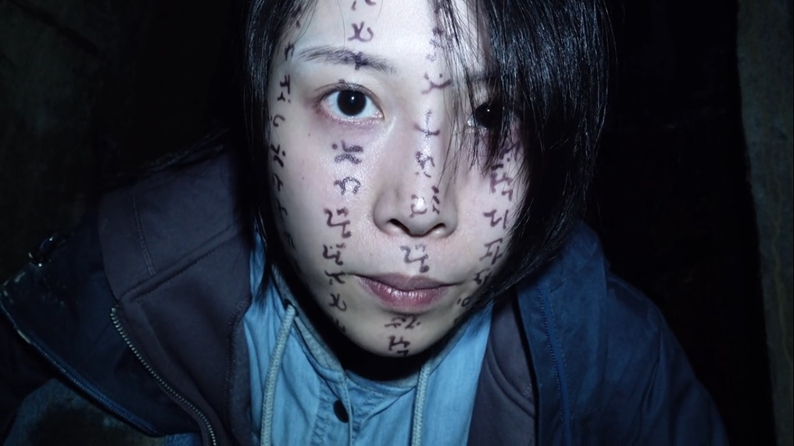
Ruo-nan’s selfish act seems to resonate with much in the present predicament of humanity, which seems to wilfully ignore the clues from the past that tell of modes of damage and exploitation that have blighted our environment and our intercultural relations, continuing to deny any responsibility and, consequently, inviting the curse of an undead heritage that will inevitably consume us. Of particular note is the growing sense that we are no longer in this together and that individual actors are increasingly focused on saving themselves or their own. Annie’s self-absorption might have exacerbated her predicament and allowed for an undead heritage to be visited upon the world, but Ruo-nan, even though she won’t be there herself, is willing to risk the world for her daughter’s future. A seemingly noble endeavour, but one that purposely endangers humanity itself.
Simon Bacon, author of The Undead in the 21st Century: A Companion and series editor, Genre Fiction and Film Companions
[1] There is much here that confirms to fantasy author Terry Pratchett’s idea that gods of any kind require human belief to remain alive, though in horror texts this has been extended to supplication, dreams and fear amongst other human emotions.
[2]Films like the Paranormal Activity franchise (2007–21) work on similar themes. I would like to thank the members of the SCMS Scholarly Horror Group on FB for their help and thoughts regarding the possible implications of the ending of Hereditary.
Peter Lang Publishing is delighted to announce the 2022 Peter Lang Emerging Scholars Competition in Women, Gender and Sexuality Studies.
Proposals are invited from emerging scholars in Women’s Studies, Gender Studies and Sexuality Studies for single-author books to be evaluated by a distinguished editorial board. Proposals may be interdisciplinary or in any of the following disciplines: Cultural Studies, Education, History, Law & Economics, Literature, Media & Communication, or Politics. We also welcome projects representing regional perspectives (e.g. Irish or Swiss).
Proposals should be submitted to editorial@peterlang.com with the subject line ‘Emerging Scholars Competition’ by 15 October 2022 and consist of an abstract (including chapter synopses), a sample chapter (5,000 to 10,000 words in length), a CV, and a statement describing how you are an emerging scholar, in separate Microsoft Word documents. Proposals under review elsewhere should not be submitted.
The winner(s) will be offered a contract for a book with this distinction. Planned manuscripts should be from 60,000 to 100,000 words in length and written in English, French, Spanish or German. Authors will be expected to prepare the manuscript in accordance with the style guidelines provided.
Decisions will be made by 1 December 2022 and the winners will be notified shortly thereafter.
For more information, please contact our competition coordinators:
Dani Green (d.green@peterlang.com) and Laurel Plapp (L.PLAPP@peterlang.com)
Be sure to visit our dedicated page for more information: Emerging Scholars Competition – Peter Lang
Toxic environments would seem to be a given in horror films, and the creation and representation of spaces from which terror and violence can suddenly emerge are an inherent part of the genre. However, the nature and texture — or, what we might call, context and characteristics — of that environment are necessarily linked to the specific cultural moment from which they emerge. One of our current greatest anxieties — spawned most recently by images of the fleeing refugees from Ukraine — is immigration or, more particularly, the experience of being an outsider. This brief blog post looks at three recent horror, or horror-adjacent, films that can be seen to explore this very particular 21st-century anxiety, though one that is arguably as old as the creation of human societies.
The idea of “home” and the tensions between “not home” and “unhome” are central to the texture of the toxic environments under discussion here. The immigrant experience as seen in horror films is one that often focuses on the intersection between “home” and “toxic”, where what is considered as home becomes toxic in some way — domestic violence, extreme poverty, or war — and so then becomes “not-home,” forcing them to leave and try to find a new home, or as is often the case a new “not-home”, but one that is less toxic — physically or psychologically dangerous — than their original home. Horror film, which is often the perfect medium for effectively representing the anxiety around the sudden changing of safe environments into extremely threatening ones, is well suited for narratives describing the alienation or out-of-placeness that immigrants feel in a new country. This in itself is a characteristic of more recent films on the topic and, unlike popular or populist discourse, does not solely focus on the dangers of outsiders but rather the danger faced by those deemed as outsiders.
In the case of the three films discussed here, the outsiders/immigrants depicted are themselves very contextual, in that the nationality of the immigrants carries a very weighted meaning in their host country (a very similar weightedness is seen more recently when contrasting Syrian immigrants arriving in Europe with those from Ukraine, for instance). In this sense, the immigrants depicted in each film are those that are less welcome than others and are arriving into an environment that is already made toxic by pre-existing nationalist cultural narratives that do not recognise them as individuals in need of help but instead as a xenophobic threat. Horror films take a particular approach to representing these tensions and anxieties, as opposed to more realist or documentary style narratives, as they are inherently expected to manifest psychological monstrosity in physical form, and this is clearly seen in the examples chosen below.
The three films chosen — Mum & Dad (Sheil: 2008), His House (Weekes: 2020), and No One Gets Out Alive (Minghini: 2021) — feature immigrants from Poland, Africa and Mexico, respectively, entering the UK and/or the US at times when a very particular stigma surrounded such moves. Each film takes great pains to speak to the cultural context and the specific texture of the toxic environment the protagonists find themselves in and how they might survive it.
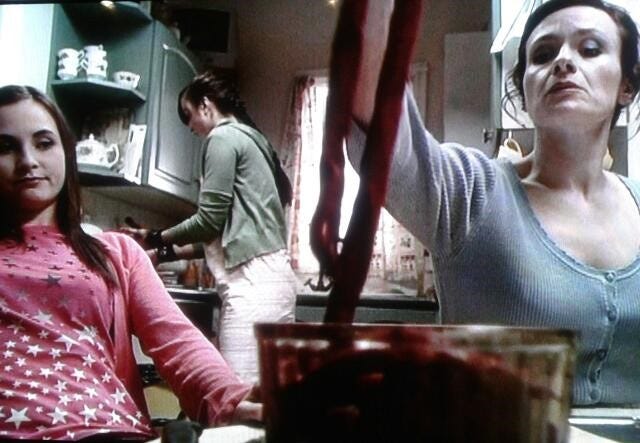
Mum & Dad focuses on Lena (Olga Fedori), who has just arrived at Heathrow Airport in the hope of finding work and a better life than she had in Poland. The airport itself becomes symbolic of an environment she has no connection to, and she herself is depicted as a commodity (baggage) moving through it and prey to anyone that might claim her. A worker at the airport offers to help, finding a bond in their shared exploitation, but she turns out to be a decoy who takes the girl to her “parents”, who turn out be brutal captors who thrust her into a toxic world. The “traditional” British home shown is one so extreme as to be the equivalent of a house of horrors: the television continually plays porn, they brutalise and handicap their “children”, and they celebrate Christmas with a real crucified man with a tinsel crown. Here, the alienness of other cultures becomes the stuff of nightmares, creating a toxic environment that leaves Natalia changed forever, even though she manages to escape. With no recourse to the authorities, or money to return home, she is left the victim of a culture that violently insists on changing her and seeing her solely as a commodity to be used and disposed off once it no longer has any need for her.
His House sees Bol (Sopi Dirisu) and his wife Rial (Wunmi Mosaku) arrive in the UK from South Sudan, a nation in conflict and consequently wracked with poverty, drought and starvation. They enter into an immigration system that only begrudgingly helps them, moving them to a house in an area that does not welcome them. The toxicity of the system and environment around them seems to concentrate in their new “home,” which seems alive with malevolence against them. Here, though, the nature of Bol’s relationship to his former home, which seems to have decidedly become not-home, is seen to link directly to the toxicity of the environment where they now live. They had pretended someone else’s child was their own to escape and now the child is dead. The guilt of their actions in South Sudan and the ghost, or “apeth”, they brought with them resonates with the dilapidated nature of the house such that it seems the structure itself is marking it out as not-their-home, just like the government immigration system. This toxicity, though, is eventually diffused through a level of acceptance of their guilt for their actions in their former home — the resolution tying Bol and his wife more closely together — so that their current one, whilst not exactly becoming “homely”, is less not-home than it was before. Here as a family in a toxic environment they find a form of home within themselves, if not with the environment around them.

No One Gets Out Alive focuses on Ambar (Christina Rodlo), a Mexican immigrant illegally living in the US. Her mother has died and the poverty of her home drives her to find a new life in America. However, her relations that already live there want little to do with her, leaving her to struggle to find underpaid work and cheap lodgings to stay in — even one of her workmates swindles her out of what money she has. The toxicity of the city-scape she finds herself in translates poverty, hunger and job precarity into a gothic-laden lodging house run by middle-aged brothers that cater solely for immigrants. Ambar is quickly assailed by anxiety, apparitions and threats of physical violence. This escalates into actual violence as it transpires the brothers are feeding the untraceable and uncared for lodgers to an entity in the basement.
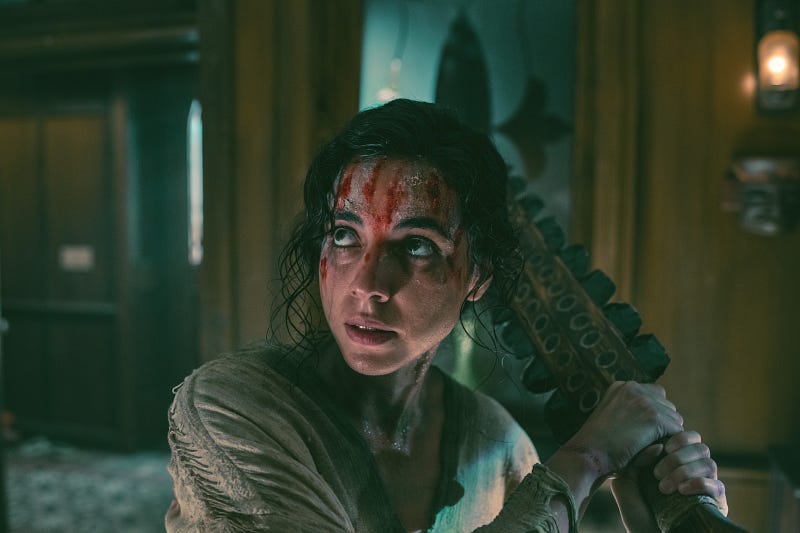
The denouement here, as with Mum & Dad, reveals the extreme violence of the immigrant experience in the face of the unknown traditions of a different culture yet, as with His House, for Ambar some of this is tempered by a reckoning with previous guilt related to her former “home” and an equally violent reaction against the alien culture to retain her own sense of self. Within this there is also a sense that she finds some points of connection to the alien culture via the entity in the basement, which is also an immigrant of sorts. Here then she establishes a different kind of “home”, where its toxicity becomes her own, or at least one that she understands more clearly now. As the film ends, Ambar has become reconciled with this new “not-home,” and not unlike Lena and Bol has been forced to readjust both her sense of self and what she considers “home” in light of her experiences.
The three films point to the inherent nature of a world moving ever more towards large-scale displacements for reasons of poverty, war or environmental disaster and where “not home” will become increasingly common for ever greater numbers of people. Horror might be able to show us how scary the sometimes toxic environment of “not-home” is for others and also highlight the importance of finding points of commonality between ours and others’ ideas of “home.”
Simon Bacon is the editor of the forthcoming collection Toxic Cultures: A Companion in the Genre Fiction and Film Companions series, for which he is also the series editor.
Note: Many thanks to the members of the SCMS Horror Studies Scholarly Interest Group on Facebook for their suggestions for similarly themed films and in helping to define the term “not-home”.
Peter Lang is delighted to announce the results of the 2021 Peter Lang Emerging Scholars Competition in Black Studies:
Winner in Black European Studies
Diantha Vliet
Postcolonial Pete: Race, Media, and Memory in the Politics of Dutch Identity
to be published in the Imagining Black Europe series
Runner-up in Black European Studies
Charlotte Mackay
From Afropea to the Afro-Atlantic: Evolving Identities across the Early Novels of Léonora Miano and Fatou Diome
to be published in the Imagining Black Europe series
Joint Winners in US Black Studies
Anne Potjans
‘Why Are You So Angry’: Anger and Rage in Black Feminist Literature
to be published in the Counterpoints series
Lekha Roy
Towards Post-Blackness: A Critical Study of Rita Dove’s Poetry
to be published in the Counterpoints series
We congratulate our winners and runner-up! Thank you to our distinguished editorial board and to all those who took part in the competition.
The Peter Lang Emerging Scholars Competition is an annual competition in selected fields. Please check back here for announcements about upcoming competitions next year.
For more information, please contact Dr Laurel Plapp, Senior Commissioning Editor, Peter Lang Oxford. E-mail: l.plapp@peterlang.com.
One might not naturally think of a disease as a transmedia narrative, let alone the centre of a multi-platform universe, yet by their very nature they move across media, from the individual to the social, from word of mouth to social media, from fact to fiction. Historically these transmedia outbreaks are made sense of after the fact, usually once data has been collected and interpreted. The Covid-19 pandemic is a little different in that not only is there constant access to a huge amount of information that is increasing daily, but it also has a narrative template through which this is being read.
This template, or ‘outbreak narrative’, is one that has been constructed between reality and fictional representation, in books and films, to create a narrative arc of contagion, one which has a start, a middle and an end, but also one which inherently creates a transmedia story-world around it that both explains and supports that arc. This short blog will lay out how this works in the current pandemic and how its narrative world is supported by earlier outbreaks, both real and fictional, yet is simultaneously working against its own successful completion, creating the possibility of a story that will never, truly end.
Priscilla Ward (2008) has described how, around the HIV/AIDS pandemic of the 1980s, certain narratives arose to explain the disease that were part science, part media reportage, part cultural imaginings. In many ways it describes a transmedia migration at its most fundamental, where bodily manifestations and oral accounts are recorded and interpreted, adapted for newspapers, news programmes and the popular imaginary, creating a kind of ongoing dialogue between actual events and cultural, fictional representations of them. Films, in particular, have played an important part in this process, presenting complex information in a form that is accessible (simplified) and culturally comprehensible — this equally skews or omits parts of the truth to fit existing cultural templates and preferences. This created a pandemic narrative that featured proscribed stages and tropes: 1) a disease originating in an undeveloped part of the world, often involving monkeys or bats, caused by human incursion into the animals’ natural habitat; 2) a ‘patient zero’, often combined with the idea of a ‘super spreader’; civilisation becomes aware of the outbreak, enforcing ‘contact tracing’ and ‘quarantine’; 3) a race against time to develop a vaccine; 4) and, finally, administering the vaccine and returning to ‘normality’.
A good example of how this narrative was used and affirmed in film and fed back to the popular imagination is Outbreak (Peterson: 1995), which follows much of the above template: a deadly virus from Africa (modelled on the HIV/AIDS epidemic); animals are involved; there is a ‘patient zero’, quarantine, contact tracing, a vaccine and a race to save humanity. Steven Soderbergh’s Contagion (2011) builds on and reinterprets the narrative world of Outbreak and has become the definitive film on the subject in the current pandemic. Originally released after SARS (2003) and Swine flu (2009–10), the film interprets what the world had just experienced, emphasising and adding new parts to the existing narrative.
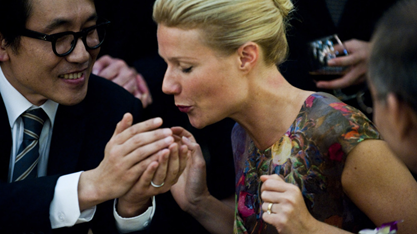
The film begins with the outbreak already in progress with the designated ‘patient zero’, Beth Emhoff (Gwyneth Paltrow), flying back from Hong Kong, infecting people as she goes. Beth is shown as an unfaithful wife who meets an ex-lover on her journey, linking the narrative to that of the earlier AIDS epidemic, which was popularly associated with transgressive sex.
As the world (America) begins to realise that an outbreak is occurring, the investigative stage of the narrative begins, involving contact tracing and the search for the point of origin — a temporal and media movement that embodies what Jenkins calls ‘spreadability’ (2013), in some ways is a natural component of contagion. The outbreak narrative then crosses various media platforms (news media, tv, radio, social media and word of mouth) as well as crossing borders, becoming transmedial and transnational, as researchers follow its path back to where it started. Once contact tracing has begun and the severity of the outbreak has gained greater understanding, the fight for survival begins, which also has two parts: the first is quarantine and containment and the second is producing a cure (vaccine). The former then requires that the ‘readers’ or ‘players’ of the narrative comply with the instructions they are given, which also relies on the coherence and consistency of those directions. This further brings in a new set of players/authors in terms of government or large corporations to discover a cure and produce a vaccine. Interestingly, whilst part of the main outbreak narrative, vaccination development can become a separate but intricately connected one, as multiple governments and corporations become involved that try to gain their own authorial control and influence the overarching urtext of the outbreak narrative.
Of particular note at this stage is the production of counter narratives that often oppose the main one or redirect it for ends other than successfully finding a cure and saving lives as quickly as possible. Contagion touches on this in the figure of Alan Krumweide (Jude Law), a self-styled investigative journalist and blogger who begins to push a story that the outbreak might be being engineered by drug companies to make money and that the government might also be involved. The conspiracy theory finds traction online (stickability and spreadability) and Alan is invited onto news programmes, subsequently claiming to have contracted the disease and being cured by taking a homeopathic remedy (Forsythia), which miraculously saves his life (when he never had the disease, of course).
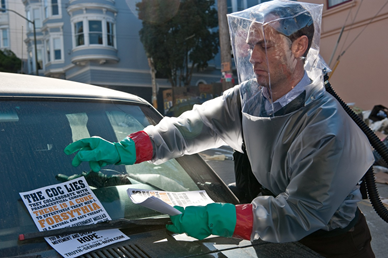
This aspect is an interesting addition to the outbreak narrative and one that had not occurred as explicitly in earlier films such as Outbreak. In many ways it acts as fan-fiction within the urtext and as a way of wresting authorial control, even if it has deadly real-world consequences. It also shows how different narrative worlds intersect and how narratives of espionage and conspiracy theory have been used to control the direction and possible readings of the original outbreak narrative. In the current pandemic, such battles for authorial control have created a plethora of contradictory narratives propagated by a wide range of authors, with many of them being purposely politicised and altering the shape of the resultant story-world. Unlike Contagion, Covid-19 has highlighted how much each aspect of the wider narrative can be altered to fit a political end beyond the goal of saving lives by weaponising actions such as hand washing, mask wearing, etc. Consequently, this creates narrative confusion and uneven implementation of measures across national and cultural boundaries due to the political leanings of the governments in charge.
As Contagion brings its narrative to close, we discover the outbreaks point of origin; an infection from a bat that eventually reaches Beth. The sense of narrative completion provided then allows ‘normality’ to return, whatever that may look like.
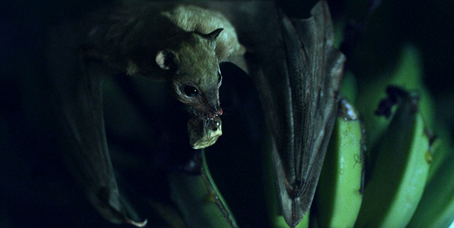
With Covid, though, it is already obvious that any real uncovering of where the outbreak began, and consequently how it might end, are buried in purposeful obfuscation. Did the virus begin in bats, or in pangolins? Where did it originate exactly and how did it spread? Indeed the outbreak narrative described in Outbreak and Contagion is predicated on the idea of a togetherness against the contagion, and the notion of the ‘fight to save humanity’ constructs this as a battle between victim (humanity) and foe (the disease). However, in many ways, this is the one aspect that continues to evade the current pandemic, with many players/readers refusing to acknowledge their place within a shared narrative. Without such central cohesion, the multiplicity of authors struggling for attention and control become increasingly destructive, using the natural stickiness of aspects of the narrative to pull it apart rather than guide it towards a coherent end point.
In this sense the existing outbreak narrative might itself be forced to mutate into one that has no beginning or end, but just keeps repeating as it continually moves across media from fact to fiction and back again. Here then actual reality or science will have little true bearing on the final outcome, as the only recognised ending will happen when enough users/players — whether national governments or large groups of like-minded citizens — co-opt authorial control to write their own version of how normality returns, regardless of its relation to the real-world or the pre-existing outbreak narrative.
Simon Bacon, Editor of Transmedia Cultures: A Companion
Works Cited
Jenkins, Henry, Sam Ford and Joshua Green, Spreadable Media: Creating Value and Meaning in a Networked Culture, New York: NYU Press, 2013.
Stolworthy, Jacob, “Contagion becomes one of most-watched films online in wake of coronavirus pandemic,” The Independent, 15 March 2020. < https://www.independent.co.uk/arts-entertainment/films/news/contagion-coronavirus-download-watch-online-otorrent-warner-bros-cast-twitter-a9403256.html> Accessed 4 March 2021.
Ward, Priscilla, Contagious: Cultures, Carriers, and the Outbreak Narrative, Durham: Duke University Press, 2008.
Congratulations to Judith Tydor Baumel-Schwartz and Dalia Ofer, editors of Her Story, My Story? Writing About Women and the Holocaust selected as a finalist of the 2020 National Jewish Book Awards in the category of Women’s Studies: Barbara Dobkin Award. Since its inception in 1950, the National Jewish Book Awards is the longest-running North American awards program of its kind and is recognized as the most prestigious. The Awards are intended to recognize authors, and encourage reading, of outstanding English-language books of Jewish interest.
Congratulations to Delia Maria Palenker, author of Die Bindung der gesonderten Verlustfeststellung an den Einkommensteuerbescheid which has won the University of Passau Dissertation award! See the award ceremony here.
We are pleased to announce that Rafaelle Nicholson’s Ladies and Lords A History of Women’s Cricket in Britain has been nominated for the prestigious Cricket Society and MCC Book of the Year Award 2021.
We are proud to announce that Rafaelle Nicholson’s Ladies and Lords A History of Women’s Cricket in Britain has been shortlisted for the Lord Aberdare Literary Prize 2020.
As part of our Sport, History and Culture series, Ladies and Lords offers the first ever academic study of women’s cricket in Britain from its origins in the 18th century to the present day. It examines women’s cricket from grassroots to international level, in schools, universities, the workplace and clubs. The book draws on a wealth of new source material including player diaries and scrapbooks, club records and the records of the Women’s Cricket Association.
“Utilising her skills as both an academic and well respected journalist, the volume reflects at length on why, when so much has been written on cricket from both literary and academic perspectives, the female element has been largely ignored.” — Russell Holden, Nordic Sports Science Forum
Rafaelle Nicholson completed her PhD thesis at Queen Mary University of London. Prior to this she gained a BA in Modern History and Politics at Merton College, Oxford, and an MSt in Women’s Studies at Mansfield College, Oxford. She has written on women’s cricket for ESPNCricinfo and Wisden, and is the editor of the women’s cricket website CRICKETher.com.
The Lord Aberdare Literary Prize is awarded each year by the British Society of Sports History for the best book on any aspect of the history of sport in Britain or for the best book on any aspect of sports history written by a British author. The winner will be announced at the 2020 BSSH Conference, which is being held online from August 26 – 28. In 2014, this prize was awarded to David Snowdon for Writing the Prizefight: Pierce Egan’s Boxiana World.