results
-
Many Voices
Ethnic Literatures of the AmericasThe literature of the Americas has a variety of cultural elements present under the general term "American." The canonical English mainstream of North America and the corresponding Spanish/Portuguese mainstream of South America have nevertheless reflected the arrival, assimilation, and marginality of numerous groups. Their experiences are both unique and representative of universal conditions of cultural contact and conflict. In both the United States and Canada, there are works which represent diverse aspects of the Black, Irish, Italian, Hispanic or Latino, Franco, German, Jewish, Portuguese, Greek, Slavic, and Asian communities, among others, as writers give both creative and testimonial form to the realities, both past and present of groups arriving subsequent to the original colonial period. In Latin America, some of these same groups are represented in the fiction written in Spanish and Portuguese. While this series focuses on specific ethnic groups and/or individual representatives, the fictional and poetic texts therein may address a range of issues, among them race relations, language and bilingualism, nationalism, colonialism, gender, class, cultural conflict, identity and maintenance, the context of multiculturalism. Critical approaches may include ethnocriticism, historical analyses, others, as well as structural critiques of these sorts of texts which by the very nature of their multiple focus become the aesthetic model for their content: a sort of border, mixed-blood, metis linguistic mode that in turn requires a double vision of its readers and critics. The literature of the Americas has a variety of cultural elements present under the general term "American." The canonical English mainstream of North America and the corresponding Spanish/Portuguese mainstream of South America have nevertheless reflected the arrival, assimilation, and marginality of numerous groups. Their experiences are both unique and representative of universal conditions of cultural contact and conflict. In both the United States and Canada, there are works which represent diverse aspects of the Black, Irish, Italian, Hispanic or Latino, Franco, German, Jewish, Portuguese, Greek, Slavic, and Asian communities, among others, as writers give both creative and testimonial form to the realities, both past and present of groups arriving subsequent to the original colonial period. In Latin America, some of these same groups are represented in the fiction written in Spanish and Portuguese. While this series focuses on specific ethnic groups and/or individual representatives, the fictional and poetic texts therein may address a range of issues, among them race relations, language and bilingualism, nationalism, colonialism, gender, class, cultural conflict, identity and maintenance, the context of multiculturalism. Critical approaches may include ethnocriticism, historical analyses, others, as well as structural critiques of these sorts of texts which by the very nature of their multiple focus become the aesthetic model for their content: a sort of border, mixed-blood, metis linguistic mode that in turn requires a double vision of its readers and critics. The literature of the Americas has a variety of cultural elements present under the general term "American." The canonical English mainstream of North America and the corresponding Spanish/Portuguese mainstream of South America have nevertheless reflected the arrival, assimilation, and marginality of numerous groups. Their experiences are both unique and representative of universal conditions of cultural contact and conflict. In both the United States and Canada, there are works which represent diverse aspects of the Black, Irish, Italian, Hispanic or Latino, Franco, German, Jewish, Portuguese, Greek, Slavic, and Asian communities, among others, as writers give both creative and testimonial form to the realities, both past and present of groups arriving subsequent to the original colonial period. In Latin America, some of these same groups are represented in the fiction written in Spanish and Portuguese. While this series focuses on specific ethnic groups and/or individual representatives, the fictional and poetic texts therein may address a range of issues, among them race relations, language and bilingualism, nationalism, colonialism, gender, class, cultural conflict, identity and maintenance, the context of multiculturalism. Critical approaches may include ethnocriticism, historical analyses, others, as well as structural critiques of these sorts of texts which by the very nature of their multiple focus become the aesthetic model for their content: a sort of border, mixed-blood, metis linguistic mode that in turn requires a double vision of its readers and critics.
5 publications
-
Critical Qualitative Research
Critical research serves to address societal structures and institutions that oppress and exclude so that transformative actions can be generated that reduce inequitable power conditions. We invite proposals for authored and edited volumes that describe critical social science research (re)conceptualizations, practices, and methodologies that can be used by other scholars who wish to design and implement critical qualitative inquiry. Critical Qualitative Research challenges modernist orientations toward research by using social theory, designs, and research practices that emerge from critical questions like: Who/what is heard? Who/what is silenced? Who is privileged? Who is disqualified? How are forms of inclusion/exclusion being created? How are relations of power constructed and managed? How do various forms of privilege and oppression intersect to impact life possibilities for various individuals and groups? How do the arts inform research? How can multiple knowledges be engaged in research? How can research be socially just?
46 publications
-
-
Critical Education and Ethics
ISSN: 2166-1359
The Critical Education and Ethics series intends to systematically analyze the pitfalls of social structures such as race, class, and gender as they relate to edu-cational issues. Books in the series contain theoretical work grounded in prag-matic, society-changing practices. The series places value on ethical responses, as prophetic commitments to change the conditions under which education takes place. The series aims to (1) Further the ethical understanding linking broader social issues to education by exploring the environmental, health-related, and faith/spiritual responses to our educational times and policy, and (2) Ground these works in the everyday world of the classroom, viewing how schools are impacted by what critical researchers do. Both theoretically and practically, the series aims to identify itself as an agent for community change. The Critical Education and Ethics series welcomes work from emerging scholars as well as those already established in the field.
18 publications
-
Critical Intercultural Communication Studies
ISSN: 1528-6118
Within Communication, culture is broadly understood as a meaning-making process that evidences itself within discourse, mediated forms, and interactional instances to constitute group autonomy. Within that meaning-making process, intercultural communication considers relationships between institutions and their societies, media and their audiences, and peoples and their communities. The formalized study of intercultural communication has always been problematic; like most disciplines and subdisciplines, its usefulness and limitations emerge from the historical context in which it is studied. Developed after World War II, intercultural communication initially served as an applied area of study to train U.S. governmental and business entities for relationships beyond U.S. borders. Then, out of the struggles of the U.S. Civil Rights era, intercultural communication expanded to concern itself with relationships between differing racial and ethnic groups. By the turn of the twentieth century, some intercultural communication scholars had fully embraced studying the differential power relations between nations, communities, and individuals thus catalyzing a body of research known as critical intercultural communication. Now, heading into the middle of the twenty-first century, critical intercultural communication has come into focus as an area of study that emphasizes, explains, and seeks to resolve power relations within specific contexts, applying theories and modes of inquiry suited to contemporary issues understood within their ongoing historical dynamics. As our institutions and their societies, mediated forms and their corresponding audiences, and communities and their members continue to alter and morph, critical intercultural communication adapts to interpret and envision progressive, socially just ways forward. This series, therefore, invites scholarship that challenges status quo cultural constitutions by recognizing and problematizing hegemonic modes of belonging and being. Spanning a range of contexts, critical intercultural communication considers symbolic and performative orders across local, national, hemispheric and transnational circuits. Moreover, this series fosters interdisciplinary conversations that innovate ontological and epistemological forms, advancing a range of systematic intellectual approaches to cultural transformation and validation. The series is particularly interested in works grounded in BIPOC, decolonial, feminist, queer, crip, and/or kink perspectives that construct claims, knowledges, and theories capable of guiding society toward new social justice knowings.
45 publications
-
Liberatory Stories and Rebel Voices for Abolition
Liberatory Stories and Rebel Voices for Abolition, is a grass-roots community-focused radical transformative critical decolonizing anti-authoritarian book series on the political delineations of transforming education for liberation in communities occupying Indigenous territories and stolen land on Turtle Island (North America) and beyond. This book series will provide space and place for marginalized communities, students, workers, public intellectuals, activist-scholars, teachers, professors, justice impacted people, youth, and oppressed voices to critically resist and amplify their counter-stories which demand that in the rollout of the neoliberal agendas, that public education must be affordable, inclusive, equitable, inclusive, just, transformative, and open to all. This book series foregrounds writer’s agency with authentic story-telling, autoethnography, collective biography and life writing narratives and is a place for disseminating participatory action and social justice activist research. It seeks critical teaching and critical writing that resists Eurocentric pedagogies and methodologies such as denotative reports, standardized metrics, rubrics, corporate, neoliberal, capitalist, standardized, colonial, factory education that colonizes the mind. Instead, the series privileges radical liberatory praxis and makes space for outstanding embodied action research tied to teaching, transformative participatory projects created with not ‘on’ marginalized communities that centers the margin. This book series defends, supports, and participates in revolutionary, transformative, social justice radical critical abolition movements to end authoritarianism, domination, oppression, state-violence, and repression. This book series has a hope for democracy from which knowledge from and for the margins emerge as powerful counter-currents and disruptive discourses that liberate. This book series holds space and place for these voices who brave the world with knowledge in one hand and resistance in the other to liberate all.
7 publications
-
Critical Multicultural Perspectives on Whiteness
ISSN: 2572-9616
This book series seeks to engage a broad and cross-disciplinary range of students, scholars, activists, and others in a critical multicultural dialogue on the complex intersections of power, privilege, identity, and Whiteness. The series aims to link theory and practice to problematize key societal and educational concerns related to Whiteness. The series editors share the view that taking action for transformative change in and through education, in the spirit of what Paulo Freire called conscientization, is the role of educators who seek to address the needs of all their students. In focusing on Whiteness, we are concerned with social, economic, and environmental justice, the problematization of race, and the potential for education to be emancipatory in addressing power imbalances. Some of the questions of interest for this book series include: How do we engage in critical discussions related to power, privilege, identity, and Whiteness when many multicultural frameworks dissuade us from such work? How can we connect Whiteness to other intersecting and pivotal forms of being, marginalization, and identity? How can those categorized as White engage in dialogues and action about Whiteness that can positively contribute to addressing concerns of racialized and marginalized groups? How can we effectively contextualize and critique hegemony and globalized economic realities so as to be able to discuss race in a constructive and transformative manner?
5 publications
-
Critical Praxis and Curriculum Guides
The Critical Praxis and Curriculum Guides is a curriculum-based series reflective of theory creating praxis. The series targets not only undergraduate and graduate audiences, but also tenured and experienced teachers of all disciplines. Research suggests that teachers need to have well-designed, thematic-centered curricula and lessons at their disposal. This is accomplished when the school works as a community to meet their own needs. Community in this sense includes working collaboratively with students, parents, and local community organizations to help build the curriculum. Practically, this means that time is devoted to professional development workshops, not exam reviews or test preparation pointers, but real learning. Together with administrators, teachers form professional learning communities (PLCs) to discuss, analyze, and revise curricula and share pedagogical strategies that meet the needs of their particular school demographics. This communal approach was found to be more successful than requiring each individual teacher to create lessons on her/his own. Ideally, we would love it if each teacher could create their own authentic lessons because only s/he truly knows her/his students and we encourage it, because it is possible! However, as educators ourselves, we understand the realities our colleagues in public schools face, especially when teaching in high needs areas. The Critical Praxis and Curriculum Guides provides relief for educators needing assistance in preparing their lessons. When possible, and in the spirit of communal practices, the series welcomes co-authored books by theorists and practitioners or solo-authored books by an expert deeply informed by the field. Because we strongly believe that theory guides our practice, each guide will blend theory and curriculum chapters creating a praxis. All, of course, in a critical pedagogical framework. Ultimately, the guides will serve as resources for teachers to use, expand upon, revise, and re-create.
13 publications
-
Black Studies and Critical Thinking
ISSN: 1947-5985
Black Studies and Critical Thinking is an interdisciplinary series which examines the intellectual traditions of and cultural contributions made by people of African descent throughout the world. Whether it is in literature, art, music, science, or academics, these contributions are vast and far-reaching. As we work to stretch the boundaries of knowledge and understanding of issues critical to the Black experience, this series offers a unique opportunity to study the social, economic, and political forces that have shaped the historic experience of Black America, and that continue to determine our future. Black Studies and Critical Thinking is positioned at the forefront of research on the Black experience, and is the source for dynamic, innovative, and creative exploration of the most vital issues facing African Americans. The series invites contributions from all disciplines but is specially suited for cultural studies, anthropology, history, sociology, literature, art, and music. Subjects of interest include (but are not limited to): Education, Sociology, History, Media/Communication, Spirituality and Indigenous Thought, Womens Studies, Policy Studies, Advertising, African American Studies, Black Political Thought.
167 publications
-
Critical Literacies and Language
Pedagogies of Social JusticeOne of the most fundamental aspects of a just society is the right to create equitable and inclusive spaces of belonging for all people while also confronting injustice and oppression. However, we are now in a time where seeking justice and equity is met with neoliberalism, which pervades the academy at all levels of education. Yet, for many, this is not a time for retreat, but rather a moment of solidarity, a time to create new knowledge and understanding through struggle. As Freire wrote, "Knowledge emerges only through invention and re-invention, through the restless, impatient, continuing, hopeful inquiry human beings pursue in the world, with the world, and with each other." Thus, the purpose of this series is to provide literacy and language researchers, practitioners, as well as community activists, with a space to actualize and embody a restless, impatient never-finished objective of critical literacies and language education. It is the aim of this series to create a space to share research that promotes pedagogies of equity. We also recognize that different audiences have different needs. To that end, we seek to provide, when applicable, a "notebook" as a companion to research volumes to facilitate actionable steps for the PK-12 classroom or community spaces. This series is different as it approaches the dissemination of critical work from a place of intentionality to address the gap in disseminating research (typically read by scholars) and the need to have it "on the ground" for classroom teachers, community activists, and workers. By creating companion volumes (where applicable), there is a greater chance for sustained criticality in literacy education.
6 publications
-
Critical Studies of Latinxs in the Americas
ISSN: 2372-6830
The Latinx presence continues to grow and intersect with every aspect of life in the 21st century. This is evident when one considers the appointment of Sonia Sotomayor as Associate Justice to the United States Supreme Court. As well as the prominence of distinct Latinx individuals in various spheres of social, cultural, and political life such as Mario J. Molina, Nobel Prize winner and recipient of the Medal of the Presidential Medal of Freedom in 2013; and Jorge Maria Bergoglio (Pope Francis) who has revolutionized the Catholic church since he became the highest ecclesiastical authority of the Catholic world in 2013. Latino Studies, as an academic field of inquiry, began to emerge during the early 1990s surfacing from the more recognized field of Chicano Studies. As such, the major contributions to the field first emerged from Mexican/Chicano scholarship—publications such as Aztlán, the most important journal in the field of Chicano Studies since 1970; Gloria Anzaldúa’’s groundbreaking memoir/essay, Borderlands/La Frontera: The New Mestiza (1987); George J. Sanchez’s historical account, Becoming Mexican American: Ethnicity, Culture, and Identity in Chicano Los Angeles, 1900-1945 (1995); and the two volumes of The Chicano Studies Reader: An Anthology of Aztlan, 1970-2010. These are a few examples of the consolidation and the continuing development of Chicano Studies in the United States. In the past two decades, Latino Studies have grown and expanded significantly. There have been a large number of publications about Latinxs in the Midwest and North East; in addition, due to the fast-growing population of Latinxs in the area, new scholarship has emerged about the Latinxs in the New South. Some examples of the emerging field of Latino Studies are the Latinos on the East Coast (2015) edited by Yolanda Medina and Ángeles Donoso Macaya, Global Cities and Immigrants (2015) by Francisco Velasco Caballero and María de los Angeles Torres; the Handbook of Latinos and Education (2010) edited by Enrique Murillo, et al.; Angela Anselmo’s and Alma Rubal-Lopez’s 2004 On Becoming Nuyoricans; David Carey Jr. and Robert Atkinson (2009) Latino Voices in New England; Yolanda Prieto’s case study entitled, The Cubans of Union City: Immigrants and Exiles in a New Jersey Community (2009); and Lawrence La Fontaine-Stokes’ Queer Ricans Cultures and Sexualities in the Diaspora (2009). Critical Studies of Latinxs in the Americas will become the counterpart of the aforementioned research about the Latinx diaspora that deserve equal scholarly attention and will add to the academic field of inquiry that highlights the lived experience, consequential progress and contributions, as well as the issues and concerns that all Latinxs face in present times. This provocative series will offer a critical space for reflection and questioning of what it means to be Latinx living in the Americas, extending the dialogue to include the North and South hemispheric relations that are prevalent in other fields of global studies such as Post-Colonial Theory, Post-Colonial Feminism, Latin American and Caribbean Studies, Critical Race Theory, and others. This broader scope can contribute to prolific interdisciplinary research and can also promote changes in policies and practices that will enable today’s leaders to deal with the overall issues that affect us all. Topics that explore contemporary inequalities and social exclusions associated with processes of racialization, economic exploitation, health, education, transnationalism, immigration, identity politics, and abilities that are not commonly highlighted in the current literature as well as the multitude of socio-economic, and cultural commonalities and differences among the Latinxs in the Americas will be at the center of the series. As the Latinx population continues to grow and change, and universities enhance their Latino Studies programs to be inclusive of all types of Latinx identities, a series dedicated to the lived experience of Latinxs in the Americas and a consideration of their progress and concerns in the social, cultural, political, economic, and artistic arenas is of incredible value in the quest for pedagogical practices and understandings that apply a critical perspective to the issues facing scholars in this area of study. Scholars, faculties, and students alike will benefit from this series. Expressions of interest for authored or edited books will be considered on a first come basis. A Book Proposal Guideline is available on request. For individual or group inquiries please contact the Series Editors at ymedina@bmcc.cuny.edu & Margarita.MachadoCasas@UTSA.edu.
49 publications
-

(De-)constructing Rape Culture and Victim Blaming Online
New Solutions and Critical Voices in Contemporary Literature and Language©2025 Monographs -

Crisis of Representation
New Solutions and Critical voices in Contemporary Literature and Arts©2025 Edited Collection -
-
-
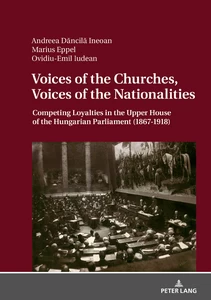
Voices of the Churches, Voices of the Nationalities
Competing Loyalties in the Upper House of the Hungarian Parliament (1867 - 1918)©2019 Monographs -
-
-

-
Pathways to Paul Celan
A History of Critical Responses as a Chorus of Discordant Voices©1995 Monographs -
-
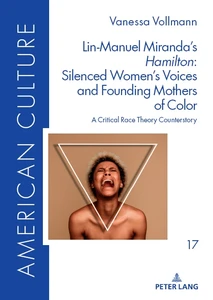
Lin-Manuel Miranda’s «Hamilton»: Silenced Women’s Voices and Founding Mothers of Color
A Critical Race Theory Counterstory©2024 Thesis -
Voices of Dissent
Interdisciplinary Approaches to New Italian Popular and Political Music©2020 Monographs -
-
Children's Voices in Politics
©2020 Monographs