Loading...

results

304 results
Sort by 
Filter
  • Hybris: Literatura y Cultura Latinoamericanas

    ISSN: 2736-5298

    Since Ancient Greece and the classical era, philosophers, artists and critics have delved into the relationships between literature and other arts. First it was painting and plastic arts –ut pictura poesis, by Simónides de Ceos and Horacio–, later on music, architecture, theatrical representation, sculpture and already, in modern and contemporary times, photography, cinema, television, the mass media. At present this vast and stimulating field of cultural and artistic hybridizations has been completed with new technologies and all "transmedia narratives", generating concepts and transversal actions attached to digital creation and new communicative realities: touch-media, cross-media, intermediality, transmediality, hypertextuality, multimodality, etc. This collection, Hybris: Latin American Literature and Culture, intends, on the one hand, to investigate in the diachronic sense that these relationships have been emerging in the literary and cultural field, understood as aesthetic, practical, leveling and technical borrowing parameters between arts and, therefore the other, is to reflect from a philosophical, social, cultural and theoretical perspective on the possibilities offered by such hybridizations, always within a Latin American context. In classical mythology, Hybris was the goddess of excess, insolence, the absolute absence of moderation, and evoked the need to go beyond limits. This new concept of Hybris intends to insist on the mythological marks of transgression, erasing borders between the arts, shaking the tendency to subdivision and containment and, at the same time, it also demandings identification with the Latin term hybrida, which alludes to the racial or cultural mixing. Hybridization and symbiosis between arts will therefore be the outlines and contexts in which these studies will be invested. Desde la Antigua Grecia y la época clásica, filósofos, artistas y críticos han profundizado en las relaciones entre la literatura y otras artes. Primero fue la pintura y artes plásticas –ut pictura poesis, de Simónides de Ceos y Horacio–, más adelante la música, la arquitectura, la representación teatral, la escultura y ya, en la época moderna y contemporánea, la fotografía, el cine, la televisión, los mass media. En la actualidad este vasto y estimulante campo de hibridaciones culturales y artísticas se ha completado con las nuevas tecnologías y todas las "narrativas transmedia", generando conceptos y actuaciones transversales anejas a la creación digital y a las nuevas realidades comunicativas: touch-media, cross-media, intermedialidad, transmedialidad, hipertextualidad, multimodalidad, etc. Esta colección, Hybris: Literatura y Cultura Latinoamericanas, pretende, por un lado, indagar en el sentido diacrónico que estas relaciones han ido perfilando en el campo literario y cultural entendidos como parámetros estéticos, prácticos, de nivelación y préstamos técnicos entre artes y, por otro, reflexionar desde una perspectiva filosófica, social, cultural y teórica sobre las posibilidades que ofrecen tales hibridaciones, siempre dentro de un contexto latinoamericano. En la mitología clásica, Hybris era la diosa de la desmesura, la insolencia, la ausencia absoluta de moderación, y evocaba la necesidad de traspasar límites. Este nuevo concepto de Hybris pretende insistir en las marcas mitológicas de la transgresión, borrando fronteras entre las artes, sacudiendo la tendencia a la parcelación y a la contención y, a la vez, reclama también la identificación con el término latino hybrida, que alude a la mezcla de sangre. Hibridación y simbiosis entre artes serán, por tanto, los contornos y contextos en los que se imbricarán estos estudios.

    20 publications

  • Postcolonial Studies

    The Postcolonial Studies series explores the enormous variety and richness in postcolonial culture and transnational literatures. The series aims to publish work which explores various facets of the legacy of colonialism including: imperialism, nationalism, representation and resistance, neocolonialism, diaspora, displacement and migratory identities, cultural hybridity, transculturation, exile, and geographical and metaphorical borderlands. This series does not define its attentions to any single place, region, or disciplinary approach, and we are interested in books informed by a variety of theoretical perspectives. While seeking the highest standards of scholarship, the Postcolonial Studies series is thus a broad forum for the interrogation of textual, cultural and political postcolonialisms. The series welcomes both individually authored and collaboratively authored books and monographs as well as edited collections of essays.

    21 publications

  • Asian American Studies

    The Asian American Studies series will continue to contribute to an understanding of the long neglected history, rich cultural heritage, and present position of Asian Americans in society. The series encompasses studies on all aspects of the Asian American experience, and we are committed to expanding the traditions of knowledge within the field to address vast Asian American epistemologies, communities, activities, and practices. We are looking for work which explores various facets of a transnational perspective including for example: diaspora, displacement and migratory identities, cultural hybridity, transculturation, comparative race studies, contemporary community issues, immigration politics, nationalisms, and representation. While seeking the highest standards of scholarship, the Asian American Studies series is thus a broad forum for research on diverse and complex Asian American issues. The Asian American Studies series is committed to interdisciplinary and cross cultural scholarship. The series scope is primarily in the Humanities and Social Sciences. For example, topics in history, literature, culture, philosophy, religion, visual arts, performing arts, sociology, language & linguistics, gender studies, global studies, ethnic studies, etc. would be suitable. The series welcomes both individually authored and collaboratively authored books and monographs as well as edited collections of essays. The series will publish manuscripts primarily in English (although secondary references in other languages are certainly acceptable). Proposals from both emerging and established scholars are welcome. The Asian American Studies series will continue to contribute to an understanding of the long neglected history, rich cultural heritage, and present position of Asian Americans in society. The series encompasses studies on all aspects of the Asian American experience, and we are committed to expanding the traditions of knowledge within the field to address vast Asian American epistemologies, communities, activities, and practices. We are looking for work which explores various facets of a transnational perspective including for example: diaspora, displacement and migratory identities, cultural hybridity, transculturation, comparative race studies, contemporary community issues, immigration politics, nationalisms, and representation. While seeking the highest standards of scholarship, the Asian American Studies series is thus a broad forum for research on diverse and complex Asian American issues. The Asian American Studies series is committed to interdisciplinary and cross cultural scholarship. The series scope is primarily in the Humanities and Social Sciences. For example, topics in history, literature, culture, philosophy, religion, visual arts, performing arts, sociology, language & linguistics, gender studies, global studies, ethnic studies, etc. would be suitable. The series welcomes both individually authored and collaboratively authored books and monographs as well as edited collections of essays. The series will publish manuscripts primarily in English (although secondary references in other languages are certainly acceptable). Proposals from both emerging and established scholars are welcome. The Asian American Studies series will continue to contribute to an understanding of the long neglected history, rich cultural heritage, and present position of Asian Americans in society. The series encompasses studies on all aspects of the Asian American experience, and we are committed to expanding the traditions of knowledge within the field to address vast Asian American epistemologies, communities, activities, and practices. We are looking for work which explores various facets of a transnational perspective including for example: diaspora, displacement and migratory identities, cultural hybridity, transculturation, comparative race studies, contemporary community issues, immigration politics, nationalisms, and representation. While seeking the highest standards of scholarship, the Asian American Studies series is thus a broad forum for research on diverse and complex Asian American issues. The Asian American Studies series is committed to interdisciplinary and cross cultural scholarship. The series scope is primarily in the Humanities and Social Sciences. For example, topics in history, literature, culture, philosophy, religion, visual arts, performing arts, sociology, language & linguistics, gender studies, global studies, ethnic studies, etc. would be suitable. The series welcomes both individually authored and collaboratively authored books and monographs as well as edited collections of essays. The series will publish manuscripts primarily in English (although secondary references in other languages are certainly acceptable). Proposals from both emerging and established scholars are welcome.

    1 publications

  • Language, Migration and Identity

    ISSN: 2296-2808

    This series fills a hitherto neglected but now growing area in the treatment of migration: the role of language and identity. This topic is central in a globalized world where the definition of community is constantly challenged by the increased mobility of individuals. Linked to this mobility is the issue of identity construction, in which language plays a key role. Language practices are indicators of the socialization process in bilingual and multilingual settings, and part of the strategies by which speakers assert membership within social groups. Migrant speakers are constantly engaged in identity construction in varying settings. Language, Migration and Identity invites proposals for revised dissertations, monographs and edited volumes on language practices and language use by migrant speakers. A wide range of themes is envisaged, within the area of migration, but from a broadly linguistic perspective. The series welcomes studies of migrant communities and their language practices, studies of language practices in multilingual educational settings, and case studies of identity building among migrants through language use. Proposals might focus on topics such as second language acquisition in social contexts, variation in L2 speech, multilingualism, acquisition of sociolinguistic competence, hybridity and ‘crossing’ in relation to identity. A multiplicity of approaches in the treatment of this interdisciplinary area will be welcome, from quantitative to ethnographic to mixed methods. The series welcomes established scholars as well as early career academics and recent PhD research.

    5 publications

  • Intersections in Communications and Culture

    Global Approaches and Transdisciplinary Perspectives

    ISSN: 1528-610X

    This series publishes a wide range of new critical scholarship, particularly works that seek to engage with and transcend the disciplinary isolationism and genre confinement that characterizes so much of contemporary research in communication studies and related fields. The Editors are particularly interested in manuscripts that address the broad intersections, movement, and hybrid trajectories that currently define the encounters between human groups in modern institutions and societies. The way these dynamic intersections are coded and represented in contemporary popular cultural forms and in the organization of knowledge is also explored in this series. Works that emphasize methodological nuance, texture, and dialogue across traditions and disciplines (communications, feminist studies, area and ethnic studies, arts, humanities, sciences, education, philosophy, etc.) are particularly welcome, as are projects that explore the dynamics of variation, diversity, and discontinuity in local and international settings. Topics covered by this series include (but are not limited to): multidisciplinary media studies; cultural studies; gender, race, and class; postcolonialism; globalization; diaspora studies; border studies; popular culture; art and representation; body politics; governing practices; histories of the present; health (policy) studies; space and identity; (im)migration; global ethnographies; public intellectuals; world music; virtual identity studies; queer theory; critical multiculturalism.

    50 publications

  • Cinema and Media Cultures in the Middle East

    ISSN: 2770-9051

    The purpose of this series is to demarcate and critically examine the shifting terrain of film- and media-making in the Middle East, and of practices of film and media studies regarding it, testing them both against their larger, social enabling conditions at the national, regional, and transnational levels. Titles in the series will engage recent developments in the field of Middle East film and media studies and will help point the field in an intellectually meaningful, pedagogically effective direction in relation to both current and, in some cases, significant, previously ignored older work. The series is conceived at a moment during which Middle Eastern film and film criticism have begun to develop in new directions. Recent years have witnessed a modest increase in scholarly engagement with topics and modes of inquiry often previously considered outside academic discourse. A handful of books and special journal issues published in English over the past half-decade, focusing on specific Middle Eastern countries, such as Tunisia, Morocco, Syria, Iran, Palestine/Israel and Turkey, as well as the long-overdue establishment of cinema studies as an emerging field of academic inquiry within universities located in the Arab world indicate a preponderance of previously unproblematized issues now circulating within the field. These include critical questions from queer and transgendered perspectives about the representation of women, and from indigenous and settler-colonial studies perspectives about the representation of migrant workers and refugees, the growing importance of documentary, digital animation and hybrid shooting, the continuing influence of global cinema imperatives, and the revival of interest in militant, revolutionary and third cinema aesthetics.

    2 publications

  • Lengua, Literatura, Traducción

    ISSN: 2700-8525

    The series Language, Literature, Translation (LeLiTrad) will gather research papers on the various fields related to humanistic and specialized translation approached from multidisciplinary perspectives. In the present collection, therefore, the collection would bring together papers on the translation of literary works from assumptions related to comparative studies, discourse analysis, or the relationships between literature and other arts; Also, the collection would be hosting research papers on disciplines like terminology, applied linguistics, and specialized translation in a variety of fields (such as legal, bio-sanitary, agri-food, technical, hybrid texts, veterinary sciences, economic sciences, translation for citizen security and translation for social affairs, audiovisual translation, para-translation, etc.). Next to these, research papers focused on different aspects of translation like theoretical essays and work on inter-language interpretation will also be accepted and assessed for publication. In short, the series Language, Literature, Translation aims to offer the specialized readers all theoretical and practical aspects hinging around the translation of texts and interpretation of speeches, so that they may contribute to the critical debate and the resulting enrichment of the discipline both in Spain and in the wider European context. La colección Lengua, Literatura, Traducción (LeLiTrad) reúne los distintos ámbitos relacionados con la traducción humanística y especializada desde una perspectiva multidisciplinar. En este sentido, abordamos desde esta colección la traducción literaria de obras desde presupuestos relacionados con la comparatística, el análisis del discurso, o la relación de la literatura con otras artes; por otro lado, la colección acoge trabajos sobre terminología, lingüística aplicada, y traducción especializada en sus múltiples ámbitos (jurídico, biosanitario, agroalimentario, técnico, textos híbridos, ciencias veterinarias, ciencias económicas, traducción para la inclusión, traducción para la seguridad de la ciudadanía y traducción social, traducción audiovisual, paratraducción, etc.). Junto a estos trabajos destinados a las distintas vertientes de la traducción también se contemplarán trabajos de tipo teórico sobre traductología e interpretación.En definitiva, la colección Lengua, Literatura, Traducción pretende mostrar todos los aspectos tanto teóricos como prácticos en torno a la traducción de los textos y a la interpretación de los discursos, de forma que contribuyan al debate crítico y al enriquecimiento de la disciplina dentro de España y en su contexto europeo.

    26 publications

  • Documentary Film Cultures

    ISSN: 2504-4834

    This series provides a space for exploring the development of documentary film cultures in the contemporary context. The series takes an ecological approach to the study of documentary funding, production, distribution and consumption by emphasizing the interconnections between these practices and those of other media systems. It thus encourages new ways of understanding documentary films or practices as part of other, wider systems of cultural production. Volumes may focus on specific sociopolitical environments, such as that of a nation or region. Alternatively, they may explore specific themes or production practices, such as new wave documentaries, environmentalism or indigenous film communities. Studies of shared technological platforms, including films that make use of embodied technologies or using emergent distribution platforms, are also welcome. The series reflects not only the maturing of literature on documentary film and media production studies over the last two decades but also the growing interest amongst nonacademic and professional audiences in documentary texts as they occupy an increasingly hybrid cultural space: part journalism, part art cinema, part activism, part entertainment, part digital culture. Editorial Board: Jouko Aaltonen (Aalto University), John Corner (Liverpool University, UK), Yingchi Chu (Murdoch University, Australia), Jonathan Dovey (University of the West of England, Bristol), Susanna Helke (Aalto University, Finland), Anette Hill (Lund University, Sweden), Bert Hogenkamp (Netherlands Institute for Sound and Vision), Ilona Hongisto (Macquarie University, Australia), K. P. Jayasankar (Tata Institute of Social Sciences, India), Susan Kerrigan (Newcastle University, Australia), Richard Kilborn (University of Stirling), Erik Knudsen (University of Central Lancashire, UK), David MacDougall (Australian National University), Anjali Monteiro (Tata Institute of Social Sciences, Mumbai), Pablo Piedras (Universidad de Buenos Aires, Argentina), Agnieszka Piotrowska (University of Bedfordshire, UK), Laura Rascaroli (University College Cork, Ireland), Belinda Smaill (Monash University, Australia), Inge Sorensen (University of Glasgow, UK), Bjørn Sørenssen (Norwegian University of Science and Technology, Norway), Malin Walhberg (Stockholm University, Sweden), Deane Williams (Monash University, Australia), Yingjin Zhang (UC San Diego, USA)

    8 publications

  • Diversitas

    ISSN: 2031-0331

    The aim of this series is to study diversity by privileging an interdisciplinary approach, through political, legal, cultural and social frameworks. The proposed method of inquiry will be to appeal, at once, to the fields of political philosophy, law, political science, history and sociology. In a period characterized by the increasing diversity of contemporary societies, the authors published in this series will explore avenues for the accommodation and management of pluralism and identity. Such studies will not be limited to assessments of federal states, but will include states that are on the path to federalization as well as non-federal states. Serious efforts will be undertaken to enrich our comprehension of so-called ‘nations without states’, most notably Catalonia, Scotland, Flanders and Quebec. A point of emphasis will also be placed on extracting lessons from experiences with civil law relative to those cases marked by the common law tradition. Monist and competing models will be compared in order to assess the relative capacity of each model to provide responses to the question of political instability, while pursuing the quest for justice in minority societies. The series also addresses the place of cities in the management of diversity, as well as the question of migration more generally and the issue of communities characterized by overlapping and hybrid identities. A profound sensitivity to historical narratives is also expected to enrich the proposed scientific approach. Finally, the works published in this series will reveal a common aspiration to advance social and political debates without privileging any particular school of thought. Cette collection cherche à étudier la diversité sous les angles politique, juridique, culturel et social en privilégiant le prisme de l’interdisciplinarité. La démarche scientifique proposée fait appel à la fois à la philosophie politique, au droit, à la science politique, à l’histoire, de même qu’à la sociologie. Au moment où les sociétés sont de plus en plus traversées par la diversité, les auteurs publiés dans cette collection exploreront des avenues en vue de gérer le pluralisme communautaire et identitaire. Sont mis à l’étude tout aussi bien les pays fédéraux et les pays en voie de fédéralisation que les pays non fédéraux. Des efforts importants seront consentis afin d’enrichir notre compréhension des nations dites « sans État » – pensons à la Catalogne, à l’Écosse, à la Flandre, au Pays basque et au Québec. Une volonté affirmée de mettre en parallèle les enseignements tirés des expériences civilistes et de celles propres au droit coutumier sera au rendez-vous. Les modèles monistes et concurrents seront mis dos à dos afin de saisir la capacité propre à chacun de fournir des réponses à l’instabilité politique tout en poursuivant la quête de justice pour les sociétés minoritaires. La place des métropoles au chapitre de la gestion de la diversité retiendra notre attention de même que les questions de migration des populations et du métissage communautaire. Une sensibilité à la trame historique viendra enrichir la démarche scientifique proposée. Les ouvrages publiés dans cette collection auront en commun leur volonté de faire avancer les débats de société sans privilégier aucune école de pensée. Directeur de la collection : Alain-G. Gagnon, titulaire, Chaire de recherche du Canada en études québécoises et canadiennes et directeur d'axe au Centre de recherche interdisciplinaire sur la diversité et la démocratie (CRIDAQ). Comité scientifique : Alain Dieckhoff, Institut d’Études Politiques, Paris Hugues Dumont, Facultés Saint-Louis, Bruxelles Avigail Eisenberg, University of Victoria, Victoria Montserrat Guibernau, University of London, Londres Will Kymlicka, Queen’s University, Kingston, Canada Guy Laforest, Université Laval, Québec Ramon Máiz, University of Santiago de Compostela, Saint-Jacques de Compostelle Marco Martiniello, Université de Liège, Liège Ferran Requejo, Universidad Pompeu Fabra, Barcelone José Maria Sauca Cano, Universidad Carlos III de Madrid, Madrid Michel Seymour, Université de Montréal, Montréal James Tully, University of Victoria, Victoria Stephen Tierney, University of Edinburgh, Édimbourg Melissa Williams, University of Toronto, Toronto The aim of this series is to study diversity by privileging an interdisciplinary approach, through political, legal, cultural and social frameworks. The proposed method of inquiry will be to appeal, at once, to the fields of political philosophy, law, political science, history and sociology. In a period characterized by the increasing diversity of contemporary societies, the authors published in this series will explore avenues for the accommodation and management of pluralism and identity. Such studies will not be limited to assessments of federal states, but will include states that are on the path to federalization as well as non-federal states. Serious efforts will be undertaken to enrich our comprehension of so-called ‘nations without states’, most notably Catalonia, Scotland, Flanders and Quebec. A point of emphasis will also be placed on extracting lessons from experiences with civil law relative to those cases marked by the common law tradition. Monist and competing models will be compared in order to assess the relative capacity of each model to provide responses to the question of political instability, while pursuing the quest for justice in minority societies. The series also addresses the place of cities in the management of diversity, as well as the question of migration more generally and the issue of communities characterized by overlapping and hybrid identities. A profound sensitivity to historical narratives is also expected to enrich the proposed scientific approach. Finally, the works published in this series will reveal a common aspiration to advance social and political debates without privileging any particular school of thought.

    43 publications

  • Higher Ed

    Questions about the Purpose(s) of Colleges and Universities

    What are the purposes of higher education? When undergraduates 'declare their majors,' they agree to enter into a world defined by the parameters of a particular academic discourse, a discipline. But who decides those parameters? How do they come about? What are the discussions and proposed outcomes of disciplined inquiry? What should an undergraduate know to be considered educated in a discipline? How does the disciplinary knowledge base inform its pedagogy? Why are there different disciplines? When has a discipline 'run its course'? Where do new disciplines come from? Where do old ones go? How does a discipline produce its knowledge? What are the meanings and purposes of disciplinary research and teaching? What are the key questions of disciplined inquiry? What questions are taboo within a discipline? What can the disciplines learn from one another? What might they not want to learn and why? Once we begin asking these kinds of questions, positionality becomes a key issue. One reason why there aren't many books on the meaning and purpose of higher education is that once such questions are opened for discussion, one's subjectivity becomes an issue with respect to the presumed objective stances of Western higher education. Academics don't have positions because positions are 'biased,' 'subjective,' 'slanted,' and therefore somehow invalid. So the first thing to do is to provide a sense, however broad and general, of what dinds of positionalities will inform the books and chapters on the above questions. Certainly the questions themselves, and any others we might ask, are already suggesting a particular 'bent,' but as the series takes shape, the authors we engage will no doubt have positions on these questions. From the stance of interdisciplinary, multidisciplinary, or transdisciplinary practitioners, will the chapters and books we solicit solidify disciplinary discourses, or liquefy them? Depending on who is asked, interdisciplinary inquiry is either a polite collaboration among scholars firmly situated in their own particular discourses, or it is a blurring of the restrictive parameters that define the very notion of disciplinary discourse. So will the series have a stance on the meaning and purpose of interdisciplinary inquiry and teaching? This can possibly be finessed by attracted thinkers from disciplines that are already multicisciplinary, e.g., the various knids of 'studies' programs (Women's, Islamic, American, Cultural, etc.), or the hybrid disciplines like Ethnomusicology (Musicology, Folklore, Anthropology). But by including people from these fields (areas? disciplines?) in our series, we are already taking a stand on disciplined inquiry. A question on the comprehensive exam for the Columbia University Ethnomusicology Program was to defend Ethnomusicology as a 'field' or a 'discipline.' One's answer determined one's future, at least to the extent that the gatekeepers had a say in such matters. So, in the end, what we are proposing will no doubt involve political struggles.

    31 publications

  • Post-Anthropocentric Inquiry

    In recent years, critical researchers, educators, and activists have become aware of the problems and limitations that have resulted by placing the ‘human’ at the center of all societal conceptualizations, concerns, and practices. Across fields, ranging from medical research laboratory practices—to the construction of the humanities—to the social sciences—to environmental studies (just to name a few), this anthropocentric focus is being called to question. The goal of this book series is to provide scholars and readers with critical opportunities to contest this anthropocentrism, (1) by creating a textual field of Post-Anthropocentric Inquiry that generates critical spaces for (re)thinking philosophies, knowledges, and ways of being/living and performing, as well as methodologies and inquiries, that decenter the human, (2) while at the same time attempting always/already to actively transform inequities and injustices performed by human privilege on nonhuman others, traditionally disqualified human others, and the natural world more broadly. This Post-Anthropocentric Inquiry can represent difference and the multiple, while at the same time exploring and welcoming notions of indistinction. Work that further develops and expands current notions of becoming (animal, earth), new feminist materialisms, critical posthuman sensibilities, hybrid existences (past and present) are example locations from which an intersectional, non-anthropocentric politics may emerge. Additionally, post-anthropocentric inquiry and activism will always include the unthought, not-yet-considered modes of living, thinking, research while critically acknowledging that alternatives can create new dualisms, new forms of human privilege, and are not always liberatory for those labeled not human or for those human beings who have traditionally been marginalized. Further, post-anthropocentric scholarship acknowledges, and attempts to (1) transform, the current post-anthropocentric predicament that facilitates neoliberal capitalism as all forms of life, matter, and relations have been/are constructed to serve market economies, and (2) examine the unprecedented human/nonhuman interaction with the increasingly intrusive and intimate technological order. Post-anthropocentric inquiry is necessary as related to these contemporary aggressive, and all-encompassing post-human conditions. Single or multiple authored manuscripts are encouraged that facilitate the development of Post-Anthropocentric Inquiry by addressing one issue, multiple issues, research purposes, methodologies, and/or forms of activism. Over a wide range of volumes that cross disciplines, the series will address broad issues, as mentioned above, and questions like the following: What is post-anthropocentric inquiry? What is made possible, enabled by post-anthropocentric approaches and research methodologies? How is post-anthropocentric research conducted without (re)privileging the human? How does the work in fields that would decenter the human, like critical animal studies, intersect with professional content and practices in fields like education or medicine? How can coalitions be formed (and actions taken) that decenter the human and increase possibilities for all forms of justice, while countering capitalist and technological orders that devalue all forms of life? Interested authors should contact Gaile S. Cannella, gaile.cannella@gmail.com

    2 publications

  • Vampire Studies: New Perspectives on the Undead

    ISSN: 2977-0718

    Vampires are everywhere. Appearing on streaming services, in book series and on multimedia platforms, vampires and the undead are an integral part of popular culture in the twenty-first century. But vampires have a long and varied history across cultures from at least the early eighteenth century onwards. Nina Auerbach once commented on their cultural ubiquity: ‘Every age embraces the vampire it needs, and gets the vampire it deserves’. The inherently transformative properties of vampires have made them uniquely able to reflect the age in which they appear. As a result, they provide original and multiple perspectives, not just on culture, but on established and emerging areas of study. Vampires and the undead serve as a useful lens for exploring Indigeneity, environmental studies and the ecogothic; identity, ethnicity and gender politics; material culture, spectatorship and fan cultures; hybridity, post-humanism and futurities; disability, mental health and ageing studies; and theology, philosophy and politics. These new territories and methodologies of vampire studies also retroactively shift the ways we view and understand earlier iterations of the undead and the different cultures they materialized from. In this first book series dedicated to vampire studies, authors will explore the ongoing evolution of vampires and the undead in the broadest sense – including the supernatural, super-human and non-human, and across cultures, histories and media – and will use new theoretical frameworks to offer original and innovative readings of established and more recent texts. This original series aims to provide a focused hub for the diverse and often dispersed body of study that sees the vampire and the undead not as a subgenre of other categories such as the Gothic or horror, but as a genre in its own right that intersects with others. An important dimension of the series is diversity and the inclusion of multiple cultural and minority perspectives, including LGBTQ+, disability, Indigeneity, and any approaches that encourage new ways of viewing the cultural impact of vampires and the undead and widen our understanding of an ever-expanding genre. Proposals for monographs and edited collections are warmly invited. All projects undergo rigorous peer review. Please contact the series editor, Simon Bacon (baconetti@googlemail.com), or editorial@peterlang.com for more information. Editorial Board: Stacey Abbott (Birkbeck, University of London), Katarzyna Ancuta (Chulalongkorn University, Thailand), Uzoamaka Melissa Anyiwo (University of Scranton, USA), John Edgar Browning (Savannah College of Art and Design, USA), S. Brooke Cameron (Queen's University, Canada), Sir Christopher Frayling, Tabish Khair (University of Aarhus, Denmark), Lorna Piatti-Farnell (Auckland University of Technology, New Zealand), Xavier Aldana Reyes (Manchester Metropolitan University, UK), Cristina Santos (Brock University, Canada), Jeffrey Andrew Weinstock (Central Michigan University, USA), Laura Westengard (City University of New York).

    0 publications

  • Title: Text- und Diskurswelten in der massenmedialen Kommunikation

    Text- und Diskurswelten in der massenmedialen Kommunikation

    by Marek Cieszkowski (Volume editor) Janusz Pociask (Volume editor) 2020
    ©2020 Edited Collection
  • Title: Hybrid Identities

    Hybrid Identities

    by Flocel Sabaté (Volume editor) 2014
    ©2014 Edited Collection
  • Title: Hybrides Erzählen und hybride Identität im britischen Roman der Gegenwart
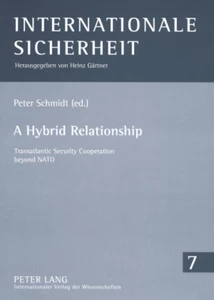
  • Title: A Hybrid Relationship

    A Hybrid Relationship

    Transatlantic Security Cooperation beyond NATO
    by Peter Schmidt (Volume editor)
    ©2008 Edited Collection
  • Title: Hybride Sinnsysteme in Informationsnetzwerken

    Hybride Sinnsysteme in Informationsnetzwerken

    Moderne Identitätsbildung und Heilsuche über den menschlichen Körper
    by Melanie Anja Knijff (Author)
    ©2006 Thesis
  • Title: Die Besteuerung hybrider Finanzinstrumente

    Die Besteuerung hybrider Finanzinstrumente

    by Haiko Krause (Author)
    ©2006 Thesis
  • Title: Hybride Regulierung des Freiverkehrs

    Hybride Regulierung des Freiverkehrs

    Aspekte einer europarechtswidrigen börsen- und wertpapierhandelsrechtlichen Regulierung des Freiverkehrs in Bezug auf das Ziel der Schaffung eines integrierten Finanzbinnenmarktes
    by Michael Schweppe (Author) 2013
    ©2013 Thesis
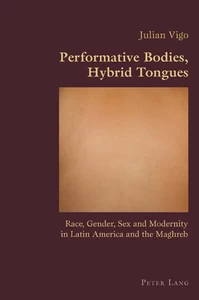
  • Title: Performative Bodies, Hybrid Tongues

    Performative Bodies, Hybrid Tongues

    Race, Gender, Sex and Modernity in Latin America and the Maghreb
    by Julian Vigo (Author) 2011
    ©2010 Monographs
  • Title: Strategisches Management hybrider Leistungsbündel

    Strategisches Management hybrider Leistungsbündel

    by Thomas Peschl (Author)
    ©2010 Thesis
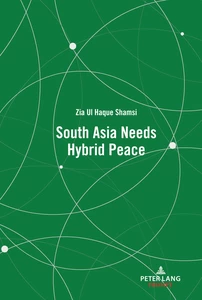
  • Title: South Asia Needs Hybrid Peace

    South Asia Needs Hybrid Peace

    by Zia Ul Haque Shamsi (Author) 2021
    ©2022 Prompt
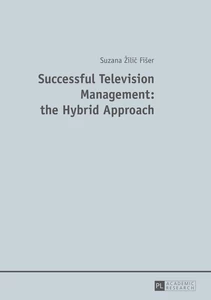
  • Title: Successful Television Management: the Hybrid Approach

    Successful Television Management: the Hybrid Approach

    by Suzana Žilic Fišer (Author) 2015
    ©2015 Monographs
  • Title: Das hybride Khmer Rouge-Tribunal

    Das hybride Khmer Rouge-Tribunal

    Entstehung, Entwicklung und rechtliche Grundlagen
    by Susanne Dyrchs (Author)
    ©2008 Thesis
  • Title: Hybrid and Cyber War as Consequences of the Asymmetry

    Hybrid and Cyber War as Consequences of the Asymmetry

    A Comprehensive Approach Answering Hybrid Actors and Activities in Cyberspace- Political, Social and Military Responses
    by Josef Schröfl (Volume editor) Bahram M. Rajaee (Volume editor) Dieter Muhr (Volume editor)
    ©2011 Conference proceedings
Previous
Search in
Search area
Subject
Category of text
Price
Language
Publication Schedule
Open Access
Publication Year