results
-
-
Fem-Mobilities: Feminismos y Movilidades
Contemporary migrations take place within the framework of varied geographical, social and symbolic mobilities with strong implications in terms of inequality and global stratification. Throughout history, women have always migrated, but their presence has been invisible or shown in a selective, partial and biased way (Morokvasic, 2011), which presents them more as dependents, sufferers and victims, than as protagonists of the migration. After decades of struggle for the development and implantation of feminist and gender studies in academia and the impact of the broad women's movement at a global level, today we are witnessing the consolidation of a "field" of studies, that of "gender and gender. migrations ». Feminist approaches have provided a set of concepts and categories of analysis that have contributed to restoring the agency of women in general, and in particular, the agency of migrant women. The diverse feminist perspectives allow us to understand how migrations politically, historically and contextually produce gender, the factors of production of political, economic and socio-cultural inequalities that affect the lives of migrant women, as well as the variety of their experiences, their positions and their identities. The FEM-MOBILITIES series is a space for the publication of works that focus on these feminist themes, approaches and perspectives on migration and refuge, with the aim of constituting a place for dialogue and debate, but also for constructive controversy around to the main axes of production of inequality and the ways to combat them. Las migraciones contemporáneas tienen lugar en el marco de movilidades geográficas, sociales y simbólicas variadas con fuertes implicaciones en términos de desigualdad y de estratificación global. A lo largo de la historia, las mujeres siempre han migrado, pero su presencia ha sido invisibilizada o mostrada de manera selectiva, parcial y sesgada (Morokvasic, 2011), lo que las presentan más como dependientes, sufrientes y víctimas, que como protagonistas de la migración. Tras décadas de lucha para el desarrollo e implantación de los estudios feministas y de género en la academia y de la incidencia del movimiento amplio de mujeres a nivel global, hoy asistimos a la consolidación de un «campo» de estudios, el de «género y migraciones». Los enfoques feministas han proporcionado un conjunto de conceptos y categorías de análisis que han contribuido a restituir en general la agencia de las mujeres, y en particular, la agencia de las mujeres migrantes. Las diversas perspectivas feministas nos permitan entender cómo las migraciones producen de manera política, histórica y contextual el género, los factores de producción de desigualdades políticas, económicas y socioculturales que inciden en la vida de las mujeres migrantes, así como la variedad de sus experiencias, sus posiciones y sus identidades. La serie FEM-MOBILITIES es un espacio para la publicación de obras que se centren en estos temas, enfoques y perspectivas feministas de las migraciones y el refugio con el objetivo de constituir un lugar de diálogo y de debate, pero también de controversia constructiva en torno a los principales ejes de producción de desigualdad y las formas de combatirlos.
1 publications
-
RES HUMANAE Arbeiten für die Pädagogik
Die Reihe RES HUMANAE Arbeiten für die Pädagogik veröffentlicht Monographien und Sammelbände zu vielfältigen Phänomenen der Pädagogik und Soziologie. Darunter befinden sich Themen wie Jugendarbeitslosigkeit, Identitätsbildung, Kommunalpädagogik, Schulische Gewaltprävention und Diskurse aus der Sozialen Arbeit, die aus pädagogischer, soziologischer und politischer Perspektive beleuchtet werden.
12 publications
-
Human Right Studies
Subseries: Italian Yearbook of Human RightsISSN: 2294-8848
The legal and political significance of human rights has increased enormously at the international and European levels. It has become increasingly clear that the respect and promotion of human rights must be at the centre of States and local communities' public policies and that human rights are the basis of civil society initiatives and movements. There is a large mechanism, at all levels of governance, monitoring the way in which States implement the obligations they have assumed towards each person under their sovereignty. The Italian Yearbook of Human Rights Series provides year by year, a dynamic and up-to date overview of the measures Italy has taken to adapt its legislation and policies in line with international human rights law and to comply with the commitments voluntarily assumed by the Italian Government at the international level. The book series thus intends to contribute to the continuous monitoring activity of the human rights situation in Italy undertaken at the local, national and international levels by the relevant intergovernmental and civil society actors. Each volume of this series surveys the activities carried out, during the year of reference, by the relevant national and local Italian actors, including governmental bodies, civil society organisations and universities. It also presents reports and recommendations that have been addressed to Italy by international monitoring bodies within the framework of the United Nations, the Council of Europe and the European Union. Finally, each Yearbook provides a selection of examples from international and national case law that cast light on Italys position vis-à-vis internationally recognised human rights. The Yearbook is edited by the Human Rights Centre of the University of Padua, in cooperation with the UNESCO Chair in Human Rights, Democracy and Peace of the same university, and with the support of the Region of Veneto. The Centre, established in 1982, carries out research and education following a global and interdisciplinary approach. It hosts the Jean Monnet Centre of Excellence on intercultural dialogue, human rights and multi-level governance.
11 publications
-
Human Right Studies
Among the broad structural transformation processes at the global level, the international legal recognition of human rights occupies an exceptionally prominent position. The dimensions of this process include standard setting, the functioning of sophisticated machineries for the promotion and protection of human rights, the development of a specific international case-law as well as new priorities of the political agenda. The human rights paradigm is at the heart of a new set of interrelated principles, which are equally valid at both the domestic and the international levels such as the rule of law, democratic principles and the responsibility to protect and of great strategic visions, as human development and human security. New functions, such as human rights monitoring, election observation, fact-finding and inquiry have already been admitted to international practice. This series intends to foster the publication of volumes that investigate the multiple facets of a strongly evolving reality, and stimulate the production of new and innovative ideas. It offers to highlight how the human rights paradigm is at times used and at times disregarded or exploited in cases and situations that regard among others those belonging to vulnerable groups (immigrants, asylum seekers, persons with disabilities), NGOs and human rights defenders’ advocacy, intercultural dialogue, governance of world economy, bio-technologies and peace operations. Those studies which adopt inter- and trans-disciplinary approaches, in accordance with the fundamental principle of interdependence and indivisibility of civil, political, economic, social and cultural rights, will be favored. Among the broad structural transformation processes at the global level, the international legal recognition of human rights occupies an exceptionally prominent position. The dimensions of this process include standard setting, the functioning of sophisticated machineries for the promotion and protection of human rights, the development of a specific international case-law as well as new priorities of the political agenda. The human rights paradigm is at the heart of a new set of interrelated principles, which are equally valid at both the domestic and the international levels such as the rule of law, democratic principles and the responsibility to protect and of great strategic visions, as human development and human security. New functions, such as human rights monitoring, election observation, fact-finding and inquiry have already been admitted to international practice. This series intends to foster the publication of volumes that investigate the multiple facets of a strongly evolving reality, and stimulate the production of new and innovative ideas. It offers to highlight how the human rights paradigm is at times used and at times disregarded or exploited in cases and situations that regard among others those belonging to vulnerable groups (immigrants, asylum seekers, persons with disabilities), NGOs and human rights defenders’ advocacy, intercultural dialogue, governance of world economy, bio-technologies and peace operations. Those studies which adopt inter- and trans-disciplinary approaches, in accordance with the fundamental principle of interdependence and indivisibility of civil, political, economic, social and cultural rights, will be favored. Among the broad structural transformation processes at the global level, the international legal recognition of human rights occupies an exceptionally prominent position. The dimensions of this process include standard setting, the functioning of sophisticated machineries for the promotion and protection of human rights, the development of a specific international case-law as well as new priorities of the political agenda. The human rights paradigm is at the heart of a new set of interrelated principles, which are equally valid at both the domestic and the international levels such as the rule of law, democratic principles and the responsibility to protect and of great strategic visions, as human development and human security. New functions, such as human rights monitoring, election observation, fact-finding and inquiry have already been admitted to international practice. This series intends to foster the publication of volumes that investigate the multiple facets of a strongly evolving reality, and stimulate the production of new and innovative ideas. It offers to highlight how the human rights paradigm is at times used and at times disregarded or exploited in cases and situations that regard among others those belonging to vulnerable groups (immigrants, asylum seekers, persons with disabilities), NGOs and human rights defenders’ advocacy, intercultural dialogue, governance of world economy, bio-technologies and peace operations. Those studies which adopt inter- and trans-disciplinary approaches, in accordance with the fundamental principle of interdependence and indivisibility of civil, political, economic, social and cultural rights, will be favored.
4 publications
-
Consciousness and Human Systems
The interdisciplinary series "Consciousness and Human Systems" presents conference proceedings on philosophy, education, and medicine. Scholars present current studies on human thought, natural laws and psycho-semantics as well as Shamanism, traditional healing and meditation. The series is published by professors of psychology, philosophy, and medical anthropology. The interdisciplinary series "Consciousness and Human Systems" presents conference proceedings on philosophy, education, and medicine. Scholars present current studies on human thought, natural laws and psycho-semantics as well as Shamanism, traditional healing and meditation. The series is published by professors of psychology, philosophy, and medical anthropology. The interdisciplinary series "Consciousness and Human Systems" presents conference proceedings on philosophy, education, and medicine. Scholars present current studies on human thought, natural laws and psycho-semantics as well as Shamanism, traditional healing and meditation. The series is published by professors of psychology, philosophy, and medical anthropology.
3 publications
-
-
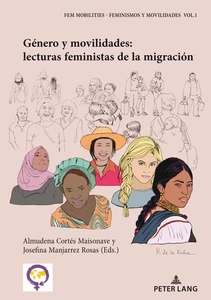
Género y movilidades: lecturas feministas de la migración
©2021 Edited Collection -
«Considerans fragilitatem humanae naturae...»
Testaments et pratique testamentaire à San Gimignano de 1299 à 1530©2005 Thesis -
Human Being – Being Human
A Theological Anthropology in Biblical, Historical, and Ecumenical PerspectiveMonographs -
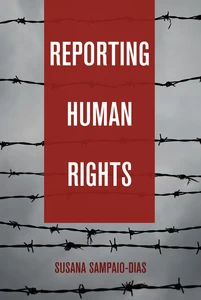
Reporting Human Rights
©2016 Textbook -

Territorios transfronterizos: Marca Francia desde un enfoque cultural, lingüístico y literario
©2025 Edited Collection -
-
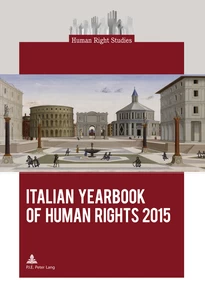
Italian Yearbook of Human Rights 2015
©2016 Edited Collection -

Recursos para una salud medioambiental y humana sostenibles
©2025 Edited Collection -
-
Humane Schule
©1999 Monographs -
Human Suffering
A Challenge to Christian Faith in Igbo/African Christian Families- (An Anthropological and Theological Study)©2001 Monographs -
Human Dialogue
©2023 Monographs -
-
Italian Yearbook of Human Rights 2016
©2016 Edited Collection -
Italian Yearbook of Human Rights 2019
©2020 Thesis -
-
Italian Yearbook of Human Rights 2020
©2021 Thesis -
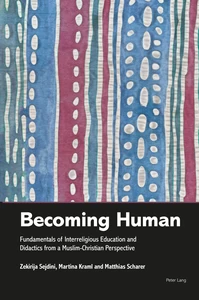
Becoming Human
Fundamentals of Interreligious Education and Didactics from a Muslim-Christian Perspective©2020 Monographs