results
-
Frontiers in Political Communication
ISSN: 1525-9730
At the heart of how citizens, governments, and the media interact is the communication process, a process that is undergoing tremendous change. Never has there been a time when confronting the complexity of these evolving relationships been so important to the maintenance of civil society. This series seeks books that advance the understanding of this process from multiple perspectives and as it occurs in both institutionalized and non- institutionalized political settings. While works that provide new perspectives on traditional political communication questions are welcome, the series also encourages the submission of manuscripts that take an innovative approach to political communication, which seek to broaden the frontiers of study to incorporate critical and cultural dimensions of study as well as scientific and theoretical frontiers.
89 publications
-
A Critical Introduction to Media and Communication Theory
The study of the media has led scholars to apply a humbling array of theories in their efforts to analyze messages, media systems, audiences and media themselves. One of the strengths of media studies has been its flexibility as it incorporates humanist and social scientific ideas in our work. This series is focused on theories, methods, schools of thought, domains of intellectual struggle, and individual thinkers whose importance to the study of the media can be reconfigured, reinvented, and refocused. Each of the specially commissioned books in the series shares a concern for the heritage of thought in the field of communication. These books provide sophisticated discussions of the relevance of particular theorists or theories, with an emphasis on reinventing communication and media studies, whether by incorporating ideas thought by some to be 'outside' the field, or by providing fresh analyses of ideas that have long been considered central to media studies. Though theoretical in focus, the books are at all times concerned with the applicability of theory to empirical research and experience, and are designed to be accessible, yet critical, for students -undergraduates and postgraduates - and scholars.
17 publications
-
Critical Intercultural Communication Studies
ISSN: 1528-6118
Within Communication, culture is broadly understood as a meaning-making process that evidences itself within discourse, mediated forms, and interactional instances to constitute group autonomy. Within that meaning-making process, intercultural communication considers relationships between institutions and their societies, media and their audiences, and peoples and their communities. The formalized study of intercultural communication has always been problematic; like most disciplines and subdisciplines, its usefulness and limitations emerge from the historical context in which it is studied. Developed after World War II, intercultural communication initially served as an applied area of study to train U.S. governmental and business entities for relationships beyond U.S. borders. Then, out of the struggles of the U.S. Civil Rights era, intercultural communication expanded to concern itself with relationships between differing racial and ethnic groups. By the turn of the twentieth century, some intercultural communication scholars had fully embraced studying the differential power relations between nations, communities, and individuals thus catalyzing a body of research known as critical intercultural communication. Now, heading into the middle of the twenty-first century, critical intercultural communication has come into focus as an area of study that emphasizes, explains, and seeks to resolve power relations within specific contexts, applying theories and modes of inquiry suited to contemporary issues understood within their ongoing historical dynamics. As our institutions and their societies, mediated forms and their corresponding audiences, and communities and their members continue to alter and morph, critical intercultural communication adapts to interpret and envision progressive, socially just ways forward. This series, therefore, invites scholarship that challenges status quo cultural constitutions by recognizing and problematizing hegemonic modes of belonging and being. Spanning a range of contexts, critical intercultural communication considers symbolic and performative orders across local, national, hemispheric and transnational circuits. Moreover, this series fosters interdisciplinary conversations that innovate ontological and epistemological forms, advancing a range of systematic intellectual approaches to cultural transformation and validation. The series is particularly interested in works grounded in BIPOC, decolonial, feminist, queer, crip, and/or kink perspectives that construct claims, knowledges, and theories capable of guiding society toward new social justice knowings.
45 publications
-
Communication Law
ISSN: 2153-1390
Acknowledging the variety of ways in which the disciplines of communication and law converge, the aim of this series is to publish books at the nexus of these two areas with particular attention paid to communication in law in the changing media landscape. Utilizing both qualitative and quantitative methodologies, volumes in this series provide analysis of issues at the interdisciplinary and international level such as free and responsible speech, media law, regulation and policy, press freedoms and governance of new media.
12 publications
-
Critical Education and Ethics
ISSN: 2166-1359
The Critical Education and Ethics series intends to systematically analyze the pitfalls of social structures such as race, class, and gender as they relate to edu-cational issues. Books in the series contain theoretical work grounded in prag-matic, society-changing practices. The series places value on ethical responses, as prophetic commitments to change the conditions under which education takes place. The series aims to (1) Further the ethical understanding linking broader social issues to education by exploring the environmental, health-related, and faith/spiritual responses to our educational times and policy, and (2) Ground these works in the everyday world of the classroom, viewing how schools are impacted by what critical researchers do. Both theoretically and practically, the series aims to identify itself as an agent for community change. The Critical Education and Ethics series welcomes work from emerging scholars as well as those already established in the field.
18 publications
-
Du sens à la signification / De la signification aux sens
Mélanges offerts à Olga Galatanu©2014 Monographs -
Facets of Domestication
Case Studies in Polish-English and English-Polish Translation©2015 Edited Collection -
Langue – Communauté – Signification
Approches en Linguistique Fonctionnelle- Actes du XXV ème Colloque International de Linguistique Fonctionnelle 2001©2002 Conference proceedings -
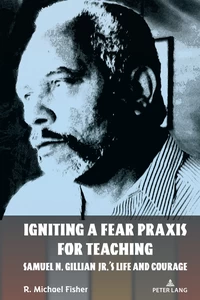
-
Sens et signification dans les espaces francophones
La (re-)construction discursive des significations©2016 Edited Collection -

Sens et signification dans les espaces francophones
La construction discursive du concept de francophonie©2013 Edited Collection -
Education for Liberation, Education for Dignity
The Story of St. Monica’s School of Basic Learning for Women©2021 Prompt -
Authenticity and Authentication in Language Learning
Distinctions, Orientations, Implications©2002 Thesis -

-
Domesticating the Public
Women’s Discourse on Gender Roles in Nineteenth-Century Germany©2012 Monographs -
Communication and Political Crisis
Media, Politics and Governance in a Globalized Public Sphere©2016 Textbook -
-
Communication in Political Campaigns
©2007 Textbook -

Redesigning Higher Education
A Small New England Public University Changes Higher Education©2020 Textbook -
Political Communication in the Age of Dissemination
Media Constructions of Hezbollah©2016 Monographs -

-
Political Communication in the Era of New Technologies
©2014 Edited Collection -

-

Food as Communication- Communication as Food
©2011 Textbook -
Food as Communication / Communication as Food
©2023 Textbook