results
-
Systems Thinking for Safety
ISSN: 2571-6913
Advisory board: Professor Erik Hollnagel, University of Southern Denmark; Professor Ragnar Löfstedt, King’s Centre for Risk Management, King’s College London, UK; Professor Alan Irwin, Copenhagen Business School, Denmark; Captain Rogers E. Smith, NASA Dryden Flight Research, USA; Professor Washington Yotto Ochieng, Imperial College, London, UK; Professor Dominic Elliott, University of Liverpool Management School, UK; Captain Tim Berry, Jet2; Dr Robert Hunter, British Air Line Pilots Association (BALPA), UK; Dr Anne Eyre, Trauma Training Ltd, UK; Dr David Fletcher, University of Leicester, UK; Associate Professor David Ison, Embry-Riddle Aeronautical University, USA; Dr Terry Shevells, University of Leicester, UK; Associate Professor Tony Masys, University of South Florida, USA; Dr Simon Bennett, University of Leicester, UK. Series description: This series draws on the success of the systems-thinking approach to safety management in commercial and military aviation, with a view to improving safety performance in other complex socio-technical systems, such as health-care, nuclear power generation, chemicals production, oil and gas extraction, deep mining and sea and rail transportation. Following the 1977 Tenerife air disaster (that killed 583 people), a traumatised and vilified aviation industry resolved to improve its safety performance. The adoption of a systems-thinking approach to risk analysis and mitigation, expressed in innovations such as the teamworking protocol crew resource management, has benefited the industry. According to the International Air Transportation Association, in 2024 the global all-accident rate was 1.13 per million flights, equating to one accident for every 880,000 flights. You are much safer in a pressurised aluminium tube cruising at eighty per cent the speed of sound six miles above terra firma than you are driving up Britain’s M1 motorway on a sunny day in a modern automobile, fully alert and not under the influence. The series is aimed at practitioners as well as academics and students. To this end, it is written in an accessible style with jargon explained. This reflects its purpose: to leverage change.
3 publications
-
Food and Cultures from the Global South
ISSN: 3067-1981
Usually, the narratives around food habits and culinary practices are structured around individual tastes. Historically, it has been observed that individual and collective food habits and culinary practices are driven by various social, cultural, gendered, sexual, racial, caste, geographical, commercial, and political factors. These factors provoke us to go beyond the stereotypical scientific narratives of consumption and unpack the various social dynamics and power structures that are associated with our daily food habits and culinary practices. With respect to these arguments, this series will generate an interwoven, multidisciplinary, and planetary archive on critical food studies.
0 publications
-
L’Europe alimentaire / European Food Issues / Europa alimentaria / L’Europa alimentare
ISSN: 2033-7892
For several decades now, our attention has been drawn to expanding agricultural output and the proliferation of powerful food companies. At the same time, in the process of European integration, the adoption of the Codex Alimentarius (1963), the Food Law (2002), and the recognition of PGIs for many products have contributed to the creation of a common European "food space". Today, these systems of supply and distribution have between them given Europeans quite varied dietary possibilities. This situation stems from various developments, linking the economic to the technical and amounting to a long-term trend. Cultural issues bear upon this, whether culinary transmission from generation to generation or the increasingly diverse catering sector, and political decisions also contribute through the establishment of standards and regulations. Hence, traditions and ruptures, innovations and continuities are permanently unsettling the European diet. Using original sources, doctoral theses, conference papers, monographs and testimonies, this series examines historical developments at the national scale and also, more generally, in a transnational perspective. The series hopes to make a significant contribution to understanding the processes of food innovation, which are powerful factors of difference and identity in contemporary Europe. All volumes in this series passed a selection process that included double blind peer-review. Le développement des rendements agricoles et la croissance de puissantes industries agroalimentaires ont focalisé l’attention depuis plusieurs décennies. Dans le processus de construction européenne, l’adoption du Codex alimentarius (1963), la Food law (2002) et la reconnaissance des IGP sur de nombreux produits contribuent désormais à unifier un espace alimentaire communautaire. Les Européens disposent de moyens d’approvisionnement et de distribution variés pour constituer leur alimentation. Cette situation procède d’évolutions plurielles, liant l’économique et le technique, et s’inscrit en fait dans la longue durée. Des enjeux culturels y sont associés, qu’il s’agisse de transmissions culinaires générationnelles ou de l’offre de restauration très diversifiée. Des choix politiques y contribuent également, par la mise en place de normalisations et de règlements. Traditions et ruptures, nouveautés et continuités bouleversent en permanence l’alimentation des Européens. Par des recueils de sources, des thèses, des actes de colloques, des monographies érudites et des témoignages, cette collection interroge les évolutions historiques et sociétales, par pays ou plus globalement dans une perspective transnationale. Elle souhaite apporter une connaissance sur des processus d’innovations alimentaires qui constituent de puissants facteurs de différences et d’identités mêlées de l’Europe contemporaine. Tous les volumes de cette collection sont publiés après double révision à l'aveugle par des pairs.
18 publications
-

Systems-thinking for Safety
A short introduction to the theory and practice of systems-thinking.©2019 Monographs -
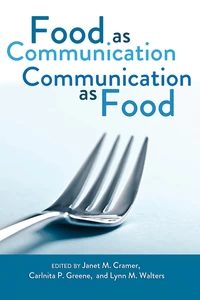
Food as Communication- Communication as Food
©2011 Textbook -
Food as Communication / Communication as Food
©2023 Textbook -
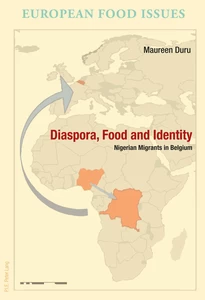
-
Food for Democracy ?
Le ravitaillement de la France occupée (1914-1919). Herbert Hoover, le blocus les neutres et les Alliés©2018 Monographs -
-
Food and the Internet
Proceedings of the 20 th International Ethnological Food Research Conference, Department of Folklore and Ethnology, Institute of Ethnology and Cultural Anthropology, University of Łodź, Poland, 3–6 September 2014©2015 Edited Collection -

Peace, Safety and Security: African Perspectives
Edited Collection -
Regulating Health and Safety Management in the European Union
A Study of the Dynamics of Change©2002 Edited Collection -
-
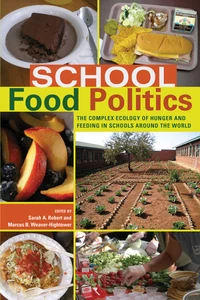
School Food Politics
The Complex Ecology of Hunger and Feeding in Schools Around the World- With a Foreword by Chef Ann Cooper©2011 Textbook -
Global Food Governance
Implications of Food Safety and Quality Standards in International Trade Law©2016 Thesis -
-

-
-
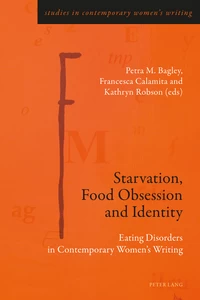
Starvation, Food Obsession and Identity
Eating Disorders in Contemporary Women’s WritingEdited Collection -
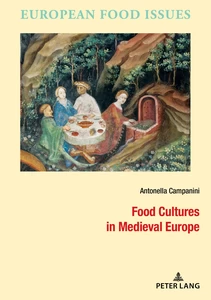
Food Cultures in Medieval Europe
©2019 Monographs -
Contemporary Studies and Theories in Gastronomy and Food Science
©2025 Edited Collection -
Autonomy and Food Biotechnology in Theological Ethics
©2009 Monographs -
Food and Language / Sprache und Essen
©2009 Conference proceedings -

Agriculture and Food in the 21 st Century
Economic, Environmental and Social Challenges- Festschrift on the Occasion of Prof. Dr. Dr. h.c. P. Michael Schmitz 65 th Birthday©2014 Others -
From Potentials to Reality: Transforming Africa's Food Production
Investment and policy priorities for sufficient, nutritious and sustainable food supplies©2021 Edited Collection