results
-
Intercultural Studies and Foreign Language Learning
ISSN: 1663-5809
Learning a foreign language facilitates the most intimate access one can get to the culture and society of another language community. The process of learning a foreign language always involves intercultural levels of engagement between the languages and cultures concerned. This process is also a long and arduous one which involves an enormous variety of factors. These factors are located on individual, socio-cultural and linguistic planes. They engage in a complex interplay between any elements of these more general planes and the concrete learning process of the learner. The series Intercultural Studies and Foreign Language Learning provides a forum for publishing research in this area. It publishes monographs, edited collections and volumes of primary material on any aspect of intercultural research. The series is not limited to the field of applied linguistics but also includes relevant research from linguistic anthropology, language learning pedagogy, translation studies and language philosophy.
24 publications
-
Intercultural Research
4 publications
-
-
-
European Studies in Lifelong Learning and Adult Learning Research
The European Studies in Lifelong Learning and Adult Learning Research series publishes interdisciplinary editions on Education. The main focus is on adult education. Topics include among others gender and pedagogy, biographical and life history approaches or the trias of state, civil society and citizens from an educational perspective. The editors are professors in the field of pedagogy with a strong emphasis on adult education. The European Studies in Lifelong Learning and Adult Learning Research series publishes interdisciplinary editions on Education. The main focus is on adult education. Topics include among others gender and pedagogy, biographical and life history approaches or the trias of state, civil society and citizens from an educational perspective. The editors are professors in the field of pedagogy with a strong emphasis on adult education. The European Studies in Lifelong Learning and Adult Learning Research series publishes interdisciplinary editions on Education. The main focus is on adult education. Topics include among others gender and pedagogy, biographical and life history approaches or the trias of state, civil society and citizens from an educational perspective. The editors are professors in the field of pedagogy with a strong emphasis on adult education.
7 publications
-
Kulturtransfer und Geschlechterforschung
Transcultural and Gender StudiesBand 10 schließt die Reihe „Kulturtransfer und Geschlechterforschung" ab. In der Reihe wurden Monographien zu kultur- und geschlechterrelevanten Diskursen veröffentlicht. Die Untersuchungen widmeten sich Themen aus der Germanistik, aber auch aus den Fachbereichen Anglistik und Romanistik. Thematische Schwerpunkte der Reihe lagen in den Bereichen der Geschichte des Kulturtransfers und der Frauen- und Geschlechterforschung. Herausgegeben wurde die Reihe von Professorin Sigrid Bauschinger und Professorin Sibylle Penkert.
9 publications
-
Visual Learning
The series Visual Learning covers a range of approaches in the fields from Philosophy to Psychology and Education. The editors are professor Andras Benedek and professor Kristof Nyiri. Their research focus lies on areas like human resource development, the philosophy of communication and the philosophy of images. The series Visual Learning covers a range of approaches in the fields from Philosophy to Psychology and Education. The editors are professor Andras Benedek and professor Kristof Nyiri. Their research focus lies on areas like human resource development, the philosophy of communication and the philosophy of images. The series Visual Learning covers a range of approaches in the fields from Philosophy to Psychology and Education. The editors are professor Andras Benedek and professor Kristof Nyiri. Their research focus lies on areas like human resource development, the philosophy of communication and the philosophy of images.
7 publications
-
-
Critical Intercultural Communication Studies
ISSN: 1528-6118
Within Communication, culture is broadly understood as a meaning-making process that evidences itself within discourse, mediated forms, and interactional instances to constitute group autonomy. Within that meaning-making process, intercultural communication considers relationships between institutions and their societies, media and their audiences, and peoples and their communities. The formalized study of intercultural communication has always been problematic; like most disciplines and subdisciplines, its usefulness and limitations emerge from the historical context in which it is studied. Developed after World War II, intercultural communication initially served as an applied area of study to train U.S. governmental and business entities for relationships beyond U.S. borders. Then, out of the struggles of the U.S. Civil Rights era, intercultural communication expanded to concern itself with relationships between differing racial and ethnic groups. By the turn of the twentieth century, some intercultural communication scholars had fully embraced studying the differential power relations between nations, communities, and individuals thus catalyzing a body of research known as critical intercultural communication. Now, heading into the middle of the twenty-first century, critical intercultural communication has come into focus as an area of study that emphasizes, explains, and seeks to resolve power relations within specific contexts, applying theories and modes of inquiry suited to contemporary issues understood within their ongoing historical dynamics. As our institutions and their societies, mediated forms and their corresponding audiences, and communities and their members continue to alter and morph, critical intercultural communication adapts to interpret and envision progressive, socially just ways forward. This series, therefore, invites scholarship that challenges status quo cultural constitutions by recognizing and problematizing hegemonic modes of belonging and being. Spanning a range of contexts, critical intercultural communication considers symbolic and performative orders across local, national, hemispheric and transnational circuits. Moreover, this series fosters interdisciplinary conversations that innovate ontological and epistemological forms, advancing a range of systematic intellectual approaches to cultural transformation and validation. The series is particularly interested in works grounded in BIPOC, decolonial, feminist, queer, crip, and/or kink perspectives that construct claims, knowledges, and theories capable of guiding society toward new social justice knowings.
45 publications
-
Digital Learning and the Future
ISSN: 2634-8527
This interdisciplinary book series examines the use of digital technology in education. It is part of an unfolding educational agenda around technology-enhanced learning, where technology is both blended as a tool within existing pedagogies and drives new pedagogies. The series looks to the future, to emerging technologies and methodologies. Areas of interest include educational futures and future pedagogies, pedagogy and globalization (including MOOC), mobile learning, edtech, technology in assessment, the use of AI in education, and technology and face-to-face blended learning. The series encourages proposals for short-format books (between 25,000 and 50,000 words) with the aim of responding quickly to this rapidly changing field. Short monographs, co-authored or edited collections, case studies, practical guides and more are also all welcome.
3 publications
-
Inquiries in Language Learning
Forschungen zu Psycholinguistik und FremdsprachendidaktikISSN: 1868-386X
The series contains empirical as well as theoretical findings from the field of language acquisition research. Contributions from disciplines like psycholinguistics, applied linguistics and language learning and teaching combine to provide a cross-sectional perspective. The focus is on first and second language acquisition, bilingualism and the multilingual classroom. Die Schriftenreihe umfasst empirische sowie theoretische Beiträge zur Sprachlern- und Spracherwerbsforschung. Die Reihe verbindet interdisziplinär Forschung aus den Bereichen Psycholinguistik, Angewandte Linguistik und Fremdsprachendidaktik. Besondere thematische Schwerpunkte sind Erst-/Zweit- und Fremdspracherwerb sowie Bilingualität und Mehrsprachigkeit im schulischen Umfeld.
41 publications
-
Telecollaborative learning and Virtual Exchange in Education
ISSN: 3042-4569
This series focuses on the pedagogical processes and learning outcomes nof engaging learners from diverse cultural and geographical backgrounds in online contact and collaboration for educational purposes. Emphasis is placed on innovative teaching and learning practices that leverage modern digital communication technologies to facilitate interaction, collaboration and intercultural learning. The activity is referred to in different academic contexts as Virtual Exchange, Collaborative Online International Learning (COIL), telecollaboration, Global International Teams and e-tandem among others. The series editors welcome proposals from authors using any of these different terms. Proposals related to Blended Mobility initiatives which combine online collaborative learning with short periods of physical mobility are also encouraged. "Telecollaborative learning and Virtual Exchange in Education" deals with the application of these practices in different subject areas (e.g. Foreign Languages, History, Science) and in different educational contexts, including but not limited to primary, secondary, university and adult education. A major aim of the series is to reflect the diversity of research and practice in this area of knowledge, providing a space for transversal dialogue among teachers and teacher trainers, administrators, researchers, and educators working in different subject areas as well as various areas of education. Publications within the series include scholarly monographs and edited volumes as well as cutting-edge projects that exemplify good practice in the application of distanced collaborative efforts. Language of publication is English. Volumes 1-6 have been published under the series name "Telecollaboration in Education". ISSN volumes 1-6: 1662-3037 ISSN from volume 7 onwards: 3042-4550 – eISSN from volume 7 onwards: 3042-4569
8 publications
-
Studies in Computer Assisted Language Learning
ISSN: 2364-1339
The series brings together contemporary research within the field of computer assisted language learning. The range of topics includes all areas pertaining to CALL methodology: corpora in language learning and teaching, computer mediated communication (CMC) in language pedagogy, intercultural language learning and teacher training, virtual language learning environments and management systems, digital course design, mobile learning and many others. Volumes in the series should be of interest to researchers within the fields of applied linguistics and communication studies. The series Studies in Computer Assisted Language Learning will publish monographs (including also outstanding dissertations) and thematic collective volumes by scholars from Poland and abroad. The language of the series is English.
4 publications
-
Hildesheimer Schriften zur Interkulturellen Kommunikation / Hildesheim Studies in Intercultural Communication
ISSN: 1868-372X
Die Hildesheimer Schriften zur Interkulturellen Kommunikation befassen sich vorwiegend mit Fragen aus der Linguistik. In Monographien und Sammelbänden werden aktuelle Beiträge zur Sprachwissenschaft, Anglistik und Kommunikationswissenschaft publiziert. Schwerpunkt der Reihe ist das Thema (regionale) Kommunikation unterschiedlicher Gesellschaften. Die Herausgeber:innen sind Professor:innen mit den Forschungsschwerpunkten Englische Sprachwissenschaft und Interkulturelle Kommunikation.
18 publications
-
Ludic Scholarship
Games, Learning, and Innovative PedagogyThis series focuses on the intersection of gamification, ludology, pedagogy, and innovative methodological thinking, offering a space for cutting-edge scholarship that bridges game-based approaches with educational theory and practice. Ludic Scholarship highlights gamified learning and emergent methodologies that challenge traditional research frameworks, encouraging transformative approaches to teaching, learning, meaning-making, and the construction of knowledge. The series invites contributions that explore how game mechanics, narrative structures, and immersive environments are reshaping learning practices across disciplines. From theoretical explorations of ludic strategies to applied case studies of gamified pedagogy, Ludic Scholarship emphasizes creativity and academic rigor, inviting works that challenge established conventions. Targeting educators, researchers, and curriculum scholars, this series supports interdisciplinary collaborations and post-qualitative approaches that investigate the dynamic role of games and play in 21st-century education.
4 publications
-
Culture and Literature in the EFL Classroom
Bridging the Gap between Theory and Practice©2019 Edited Collection -

-
Assessing Intercultural Language Learning
The Dependence of Receptive Sociopragmatic Competence and Discourse Competence on Learning Opportunities and Input©2014 Thesis -
Intercultural Learning as Identity Negotiation
©2005 Postdoctoral Thesis -
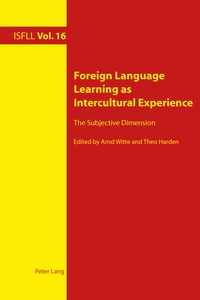
Foreign Language Learning as Intercultural Experience
The Subjective Dimension©2015 Edited Collection -
-
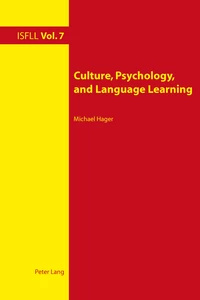
Culture, Psychology, and Language Learning
©2011 Monographs -
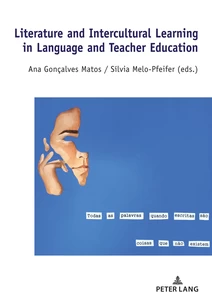
Literature and Intercultural Learning in Language and Teacher Education
©2020 Edited Collection -
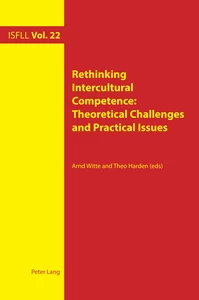
Rethinking Intercultural Competence
Theoretical Challenges and Practical Issues©2021 Edited Collection -