results
-
Hermeneutic Commentaries
ISSN: 1043-5735
"The question of interpretation of the text is at the center of this collection of monographs and commentaries on classical literatures. Interpretation starts with the realisation that at the outset, the sense of a text is an hypothesis to be gradually and constantly revised and ascertained. Grammar, syntax, and rhetoric are certainly the necessary part for this critical operation, but they fall short of giving full sense to the signification of the text. A philological commentary establishes the texts as close as possible to the authors text, and provides the information necessary for modern readers to understand what the text meant to its contemporary users. But besides the impossibility of achieving this task fully, this sort of information does not provide the sense of the text as it opens itself to the questions of its individuality and universality, its historicity and its transhistorical iterability, as it hides the rules and game of its composition, its difference in order to show its identity. These opposite poles are constantly united and create a tension, a continuous oscillation that are the very domaine of the interpretative analysis, and the conditions of the texts ever emerging sense . The hermeneutic circle, through which the critical hypothesis is constantly revised and made more precise, can be viewed also as a sort of deconstructive operation, a decomposing of the text in order to recompose it around its now discovered rules and games, of which the author is not necessarily always fully aware. Because of these conditions the sense of a text is more open to the critics than to its author; this point makes the critics conscious that as they are reading, they are in some way writing the text." "The question of interpretation of the text is at the center of this collection of monographs and commentaries on classical literatures. Interpretation starts with the realisation that at the outset, the sense of a text is an hypothesis to be gradually and constantly revised and ascertained. Grammar, syntax, and rhetoric are certainly the necessary part for this critical operation, but they fall short of giving full sense to the signification of the text. A philological commentary establishes the texts as close as possible to the authors text, and provides the information necessary for modern readers to understand what the text meant to its contemporary users. But besides the impossibility of achieving this task fully, this sort of information does not provide the sense of the text as it opens itself to the questions of its individuality and universality, its historicity and its transhistorical iterability, as it hides the rules and game of its composition, its difference in order to show its identity. These opposite poles are constantly united and create a tension, a continuous oscillation that are the very domaine of the interpretative analysis, and the conditions of the texts ever emerging sense . The hermeneutic circle, through which the critical hypothesis is constantly revised and made more precise, can be viewed also as a sort of deconstructive operation, a decomposing of the text in order to recompose it around its now discovered rules and games, of which the author is not necessarily always fully aware. Because of these conditions the sense of a text is more open to the critics than to its author; this point makes the critics conscious that as they are reading, they are in some way writing the text." "The question of interpretation of the text is at the center of this collection of monographs and commentaries on classical literatures. Interpretation starts with the realisation that at the outset, the sense of a text is an hypothesis to be gradually and constantly revised and ascertained. Grammar, syntax, and rhetoric are certainly the necessary part for this critical operation, but they fall short of giving full sense to the signification of the text. A philological commentary establishes the texts as close as possible to the authors text, and provides the information necessary for modern readers to understand what the text meant to its contemporary users. But besides the impossibility of achieving this task fully, this sort of information does not provide the sense of the text as it opens itself to the questions of its individuality and universality, its historicity and its transhistorical iterability, as it hides the rules and game of its composition, its difference in order to show its identity. These opposite poles are constantly united and create a tension, a continuous oscillation that are the very domaine of the interpretative analysis, and the conditions of the texts ever emerging sense . The hermeneutic circle, through which the critical hypothesis is constantly revised and made more precise, can be viewed also as a sort of deconstructive operation, a decomposing of the text in order to recompose it around its now discovered rules and games, of which the author is not necessarily always fully aware. Because of these conditions the sense of a text is more open to the critics than to its author; this point makes the critics conscious that as they are reading, they are in some way writing the text."
1 publications
-
Human Right Studies
Subseries: Italian Yearbook of Human RightsISSN: 2294-8848
The legal and political significance of human rights has increased enormously at the international and European levels. It has become increasingly clear that the respect and promotion of human rights must be at the centre of States and local communities' public policies and that human rights are the basis of civil society initiatives and movements. There is a large mechanism, at all levels of governance, monitoring the way in which States implement the obligations they have assumed towards each person under their sovereignty. The Italian Yearbook of Human Rights Series provides year by year, a dynamic and up-to date overview of the measures Italy has taken to adapt its legislation and policies in line with international human rights law and to comply with the commitments voluntarily assumed by the Italian Government at the international level. The book series thus intends to contribute to the continuous monitoring activity of the human rights situation in Italy undertaken at the local, national and international levels by the relevant intergovernmental and civil society actors. Each volume of this series surveys the activities carried out, during the year of reference, by the relevant national and local Italian actors, including governmental bodies, civil society organisations and universities. It also presents reports and recommendations that have been addressed to Italy by international monitoring bodies within the framework of the United Nations, the Council of Europe and the European Union. Finally, each Yearbook provides a selection of examples from international and national case law that cast light on Italys position vis-à-vis internationally recognised human rights. The Yearbook is edited by the Human Rights Centre of the University of Padua, in cooperation with the UNESCO Chair in Human Rights, Democracy and Peace of the same university, and with the support of the Region of Veneto. The Centre, established in 1982, carries out research and education following a global and interdisciplinary approach. It hosts the Jean Monnet Centre of Excellence on intercultural dialogue, human rights and multi-level governance.
11 publications
-
Human Right Studies
Among the broad structural transformation processes at the global level, the international legal recognition of human rights occupies an exceptionally prominent position. The dimensions of this process include standard setting, the functioning of sophisticated machineries for the promotion and protection of human rights, the development of a specific international case-law as well as new priorities of the political agenda. The human rights paradigm is at the heart of a new set of interrelated principles, which are equally valid at both the domestic and the international levels such as the rule of law, democratic principles and the responsibility to protect and of great strategic visions, as human development and human security. New functions, such as human rights monitoring, election observation, fact-finding and inquiry have already been admitted to international practice. This series intends to foster the publication of volumes that investigate the multiple facets of a strongly evolving reality, and stimulate the production of new and innovative ideas. It offers to highlight how the human rights paradigm is at times used and at times disregarded or exploited in cases and situations that regard among others those belonging to vulnerable groups (immigrants, asylum seekers, persons with disabilities), NGOs and human rights defenders’ advocacy, intercultural dialogue, governance of world economy, bio-technologies and peace operations. Those studies which adopt inter- and trans-disciplinary approaches, in accordance with the fundamental principle of interdependence and indivisibility of civil, political, economic, social and cultural rights, will be favored. Among the broad structural transformation processes at the global level, the international legal recognition of human rights occupies an exceptionally prominent position. The dimensions of this process include standard setting, the functioning of sophisticated machineries for the promotion and protection of human rights, the development of a specific international case-law as well as new priorities of the political agenda. The human rights paradigm is at the heart of a new set of interrelated principles, which are equally valid at both the domestic and the international levels such as the rule of law, democratic principles and the responsibility to protect and of great strategic visions, as human development and human security. New functions, such as human rights monitoring, election observation, fact-finding and inquiry have already been admitted to international practice. This series intends to foster the publication of volumes that investigate the multiple facets of a strongly evolving reality, and stimulate the production of new and innovative ideas. It offers to highlight how the human rights paradigm is at times used and at times disregarded or exploited in cases and situations that regard among others those belonging to vulnerable groups (immigrants, asylum seekers, persons with disabilities), NGOs and human rights defenders’ advocacy, intercultural dialogue, governance of world economy, bio-technologies and peace operations. Those studies which adopt inter- and trans-disciplinary approaches, in accordance with the fundamental principle of interdependence and indivisibility of civil, political, economic, social and cultural rights, will be favored. Among the broad structural transformation processes at the global level, the international legal recognition of human rights occupies an exceptionally prominent position. The dimensions of this process include standard setting, the functioning of sophisticated machineries for the promotion and protection of human rights, the development of a specific international case-law as well as new priorities of the political agenda. The human rights paradigm is at the heart of a new set of interrelated principles, which are equally valid at both the domestic and the international levels such as the rule of law, democratic principles and the responsibility to protect and of great strategic visions, as human development and human security. New functions, such as human rights monitoring, election observation, fact-finding and inquiry have already been admitted to international practice. This series intends to foster the publication of volumes that investigate the multiple facets of a strongly evolving reality, and stimulate the production of new and innovative ideas. It offers to highlight how the human rights paradigm is at times used and at times disregarded or exploited in cases and situations that regard among others those belonging to vulnerable groups (immigrants, asylum seekers, persons with disabilities), NGOs and human rights defenders’ advocacy, intercultural dialogue, governance of world economy, bio-technologies and peace operations. Those studies which adopt inter- and trans-disciplinary approaches, in accordance with the fundamental principle of interdependence and indivisibility of civil, political, economic, social and cultural rights, will be favored.
4 publications
-
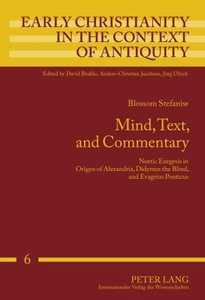
Mind, Text, and Commentary
Noetic Exegesis in Origen of Alexandria, Didymus the Blind, and Evagrius Ponticus©2010 Thesis -
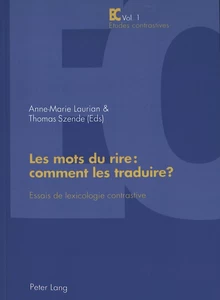
Les mots du rire : comment les traduire ?
Essais de lexicologie contrastive – Publication du Centre de recherche «Lexiques – Cultures – Traductions» (INALCO)©2001 Edited Collection -
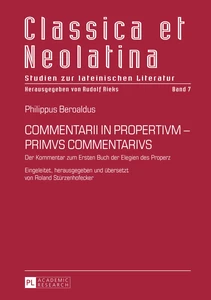
COMMENTARII IN PROPERTIVM - PRIMVS COMMENTARIVS
Der Kommentar zum Ersten Buch der Elegien des Properz©2015 Thesis -
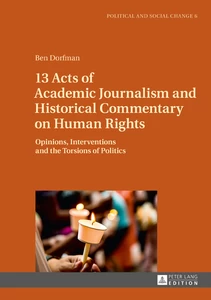
13 Acts of Academic Journalism and Historical Commentary on Human Rights
Opinions, Interventions and the Torsions of Politics©2017 Monographs -
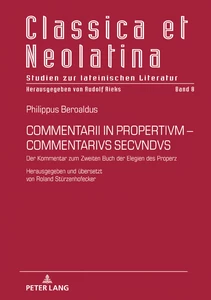
COMMENTARII IN PROPERTIVM-COMMENTARIVS SECVNDVS
Der Kommentar zum Zweiten Buch der Elegien des Properz. Herausgegeben und übersetzt von Roland Stürzenhofecker©2019 Thesis -
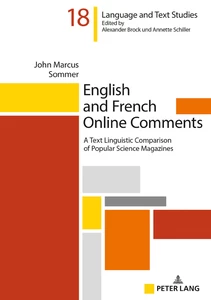
English and French Online Comments
A Text Linguistic Comparison of Popular Science Magazines©2020 Thesis -

Old Jewish Commentaries on the Song of Songs I
The Commentary of Yefet ben Eli- Edited and translated from Judeo-Arabic by Joseph Alobaidi©2010 Others -
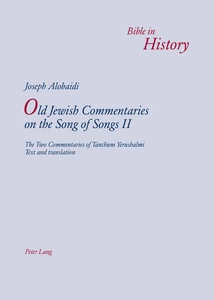
Old Jewish Commentaries on «The Song of Songs» II
The Two Commentaries of Tanchum Yerushalmi- Text and translation©2014 Others -
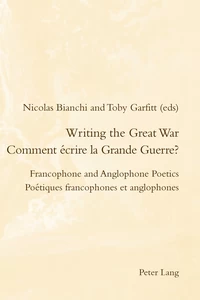
Writing the Great War / Comment écrire la Grande Guerre?
Francophone and Anglophone Poetics / Poétiques francophones et anglophonesMonographs -
Glossae – Scholia – Commentarii
Studies on Commenting Texts in Antiquity and Middle Ages©2015 Edited Collection -
Drag-Along Right
Wirtschaftliche Interessen, rechtliche Grenzen und Gestaltung von Mitverkaufsverpflichtungen in der GmbH©2013 Thesis -

-
Le commentaire des psaumes par le qaraïte Salmon ben Yeruham
Psaumes 1-10- Introduction, édition, traduction©1996 Others -
Activation Policies for the Unemployed, the Right to Work and the Duty to Work
©2014 Edited Collection -
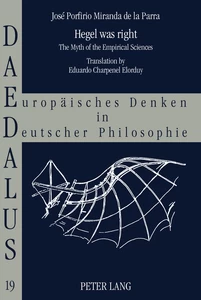
Hegel was right
The Myth of the Empirical Sciences- Translation by Eduardo Charpenel Elorduy©2011 Monographs -
-

A Short Introduction to the Rights of Nature
A Discourse on Its Philosophy and Recognition in International Law©2026 Monographs -

-
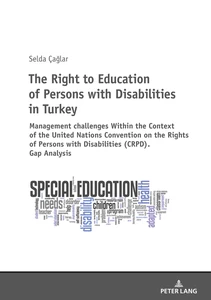
The Right to Education of Persons with Disabilities in Turkey
Within the Context of the United Nations Convention on the Rights of Persons with Disabilities (CRPD). Gap Analysis©2018 Monographs -
Comment comprendre la «crise» de l’Etat postcolonial en Afrique?
Un essai d’explication structurelle à partir des cas de l’Angola, du Congo-Brazzaville, du Congo-Kinshasa, du Liberia et du Rwanda©2006 Thesis -

-
Literacy as a Civil Right
Reclaiming Social Justice in Literacy Teaching and Learning©2008 Textbook