results
-
Hermeneutics of Art
7 publications
-
Aisthesis, Hermeneutik, Rhetorik
Interdisziplinäre Studien zu den romanischen Sprachen und Literaturen"Die Reihe versammelt literatur- und sprachwissenschaftliche Arbeiten, die bei unterschiedlichen methodischen Zugriffen in dem Bestreben übereinstimmen, durch präzise Analysen der je spezifischen Sprach-, Text- und Sinnstrukturen auch deren besondere Form alltagsweltlicher Sinngebung wie auch kognitiver und ästhetisch-ethischer Welterschließung freizulegen. Mit diesem Programm will die Reihe zwei in der gegenwärtigen Forschung zu beobachtenden Entwicklungen entgegenwirken: einmal der in der neueren Literaturwissenschaft ausgeprägten Tendenz zu textferner Hypertheoretisierung und hermetischen Terminologien, die sich wissenschaftlicher Kritisierbarkeit entziehen; zum anderen, dem diametral entgegengesetzt, der in der aktuellen Linguistik vorherrschenden Selbstbeschränkung, die sich mit der Analyse, Beschreibung und Erklärung sprachlicher Strukturen oder sprachlichen Handelns begnügt. In diesem Sinne sind die hier erscheinenden Untersuchungen auch kulturwissenschaftlich orientiert, ohne jedoch ihre Basis in der Literatur- und Sprachwissenschaft aufzugeben. "
4 publications
-
Hermeneutic Commentaries
ISSN: 1043-5735
"The question of interpretation of the text is at the center of this collection of monographs and commentaries on classical literatures. Interpretation starts with the realisation that at the outset, the sense of a text is an hypothesis to be gradually and constantly revised and ascertained. Grammar, syntax, and rhetoric are certainly the necessary part for this critical operation, but they fall short of giving full sense to the signification of the text. A philological commentary establishes the texts as close as possible to the authors text, and provides the information necessary for modern readers to understand what the text meant to its contemporary users. But besides the impossibility of achieving this task fully, this sort of information does not provide the sense of the text as it opens itself to the questions of its individuality and universality, its historicity and its transhistorical iterability, as it hides the rules and game of its composition, its difference in order to show its identity. These opposite poles are constantly united and create a tension, a continuous oscillation that are the very domaine of the interpretative analysis, and the conditions of the texts ever emerging sense . The hermeneutic circle, through which the critical hypothesis is constantly revised and made more precise, can be viewed also as a sort of deconstructive operation, a decomposing of the text in order to recompose it around its now discovered rules and games, of which the author is not necessarily always fully aware. Because of these conditions the sense of a text is more open to the critics than to its author; this point makes the critics conscious that as they are reading, they are in some way writing the text." "The question of interpretation of the text is at the center of this collection of monographs and commentaries on classical literatures. Interpretation starts with the realisation that at the outset, the sense of a text is an hypothesis to be gradually and constantly revised and ascertained. Grammar, syntax, and rhetoric are certainly the necessary part for this critical operation, but they fall short of giving full sense to the signification of the text. A philological commentary establishes the texts as close as possible to the authors text, and provides the information necessary for modern readers to understand what the text meant to its contemporary users. But besides the impossibility of achieving this task fully, this sort of information does not provide the sense of the text as it opens itself to the questions of its individuality and universality, its historicity and its transhistorical iterability, as it hides the rules and game of its composition, its difference in order to show its identity. These opposite poles are constantly united and create a tension, a continuous oscillation that are the very domaine of the interpretative analysis, and the conditions of the texts ever emerging sense . The hermeneutic circle, through which the critical hypothesis is constantly revised and made more precise, can be viewed also as a sort of deconstructive operation, a decomposing of the text in order to recompose it around its now discovered rules and games, of which the author is not necessarily always fully aware. Because of these conditions the sense of a text is more open to the critics than to its author; this point makes the critics conscious that as they are reading, they are in some way writing the text." "The question of interpretation of the text is at the center of this collection of monographs and commentaries on classical literatures. Interpretation starts with the realisation that at the outset, the sense of a text is an hypothesis to be gradually and constantly revised and ascertained. Grammar, syntax, and rhetoric are certainly the necessary part for this critical operation, but they fall short of giving full sense to the signification of the text. A philological commentary establishes the texts as close as possible to the authors text, and provides the information necessary for modern readers to understand what the text meant to its contemporary users. But besides the impossibility of achieving this task fully, this sort of information does not provide the sense of the text as it opens itself to the questions of its individuality and universality, its historicity and its transhistorical iterability, as it hides the rules and game of its composition, its difference in order to show its identity. These opposite poles are constantly united and create a tension, a continuous oscillation that are the very domaine of the interpretative analysis, and the conditions of the texts ever emerging sense . The hermeneutic circle, through which the critical hypothesis is constantly revised and made more precise, can be viewed also as a sort of deconstructive operation, a decomposing of the text in order to recompose it around its now discovered rules and games, of which the author is not necessarily always fully aware. Because of these conditions the sense of a text is more open to the critics than to its author; this point makes the critics conscious that as they are reading, they are in some way writing the text."
1 publications
-
Herméneutique et bricolage
Territoires et frontières de la Tradition dans le judaïsme- Actes du colloque de Bucarest, 27-28 octobre 2006©2008 Conference proceedings -
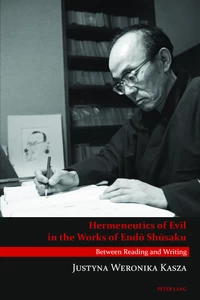
Entre Anthropologie et Herméneutique
©2003 Monographs -
-
-
-
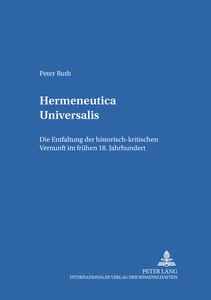
Hermeneutica universalis
Die Entfaltung der historisch-kritischen Vernunft im frühen 18. Jahrhundert©2002 Thesis -

-
-
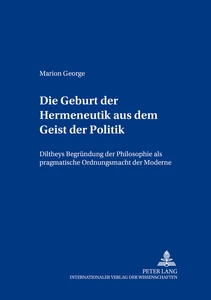
Die Geburt der Hermeneutik aus dem Geist der Politik
Diltheys Begründung der Philosophie als pragmatische Ordnungsmacht der Moderne©2002 Monographs -
Fiqh und Hermeneutik im klassischen Islam
Zum Spannungsfeld von Normenlehre und Sprache in den Werken des Universalgelehrten Ibn Qutaiba (gest. 276 /899)©2024 Monographs -
The Hermeneutics of Translation
A Translator’s Competence and the Philosophy of Hans-Georg Gadamer©2021 Monographs -
-
-
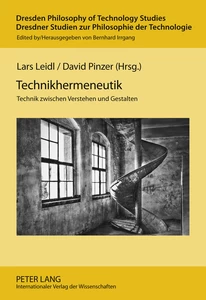
-
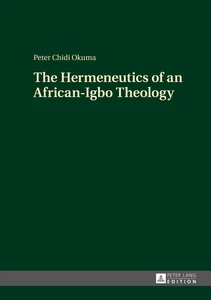
The Hermeneutics of an African-Igbo Theology
©2015 Monographs -

-
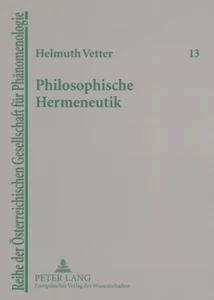
-
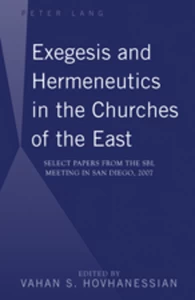
Exegesis and Hermeneutics in the Churches of the East
Select Papers from the SBL Meeting in San Diego, 2007©2009 Monographs -
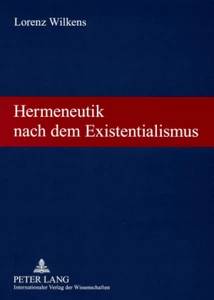
-
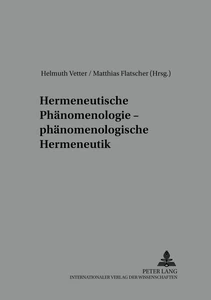
Hermeneutische Phänomenologie – phänomenologische Hermeneutik
©2005 Edited Collection -
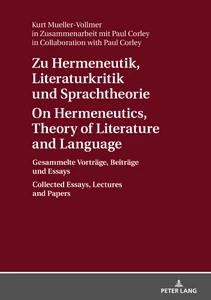
Zu Hermeneutik, Literaturkritik und Sprachtheorie / On Hermeneutics, Theory of Literature and Language
Gesammelte Vorträge, Beiträge und Essays / Collected Essays, Lectures and Papers©2018 Monographs -
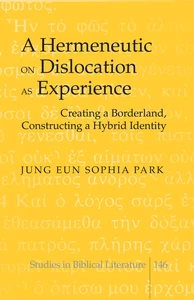
A Hermeneutic on Dislocation as Experience
Creating a Borderland, Constructing a Hybrid Identity©2012 Monographs