results
-
Ludic Scholarship
Games, Learning, and Innovative PedagogyThis series focuses on the intersection of gamification, ludology, pedagogy, and innovative methodological thinking, offering a space for cutting-edge scholarship that bridges game-based approaches with educational theory and practice. Ludic Scholarship highlights gamified learning and emergent methodologies that challenge traditional research frameworks, encouraging transformative approaches to teaching, learning, meaning-making, and the construction of knowledge. The series invites contributions that explore how game mechanics, narrative structures, and immersive environments are reshaping learning practices across disciplines. From theoretical explorations of ludic strategies to applied case studies of gamified pedagogy, Ludic Scholarship emphasizes creativity and academic rigor, inviting works that challenge established conventions. Targeting educators, researchers, and curriculum scholars, this series supports interdisciplinary collaborations and post-qualitative approaches that investigate the dynamic role of games and play in 21st-century education.
4 publications
-
Teaching Contemporary Scholars
This innovative series addresses the pedagogies and thoughts of influential contemporary scholars in diverse fields. Focusing on scholars who have challenged the normal science, the dominant frameworks of particular disciplines, Teaching Contemporary Scholars highlights the work of those who have profoundly influenced the direction of academic work. In a era of great change, this series focuses on the bold thinkers who provide not only insight into the nature of the change but where we should be going in light of the new conditions. Not a festschrift, not a re-interpretation of past work, these books allow the reader a deeper, yet accessible conceptual framework in which to negotiate and expand the work of important thinkers.
15 publications
-
AEJMC - Peter Lang Scholarsourcing Series
ISSN: 2373-6984
Based on the concept of crowdsourcing, Scholarsourcing is a joint publishing initiative between the Association for Education in Journalism and Mass Communication (AEJMC) and Peter Lang Publishing. The series reimagines the way that scholarly books are proposed, peer-reviewed, and approved for contract during this time of relentless change in both the journalism and publishing industries. Beginning with a call from AEJMC each fall, members are invited to submit short book proposals that are relevant to journalism and communication and speak to the mission of AEJMC. Proposals are uploaded to an online public platform that allows as many AEJMC members as possible to browse, review, and then vote on and pledge support. This platform encourages public dialogue among multiple parties to improve the potential of each book project. Whether awarded a book contract or not, authors benefit by receiving a valuable set of review comments, far more than they might receive via conventional reviewing processes, and from a more diverse range of reviewers (members). Using these votes and review comments, the AEJMC Scholarsourcing editorial committee, appointed by the president of AEJMC, selects the top proposals. The authors of the top proposals are invited to submit complete book proposals. Once those reviews have been evaluated by the editorial committee and the publisher, a decision on which proposals receive contracts is made.
21 publications
-
Ecological Pedagogy, Curriculum and Scholarship
This book series is premised on the ecological understanding that all of education– all of the living fields of knowledge entrusted to teachers and students in schools, all of the gestures of teaching and learning itself – is full of relations, interdependencies, ancestries, places, voices animated by lived and learned experiences. Ecological pedagogy, curriculum and scholarship understands that all living fields of knowledge must be taught and learned as such, with all of their intrinsic and animate rigours, complexities, interrelatedness, and earthly responsibilities. In these ecologically sorrowful times, our individual and collective impulse to raise voices of commiseration and encouragement to those working inside and outside of schools bristles with urgency. And this just at a time when the world also seems to be churning with increasing distractions and fakeries whose beneficiaries are not of this earth. Schools and schooling are caught up in ongoing yet ever-shifting inheritances of place and displacement, privilege, colonialism, gender and so on. They are also subject to legacies of indiscriminate standardization, efficiency, fragmentation and all of the ramped-up, exhausting and exhausted distractions of our current age. Education often drags along with its tenacious legacies of thinking and practice that are mostly silent, often silencing, simply taken for granted as just the way things are. Schooling itself, in so many quarters, has become an ecological disaster. Many teachers have studied and voiced these matters, while pursuing more venturous, ecologically sound work in their classroom, all this in deliberate resistance to the marginalization of such work. The series invites scholarly, enlivening and healing ways of researching and writing that attempt to live up to the ecologies of the topics themselves, each in their own ways and languages, each laden with their own ancestries, troubles, and insights – eco-hermeneutics, interpretive research, poetic inquiry, autobiographical and life writing, currere, Indigenous research, arts-based inquiry, storytelling and emergent ways and means of knowing. None of these are merely methodologies. Each involves myriad encounters, myriad relationships, myriad possibilities. In trying to find the measure of what is written within the things written about, these ways are in themselves ecological and pedagogical. They are locales where our relations are worked out, our songs are sung, our silences are shared, and our individual and collective stories are lived, contested, shaped and re-told. The logo for this book series is a Celtic Knot drawn by Eric Jardine in 1992. It became the cover illustration of a self-published book that year. It is a reminder of how long-standing is this current stream of work in education, stretching far back from there. These stretches are part of the ecological imagination itself. This book series is premised on the ecological understanding that all of education– all of the living fields of knowledge entrusted to teachers and students in schools, all of the gestures of teaching and learning itself – is full of relations, interdependencies, ancestries, places, voices animated by lived and learned experiences. Ecological pedagogy, curriculum and scholarship understands that all living fields of knowledge must be taught and learned as such, with all of their intrinsic and animate rigours, complexities, interrelatedness, and earthly responsibilities. In these ecologically sorrowful times, our individual and collective impulse to raise voices of commiseration and encouragement to those working inside and outside of schools bristles with urgency. And this just at a time when the world also seems to be churning with increasing distractions and fakeries whose beneficiaries are not of this earth. Schools and schooling are caught up in ongoing yet ever-shifting inheritances of place and displacement, privilege, colonialism, gender and so on. They are also subject to legacies of indiscriminate standardization, efficiency, fragmentation and all of the ramped-up, exhausting and exhausted distractions of our current age. Education often drags along with its tenacious legacies of thinking and practice that are mostly silent, often silencing, simply taken for granted as just the way things are. Schooling itself, in so many quarters, has become an ecological disaster. Many teachers have studied and voiced these matters, while pursuing more venturous, ecologically sound work in their classroom, all this in deliberate resistance to the marginalization of such work. The series invites scholarly, enlivening and healing ways of researching and writing that attempt to live up to the ecologies of the topics themselves, each in their own ways and languages, each laden with their own ancestries, troubles, and insights – eco-hermeneutics, interpretive research, poetic inquiry, autobiographical and life writing, currere, Indigenous research, arts-based inquiry, storytelling and emergent ways and means of knowing. None of these are merely methodologies. Each involves myriad encounters, myriad relationships, myriad possibilities. In trying to find the measure of what is written within the things written about, these ways are in themselves ecological and pedagogical. They are locales where our relations are worked out, our songs are sung, our silences are shared, and our individual and collective stories are lived, contested, shaped and re-told. The logo for this book series is a Celtic Knot drawn by Eric Jardine in 1992. It became the cover illustration of a self-published book that year. It is a reminder of how long-standing is this current stream of work in education, stretching far back from there. These stretches are part of the ecological imagination itself.
3 publications
-
-
De la representación a la representatividad
Disidencias del deseo en el teatro español y brasileño [siglos XX y XXI]©2023 Edited Collection -
-
-
-
At the Limits of Presentation
Coming-into-Presence and its Aesthetic Relevance in Jean-Luc Nancy’s Philosophy©2008 Thesis -
-
Power, Place and Representation
Contested Sites of Dependence and Independence in Latin America©2012 Edited Collection -
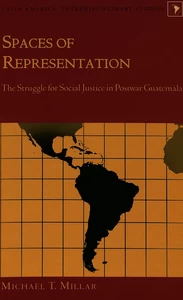
-

Crisis of Representation
New Solutions and Critical voices in Contemporary Literature and Arts©2025 Edited Collection -
-

Sound Representations of Memory
©2024 Monographs -
Representations of War in Films and Novels
©2016 Edited Collection -
Representations of Justice
©2007 Conference proceedings -
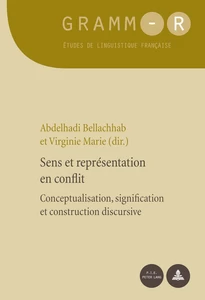
Sens et représentation en conflit
Conceptualisation, signification et construction discursive©2013 Conference proceedings -
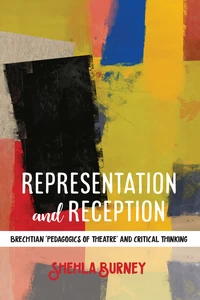
-
-
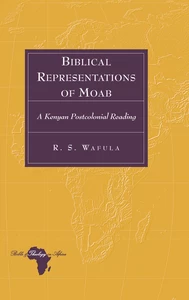
-
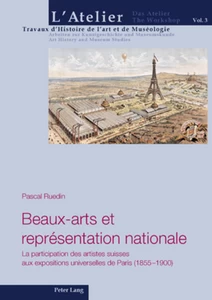
Beaux-arts et représentation nationale
La participation des artistes suisses aux expositions universelles de Paris (1855–1900)©2010 Thesis -
Speech Presentation in the British and German Press
©2006 Thesis -