results
-
Rechts-, Sozial- und Wirtschaftsphilosophie
ISSN: 1613-5342
Die Buchreihe Rechts-, Sozial- und Wirtschaftsphilosophie präsentiert interdisziplinäre Studien zu den Fachbereichen Rechtswissenschaft und Philosophie. Sie widmet sich beispielsweise der historischen Rechts- und Sozialphilosophie, der sozialistischen Politik und Theologie, der gesellschaftlichen Funktion von Kunst, sowie dem Thema Subjekt und Kulturalität. Die Buchreihe Rechts-, Sozial- und Wirtschaftsphilosophie präsentiert interdisziplinäre Studien zu den Fachbereichen Rechtswissenschaft und Philosophie. Sie widmet sich beispielsweise der historischen Rechts- und Sozialphilosophie, der sozialistischen Politik und Theologie, der gesellschaftlichen Funktion von Kunst, sowie dem Thema Subjekt und Kulturalität. Die Buchreihe Rechts-, Sozial- und Wirtschaftsphilosophie präsentiert interdisziplinäre Studien zu den Fachbereichen Rechtswissenschaft und Philosophie. Sie widmet sich beispielsweise der historischen Rechts- und Sozialphilosophie, der sozialistischen Politik und Theologie, der gesellschaftlichen Funktion von Kunst, sowie dem Thema Subjekt und Kulturalität.
20 publications
-
Soziale Sicherheit
Die Reihe Soziale Sicherheit umfaßt Bücher von internationaler Tragweite über bedeutende Entwicklungen, neuste Erfahrungen sowie Grundsatzdebatten auf dem Gebiet der sozialen Sicherheit und der Sozialpolitik. Außerdem präsentiert sie Ergebnisse vergleichender und zukunftsorientierter Studien, Analysen und Forschungen in diesen Bereichen. Sie bietet den Interessierten Zugang zu aktuellen Problemen der sozialen Sicherheit in ihrer Gesamtheit oder in den einzelnen Sektoren und Zweigen, sowie zu Bewertungen der Wirkung und Effizienz der unterschiedlichen Sozialschutzmaßnahmen. Die Autoren und Herausgeber der Bände in dieser Reihe sind Experten aus Trägerorganisationen der sozialen Sicherheit, Forschungsanstalten, der akademischen Welt und internationalen Organisationen. Die Internationalen Vereinigung für Soziale Sicherheit (IVSS), ist eine 1927 gegründete internationale Organisation. Sie vereint vor allem Institutionen und Verwaltungsorgane aus Ländern der ganzen Welt, die sich mit allen Formen der sozialen Sicherheit befassen, welche aufgrund der Gesetzgebung oder von nationalen Gepflogenheiten in diesen Ländern Bestandteil des Systems sind. Ziel der IVSS ist es, auf internationaler Ebene an der Förderung und Entwicklung der sozialen Sicherheit mitzuwirken. Die IVSS hat ihren Sitz in Genf, Schweiz. Website: http://www.issa.int
4 publications
-
Soziale Baustellen
Ein Programm zur Aktivierung von SozialkapitalSoziale Baustellen sind Situationen des alltäglichen Lebens, in denen das Soziale in Veränderung begriffen ist und Probleme, Konflikte und Krisen im mitmenschlichen Umgang Anlässe für Renovierungs-, Neubau- und Abbruchmaßnahmen bieten. Die Schriftenreihe bietet mit vier aktuellen Themen grundlegende Erkenntnisse und Handlungsanleitungen für eine soziale Architektur: Umgang mit Gewalt - Reformation statt Deformation des Sozialen Anleitung zum Streiten - auf Du und Du mit sich und anderen Miteinander umgehen - Geselligkeit und Gemeinsinn im Budget In Gruppen leben - Zusammenhalt und Zugehörigkeit erfahren
1 publications
-
INTER-LIT
Studien zu Literatur und GeschlechtDie Reihe InterLit erkundet und begleitet den Wandel des Verhältnisses von Literatur und Geschlecht im Spiegel von medialen und kulturellen Praktiken der Zeit. Die Reihe soll damit auch offener werden für Fragen von Literatur und Geschlecht über das späte zwanzigste Jahrhundert hinaus, aber auch hinter das zwanzigste Jahrhundert zurück. Manuskriptvorschläge können an die HerausgeberInnen gerichtet werden.
14 publications
-
Schriften zur europäischen Sozial-und Verfassungsgeschichte
6 publications
-
Strafvollzug, Randgruppen, soziale Hilfen
5 publications
-
Institutionelle und Sozial-Ökonomie / Institutional and Socio-Economics
"In the "Institutional and Socio-Economics" book series, the economy is studied as a genuinely social system of heterogeneous agents in an institutional context. The series includes a broad range of different methodological approaches, theoretical perspectives and subjects of study. Interdependencies among agents in complex social systems can be studied using evolutionary economic models, as well as institutional economic and simulation studies. Hence, the focus is being laid on approaches that are more explorative than the standard equilibrium analysis; on approaches that allow for complexity; on approaches that consider development, history, institutions, and values. Thus, we may conclude that institutions are more than just devices for the reduction of transaction costs. From an institutionalist perspective, institutions are the common and collective solutions to social decision problems, particularly social dilemma problems, coordination problems, and collective-good problems. Such solutions require recognized interdependence and learned coordination and cooperation, thus a learned culture of a long-run perspective emerging as the result of a process of interactions. Institutions often are transitory only, part of the ongoing dynamics, adequately modeled possibly as an evolutionary process. Also, they may be instrumental solutions to a social decision problem at first and may degenerate into ceremonial power-and-status-based phenomena later, thus limiting the possibility of further innovation and development. In a genealogy of economics, the thematic and methodological spectrum of this book series would embrace the history of thought beginning with the classics including great names such as Adam Smith and Karl Marx but also the late classics who already have struggled with issues like complexity, process, historical time, and evolution. In newer times, the spectrum continues with Veblenian, Keynesian, and Post-Keynesian thinking; it would also include works in the traditions of original institutionalist economics, ecological economics, Neo-Schumpeterian thinking, evolutionary economics, and game theory. Social economics and social policy analysis, behavioral economics, complex modeling, system dynamics, and agent-based computational economics would be embraced as well. Such lists, however, can never be exhaustive. Last not least, institutional and socio-economics deals with the epistemology and substance of values, norms and ethics, value warrants of economic behavior as well as the normative foundations of economics. This series, thus, stands in the best traditions of plural economic research areas and pluralistic theoretical perspectives. It may be called heterodox, but it shall always be cutting-edge and of high quality. Enjoy exploring the works of this book series. The Editors: Wolfram Elsner Editor-in-Chief University of Bremen Torsten Heinrich Managing Editor University of Bremen Wilfred Dolfsma Co-Editor University of Groningen Arne Heise Co-Editor University of Hamburg Helge Peukert Co-Editor University of Erfurt Werner Schönig Co-Editor Catholic University of Applied Sciences Cologne Homepage der Herausgeber: Prof. Dr. Wolfram Elsner (Editor-in-Chief) Dr. rer. pol. Torsten Heinrich (Managing Editor) " "In the "Institutional and Socio-Economics" book series, the economy is studied as a genuinely social system of heterogeneous agents in an institutional context. The series includes a broad range of different methodological approaches, theoretical perspectives and subjects of study. Interdependencies among agents in complex social systems can be studied using evolutionary economic models, as well as institutional economic and simulation studies. Hence, the focus is being laid on approaches that are more explorative than the standard equilibrium analysis; on approaches that allow for complexity; on approaches that consider development, history, institutions, and values. Thus, we may conclude that institutions are more than just devices for the reduction of transaction costs. From an institutionalist perspective, institutions are the common and collective solutions to social decision problems, particularly social dilemma problems, coordination problems, and collective-good problems. Such solutions require recognized interdependence and learned coordination and cooperation, thus a learned culture of a long-run perspective emerging as the result of a process of interactions. Institutions often are transitory only, part of the ongoing dynamics, adequately modeled possibly as an evolutionary process. Also, they may be instrumental solutions to a social decision problem at first and may degenerate into ceremonial power-and-status-based phenomena later, thus limiting the possibility of further innovation and development. In a genealogy of economics, the thematic and methodological spectrum of this book series would embrace the history of thought beginning with the classics including great names such as Adam Smith and Karl Marx but also the late classics who already have struggled with issues like complexity, process, historical time, and evolution. In newer times, the spectrum continues with Veblenian, Keynesian, and Post-Keynesian thinking; it would also include works in the traditions of original institutionalist economics, ecological economics, Neo-Schumpeterian thinking, evolutionary economics, and game theory. Social economics and social policy analysis, behavioral economics, complex modeling, system dynamics, and agent-based computational economics would be embraced as well. Such lists, however, can never be exhaustive. Last not least, institutional and socio-economics deals with the epistemology and substance of values, norms and ethics, value warrants of economic behavior as well as the normative foundations of economics. This series, thus, stands in the best traditions of plural economic research areas and pluralistic theoretical perspectives. It may be called heterodox, but it shall always be cutting-edge and of high quality. Enjoy exploring the works of this book series. May 2012 The Editors: Wolfram Elsner Editor-in-Chief University of Bremen Torsten Heinrich Managing Editor University of Bremen Wilfred Dolfsma Co-Editor University of Groningen Arne Heise Co-Editor University of Hamburg Helge Peukert Co-Editor University of Erfurt Werner Schönig Co-Editor Catholic University of Applied Sciences Cologne Homepage der Herausgeber: Prof. Dr. Wolfram Elsner (Editor-in-Chief) Dr. rer. pol. Torsten Heinrich (Managing Editor) " "In the "Institutional and Socio-Economics" book series, the economy is studied as a genuinely social system of heterogeneous agents in an institutional context. The series includes a broad range of different methodological approaches, theoretical perspectives and subjects of study. Interdependencies among agents in complex social systems can be studied using evolutionary economic models, as well as institutional economic and simulation studies. Hence, the focus is being laid on approaches that are more explorative than the standard equilibrium analysis; on approaches that allow for complexity; on approaches that consider development, history, institutions, and values. Thus, we may conclude that institutions are more than just devices for the reduction of transaction costs. From an institutionalist perspective, institutions are the common and collective solutions to social decision problems, particularly social dilemma problems, coordination problems, and collective-good problems. Such solutions require recognized interdependence and learned coordination and cooperation, thus a learned culture of a long-run perspective emerging as the result of a process of interactions. Institutions often are transitory only, part of the ongoing dynamics, adequately modeled possibly as an evolutionary process. Also, they may be instrumental solutions to a social decision problem at first and may degenerate into ceremonial power-and-status-based phenomena later, thus limiting the possibility of further innovation and development. In a genealogy of economics, the thematic and methodological spectrum of this book series would embrace the history of thought beginning with the classics including great names such as Adam Smith and Karl Marx but also the late classics who already have struggled with issues like complexity, process, historical time, and evolution. In newer times, the spectrum continues with Veblenian, Keynesian, and Post-Keynesian thinking; it would also include works in the traditions of original institutionalist economics, ecological economics, Neo-Schumpeterian thinking, evolutionary economics, and game theory. Social economics and social policy analysis, behavioral economics, complex modeling, system dynamics, and agent-based computational economics would be embraced as well. Such lists, however, can never be exhaustive. Last not least, institutional and socio-economics deals with the epistemology and substance of values, norms and ethics, value warrants of economic behavior as well as the normative foundations of economics. This series, thus, stands in the best traditions of plural economic research areas and pluralistic theoretical perspectives. It may be called heterodox, but it shall always be cutting-edge and of high quality. Enjoy exploring the works of this book series. The Editors: Wolfram Elsner Editor-in-Chief University of Bremen Torsten Heinrich Managing Editor University of Bremen Wilfred Dolfsma Co-Editor University of Groningen Arne Heise Co-Editor University of Hamburg Helge Peukert Co-Editor University of Erfurt Werner Schönig Co-Editor Catholic University of Applied Sciences Cologne Homepage der Herausgeber: Prof. Dr. Wolfram Elsner (Editor-in-Chief) Dr. rer. pol. Torsten Heinrich (Managing Editor) "
11 publications
-
Kieler Werkstücke
Reihe E: Beiträge zur Sozial- und WirtschaftsgeschichteDie Studien der «Kieler Werkstücke, Reihe E» befassen sich mit der Sozial- und Wirtschaftsgeschichte des Spätmittelalters und der Frühen Neuzeit. Herausgeber ist Professor Gerhard Fouquet. Die Sammelbände und Monographien der Reihe präsentieren Forschungsergebnisse zu Themen der Geschichtswissenschaft und der Volkswirtschaftslehre.
16 publications
-
Theodor-Geiger-Gesamtausgabe (TGG)
Abt. IV: Soziale Schichtung und Mobilität"Theodor Geiger (1891–1952) zählt zu den Klassikern der Soziologie. Ursprünglich aus Deutschland stammend, wo er von 1928 an an der Technischen Hochschule Braunschweig als erster Professor für Soziologie lehrte, floh er nach Dänemark, weil er vom Nazi-Regime im Herbst 1933 wegen «nationaler Unzuverlässigkeit» entlassen wurde. Dort wurde er 1938 zum landesweit ersten Professor für Soziologie an der Universität Aarhus berufen. In Deutschland gilt Geiger als Begründer der Schichtungssoziologie als empirischer Gesellschaftswissenschaft. In seinen vielfältigen Werken in Dänemark vereinigte er systematische deutsche soziologische Tradition mit skandinavischer Rechtstradition und hat damit die dänischen und schwedischen Gesellschaftswissenschaften entscheidend geprägt. Die Edition der Theodor-Geiger-Gesamtausgabe begann im Jahre 2002. 31 Bände in 7 Abteilungen sowie ein zusätzlicher Registerband sind geplant. 6 Bände sind bereits erschienen; ein weiterer Band ist für Ende 2014 vorgesehen, die nächsten Bände folgen voraussichtlich im Herbst 2015 und im Herbst 2016. Theodor Geiger (1891–1962) is regarded as one of the classical authors of sociology. Originally from Germany, where he was first professor of sociology at the College of Science and Technology Brunswick from 1928 forth, he took refuge at Denmark in autumn 1933 because he was displaced on account of «nationally undesirable» by the NS-regime. Here he became the nation’s first professor of sociology at the University of Aarhus. In Germany Geiger is considered a founder of sociology of social classes as empirical social science. In his various works in Denmark he systematically united German sociological tradition with Scandinavian legal tradition. Thus he shaped Danish and Swedish social sciences decisively. The edition of Theodor Geiger’s complete works began in 2002. 31 Volumes in 7 domains of science are planned plus an additional index. 6 volumes have already been published. Another volume is planned for the end of 2014, the next volumes are expected to follow in fall 2015 and in fall 2016. " "Theodor Geiger (1891–1952) zählt zu den Klassikern der Soziologie. Ursprünglich aus Deutschland stammend, wo er von 1928 an an der Technischen Hochschule Braunschweig als erster Professor für Soziologie lehrte, floh er nach Dänemark, weil er vom Nazi-Regime im Herbst 1933 wegen «nationaler Unzuverlässigkeit» entlassen wurde. Dort wurde er 1938 zum landesweit ersten Professor für Soziologie an der Universität Aarhus berufen. In Deutschland gilt Geiger als Begründer der Schichtungssoziologie als empirischer Gesellschaftswissenschaft. In seinen vielfältigen Werken in Dänemark vereinigte er systematische deutsche soziologische Tradition mit skandinavischer Rechtstradition und hat damit die dänischen und schwedischen Gesellschaftswissenschaften entscheidend geprägt. Die Edition der Theodor-Geiger-Gesamtausgabe begann im Jahre 2002. 31 Bände in 7 Abteilungen sowie ein zusätzlicher Registerband sind geplant. 6 Bände sind bereits erschienen; ein weiterer Band ist für Ende 2014 vorgesehen, die nächsten Bände folgen voraussichtlich im Herbst 2015 und im Herbst 2016. Theodor Geiger (1891–1962) is regarded as one of the classical authors of sociology. Originally from Germany, where he was first professor of sociology at the College of Science and Technology Brunswick from 1928 forth, he took refuge at Denmark in autumn 1933 because he was displaced on account of «nationally undesirable» by the NS-regime. Here he became the nation’s first professor of sociology at the University of Aarhus. In Germany Geiger is considered a founder of sociology of social classes as empirical social science. In his various works in Denmark he systematically united German sociological tradition with Scandinavian legal tradition. Thus he shaped Danish and Swedish social sciences decisively. The edition of Theodor Geiger’s complete works began in 2002. 31 Volumes in 7 domains of science are planned plus an additional index. 6 volumes have already been published. Another volume is planned for the end of 2014, the next volumes are expected to follow in fall 2015 and in fall 2016. " "Theodor Geiger (1891–1952) zählt zu den Klassikern der Soziologie. Ursprünglich aus Deutschland stammend, wo er von 1928 an an der Technischen Hochschule Braunschweig als erster Professor für Soziologie lehrte, floh er nach Dänemark, weil er vom Nazi-Regime im Herbst 1933 wegen «nationaler Unzuverlässigkeit» entlassen wurde. Dort wurde er 1938 zum landesweit ersten Professor für Soziologie an der Universität Aarhus berufen. In Deutschland gilt Geiger als Begründer der Schichtungssoziologie als empirischer Gesellschaftswissenschaft. In seinen vielfältigen Werken in Dänemark vereinigte er systematische deutsche soziologische Tradition mit skandinavischer Rechtstradition und hat damit die dänischen und schwedischen Gesellschaftswissenschaften entscheidend geprägt. Die Edition der Theodor-Geiger-Gesamtausgabe begann im Jahre 2002. 31 Bände in 7 Abteilungen sowie ein zusätzlicher Registerband sind geplant. 6 Bände sind bereits erschienen; ein weiterer Band ist für Ende 2014 vorgesehen, die nächsten Bände folgen voraussichtlich im Herbst 2015 und im Herbst 2016. Theodor Geiger (1891–1962) is regarded as one of the classical authors of sociology. Originally from Germany, where he was first professor of sociology at the College of Science and Technology Brunswick from 1928 forth, he took refuge at Denmark in autumn 1933 because he was displaced on account of «nationally undesirable» by the NS-regime. Here he became the nation’s first professor of sociology at the University of Aarhus. In Germany Geiger is considered a founder of sociology of social classes as empirical social science. In his various works in Denmark he systematically united German sociological tradition with Scandinavian legal tradition. Thus he shaped Danish and Swedish social sciences decisively. The edition of Theodor Geiger’s complete works began in 2002. 31 Volumes in 7 domains of science are planned plus an additional index. 6 volumes have already been published. Another volume is planned for the end of 2014, the next volumes are expected to follow in fall 2015 and in fall 2016. "
3 publications
-
Sprache, Mehrsprachigkeit und sozialer Wandel / Language, Multilingualism and Social Change / Langue, multilinguisme et changement social
Die Buchreihe «Sprache, Mehrsprachigkeit und sozialer Wandel» beschäftigt sich mit linguistischen Fragestellungen im Bereich der Romanistik. Der thematische Schwerpunkt der Reihe liegt auf Untersuchungen zu Sprachkontakt, Sprachkonflikten, Sprachbewusstsein und den Varietäten verschiedener romanischer Sprachen. Frankophonie, Mehrsprachigkeit und Migration sowie soziale Identifikation durch Sprache stehen ebenfalls im Fokus der Reihenbände. Herausgeber der Reihe ist der Sprachwissenschaftler Professor Jürgen Erfurt.
42 publications
-
Arbeit - Technik - Organisation - Soziales / Work - Technology - Organization - Society
Die Bände 1-17 dieser Reihe wurden herausgegeben von Wiking Ehlert und György Széll, die Bände 18-32 von Wiking Ehlert, György Széll und Heinz Sünker.
33 publications
-
Sprachliche Konstruktion sozialer Grenzen: Identitäten und Zugehörigkeiten / Linguistic Construction of Social Boundaries: Identities and Belonging
ISSN: 2509-4505
This series focuses on linguistic negotiations of belonging, covering processes of identity construction and group formation (groupness) in social, spatial and temporal terms. At the interface between linguistic, sociological, ethnographic and cultural sciences research, it seeks to depict different communities in their cultural and language practices, which can be implicit in routines of everyday encounters or subject to negotiations and adjustment. Bi- and plurilingual – as well as migratory contexts – are particularly suitable for inquiries regarding belonging. It is often an overt subject of debate within these communities, as the outcome determines the in- or exclusion of members. This series therefore offers a vital and transdisciplinary contribution to recent discussions on belonging. Book proposals are welcome and may be submitted to the editors. All publications will be peer reviewed. Die Reihe thematisiert sprachliche Aushandlungen von Zugehörigkeit in Interaktionen und Prozesse von Identitätskonstruktionen sowie soziale, räumliche und zeitliche Aspekte von Gruppenbildung. An der Schnittstelle zwischen linguistischer, soziologischer, ethnographischer und kulturwissenschaftlicher Forschung werden kulturelle Praktiken und Sprachgebrauch von Gemeinschaften vergleichend dargestellt. Sie zeichnen sich durch alltägliche (Sprach-)Routinen aus oder stehen zur Disposition und werden neu verhandelt. Insbesondere in Migrationskontexten sowie in bi- und plurilingualen Gemeinschaften sind Zugehörigkeitsaushandlungen Teil ein- oder ausgrenzender Prozesse. Die Reihe hat zum Ziel, eine transdisziplinäre Perspektive in die aktuelle Zugehörigkeitsforschung einzubringen. Die Auswahl beinhaltet ein Peer-review-Verfahren. Manuskriptvorschläge an die Herausgeberinnen sind willkommen.
15 publications
-
Recht der Arbeit und der sozialen Sicherheit
Die Publikationsreihe Recht der Arbeit und der sozialen Sicherheit publiziert Monographien zur Rechtswissenschaft, speziell in den Bereichen Arbeits- und Sozialrecht auf europäischer Ebene und im internationalen Rechtsvergleich. Die Herausgeber der Reihe setzen in ihrer Forschungsarbeit Schwerpunkte auf Aspekte des Europarechts, Wirtschaftsrechts, Sozialrechts und Gender Law. Die Reihe erscheint in deutscher und französischer Sprache. Homepage der Herausgeber Prof. Dr. Wolfgang Däubler Prof. Dr. Konstanze Plett Prof. Dr. Ursula Rust Prof. Dr. Klaus Sieveking
38 publications
-
Transpekte: Transdisziplinäre Perspektiven der Sozial- und Kulturwissenschaften / Transpects: Transdisciplinary Perspectives of the Social Sciences and Humanities
ISSN: 1860-868X
In der Reihe Transpekte: Transdisziplinäre Perspektiven der Sozial- und Kulturwissenschaften werden Beiträge aus den Gebieten der Soziologie, Politikwissenschaft, Philosophie und Anglistik veröffentlicht. Die Reihe hat eine sehr interdisziplinäre Ausrichtung. Themen sind u. a. sozialkulturelle Konstruktionen und gegenwärtige Diskurse zu gesellschaftlichen Konflikten. Ein Teil der Reihe erscheint auf Englisch. Die Herausgeber forschen in sozialwissenschaftlichen Disziplinen. Transpects: Transdisciplinary Perspectives of Social and Cultural Studies is a forum for studies in the fields of sociology, political science, philosophy and English literature. The series approach is decidedly interdisciplinary. Among its topics are, for instance, socio-cultural constructions and contemporary discourses on social conflicts. Some of the series publications are in English. The editors do research in social science disciplines. Homepages der Herausgeber / Editors' Homepages: Prof. Dr. Johannes Angermüller Dr. Anke Bartels Dr. Dietmar Fricke Prof. Dr. Raj Kollmorgen Dr. Jörg Meyer Prof. Dr. Dirk Wiemann In der Reihe Transpekte: Transdisziplinäre Perspektiven der Sozial- und Kulturwissenschaften werden Beiträge aus den Gebieten der Soziologie, Politikwissenschaft, Philosophie und Anglistik veröffentlicht. Die Reihe hat eine sehr interdisziplinäre Ausrichtung. Themen sind u. a. sozialkulturelle Konstruktionen und gegenwärtige Diskurse zu gesellschaftlichen Konflikten. Ein Teil der Reihe erscheint auf Englisch. Die Herausgeber forschen in sozialwissenschaftlichen Disziplinen. Transpects: Transdisciplinary Perspectives of Social and Cultural Studies is a forum for studies in the fields of sociology, political science, philosophy and English literature. The series approach is decidedly interdisciplinary. Among its topics are, for instance, socio-cultural constructions and contemporary discourses on social conflicts. Some of the series publications are in English. The editors do research in social science disciplines. Homepages der Herausgeber / Editors' Homepages: Prof. Dr. Johannes Angermüller Dr. Anke Bartels Dr. Dietmar Fricke Prof. Dr. Raj Kollmorgen Dr. Jörg Meyer Prof. Dr. Dirk Wiemann In der Reihe Transpekte: Transdisziplinäre Perspektiven der Sozial- und Kulturwissenschaften werden Beiträge aus den Gebieten der Soziologie, Politikwissenschaft, Philosophie und Anglistik veröffentlicht. Die Reihe hat eine sehr interdisziplinäre Ausrichtung. Themen sind u. a. sozialkulturelle Konstruktionen und gegenwärtige Diskurse zu gesellschaftlichen Konflikten. Ein Teil der Reihe erscheint auf Englisch. Die Herausgeber forschen in sozialwissenschaftlichen Disziplinen. Transpects: Transdisciplinary Perspectives of Social and Cultural Studies is a forum for studies in the fields of sociology, political science, philosophy and English literature. The series approach is decidedly interdisciplinary. Among its topics are, for instance, socio-cultural constructions and contemporary discourses on social conflicts. Some of the series publications are in English. The editors do research in social science disciplines. Homepages der Herausgeber / Editors' Homepages: Prof. Dr. Johannes Angermüller Dr. Anke Bartels Dr. Dietmar Fricke Prof. Dr. Raj Kollmorgen Dr. Jörg Meyer Prof. Dr. Dirk Wiemann
9 publications
-
Flucht - Nation - Soziale Ungleichheit
Eine Diskursanalyse zur bildenden Funktion von Medien©2022 Monographs -
Die Reproduktion sozialer Ungleichheiten in der Freiwilligenarbeit
Theoretische Perspektiven und empirische Analysen zur sozialen Schließung und Hierarchisierung in der Freiwilligenarbeit©2015 Thesis -
Weiblich – jung – ungebildet
Drei Antworten auf den Wandel in der Sozialberatung- Eine empirische Erhebung©2012 Thesis -

-
Schlüsselzuweisungen und fiskalische Ungleichheit
Eine theoretische Analyse der Verteilung von Schlüsselzuweisungen an Kommunen©1988 Others -

Psychosoziales Geschlecht und Ehekonflikte
Eine empirische Untersuchung an Ehe- und Familienberatungsstellen©2004 Thesis -
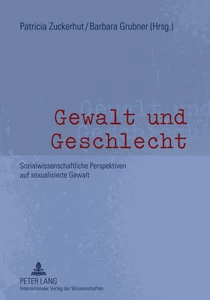
Gewalt und Geschlecht
Sozialwissenschaftliche Perspektiven auf sexualisierte Gewalt©2011 Edited Collection -
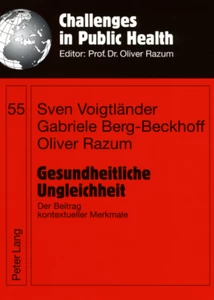
-

Gewalt, Krieg und Geschlecht im Mittelalter
©2020 Conference proceedings -
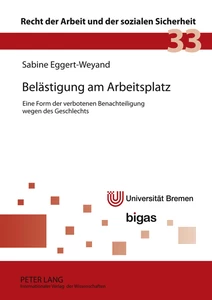
Belästigung am Arbeitsplatz
Eine Form der verbotenen Benachteiligung wegen des Geschlechts©2010 Thesis -

Ästhetik des Geschlechts
Prousts "À la rechreche du temps perdu" zwischen Genealogie und Anti-Genealogie©2015 Thesis