


 de
de  fr
fr 
International Translation Day is celebrated on the 30th of September each year, with an annual theme selected by the International Federation of Translators (FIT). The chosen theme for 2026 is “Language Diversity and Language Rights: The Power of Being Understood”
This day highlights the essential role of professional language services such as translation, interpretation, and terminology in defending linguistic diversity and equality. It also aims to foster inclusion and participation in a globalised, interconnected world.
The subtitle The Power of Being Understood underscores the pivotal role played by translation in overcoming communication barriers and highlights the importance of translation for modern society’s commitment to social and economic fairness.
As an international academic publisher, Peter Lang has always been dedicated to promoting cross-cultural understanding and disseminating rigorous research across linguistic divides. To mark this year’s celebration, we are proud to spotlight six multilingual titles from our catalogue which explore various contemporary issues in translation.
Translation as access
As a fundamental human right, language rights guarantee the right to access justice, education, healthcare and other public services in a language that can be freely understood, ensuring that everyone has equal access to information. Accessibility therefore represents equity; making this information usable for all, including non-native speakers and people with disabilities, as well as making those from diverse backgrounds feel represented.
Acesibilidad desde un enfoque traductológico explores the bridge between translation and accessibility. It addresses how working with linguistic codes enables the exchange of information between people with diverse communication needs, including translation between modes of communication to provide access to those with hearing and sight impairment, localisation services for those with limited sociolinguistic competence, and language accessibility services such as plain language for those who do not understand specialised language.
Accesibilidad desde un enfoque traductológico
By Goedele De Sterck, Fátima Gómez-Cáneba, Silvia Roiss
Read more and purchase the book here.
Title Summary:
La obra aborda temas como la audiodescripción, la simplificación y el subtitulado para personas sordas, así como la lengua de signos, el lenguaje claro o la lectura fácil. La tecnología desempeña un papel crucial en los servicios de accesibilidad, por lo que este volumen también cubre los últimos avances tecnológicos, como la IA, aplicados a este ámbito. Con la inclusión de casos concretos y ejemplos, el libro ilustra las aplicaciones prácticas de los conceptos teóricos, proporcionando a los lectores una comprensión más clara de cómo se aplican las teorías en escenarios reales. Este enfoque interdisciplinar une, por lo tanto, estudios de traducción, lingüística, comunicación audiovisual y discapacidad, entre otros. El fin último es que sirva de puente entre estas áreas y que promueva una comprensión más holística de la accesibilidad en y para la traducción y, además, fomente una mayor sensibilización y respeto hacia todos los actores implicados.
Excerpt:
En un mundo cada vez más interconectado, garantizar que todas las personas puedan acceder en igualdad de condiciones a la información se erige en prioridad. Partiendo de este contexto, la alianza entre traducción y accesibilidad ayuda a eliminar barreras y facilita el acceso a contenidos, productos y servicios pertenecientes a todas las áreas de la vida para personas con discapacidades auditivas, visuales o cognitivas.
This book is part of our series Forum Translationswissenschaft. Explore the full series here.
Translation as discourse
Translation is more than swapping words between languages; a translated text is not a simple copy of the original, but a creative re-writing. The view of translation as discourse positions translation as a social and cultural act shaped by ideology. As discourse producers, translators are not neutral machines, rather their choices can reflect, support, or challenge power and socio-cultural preconceptions. In producing a translated text, the translator must interpret the meaning for a new audience.
Translation and Discourse as (Non)Discrimination
By Catalina Iliescu-Gheorghiu
Read more and purchase the book here.
Title Summary:
A realistic view of the past should provide a critical understanding of the present, in which discourse producers (including translators and interpreters) must be seen in their socio-political, cultural context. Communication is often hindered by linguistic, cultural, or behavioral differences in the interaction between service providers and service seekers. While there is an extensive literature (sociology, psychology) on different types of discrimination, classified either by its cause (sex, gender, religion), its context (workplace discrimination, border areas), or its consequences (stress, self-stigma, distress), narratives of discrimination seem to be less explored. This volume aims to provide an updated overview of the many facets of intercultural communication and its realities. It emphasizes narratives of otherness and their (conscious or unconscious) presence in policies, social or professional relations, and positive discrimination as a corrective.
Excerpt:
The unprecedented linguistic and cultural diversity which is the result of the migration flows is shown by the book contributors to involve communication challenges due to (linguistic and/or behavioural) barriers in the destination countries between service-providers and service-seekers. There are situations in which communication breakdowns occur both at individual and social level, with some people talking at cross purposes, misrepresenting and distorting the meaning of what others are trying to say, which makes it more necessary than ever to speak with one another, rather than at one another in order to achieve mutual understanding and concerted action. Such types of situations led Bohm to conclude that “shared meaning is really the cement that holds society together, and you could say that the present society has very poor quality cement” (Bohm 2004: ix). Consequently, to reach shared meaning it is essential to understand and reinforce the mechanisms of socially and culturally effective dialogues across (social, gender, cultural, etc.) groups and communities of practice in increasingly multicultural interaction contexts.
Translation in a globalised world
In an increasingly globalised world, translation plays a crucial role in facilitating intercultural exchange and understanding. This globalised context has increased the demand for localisation services; adapting the source text in a manner sensitive to cultural and linguistic differences to ensure the resulting translation is culturally appropriate. In shaping how people share ideas, translation functions as a process of cultural mediation.
Comunicación intercultural, traslación e idiomaticidad
By Laura Ramírez Sainz, Carmen Cayetana Castro Moreno
Read more and purchase the book here.
Title Summary:
El libro explora la intersección entre lengua, cultura y traducción en un mundo globalizado. A través de un enfoque interdisciplinar, los autores examinan cómo las diferencias idiomáticas y culturales impactan en la comprensión cultural y en la traducción. El libro está dividido en capítulos que ofrecen una revisión crítica del papel esencial de la idiomaticidad y la traducción en la comprensión intercultural.
Asimismo se profundiza en las estrategias para superar barreras culturales y lingüísticas, resaltando la importancia de la efectividad en la comunicación intercultural en diversos contextos.
La publicación aquí presente es de especial relevancia para traductores, lingüistas y todo aquel que investigue en el diálogo cultural e invita al lector a ver la traducción y la producción lingüística no solo como un acto lingüístico, sino como un proceso de mediación cultural y entendimiento mutuo.
Excerpt:
La traducción es abordada desde una perspectiva intercultural, evaluando cómo se gestionan las múltiples lenguas dentro de la Unión Europea y examinando casos específicos de traducciones literarias. Los artículos en esta sección destacan la importancia de la naturalidad y la cantabilidad en la traducción de obras musicales, así como la evolución de las traducciones de clásicos literarios a lo largo del tiempo. Además, se explora el papel de los traductores en la transmisión de obras fundamentales de la literatura mundial.
This book is part of our Studien zur Translation und Interkulturellen Kommunikation in der Romania series. Explore the full series here.
Translation and variation
In addition to differences between languages, the translator must also contend with variation embedded within a single language. In L’approche variationnelle dans la terminologie et la traduction juridiques, this idea of variation is explored in the context of legal translation, where a single language can encompass multiple regional legal systems and interlingual translation is not a simple question of a single language pair, but rather requires navigation of differing practices, semantic discrepancies and interpretative challenges.
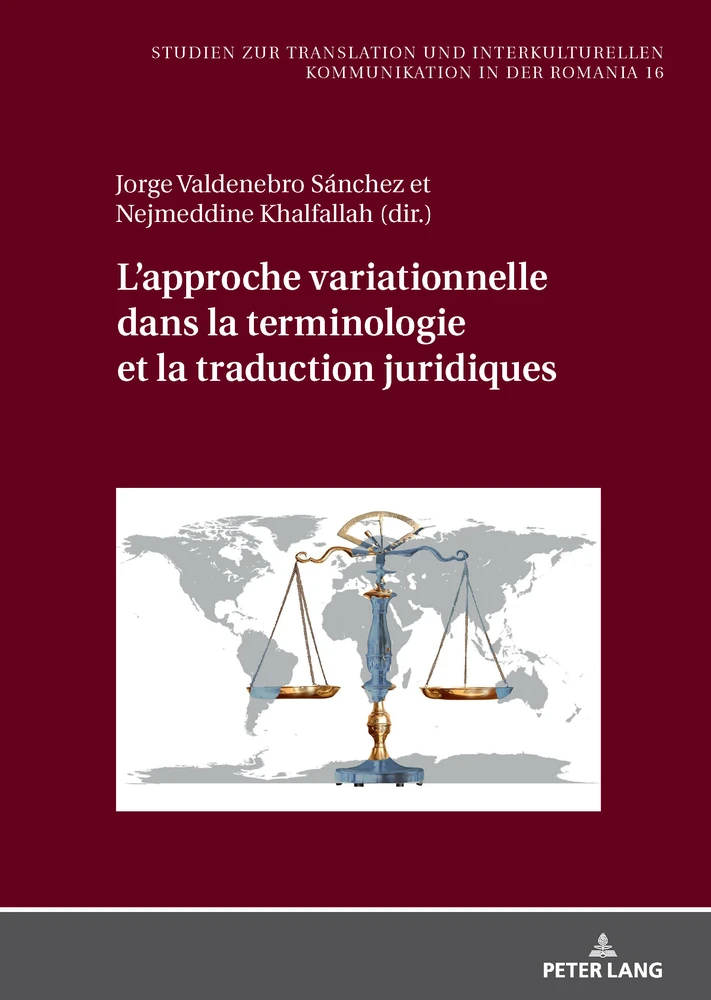
L’approche variationnelle dans la terminologie et la traduction juridiques
By Jorge Valdenebro Sánchez, Nejmeddine Khalfallah
Read more and purchase the book here.
Title Summary:
Cet ouvrage propose une analyse approfondie des variations terminologiques, conceptuelles et discursives qui traversent les langues du droit et influencent la traduction juridique. À partir de contributions issues de diverses traditions, il montre comment les phénomènes de variation, comme la variation diatopique ou diachronique, entre autres, peuvent entraîner des écarts de sens ou des difficultés d’interprétation qui compliquent la recherche de traductions adaptées au skopos. L’ouvrage souligne que la variation est profondément ancrée au sein d’une même langue : loin de constituer un ensemble homogène, celle-ci se décline en usages professionnels, registres, pratiques institutionnelles et cultures juridiques diverses. Ces différences internes façonnent les concepts, orientent les choix terminologiques et modifient les structures discursives selon les époques, les territoires et les traditions. En offrant un panorama actualisé des travaux en jurilinguistique et en juritraductologie, le volume montre que la compréhension fine de ces variations est indispensable pour analyser, interpréter et traduire les discours et les textes juridiques.
Excerpt:
Si la sociolinguistique a étudié depuis longtemps le phénomène de la variation, la terminologie, la traductologie et, plus spécifiquement, la juritraductologie n’ont commencé que récemment à l’intégrer de manière systématique. Certaines contributions pionnières ont ouvert la voie, comme l’ouvrage coordonné par Caprara, Ortega Arjonilla et Villena Ponsada (2016)7, consacré à la variation linguistique et culturelle, ou la thèse précurseure de Mayoral Asensio (1999)8 sur la traduction de la variation linguistique. Dans le domaine juridique, la thèse d’El Krirh (2015)9 a montré l’importance des phénomènes variationnels dans la terminologie du droit pénal et processuel pénal en espagnol, français et arabe, démontrant que la comparaison de systèmes juridiques occidentaux et arabes révèle des divergences conceptuelles et dénominatives d’une grande portée traductologique.
This book is part of our Studien zur Translation und Interkulturellen Kommunikation in der Romania series. Explore the full series here.
The role of the translator
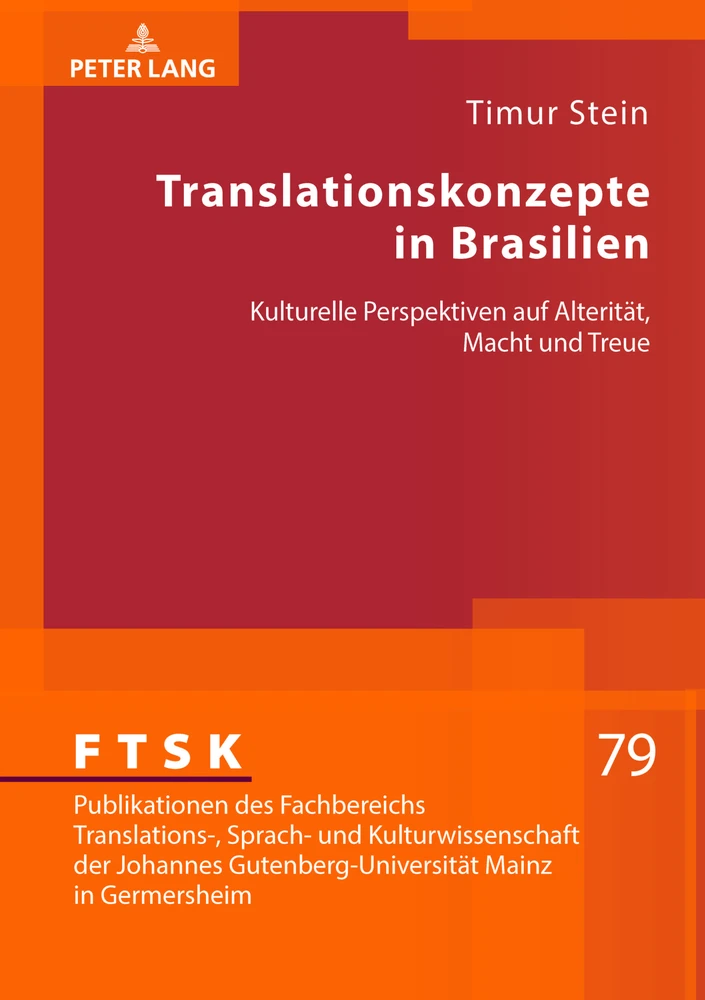
The value of human translators lies in their ability to provide essential contextual understanding, cultural relevance, and emotional impact when dealing with the text. Machine translation is limited in its capacity to understand and recreate nuanced meaning, making human input indispensable for ensuring the context of the text is accurately maintained. The concept discussed in Translationskonzepte in Brasilien is that translation is not a neutral act; translators function as cultural mediators whose choices are inextricably influenced by their cultural, social and political viewpoints.
Title Summary:
Nach wie vor stellt sich die alte Frage: Was ist die Aufgabe des Übersetzers? Auf der Suche nach Antworten erkundet die brasilianische Translationswissenschaft unterschiedlichste Denktraditionen wie den europäischen Poststrukturalismus einerseits und die modernistische Anthropophagiebewegung Brasiliens, den amerindischen Perspektivismus sowie die afrobrasilianische Mythologie andererseits. Auf diese Weise eröffnet sie Sichtweisen, die im deutschsprachigen Raum fremd erscheinen mögen, es eben dadurch aber erlauben, neue Wege zu beschreiten. Eine wichtige Einsicht ist dabei: Translation ist niemals unschuldig, und Translatoren – ob gewollt oder nicht – sind stets politische Akteure, die maßgeblich bestimmen, wie die übersetzende und die übersetzte Seite zueinander in Beziehung treten.
Diese Arbeit ist mit dem Forschungsförderpreis der Freunde der Universität Mainz e.V. 2024 ausgezeichnet worden.
This book is part of our series FTSK. Publikationen des Fachbereichs Translations-, Sprach- und Kulturwissenschaft der Johannes Gutenberg-Universität Mainz in Germersheim. Explore the full series here.
Technological developments
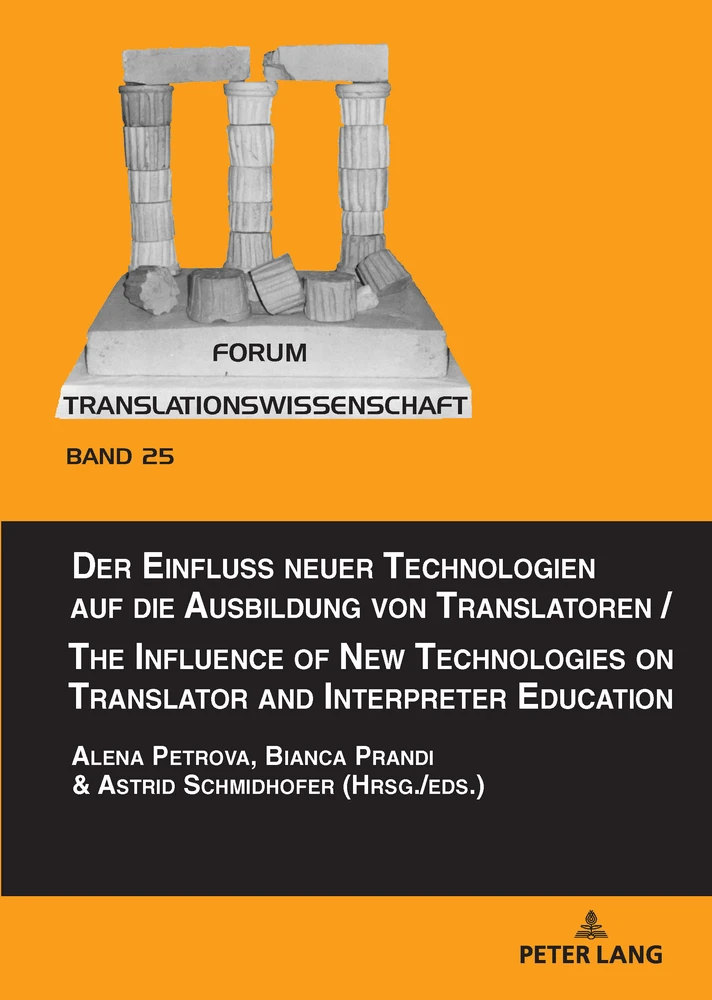
Rapid advancements in technology are profoundly impacting the translation industry. The rise of AI and machine translation enables the rapid translation of large volumes of text at extremely low costs. However, automated translations must be overseen by human input. The title below discusses how pedagogical approaches to translation and interpreting are changing in response to these technological developments.
Der Einfluss neuer Technologien auf die Ausbildung von Translatoren / The Influence of New Technologies on Translator and Interpreter Education
By Alena Petrova, Bianca Prandi, Astrid Schmidhofer
Read more and purchase the book here.
Title Summary:
In den letzten Jahren haben technologische Entwicklungen, die vor allem auf Fortschritten im Bereich der künstlichen Intelligenz (KI) basieren, zu rasanten, fast revolutionären Veränderungen in der Übersetzungsindustrie und, in etwas geringerem Ausmaß, in der Dolmetschbranche geführt. Die vierzehn Beiträge im vorliegenden Sammelband beleuchten die weitreichenden Auswirkungen von KI auf die translationswissenschaftliche Ausbildung – von der Übersetzungsdidaktik über das Post-Editing bis hin zur Dolmetsch- und Sprachausbildung.
In recent years, technological developments—driven primarily by advances in artificial intelligence (AI)—have led to rapid, almost revolutionary changes in the translation industry and, to a slightly lesser extent, the interpreting sector. The fourteen chapters in this volume explore the far-reaching impact of AI on translator and interpreter education, covering topics ranging from translation didactics and post-editing to interpreter training and language education.
Excerpt:
Der nächste Teil ist dem Einsatz von KI-Tools in der Übersetzungsdidaktik gewidmet. Das Kapitel von Belén Lozano Sañudo (Universität Valencia) zeigt anhand von Werbetexten, wie maschinelle Übersetzung bereits im frühen Stadium zur Sensibilisierung für die Möglichkeiten und Grenzen der MÜ und Steigerung der Motivation eingesetzt werden kann. Borislava Eraković (Universität Novi Sad) stellt eine Studie zu Recherchekompetenz und Post-Edition mithilfe von MÜ und generativer KI in der Frühphase der Übersetzungsausbildung vor und weist auf die Notwendigkeit hin, diese Kompetenzen gezielt zu trainieren. Konkrete Vorschläge dazu bietet der Beitrag von Maria Elisa Fina (Ca’ Foscari Universität Venedig), der beschreibt, wie Studierende an das Posteditieren herangeführt werden und die dafür erforderlichen Kompetenzen entwickeln können.
The subsequent part of the volume is dedicated to the use of AI tools in translator training. The chapter by Belén Lozano Sañudo (University of Valencia) illustrates how machine translation (MT) can be used at an early stage to raise awareness of the potential and limitations of MT and to boost motivation, taking the translation of advertising texts as an example. Borislava Eraković (University of Novi Sad) presents a study on research skills and post-editing using MT and generative AI in the early stages of translator training and emphasises the need for targeted training of these skills. Maria Elisa Fina (Ca’ Foscari University of Venice) offers specific suggestions on how students can be introduced to post-editing and develop the necessary competences required.
This book is part of our series Forum Translationswissenschaft. Explore the full series here.
On International Translation Day 2026, we invite you to explore these vital conversations around language rights, critical analysis of power dynamics in language, accessibility, and the future of the translation industry. You can also browse our range of available linguistics titles.

This year marks the 60th anniversary of International Literacy Day (ILD), a celebration organised by UNESCO that takes place on the 8th of September every year to highlight the importance of global literacy.
The theme of ILD 2026 is “Literacy for people, the planet and prosperity”. With a focus on understanding both longstanding issues and emerging challenges in an ever-changing and increasingly unpredictable world, the day serves as a timely reminder of the persistent disparity in literacy rates across the world and of the vital nature of foundational reading and numeracy skills.
Learning to read and write are not only fundamental skills for basic communication, independence, and daily tasks, but also provide the foundation for much wider skill sets (including media and digital literacy), for greater participation in the labour market and professional development, and for education on matters relating to global citizenship and environmental sustainability.
In the broader societal context, acquiring literacy is a vital and liberatory exercise both in the context of women’s empowerment and combatting poverty and social disadvantage. Lower levels of literacy and poor access to books has a long-term impact on personal fulfilment, employment prospects, and social mobility. The recent passing of celebrated singer-songwriter Dolly Parton has prompted renewed publicity for her Imagination Library, which was inspired by her own father’s inability to read or write. Today, the program gifts millions of free books every month to children around the world and underscores the transformative power of reading.
In honour of ILD, we are celebrating a selection of publications from our Education titles.
Literacy pedagogy
In the context of literacy education, it is also important to consider the importance of multimodality; construction of textual meaning through more than one mode of communication. As the ubiquitous presence of digital technology continues to shape contemporary communication, pedagogical approaches to literacy must change to ensure children learn to comprehend and meaningfully interact with multimodal texts.
In multilingual environments, particularly in the case of post-colonial countries, there are important considerations to be made with regard to the implementation of literacy education that benefits the people.
Development of Key Literacy Skills in Early Childhood Education
By Kamila Urban
Read more and purchase the book here.
Title Summary:
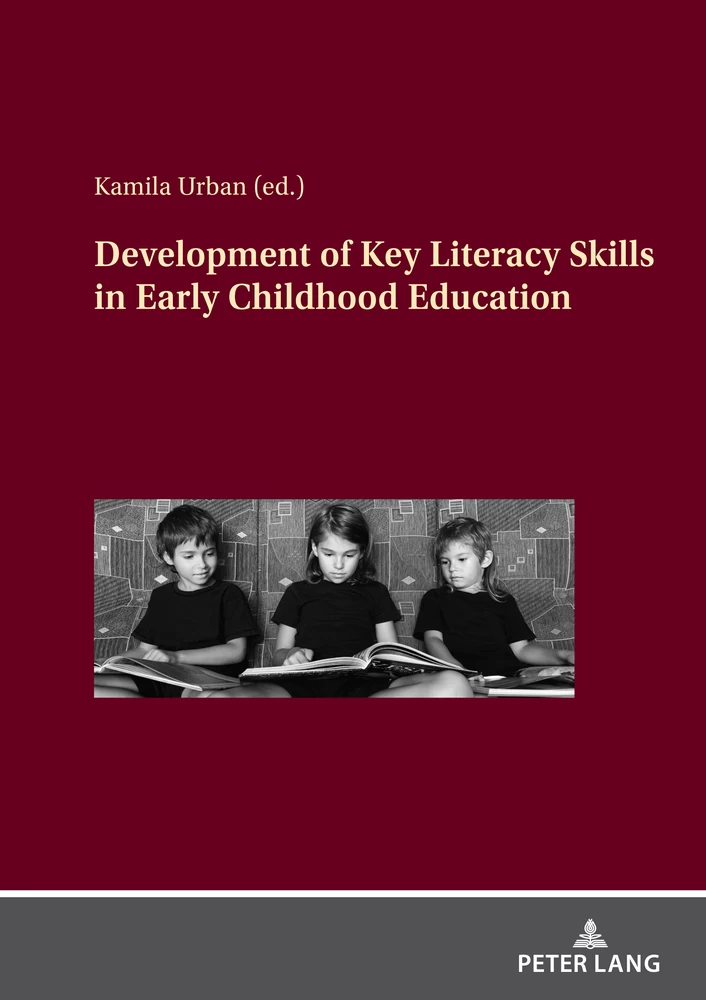
The curricular reform of 2016 presented us with a unique opportunity to compare children who had followed the previous early childhood curriculum in Slovakia with children who attended preschool after the successful implementation of the new preschool curriculum. Our book is based on the findings of research carried out in the ecologically valid environment of Slovak preschools. The results offer a unique perspective on literacy development in the context of a national reform implementation that had a direct impact on educational practice.
Excerpt:
In the preschool classroom, early childhood educators require a more complex skill-set. To promote early literacy development, they need good classroom instruction skills (DeBruin-Parecki & Squibb, 2011) and to ensure that children are educated in a literacy-rich environment (Zápotočná et al., 2022). In literacy-rich environments, diverse textual materials (such as stories, ←11 | 12→poetry, and informational texts) are actively used during reading sessions. Obtaining extensive reading experiences of a variety of textual materials helps children to acquire explicit (literal) and implicit (inferential) understanding and metacognitive development. Although our understanding of (comprehension) strategy instruction is based on research with good readers (Houtveen & van de Grift, 2007; Pressley & Afflerbach, 1995), the research shows that weak readers with limited access to print materials at home benefit most from strategy instruction (DeBruin-Parecki & Squibb, 2011; Zápotočná et al., 2020). Moreover, it is important to note that children need to learn reading comprehension strategies before they reach school age (DeBruin-Parecki & Squibb, 2011).

Multimodal Literacy in Education
By Nickolas Komninos, Sonja Starc
Read more and purchase the book here.
Title Summary:
This multilingual volume delves into multimodal literacy within educational contexts, exploring its significance across diverse cultural settings. From Singapore’s integration of multimodal meaning-making into the English language syllabus to Slovenia’s reevaluation of pictorial semiotic sources in primary school textbooks, each chapter offers nuanced perspectives on implementation and impact. Contributors illuminate methods to enhance students’ understanding of multimodality and genre, advocate for audio description in language education, and explore multimodal texts’ role in historical education. Through theoretical discourse and practical illustrations, the book elucidates how multimodal texts foster student agency and enrich learning experiences. Offering insights into methodologies and pedagogical approaches, it equips educators to integrate multimodal practices effectively. By highlighting the transformative potential of multimodal literacy, this work contributes to ongoing scholarly conversations in education, prompting a reevaluation of traditional literacy in the digital era.
Excerpt:
In this collection of diverse chapters, we have delved into the multifaceted realm of multimodal texts in educational settings, spanning various contexts and methodologies. Each chapter offers unique insights into the application and implications of multimodality in different educational landscapes, shedding light on its role in shaping learning experiences and outcomes. Through empirical studies, theoretical explorations, and practical applications, contributors have illuminated the intricate interplay between various semiotic resources, including images, text, sound, and gesture. They have demonstrated how these resources can be harnessed to foster deeper understanding, critical thinking, and creativity among students.
Re-thinking the Literacy Divide in Language Education in Senegal
By Moustapha Fall
Read more and purchase the book here.
Title Summary:
This book examines literacy education in Senegal. It assesses some of the impacts of French policies on the overall Senegalese system of education, including some of the language policies championed by a cohort of Senegalese authorities from 1960 until 2012. It begins with a definition of the concept of literacy education in general to briefly set the scene of the early resistance this encountered in West Africa, particularly in Senegal. It discusses the major language policies undertaken by presidents Leopold Sedar Senghor, Abdou Diouf, and Abdoulaye Wade. Finally, the book assesses the major impacts of France’s literacy policies on the current system of education in Senegal and proposes solutions on how to help Senegal and the rest of the West African countries put in place a rigorous literacy education that benefits their population.
Critical literacy
A key aspect of critical literacy is the capacity to question the values and assumptions of media and written materials. A critical perspective allows us to challenge implicit textual prejudice and adopt a questioning attitude toward unsubstantiated claims. This is of particular importance in the context of digital technology and the accessibility of highly biased information via algorithms that guide us down ever-narrowing echo chambers.
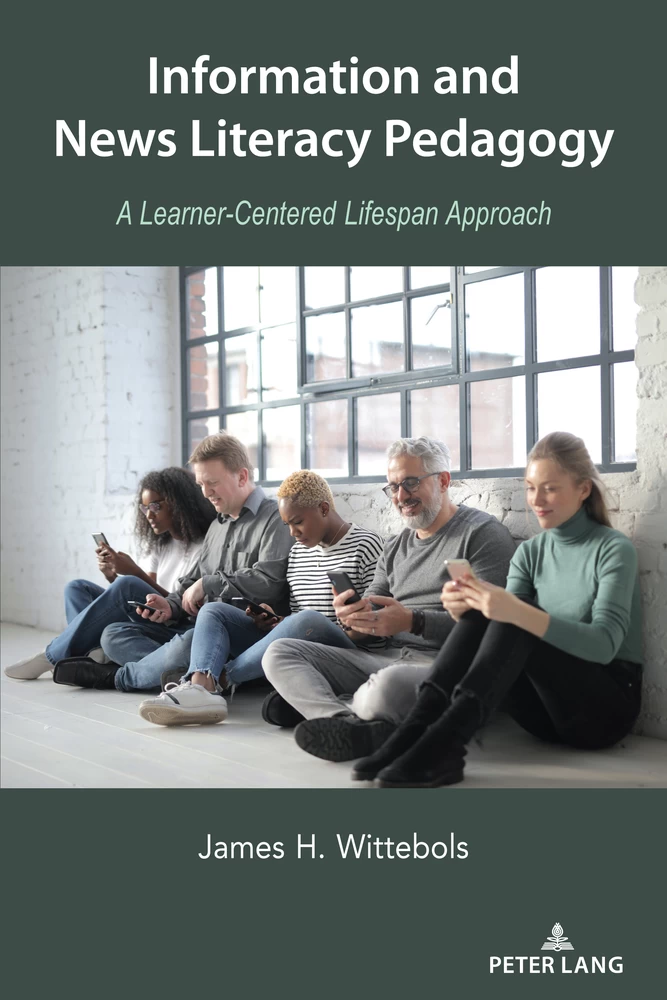
Title Summary:
Living in a post-truth world during an era of information wars, making sense of events is increasingly challenging for everyone. The fact that today’s politics has found many retreating to ideologically “safe” spaces online where their world view is not contested makes the need for news and information literacy more significant. A contemporary world where disinformation and propaganda lead to a distrust of news sources calls for a new way to approach information and news literacy. Digital technology has seemingly made information and news easier to access, but it has also made sorting quality from nonsense a challenge.
This book presents a different approach to news and information literacy which uses a flipped classroom method to create a student-centered learning experience. The course is guided by the educational philosophy of Paulo Freire and draws on theory and research from psychology, education and news and information literacy. The course begins with an exercise which reveals the role confirmation bias plays in how students judge the adequacy of news and information they retrieve through online search. The course engenders greater confidence in mastering the pitfalls of the Internet as students emerge empowered with self-knowledge as well as a better understanding of the Internet.
Literacy and society
A further necessary consideration is the intersection of literacy with society, culture and politics. As a socially embedded practice, literacy is inextricably tied to discourses of power, identity, and ideology. It is therefore essential to consider the role that literacy plays in reinforcing cultural normativity and how marginalised identities can be excluded.

This book is part of our Studies in Composition and Rhetoric series, edited by Alice S. Horning. Explore the full series here.
Title Summary:
In a documentarian research study of artifacts from archives across the United States, this book examines how homophobia circulated through literacy-sponsored objects and how Queer literates created countervailing things to upend that heteronormative discourse. Through the theoretical lens of Bruno Latour’s quasi-objects, it analyzes police cadet textbooks, young adult sex education manuals, and syndicated advice columns to show how they had influential agency in Queer lives across the twentieth century.
Review:
“While Mark McBeth has previously researched and explored forgotten homophobic discourses and their rebuttals through the actors of literacy, Objectionable offers a dynamic account of how literacy and its objects work to shape self and society. He reveals the surprising role that police training textbooks, young adult sex education manuals, and syndicated advice columns played in queer life over the last century and continue to play into our own. Anyone who has ever been touched by such objects–that is, all of us–will be moved by what McBeth teaches us about these forces of constriction, composition, and creativity.”
— Jessica Yood, Professor of English, Lehman College and The Graduate Center, CUNY
Literacy and well-being

Title Summary:
Social-emotional learning plays a crucial role in children’s mental health, fostering emotional regulation, empathy, and responsible decision-making. This book provides a comprehensive guide for teachers to integrate critical literacy with social-emotional learning, encouraging them to write customized children’s books that address their students’ socio-emotional needs. Through an in-depth exploration of literacy frameworks, classroom strategies, and teacher empowerment, this book equips teachers with the tools to create meaningful literature that supports both learning and emotional well-being.
These titles explore various themes related to the concept of literacy. We also invite you to explore our range of available education titles.
We are pleased to highlight the latest reviews for our publications. These reviews reflect the hard work and dedication of our authors and we are pleased to see their titles receiving the professional recognition they deserve.
We invite you to read the reviews and join us in acknowledging our authors’ achievements. Our thanks go out to the reviewers for providing such constructive commentary. All titles are available to purchase from www.peterlang.com.
Review Highlights
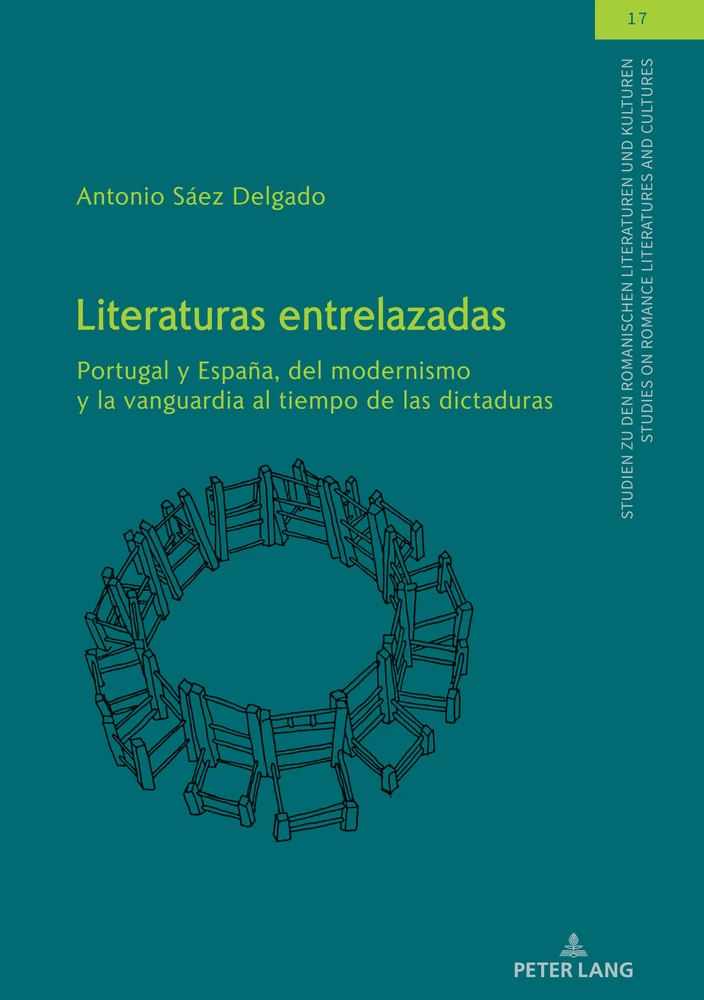
Title: Literaturas entrelazadas by Antonio Sáez Delgado
Review by: Fernando Cid Lucas (Universidad de Macerata)
“Literaturas entrelazadas se impone como una obra necesaria, no solo por la solidez de sus análisis, sino por la saludable incomodidad que introduce en ciertas inercias críticas todavía dominantes. Frente a la comodidad de los compartimentos nacionales, Sáez Delgado restituye a la literatura su condición natural: la del diálogo, la circulación y el contagio intelectual.”
Featured in: Revista humanitats (2026). Nº 10
Link: SÁEZ DELGADO, Antonio: Literaturas entrelazadas: Portugal y España en el tránsito del modernismo a la vanguardia. Berlín, Peter Lang, 2021. – Arxiu Digital UIC
Title: Discourse Markers in Romance Languages. Crosslinguistic Approaches in Romance and Beyond by Cecilia-Mihaela Popescu, Oana-Adriana Duță
Review by: Silviu Cociuban
“El lector notará en las páginas de este volumen la calidad de las contribuciones, dejando patente el hecho de que, debido a su heterogeneidad, el campo de los marcadores del discurso todavía tiene bastante potencial de investigación en las lenguas románicas, aun tratándose de un objeto de estudio extensamente analizado. En definitiva, se trata de un volumen cohesionado y valioso, que con certeza será de provecho para cualquier interesado ya sea en los marcadores del discurso, ya sea en la lingüística románica.”
Featured in: Revista Internacional de Lingüística Iberoamericana (RILI). Volumen XXIV (2026). Nº 47.
Link: – Iberoamericana
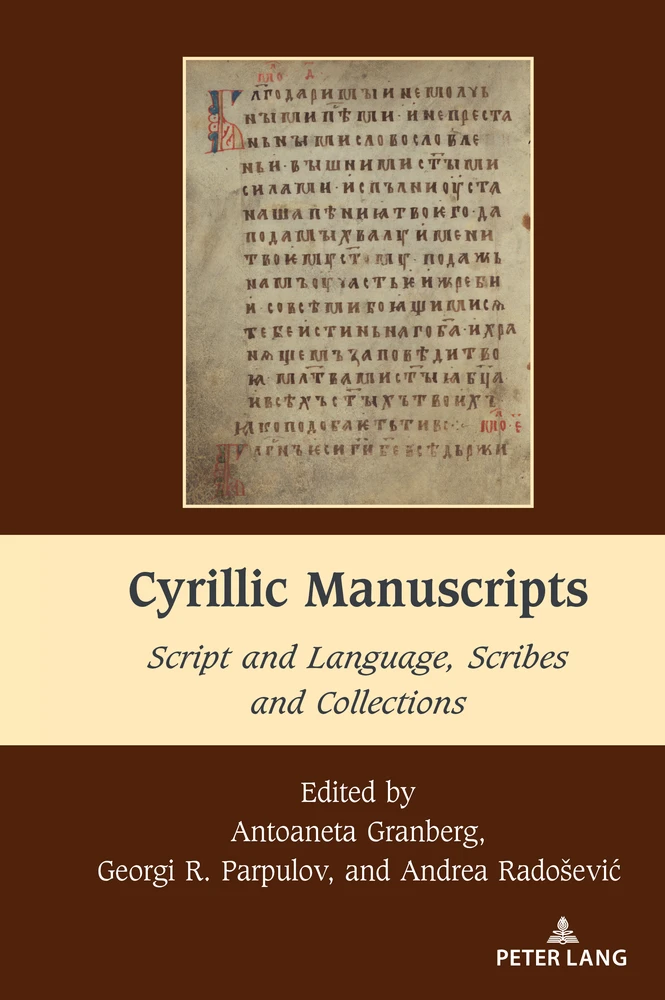
Title: Cyrillic Manuscripts by Antoaneta Granberg, Georgi R. Parpulov, Andrea Radošević
Review by: Ivan P. Petrov (University of Vienna)
“In conclusion, this volume offers not only new data on textual witnesses and their role in the transmission of texts, but also new methodological approaches and theoretical frameworks through which questions of traditional philology can be addressed. The chapters cover variety of traditions connected with the Cyrillic script, within in a time frame extending from the medieval period to the early modern era. The discussions range across both handwritten and printed witnesses, and from canonical to ‘marginal’ texts, thus extending the scope of traditional philology and entangling it with the scholarly narratives of the new century.”
Featured in: SCRIPTA & e-SCRIPTA. Vol. 26 (2026)
Link: scripta_26_665_670_reiews_elisaveta_musakova.pdf
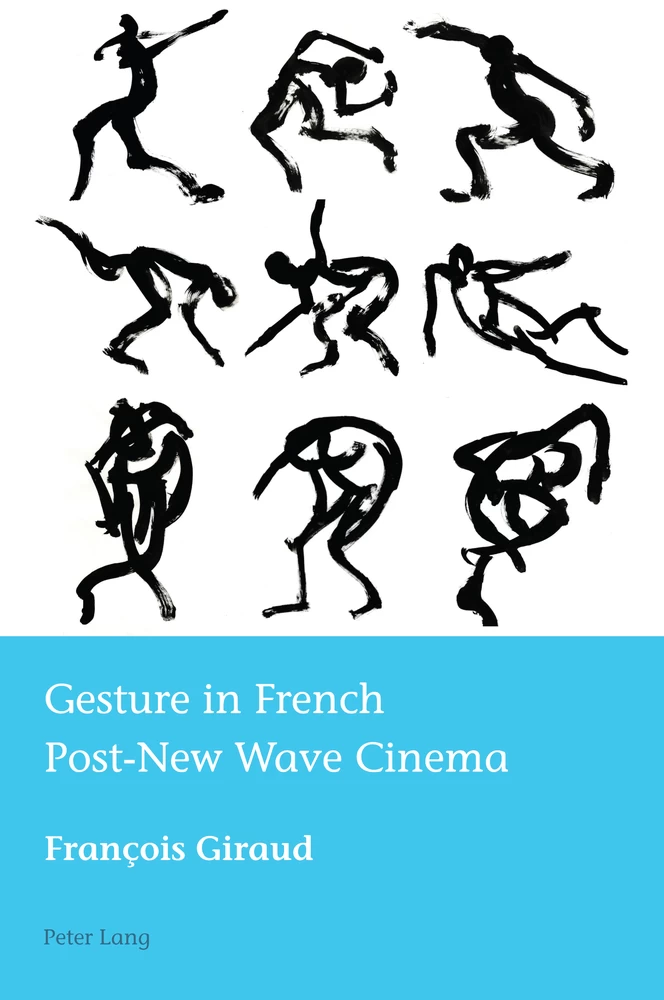
Title: Gesture in French Post-New Wave Cinema by François Giraud
Review by: Douglas Morrey (University of Warwick)
“Giraud’s book is thoroughly researched and demonstrates excellent knowledge of French film theory and avant-garde film history and practice, and it is scattered throughout with incisive close readings.”
Featured in: H-France Review Vol. 26 (March 2026), No.15
Link: vol26no15Morrey.pdf

Title: Venice in Las Vegas by Alan N. Shapiro
Review by: Nolan Bazinet (Université de Sherbrooke)
“Born in 1956 in Brooklyn, New York, Alan N. Shapiro came into adulthood like many children of the postwar era, during America’s actualization as the world’s preeminent superpower. Thus, in many ways, his narrative resembles a dual bildungsroman, his maturation parallelling America’s. Yet what makes Shapiro’s auto-socio-biography particularly compelling is his weaving of notable sociological insights into his personal narrative, elucidating the theoretical and ideological underpinnings of the former to better contextualize the latter.”
“Clearly, Shapiro’s coming of age narrative through the political and social upheaval of mid-century America is a familiar tale. However, his auto-socio-biography brings a new twist on this well-trodden path, weaving together key sociological and philosophical insights within autobiographical (and presumably fictional) accounts.”
Featured in: Review of Education, Pedagogy, and Cultural Studies, August, 1-4
Link: https://doi.org/10.1080/10714413.2026.2715449

Title: Heritage, Connection, Writing by Laima Vincé
Review by: Žydronė Kolevinskienė. Translated by Agnieška Leščinska
“The book demonstrates that the Lithuanian diaspora of the twenty-first century is shaped by several waves of migration, different languages, diverse historical experiences, and multifaceted relationships with Lithuania. It represents a significant attempt to redefine what it means to belong to Lithuania in the twenty-first century, even when one lives on another continent and writes in another language.”
Featured in: Vilnius Review. The Online Magazine for Lithuanian Literature (August 2026)

Title: Mystical Forest by Kenneth J. Yin
Review by: Mark Bender (The Ohio State University)
“Yin demonstrates not only deep engagement with Dungan literature, but a resonant connection with the creative soul of Dzhon. The collaboration between Yin and Dzhon traverses thousands of miles and several cultural barriers, but the result is a rare glimpse into the world of a poet and writer whose work is at once highly personal and idiosyncratic yet probes into Dungan history, culture, and identity in several historical contexts.”
“Yin’s work gives us an opportunity to discuss the role of translators as ‘cultural bridges,’ who aid in the exposure, representation, and interpretation of works between cultures and audiences literally around the world in an increasing array of media outlets.”
Featured in: Asian Ethnology Vol. 85, Issue 1 (2026)

Title: Hegel und das Sollen by Thomas Auinger, Friedrich Grimmlinger, Linda Obermayr
Review by: Andreas Arndt (Humboldt-Universität zu Berlin)
“Die vorliegenden Beiträge machen deutlich, dass Hegels Sollenskritik sich nicht in der Kritik eines leeren Sollens erschöpft, sondern im Sinne der Widersprüchlichkeit des Endlichen und damit auch der gesellschaftlichen und politischen Strukturen des objektiven Geistes Potentiale einer immanenten Kritik der Realität enthält, statt sie kritiklos zu affirmieren. Die Lektüre dieses Buches kann daher dazu beitragen, viele Missverständnisse über Hegel auszuräumen.”
Featured in: Das Argument, Heft 2 (2026)
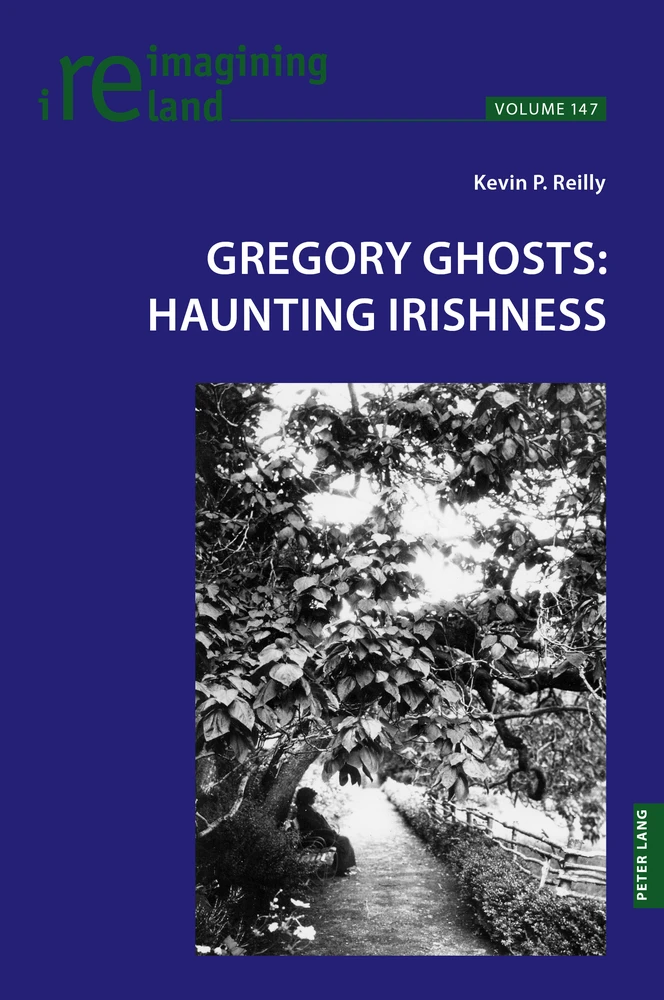
Memory, Literature, Legacy… and ghosts!
Since its publication in January 2026, Gregory Ghosts: Haunting Irishness by Kevin P. Reilly has attracted an impressive range of critical attention, prompting thoughtful discussion across academic, literary, and cultural spheres. Blending rigorous scholarship with imaginative storytelling, the monograph revisits the life and legacy of Lady Augusta Gregory through the voices of historical figures whose intertwined lives helped shape the Irish Literary Renaissance. Drawing on his longstanding expertise in Irish literary studies, Reilly offers a “fresh, vibrant, and fascinating” perspective on questions of national identity, memory, cultural revival, and a superb addition to Peter Lang’s Reimagining Ireland series. We are delighted to spotlight some of the outstanding coverage Gregory Ghosts: Haunting Irishness has received since publication and to celebrate the conversations it continues to inspire.
New Books in Irish Studies with Aidan Beatty | Podcast Interview
In a featured episode of the New Books in Irish Studies podcast on 30 June 2026, Reilly joined historian and Irish Studies scholar Aidan Beatty for an in-depth discussion of Gregory Ghosts: Haunting Irishness. The conversation explores the book’s distinctive approach to literary scholarship, examining how Reilly uses the imagined voices of Lady Augusta Gregory and eight figures from her personal and professional circles to illuminate the cultural, political, and intellectual world of the Irish Literary Revival. Reilly reflects on Gregory’s complex legacy, her pivotal role in shaping modern Irish cultural identity, and the creative process behind blending historical research with narrative imagination. The interview offers listeners an engaging introduction to the book’s central themes, while highlighting its contribution to contemporary Irish Studies and the ongoing reappraisal of one of Ireland’s most influential literary figures.
You can listen to the episode here, or wherever you get your podcasts.
Office Hours with John Gardner | Podcast Interview
Kevin P. Reilly was also featured on the Gardner Institute’s Office Hours with John Gardner podcast in a wide-ranging conversation that connected his distinguished career in higher education leadership with his work as a scholar of Irish literature. In the episode, Reilly reflects on the power of historical narratives to shape contemporary understanding, discussing how Gregory Ghosts: Haunting Irishness reimagines the lives and legacies of Lady Augusta Gregory and her circle through an innovative blend of research, biography, and creative non-fiction. The discussion highlights the value of storytelling as a means of exploring complex cultural histories, while showcasing the interdisciplinary thinking that informs Reilly’s work. Offering insights into both educational leadership and literary scholarship, the interview provides listeners with a compelling perspective on the ideas and creative ambitions behind Gregory Ghosts: Haunting Irishness.
You can listen to the episode here, or wherever you get your podcasts.
Reimagining the Irish Literary Revival | Seminar
Beyond interviews and reviews, Gregory Ghosts: Haunting Irishness has also inspired wider public engagement through a special in-person course led by Reilly at Celtic Junction Arts Center. Titled “Gregory’s Ghosts: Reimagining the Irish Literary Revival,” the class invites participants to step beyond the stiff public persona of the Victorian widow to encounter the spirits of Reilly’s book as they look backward to reflect on their intertwined lives, and forward into the future to see what has become of the nation they helped spark. From the drawing-rooms of Coole Park to the riots of the Abbey Theatre, the seminar will blend factual history with rich, fictionalised narratives, discussing how a tight-knit circle of passionate, conflicted individuals fundamentally shaped the cultural and political destiny of modern Ireland.
The class will take place on 15 October 2026, and you can find all the details here.
Upcoming Events and Appearances
Reilly has several events scheduled in the coming months, where he will present his book, and offer readings:
- 19 September 2026 – Fox Cities Irish Fest, Wisconsin
- 25 to 27 September 2026 – American Conference for Irish Studies, University of Notre Dame, Indiana
- 2 October – University of Wisconsin-Milwaukee, Milwaukee, Wisconsin
- 15 October – Celtic Junction Arts Center, St. Paul, Minnesota
Dr Kevin P. Reilly is President Emeritus and Regent Professor with the University of Wisconsin System. He was first in the field of critical examination of Irish literary autobiography as a distinct genre. He serves as Vice President of the Board of the Irish American Cultural Institute and has taught the James Joyce course at the University of Wisconsin-Madison.
Read more and purchase the book, here. Gregory Ghosts: Haunting Irishness is Volume 147 in the series Reimagining Ireland, edited by Eamon Maher.
We are pleased to highlight the latest reviews for our publications. These reviews reflect the hard work and dedication of our authors and we are pleased to see their titles receiving the professional recognition they deserve.
We invite you to read the reviews and join us in acknowledging our authors’ achievements. Our thanks go out to the reviewers for providing such constructive commentary. All titles are available to purchase from www.peterlang.com.
Review Highlights
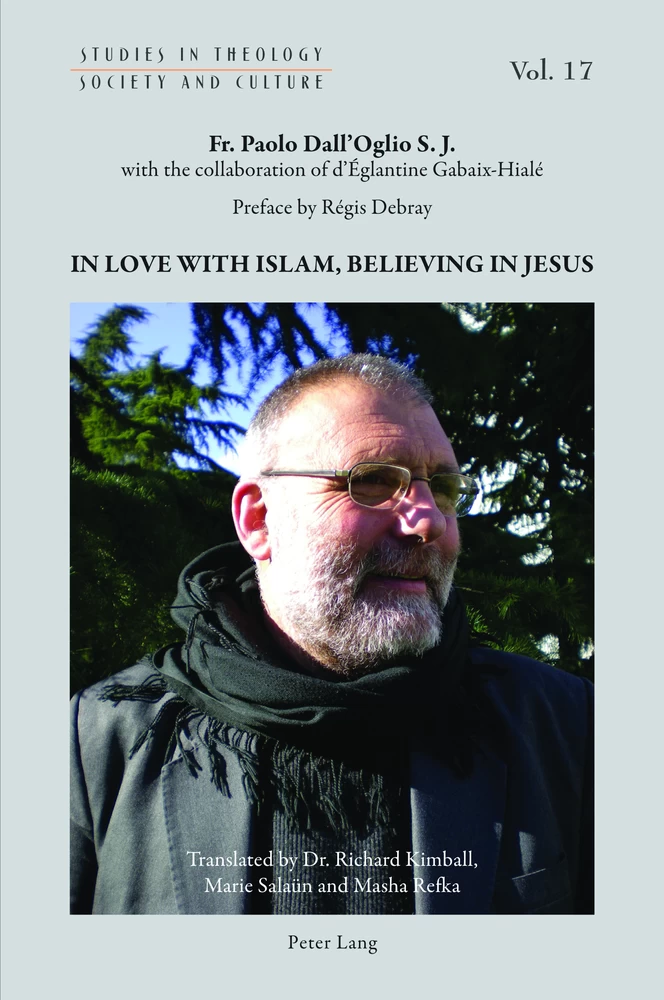
Title: In Love with Islam, Believing in Jesus by Richard Kimball, Marie Salaün, Masha Refka
Review by: Gavin D’Costa
I end by citing Sidney Griffiths, the great scholar of Eastern Christianity. His acclaim for the book (printed on its cover) is entirely fitting: “At long last, English-speaking readers now have access to the most comprehensive and insightful account of the vision that inspires the rapprochement and lived interreligious dialogue between Christians and Muslims inaugurated in the life and thought of the late Paolo Dall’Oglio S.J., and the interreligious community of al-Khalil in the monastery of Mar Musa in Syria. This book is ‘must reading’ for all of us engaged in the dialogue between Muslims and Christians in the spirit of Nostra Aetate and the life and legacy of Louis Massignon”.
Featured in: Studies in Theology, Society and Culture Vol. 17
Link: https://doi.org/10.1177/00211400241281100a
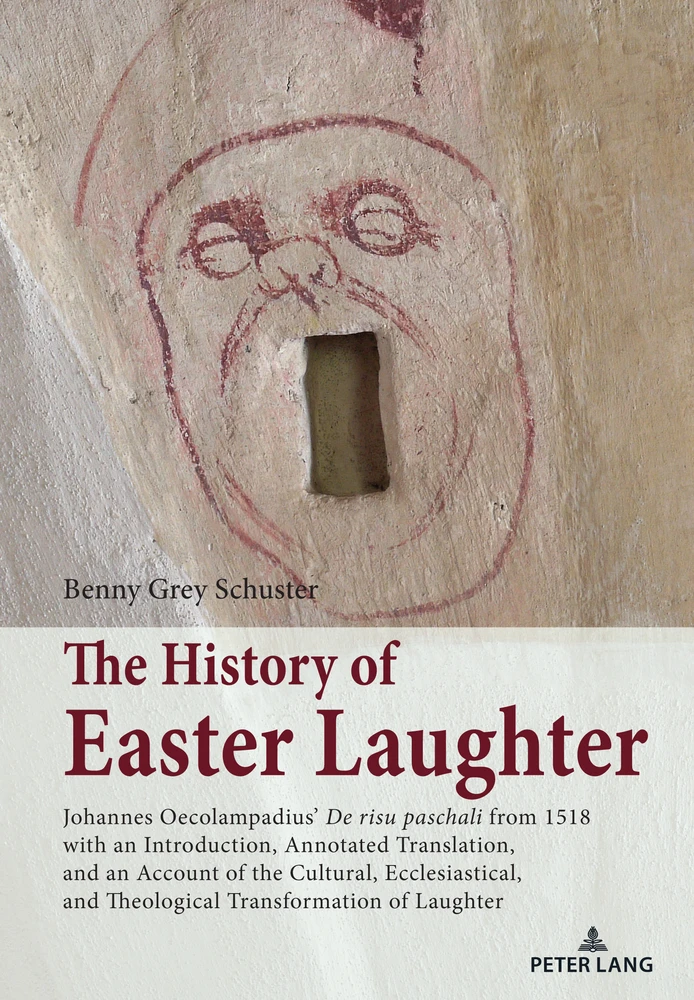
Title: The History of Easter Laughter: Johannes Oecolampadius’ ‘De risu paschali’ from 1518 with an Introduction, Annotated Translation, and an Account of the Cultural, Ecclesiastical, and Theological Transformation of Laughter by Benny Grey Schuster
Review by: Ingvild Sælid Gilhus
“It is an insightful and thorough study of the historical development of Easter laughter and its many aspects, changing views on laughter and religion, and culturally permissible types of humour and laughter. The book combines the author’s learnedness with an entertaining writing style, for Schuster is a lively presence in his own text, and he has written a book that both informs and engages its reader.”
Featured in: Temenos – Nordic Journal for the Study of Religion
Link: DOI: 10.33356/temenos.180999
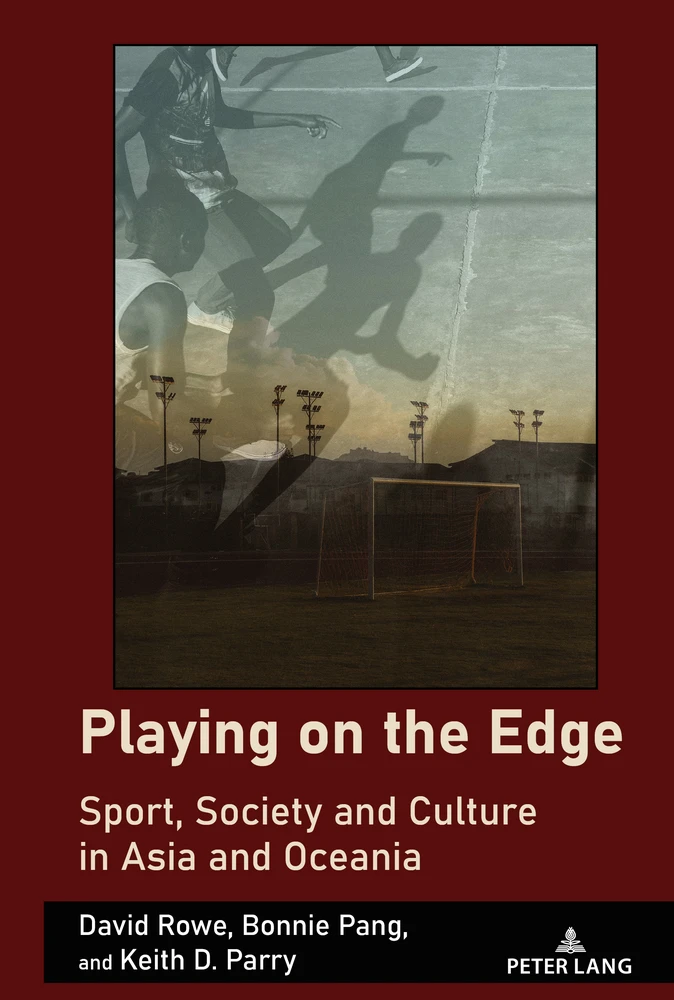
Title: Playing on the Edge: Sport, Society and Culture in Asia and Oceania by David Rowe, Bonnie Pang, Keith Parry
Review by: Malcolm MacLean (University of Gibraltar/University of Wales Trinity St David)
“The attention to esports with their disputes over ownership, technology, and intellectual property draws attention to the emerging and intensifying character of late late-capitalist sport, while the discussions of trans- and international sport flows highlight the emerging significance of East Asia and Oceania in the global sport ecosystem. These factors and the insights gained from the use of the notion of the New International Division of Cultural Labour combine to make this an essential addition to critical globalisation studies of sport, disrupting the power of the dominant frames of analysis.”
Featured in: idrottsforum.org
Link: https://idrottsforum.org/macmal_roweetal260612/
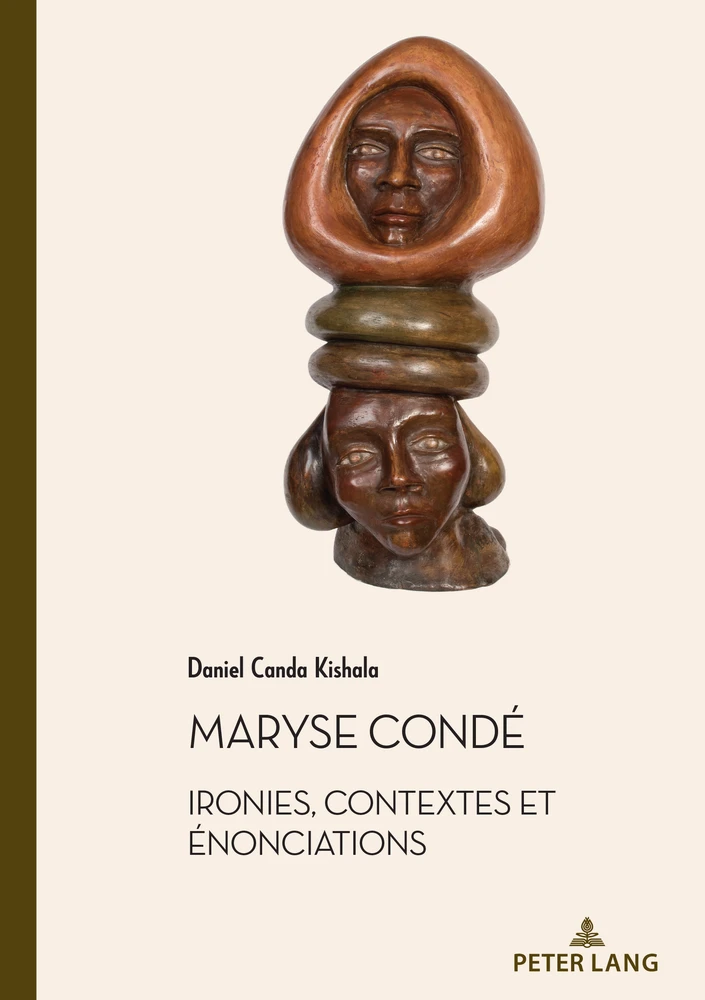
Title: Maryse Condé: Ironies, contextes et énonciations by Daniel Canda Kishala
Review by: Roberto Ferraroni
“Le choix de Canda Kishala de ne travailler que sur une sélection de trois romans de Maryse Condé s’est avéré un bon choix puisqu’il a permis de faire un travail en profondeur sur les textes, grâce à de nombreux exemples tout en ouvrant une perspective innovante qui concerne l’ensemble de l’œuvre de Condé, et pour cette raison intéresse tous les spécialistes de l’écrivaine guadeloupéenne.”
Featured in: Rassegna bibliografica
Link: sf208_14_rassegne.pdf
Title: Shirley Jackson: A companion by Kristopher Woofter
Review by: Charles William Hoge
“One of the many strengths of this collection is the tendency of every author to explain very effectively the theory they are working with or against within their essays; embedding these thick descriptions of the critical methodologies used allows this collection to function well in an undergraduate or graduate classroom as a productive way for students to encounter theory and read about its practical application. In short, an instructor could use this book as a foundational text for a class that introduces students to literary and film theory, in addition to classes that feature Jackson’s work
Featured in: The Journal of American Culture Volume 47, Issue 3 p. 244
Link: https://doi.org/10.1111/jacc.13569
Title: «Keeping the Sources Pure»: The Making of George Mackay Brown by Sabine Schmid
Review by: Luca Fumagalli
“The influences of these three great authors are described in detail in Sabine Schmid’s excellent essay, “Keeping the Sources Pure”: The Making of George Mackay Brown. Unlike her compatriot Berthold Schoene, who also authored a valuable volume on Brown that explores his specific qualities as an Orcadian writer, the German scholar adopts a more inclusive approach. She grapples with the question of whether Brown’s personal vision was shaped by a dialectical tension between indigenous and other British and European influences, which are many and vital. Therefore, “Orkney’s bard” is a circumlocution that fits Brown well, provided, however, that it does not imply an insular approach, impervious to any external influence.”
Featured in: Radio Spada
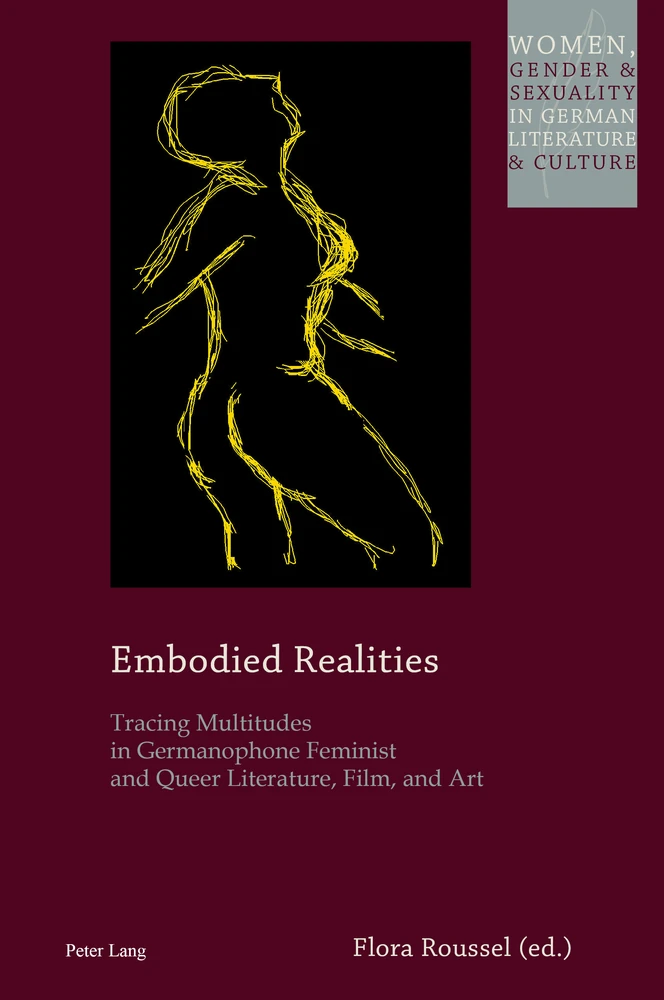
As part of the Peter Lang Pride Month celebrations, volume editor Flora Roussel continues the conversation.
In times of conservative politics and discourse, the edited volume Embodied Realities offers an overview of recent queer, feminist, and intersectional debates across literature, film, performing arts, and the history of ideas. The book provides insights in how literature, film, and art can serve as sites of resistance that challenge normative conceptions of the body and reality.
Contributors offer cutting-edge analyses of the artistic power as well as reflections on activist life experiences. Following in the footsteps of Black, feminist, and queer activists who have striven to rethink resistance by giving a voice to those who have been silenced, the volume presents various “othered” realities that defy the expected reality defined by the hegemonic powers in place. It also refocuses attention on “embodiment” by showcasing strategies of reappropriation, disruptions of stereotypes, as well as alternative constructions of community and solidarity.
For instance, Chapter 1 features testimony by Katharina Oguntoye, who recounts how she transformed the racist, sexist, and anti-queer reality she lived in into an embodied activism to create spaces of growth. Further, Chapter 5 interrogates marginalization, queerness, and the body in contemporary performances by tracing other (art) histories through the use of queer techniques (freak, crip, etc.).
Embodied Realities is a unique collaboration among activists, authors, and scholars, highlighting the importance of positionality in relation to identity, gender, class, and sexuality.
Read more and purchase the book, here. Embodied Realities is Volume 24 in the book series Women, Gender and Sexuality in German Literature and Culture, edited by Helen Finch and Katherine Stone.
Use code ER30 at checkout to receive a 30% discount on Embodied Realities, or contact orders@peterlang.com to order directly. Valid until 2 July 2026. Not applicable in countries with fixed book pricing.
Contents
Foreword (Ervin Malakaj)
Introduction: Looking Further, Constantly Growing (Flora Roussel)
1 The One and the Other: Continuing the Work of Audre Lorde in Germany (Katharina Oguntoye)
2 Writing (through) Trauma in Jasmina Kuhnke’s Schwarzes Herz: Voyeuristic Entertainment or a Path to Collective Healing? (Kathrin Spiller)
3 An “Ordinary Grotesque”: Ambiguous Queer Feminist Body Politics in Simone Meier’s Fleisch (Flora Roussel)
4 From Montreal to Berlin: Carrying on the Work of Audre Lorde (Carolyn Gammon)
5 The Micropolitics of Contemporary Queer Feminist Performances in Germanophone Countries (Priscilla Wind)
6 Queer Precarious Lives: Negotiating Diversity in the German Public Broadcasting Web Series Becoming Charlie (Charlotte Kaiser)
7 How I Became a Feminist Writer (Albeit a Bad One) (Melanie Raabe)
8 Feminine Genius on Screen: On Margarethe von Trotta’s Biopics (Francis Tremblay)
Flora Roussel is a Postdoctoral Fellow in the Department of Languages, Literatures and Cultures at McGill University. She holds a PhD in Comparative Literature from the University of Montreal. Her research interests include feminist, queer, and intersectional considerations of bodies, relationalities, and affects as well as exophony and its potential to transform literary studies.
Throughout June, Peter Lang will mark Pride Month by showcasing a range of publications that explore and celebrate LGBTQ+ experiences across disciplines, from film and literature to sport, history, and public policy. This curated focus reflects our ongoing commitment to amplifying diverse voices and advancing inclusive scholarship, recognising the importance of equitable representation within academic publishing.
We are pleased to highlight the latest reviews for our publications. These reviews reflect the hard work and dedication of our authors and we are pleased to see their titles receiving the professional recognition they deserve.
We invite you to read the reviews and join us in acknowledging our authors’ achievements. Our thanks go out to the reviewers for providing such constructive commentary. All titles are available to purchase from www.peterlang.com.
Review Highlights
Title: The Boom & The Boom: Historical Rupture and Political Economy in Contemporary British and Chinese Science Fiction by Guangzhao Lyu
Review by: Johannes D. Kaminski
“One of the most remarkable aspects of Lyu’s study is his careful selection of congenial texts, including iconic sf such as Liu Cixin’s and Iain M. Banks’s novels, as well as lesser-known texts, in lively cross-cultural dialogues. Aware of the leap of faith required to consider such texts as complementary units, Lyu compares the coexistence of the Chinese and British sf realms to the eerie situation described in China Miéville’s novel The City & the City (2009).”
Featured in: Science Fiction Studies, Vol. 53
Title: Global China and the Global Game in Africa: China–Africa Engagement through the Lens of Football edited by Jonathan Sullivan, Tobias Ross, Angela Lewis
Review by: Alan Bairner
“This is a thought-provoking collection of essays that deserves to be read not only by people with a specific interest in football in China and Africa but also by anyone who simply wants to learn more about the important relationship between these two parts of the world in an era in which the global order is being reconfigured even as I write.”
Featured in: idrottsforum
Link: https://idrottsforum.org/baiala_sullivanetal260507/
Title: Luke Wadding. A Life: Religion, Politics and Culture, 1588–1657 by Benjamin Hazard.
Review by: Simon Ditchfield
“On finishing Hazard’s painstakingly learned and carefully written study one can well believe that Wadding took refuge in scholarship from the Sturm und Drang of Irish politics and its international implications.”
Featured in: Irish Theological Quarterly
Link: https://doi.org.10.3917/rpsf.155.0161
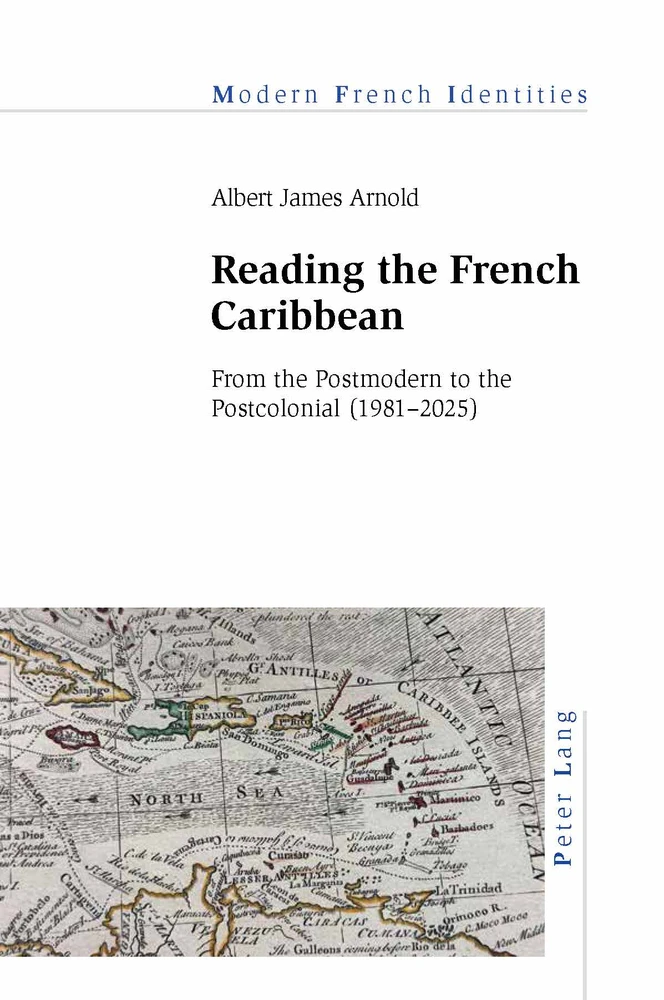
Title: Reading the French Caribbean by Albert James Arnold
Review by: Gaspard Brunet (IRJS – Université Paris 1 Panthéon-Sorbonne) et Myriam Prévot (CERSA – Université Paris Panthéon-Assas)
“The book offers a highly informative socio-historical approach to these literary works, placing the texts in their contexts and illuminating important elements of Caribbean society, such as gender dynamics and linguistic hierarchies between French and Creole.”
Featured in: New West Indian Guide
Link: NWIG 100-3&4 (2026)
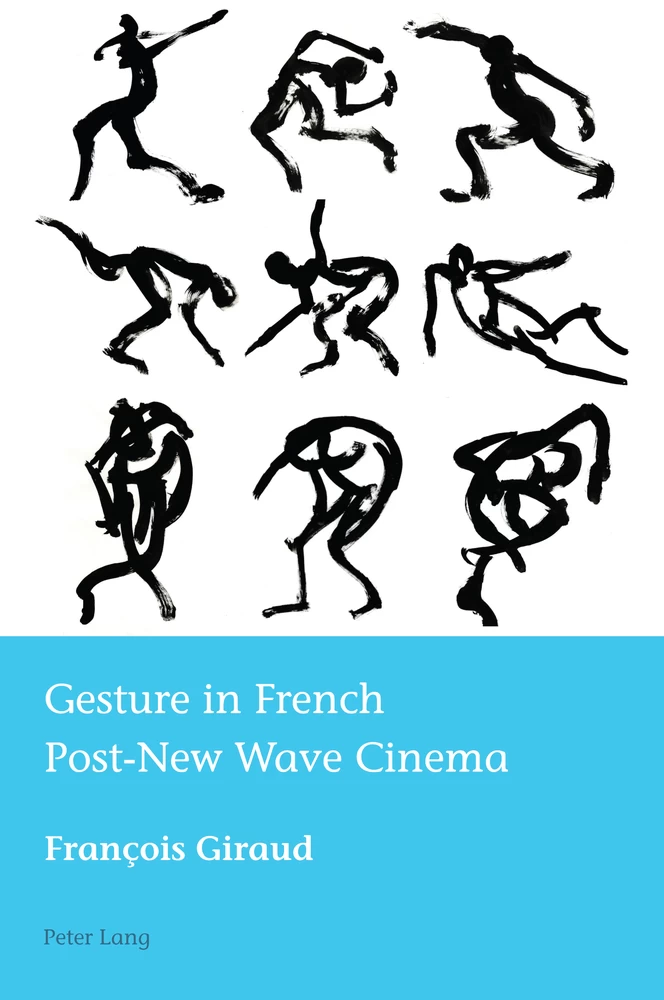
Title: Gesture in French Post-New Wave Cinema by François Giraud
Review by: Douglas Morrey
“Giraud’s book is thoroughly researched and demonstrates excellent knowledge of French film theory and avant-garde film history and practice, and it is scattered throughout with incisive close readings. French syntax occasionally creeps into the English expression, but this is only a very minor complaint about a book that will be of value to any scholar working on this singularly adventurous era of French filmmaking. Indeed, much of the pleasure of reading the book comes from remembering, or reviewing, these films and marvelling at the aesthetic courage and intellectual integrity of this much-lamented generation of filmmakers.”
Featured in: H-France Review Volume 26 (2026)
Link: vol26no15Morrey.pdf
As part of the Peter Lang Pride Month celebrations, volume editors T.J. Jourian and Chase Catalano continue the conversation.
It wasn’t that long ago that we, along with two of our colleagues, decided we would co-edit Envisioning a Critical and Liberatory Approach to Trans and Queer Center(ed) Diversity Work (published in 2025). Yet many of the chapter authors’ professional and personal lives, including our own, feel worlds apart from ‘back then.’ US higher education had just begun sustaining the impacts of a swelling and multi-pronged ‘anti-DEI’ assault. The figurative ink had not yet set on senior administrators’ statements of commitment to justice and equity in response to nationwide protests against police brutality following George Floyd’s murder in May 2020, when the hollowness of those publicly promoted statements led to their quietly private annulment. Call it higher education’s remake of Britney Spears’ 55-hour marriage to Jason Alexander.
These highly bureaucratic institutions often require countless unrelenting advocates and years of taskforces, reports, benchmarking, and assessments to permit basic adjustments to policies and processes that enable marginalized students, staff, and/or faculty to breathe a touch easier. Yet, at the mere whisper of toothless executive orders and funding-cut threats, entire structures and organizational charts were upended. Commitments be damned and endowments untouched. Since then, several chapter authors have lost jobs and titles, left institutions and States for comparatively safer (i.e., less volatile) environments, and ditched careers they sought to or had dedicated their professional lives to. The festering anti-queer and anti-trans rhetoric coupled with institutional moves of capitulation—which are very much present and addressed in the book—have since taken hold more robustly, impacting trans staff and faculty—especially those of color—most significantly.
“Today, students, staff, and faculty are fighting to salvage what (little) resources and initiatives have become institutionalized or at least more available since then, while our visibility is weaponized against us and our young people in every aspect of social and public life.”
The two of us are ‘old enough’ to recall navigating the invisibility of transness in higher education as students and practitioners. A lot of our efforts were focused on alleviating ignorance and misinformation rather than addressing outright malice. To be clear, there was plenty of malice to go around; but it didn’t dominate where we deployed our energy and time. By the time either of us were working on our dissertations (both variably focused on trans men and masculine college students’ understandings of their manhood /masculinity), there were but a few research-driven publications about trans college students (none on staff or faculty), most by cisgender scholars writing with cisgender readership in mind (LOTS of defining terms and cislation of our illegible complexities), and flattening trans students into a one-dimensional aggregate.
Then, trans erasure on most campuses was less active. We were invisible mainly because most people didn’t know about us, not because we were being intentionally eliminated, as we are today. We hadn’t yet been written into the institution, so we created trans-inclusive housing and healthcare policies, replaced binary gender(ed) language with more expansive vocabulary, provided campus colleagues with the tools and skills to support all students, and were visible enough for trans students to find trans adults existing close by. Today, students, staff, and faculty are fighting to salvage what (little) resources and initiatives have become institutionalized or at least more available since then, while our visibility is weaponized against us and our young people in every aspect of social and public life.
That colleges and universities are not bulwarks for liberation and marginalized populations is not new or news to most of us who have engaged in queer center(ed) work for even a moment. What is renewed is the level of fear, anxiety, unsafety, and instability trans people are grappling with today and the open mass coordination of that renewal across social institutions (government, media, religion, education, and the economy) and the populace at large, including within the ‘LGB-without-the-T’ spaces we helped create.
In the book’s concluding chapter, we built on Barbara Love’s (2018) conception of liberatory consciousness and Charlene Carruthers’ (2018) questions for those seeking clarity about their place in resistance work, to offer four questions of our own:
- What do I/we need to know and understand?
- How will we think together?
- What actions and risks am I/we willing to take and able to take?
- How will I/we hold myself and each other in community in support and accountability?
“This Pride Month, […] we call on ourselves, each other, and all who want a future we can all thrive in”
At the time, “we” referred primarily to those undertaking TQ center(ed) diversity work. Today’s realities—plural, because, as always, the permeability of oppression has many fighting multiple, different, and often overlapping but siloed battles—require us to have a more expansive and poignant understanding of who “we” are. So, we (T.J. and Chase) reframe those questions1 to enable inquiry from any vantage point, regardless of identity, professional role, or organizing experience:
- What do we as individuals and as a collective need to illuminate for each other? How do we make room to hear each other’s stories as often as they need to be told in a variety of permutations?
- How can we fortify our analysis to enable us to have a kaleidoscopic and collective lens that leaves no-one out of the picture?
- How do we create a human-centered parable of the choir (an analogy by Celeste Bembry) to sustainably distribute the weight of action and risk taken up by a few, to allow for rest and reflection?
This Pride Month, whatever our individual interpretations and experiences of “Pride” might be, rather than lamenting or railing against the loss of corporate sponsorships that were always contingent on our palatability and profitability, we call on ourselves, each other, and all who want a future we can all thrive in, “to abandon notions of institutional saviorism in favor of saving ourselves” (Hobson & Jourian, 2025, p. 221). It’s what queer and trans people have done throughout history—our ancestors can show us the way!
T.J. Jourian is a freelance writer, independent scholar, and “DEI” consultant and coach. Formerly, he was an assistant professor in higher education leadership at Oakland University and worked in LGBTQ life and campus housing as a student affairs practitioner. Dr. Jourian’s writing, research, and practice center trans and queer people of color’s experiences and worldviews.
Find more information about Envisioning a Critical and Liberatory Approach to Trans and Queer Center(ed) Diversity Work, and purchase the book, here.
Throughout June, Peter Lang will mark Pride Month by showcasing a range of publications that explore and celebrate LGBTQ+ experiences across disciplines, from film and literature to sport, history, and public policy. This curated focus reflects our ongoing commitment to amplifying diverse voices and advancing inclusive scholarship, recognising the importance of equitable representation within academic publishing.
As part of the Peter Lang Pride Month celebrations, we are spotlighting the forthcoming first volume in the new series, Queer Texts.
Last year, Terry Goldie at York University in Canada and Nikolai Endres at Western Kentucky University instigated Peter Lang’s Queer Texts series.
We are pleased to announce that the first book in our series will be a collection of studies of Heated Rivalry, examining both the original novel and the television adaptation.
What a phenomenon! Heated Rivalry is part of the Game Changer series by Rachel Reid, which now comprises six volumes – Game Changer, Heated Rivalry, Tough Guy, Common Goal, Role Model, The Long Game – with a final installment, Unrivaled, promised for next year. Jacob Tierney directed the television series for Crave, starring Hudson Williams as Shane Hollander and Connor Storrie as Ilya Rozanov. HBO subsequently streamed it in the US, with a second season already in production.


Jo Coghlan, Erin Burrell, and Tess Ezzy, the editors of Heated Rivalry: Queer Joy and Intimate Masculinity on Television (Peter Lang, 2026 Forthcoming), begin with a simple premise: “Set in professional ice hockey, Heated Rivalry is propelled by queer characters and the sustained pleasures of their relationship. Its defining contribution is not exposure or transgression, but queer joy: intimacy, desire, humour, trust, and emotional safety enacted within demanding institutional and work settings.”
No subject could be more timely. There are still no openly queer athletes in the National Hockey League, but some former players have talked about what was hidden. And the study ventures still further. Heated Rivalry: Queer Joy goes beyond the ice to consider Ilya’s gay life in Russia, known for President Vladimir Putin’s extreme anti-LGBTQ+ policies. This study arrives at a time when American homophobia is also growing. Heated Rivalry has attracted millions of fans, who want to know more about all aspects. Students and teachers in Queer Studies, Contemporary Television and Streaming Media, Popular Culture, Sports, Sociology, and other fields will benefit. This is television that makes people read books.
The edited volume will cover many topics: hockey culture, homophobia, institutional power, masculinity, fandom, romance, female desire, and more.
The editors:
Dr. Jo Coghlan, Associate Professor in Cultural and Political Sociology at the University of New England, Australia, is author, editor or co-editor of ten books and forty articles and book chapters exploring affective dynamics of power across popular culture, material culture, and political sociology.
Erin K. Burrell, a researcher at the University of New England has published a number of articles and book chapters in which she examines how media and cultural forms mediate social control, with particular emphasis on femininity.
Tess Ezzy is an interdisciplinary sociologist and cultural theorist with a particular interest in technology and inclusion.
Let the puck drop!
Queer Texts is a new Peter Lang series, edited by Terry Goldie (York University) and Nikolai Endres (Western Kentucky University). For more information about the series, or to discuss a proposal, please contact Dr. Philip Dunshea, Senior Acquisitions Editor, at p.dunshea@peterlang.com.
Throughout June, Peter Lang will mark Pride Month by showcasing a range of publications that explore and celebrate LGBTQ+ experiences across disciplines, from film and literature to sport, history, and public policy. This curated focus reflects our ongoing commitment to amplifying diverse voices and advancing inclusive scholarship, recognising the importance of equitable representation within academic publishing.
Discover more titles in Film and Media here:
Embodied Realities
« It’s so queer ! »
Transmedia and Public Representation
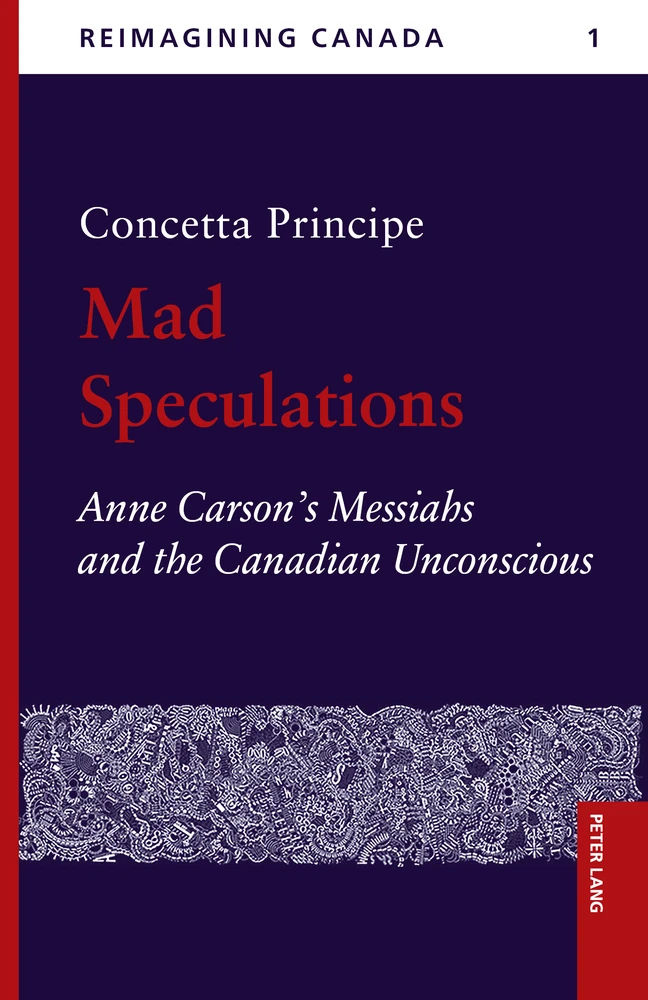
Mad Speculations: Anne Carson’s Messiahs and the Canadian Unconscious started out as a project exploring the phenomenon of the messiah in secular culture. As the research took shape, the work came to embody themes central to the Peter Lang series, Reimagining Canada. In this monograph that inaugurates the series, we rp
ead how Carson’s postmodern interpretation of the emancipator signifies the erosion of Canada’s foundational myths; allegiance to Canadian identity is both contested and reinforced by the “nowhere” of the stories driven by the “everyman” protagonists, and points us to envision some imagined future. Does Carson’s work exemplify a Canadian inferiority complex, or does it go beyond it? Do we find in these works an unconscious that speaks of the fragmented nation state? Do we take up Carson’s poetry as a roadmap to saving Canada? In considering these questions and listening to the mad messiahs, Mad Speculations makes some bold claims about the Canadian unconscious.
The Psychotic
In contrast to the neurotypical anxieties of autism that we find in Rainman (1988), Anne Carson’s Autobiography of Red (1998) reinvents the autistic story as a queer creative project. Stesichorus’ story about a beast named Geryon murdered by Herakles becomes in Carson’s hands the story of an autistic subject who falls in love with Herakles and then takes authority, literally authorship, over his life through photographs. The narrative ends with Geryon being a saviour figure for his friends. In the context of Carson’s oeuvre, certain texts explore a critical engagement with neurotypical anxieties about psychosis through the messiah. In short, Carson’s postmodernism reimagines the myths of madness and salvation.
The Messiah
Whether consciously or not, I argue, Carson reinvents Frederic Jameson’s “schizophrenic” as a mad messiah which speaks volumes to the Canadian desire for redemption. In the poem, “The Book of Isaiah” (1995), Carson’s prophet-who-becomes-messiah receives the violence of God’s word. It is a text that undermines the grand narratives of psychosis and divine revelation together. Geryon, in Autobiography of Red, is the on-the-psychotic-spectrum protagonist who queers the narrative of salvation. In Red Doc (2013), the saviour is a mosaic of characters struggling with various disorders who escape the dim, ineffective efforts of psychiatric treatment after failing in their messianic mission to heal. Each of these saviour narratives exemplifies how Carson undermines able-minded thinking by embracing fragmented identities that mark a path to a more equitable future.
Secularism
Why would there be a messiah in a secular project? What function would this religious anomaly have in discourse designed to replace religion? As Carson suggests in the interview with Mary Di Michele, worship needs to be accounted for, even in a secular world. But the world of these figures is not just secular. It is, in fact, emblematic of the generic “nowhere” which has been considered a mark of Canadian culture. The nationalism that appears in Carson’s saviours is complicated, a complication that explains the relationship between interpretation and speculation.
Speculation
Interpretation relies on patterns for proposing ways of reading. This project is about proposing ways of reading that are speculative, driven by considering unconscious messages using Freudian/Lacanian methods of interpretation. At the conscious level, Geryon is an autistic queer messianic figure troubling heteronormative hegemony. But Geryon is also personified as this ‘everyman’; buried in his generic features is the white Anglo-Saxon settler so central to Canadian culture. If Geryon’s character is shaped by unconscious Canadian ideology, his messianism is similarly shaped and equally unconscious. The fact is, as my analysis suggests, seeing a connection between Geryon’s representation and two historical figures, namely the first diagnosed schizophrenic, Daniel Paul Schreber as well as the Canadian self-proclaimed messiah, Louis Riél, may be bold but it is worth considering. That is, although these ways of seeing unconscious messaging cannot be substantiated by evidence other than in associative patterns of the text, these ways of seeing push us to look beyond what we think we know about Canada, what we assume is our cultural heritage, what we imagine the messiah is and may come to be.
The Unconscious
Lacan’s way of thinking about the unconscious invites us to imagine a Canadian future deeply buried in Carson’s work. In understanding how the unconscious works, Lacan quotes Freud in this German phrase: Wo Es war, soll Ich werden (where I was, so there shall I be). This is to say that the analysand will find the truth for herself after taking the path her unconscious has laid for her: the unconscious knows before the conscious self can know. In that sense, we can say that at the time of her writing, Carson’s work anticipated our contemporary scholarship that problematizes the neurotypical grand narratives about insanity and divine interventions. Her future is our present. In very provisional ways, then, we might speculate that this analysis of her messiahs, which interrogates the Canadian cultural landscape we know, points us beyond the disability politics Carson grapples with to consider a future in which the Canadian messiah is reinvented for a decolonized tomorrow.